
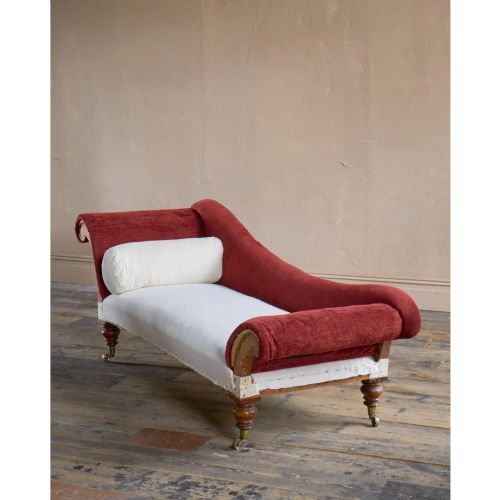


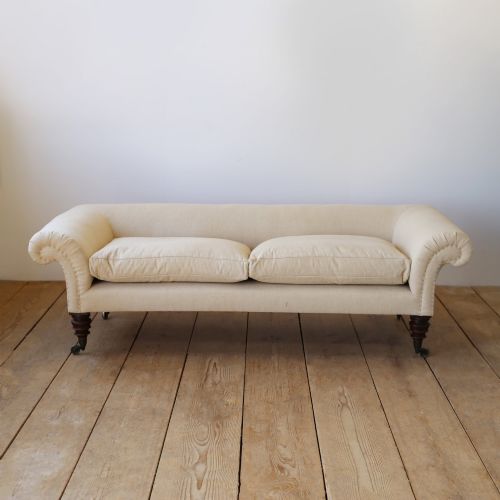

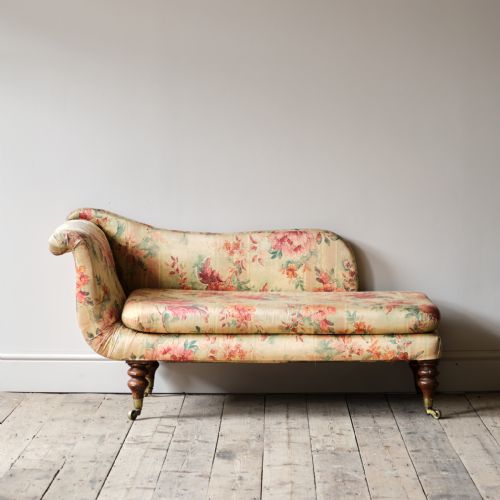


Mahogany Leg Daybed
These mahogany leg daybed pieces bring architectural form and tailored seating to a room, offering a long tradition of comfortable reclining.
Mahogany Leg Daybed
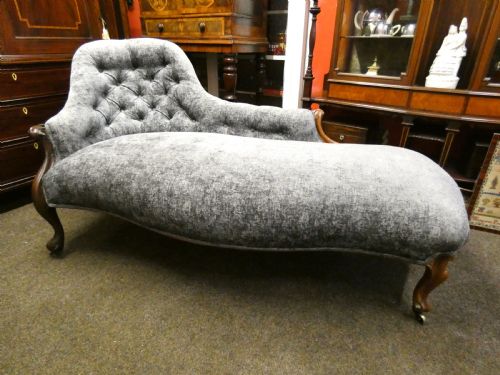
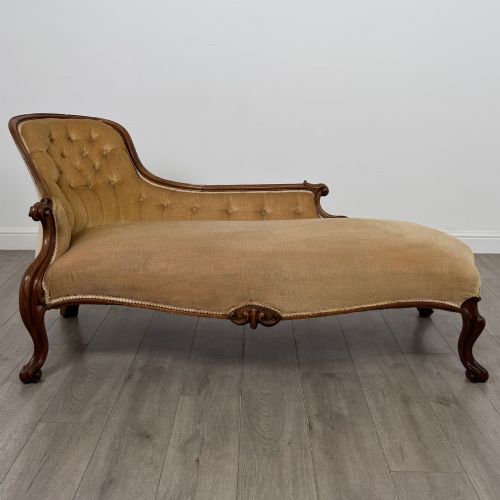
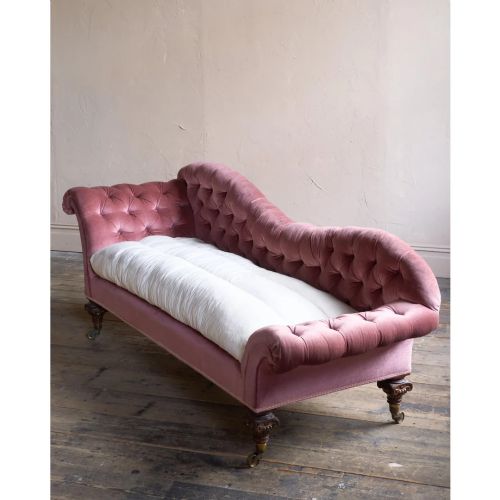
When you search for a mahogany leg daybed, you encounter nineteenth-century chaise longues, daybeds, and sofas featuring prominent timber supports. These items appear across Victorian, Regency, and Edwardian periods, taking the form of asymmetrical lounge furniture designed for reclining.
The pieces on this page span the early nineteenth century through to nineteen hundred, showing regional English workshop production. Forms range from simple country house sofas to grander Regency designs with classical architectural details.
Most examples function as chaise longues or daybeds rather than standard multi-seat sofas, providing a single raised headrest and an extended seat for resting.
How they were made
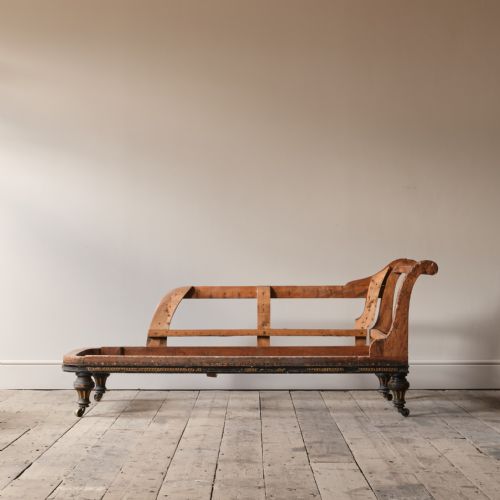
Makers constructed the structural frames from solid mahogany and other hardwoods, frequently incorporating ebonised wood details. Woodworkers shaped the timber to form curved backs, scrolled ends, and distinctive legs such as Ionic columns.
Upholstery techniques involved traditional stuffing finished in various fabrics including velvet, calico, leather, and patterned textiles. Brass components often appeared as castors or decorative mounts on the legs.
Listings feature nineteenth-century furniture spanning the Regency and Victorian eras, utilising mahogany, hardwood, brass, and diverse upholstery fabrics.
What varies in quality
The distinction between standard workshop production and top-tier cabinet work rests in the precision of the timber carving and the architectural ambition of the frame. Pieces attributed to distinguished makers demonstrate superior joinery and more refined proportions in elements like scrolled ends and column legs.
Upholstery specification and frame stability also dictate the tier of the piece, with higher quality examples retaining sophisticated internal webbing, supportive springing, and robust hardwood frames that withstand centuries of use.
Holland & Sons·Gillows·Howard & Sons·Miles & Edwards·Hampton & Sons
The Mahogany Leg Daybed Glossary
- Chaise longue
- An upholstered sofa in the form of a chair combined with a long seat for reclining. This French term translates to long chair and defines the primary form found in these listings.
- Regency
- A period of English design spanning the early nineteenth century, characterised by classical motifs inspired by ancient Greece and Rome. Pieces from this era often feature clean mahogany grain and architectural columns.
- Victorian
- A design era covering the reign of Queen Victoria during the nineteenth century, encompassing diverse revival styles and heavier proportions. Furniture from this time ranges from plain walnut and mahogany to richly upholstered seating.
- Ionic column
- A classical architectural order featuring scroll-shaped capitals, occasionally adapted by cabinet makers as support legs on nineteenth-century sofas and daybeds.
- Calico
- A plain-woven cotton fabric frequently used as an underlying tight upholstery cover before decorative top fabrics are applied.
Mahogany Leg Daybed: Frequently Asked Questions
What is a mahogany leg daybed used for?
These pieces served as daytime lounging furniture in nineteenth-century drawing rooms and parlours, offering a comfortable place to recline without retiring to a bedroom.
Today, they function as elegant statement seating in living spaces, studies, or large bedrooms, providing an elongated seat suited for reading or resting.
How do I tell Regency from Victorian pieces?
Regency daybeds usually display restrained classical lines, architectural elements like columns, and neat mahogany frames inspired by ancient Greek or Roman design.
Victorian examples tend to feature heavier proportions, more exuberant curves, and varied upholstery treatments reflecting the shifting tastes of the later nineteenth century.
Are these daybeds comfortable to sit on?
Comfort depends entirely on the internal upholstery springing and padding, which varies between individual pieces depending on whether they retain original stuffing or have been modernised.
Many examples offer a firm, supportive angle against the raised headrest, making them well-suited for extended periods of reading or relaxing.
How do I care for antique mahogany wood?
Maintain the timber by keeping the piece away from direct heat sources and strong sunlight, which can dry out the mahogany and fade the polished surface over time.
Apply a traditional beeswax polish occasionally to nourish the hardwood and preserve the natural depth of the grain.