


Vintage Turned Leg Table
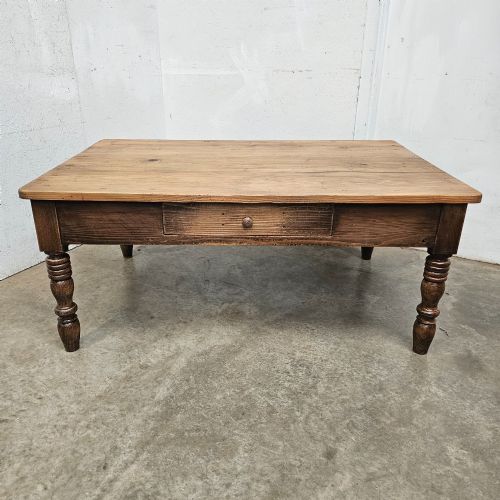
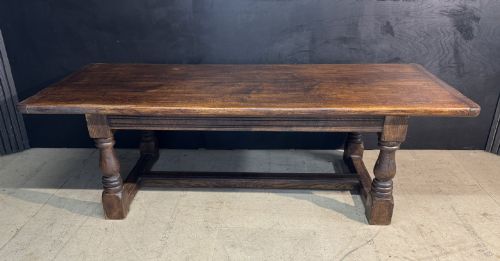
A vintage turned leg table brings honest craft and sturdy timber to a room, ranging from small pine coffee tables to large oak dining pieces.
Vintage Turned Leg Table
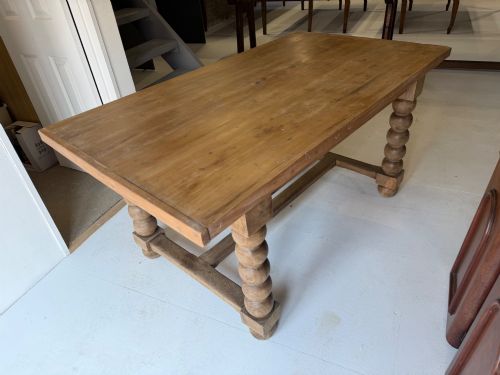
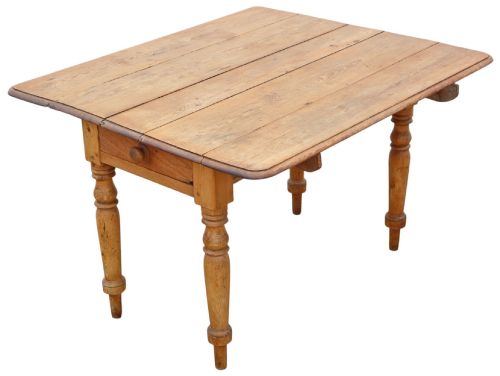
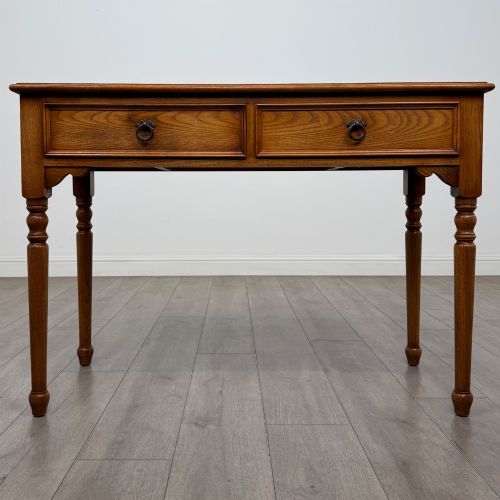
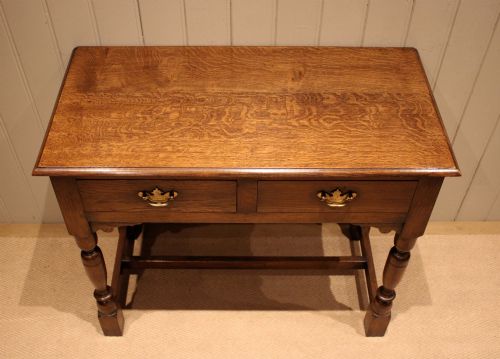
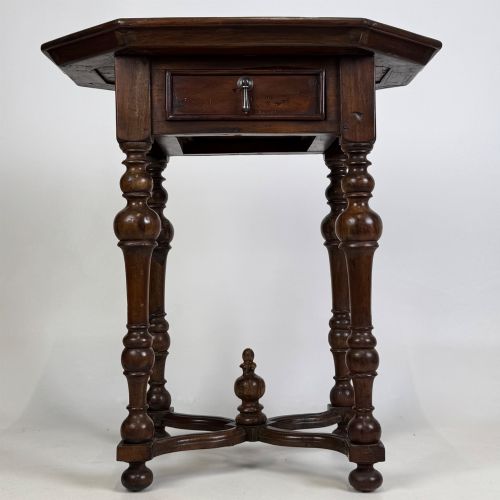
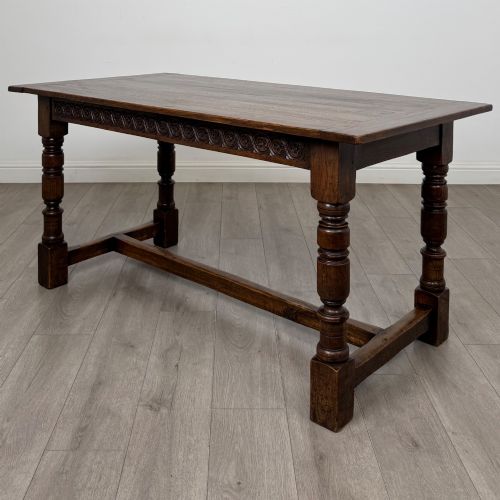
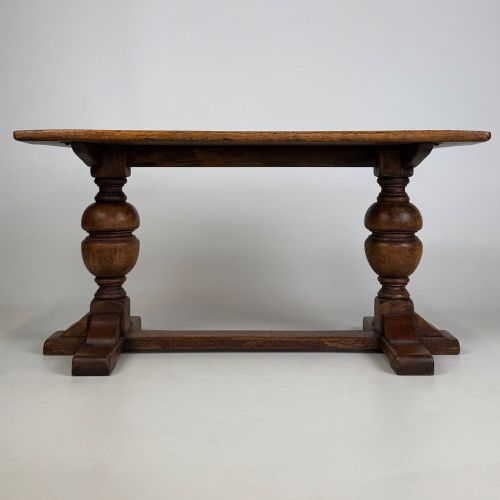
When you search for a vintage turned leg table, you encounter a wide variety of domestic furniture spanning the nineteenth and early twentieth centuries. These pieces encompass utilitarian kitchen furniture, formal dining furniture, and smaller occasional pieces designed for parlours and sitting rooms.
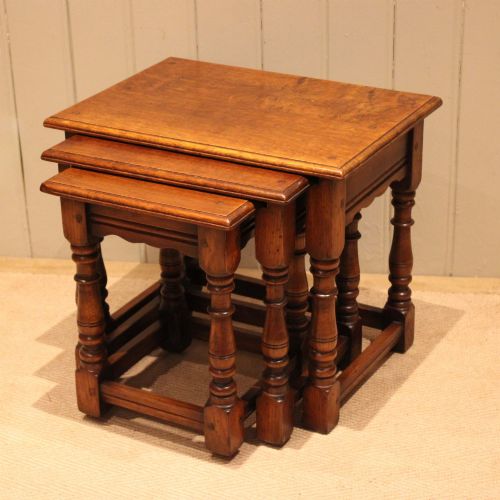
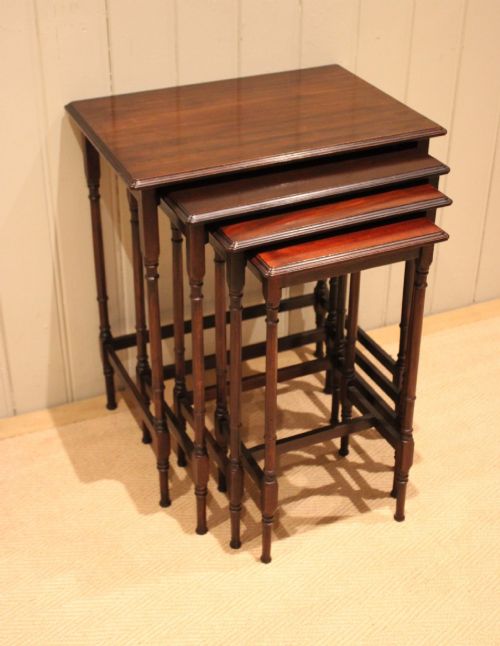
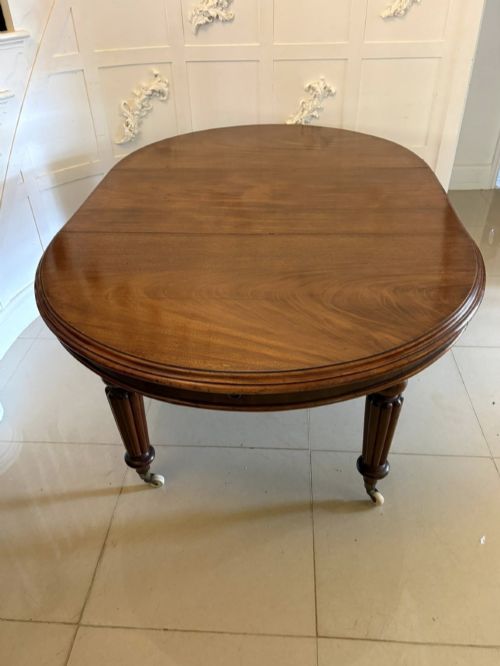
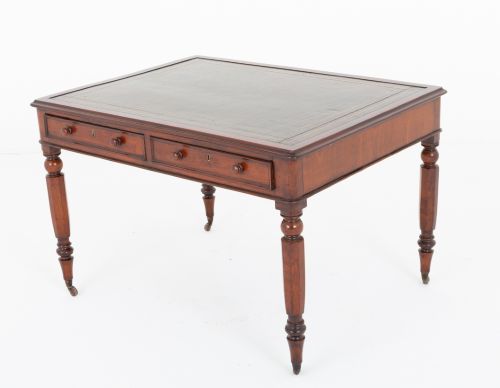
The selection includes dining tables, coffee tables, nests of tables, side tables, and writing desks produced during the Victorian, Edwardian, and early twentieth-century periods. Oak and pine dominate the simpler farmhouse and side table forms, whilst mahogany appears frequently in refined dining tables and nests.
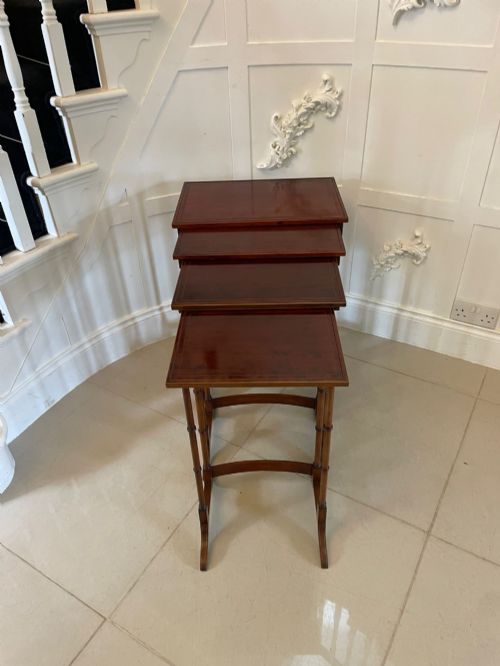
Buyers meet numerous variations in form, from drop-leaf kitchen tables and extending dining tables on castors to compact nests of three or four tables. The turned leg serves as the common denominator across these diverse functions, providing both structural support and decorative detail.
How they were made
Joiners and cabinet makers constructed these tables primarily using solid timbers such as oak, mahogany, pine, and walnut, often applying turning lathes to shape the legs into bobbins, columns, or baluster forms. Pine served for robust kitchen and farmhouse tables, whilst oak and mahogany lent themselves to finely carved dining tables, writing desks, and nested sets.
Assembly relied on traditional joinery methods, supplemented by brass castors on larger dining tables and occasional inlay on Edwardian mahogany pieces. Surfaces received hand-applied finishes that highlighted the natural grain of the wood, from pale and golden oak to rich, dark mahogany.
Listings feature oak, mahogany, pine, walnut, and burr walnut across periods from the nineteenth century through the 1930s.
What varies in quality
The choice of timber and the precision of the turning set individual pieces apart, distinguishing utilitarian workshop output from finer cabinet work. Dense hardwoods like mahogany and figured timbers such as burr walnut indicate a higher grade of production than standard utility pine.
Proportion and decorative restraint dictate the visual success of a turned leg table, with balanced proportions and crisp carving on the legs separating standard examples from exceptional ones.
James Mein of Kelso
The Vintage Turned Leg Table Glossary
- Turned leg
- A wooden leg shaped on a lathe by rotating the timber against cutting tools to create cylindrical profiles, rings, or bobbin shapes.
- Nest of tables
- A set of graduated small tables designed to fit neatly beneath one another when not in use.
- Drop-leaf table
- A table featuring fixed centre leaves and hinged side flaps that fold down to save space.
- Refectory table
- A long, narrow dining table traditionally built with a solid timber top and heavy legs braced by a central stretcher.
- Castor
- A small wheel mounted in a swivel frame attached to the bottom of table legs to permit easy movement.
Vintage Turned Leg Table: Frequently Asked Questions
What is a turned leg table?
A turned leg table is a piece of furniture featuring wooden legs shaped on a lathe, ranging from simple pine kitchen tables to elaborate mahogany dining tables.
These pieces span various historical periods including the Victorian and Edwardian eras, offering sturdy construction and distinctive wooden details.
How do I date an old table?
Dating relies on examining the timber species, construction techniques, and stylistic markers such as Jacobean revival carvings or Edwardian inlay.
Comparing the turned leg profiles and overall form against documented periods helps narrow down the decade of manufacture.
Where should I place a nest of tables?
A nest of tables works well beside a sofa or in a corner, providing flexible surface space that expands when entertaining guests.
They occupy minimal floor area when stacked together, making them practical for smaller rooms.
How do I care for antique wood?
Maintain antique timber by keeping it away from direct heat sources and sudden humidity changes that can cause the wood to split.
Apply suitable wax polish occasionally to nourish the surface and preserve the natural sheen of the grain.