
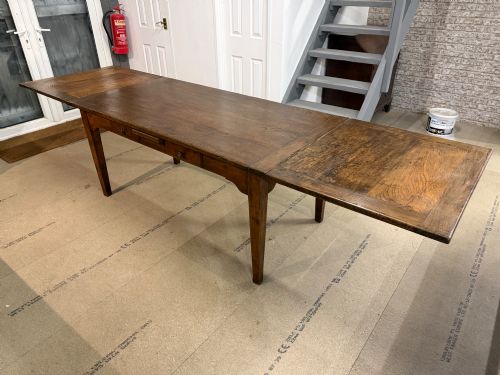
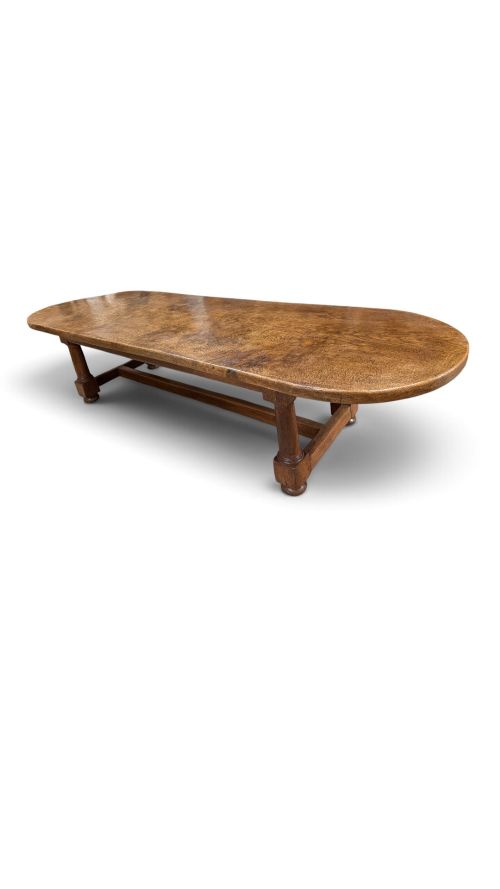
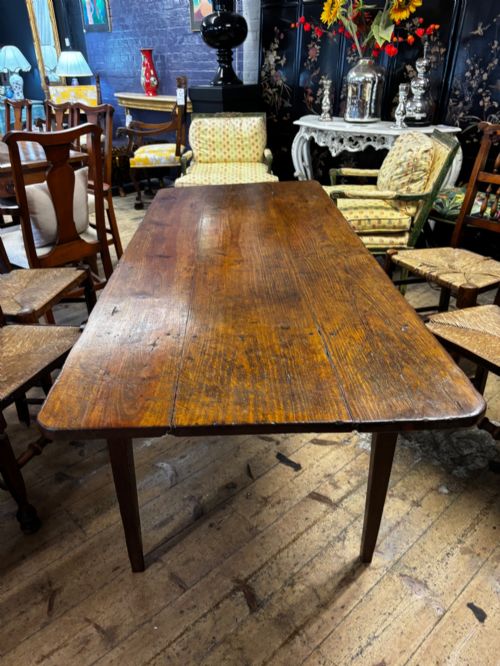
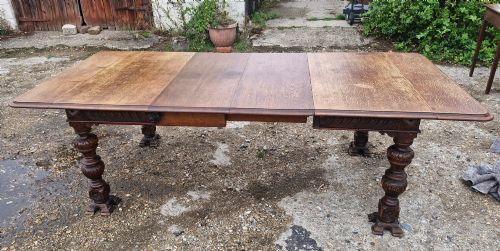
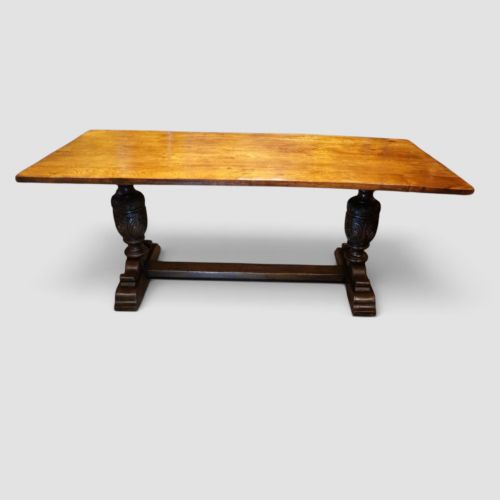
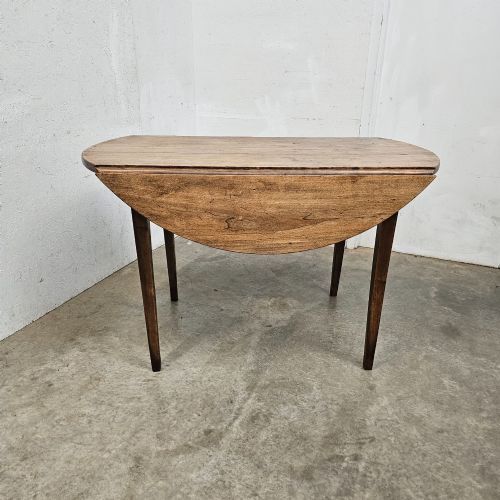
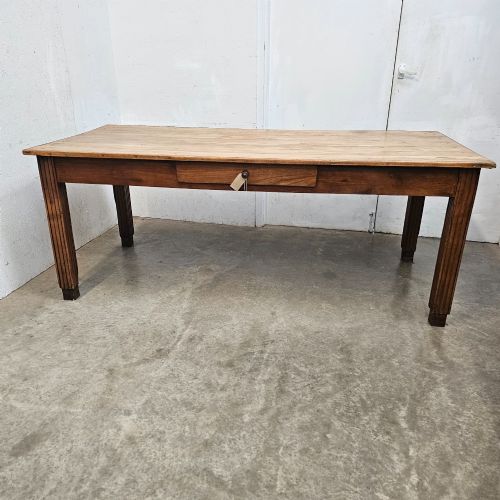
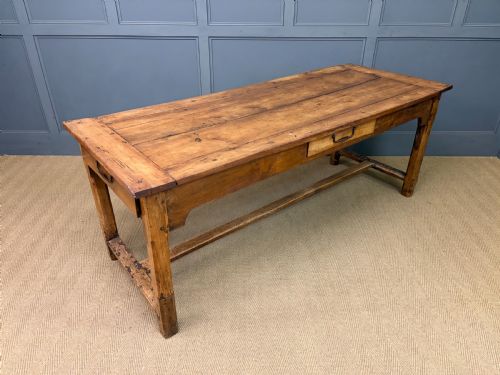
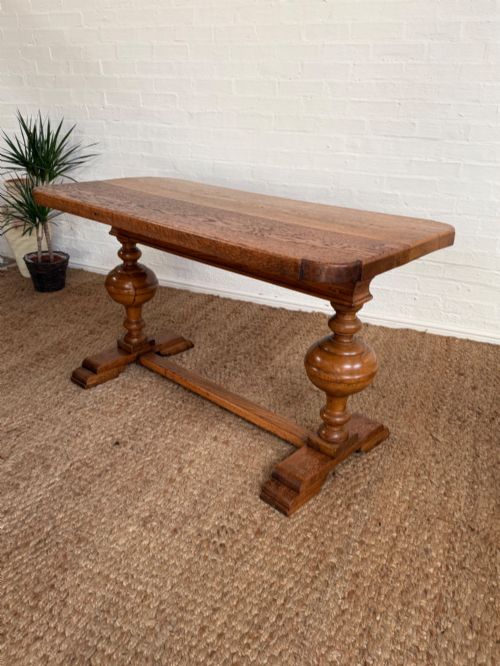
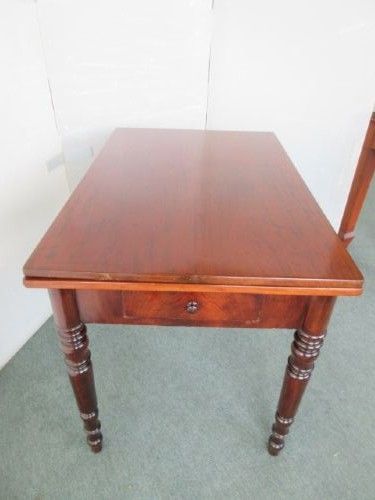
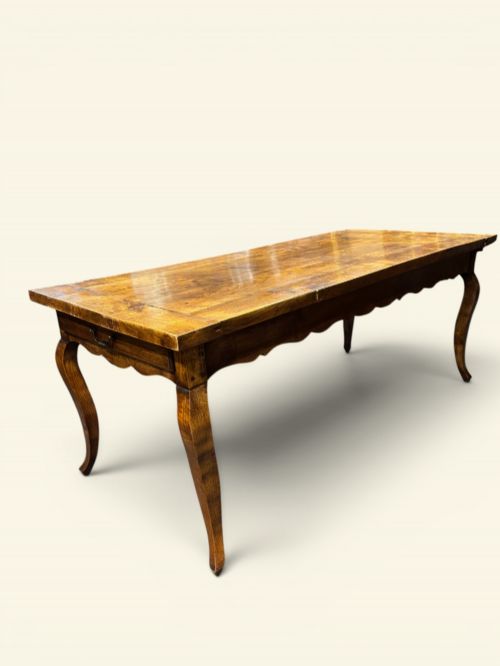
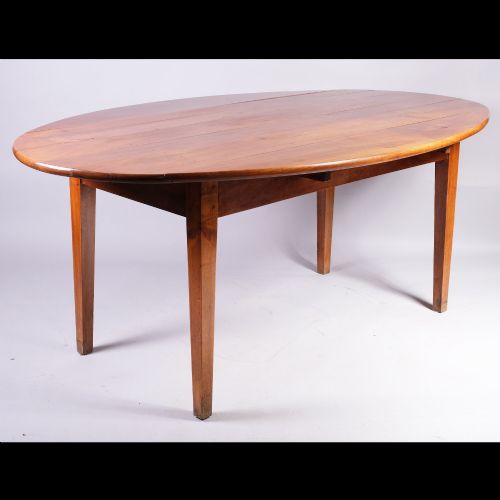
Warm Brown Kitchen Table
A warm brown kitchen table brings an honest, working heart to a home through time-worn timber and everyday utility.
What They Are
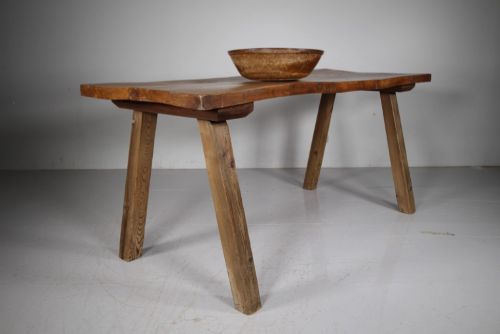
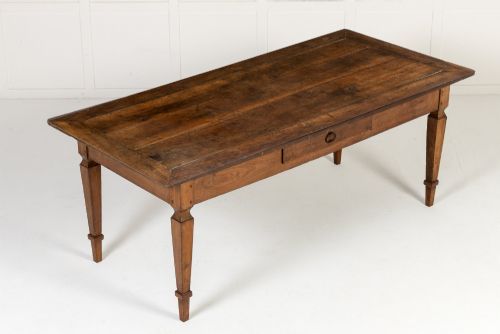
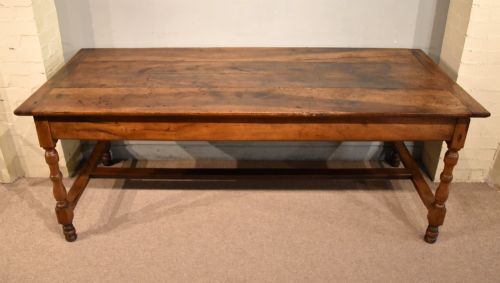
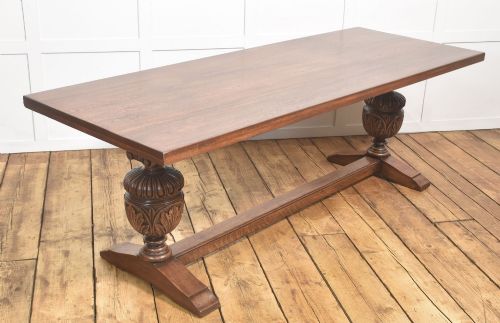
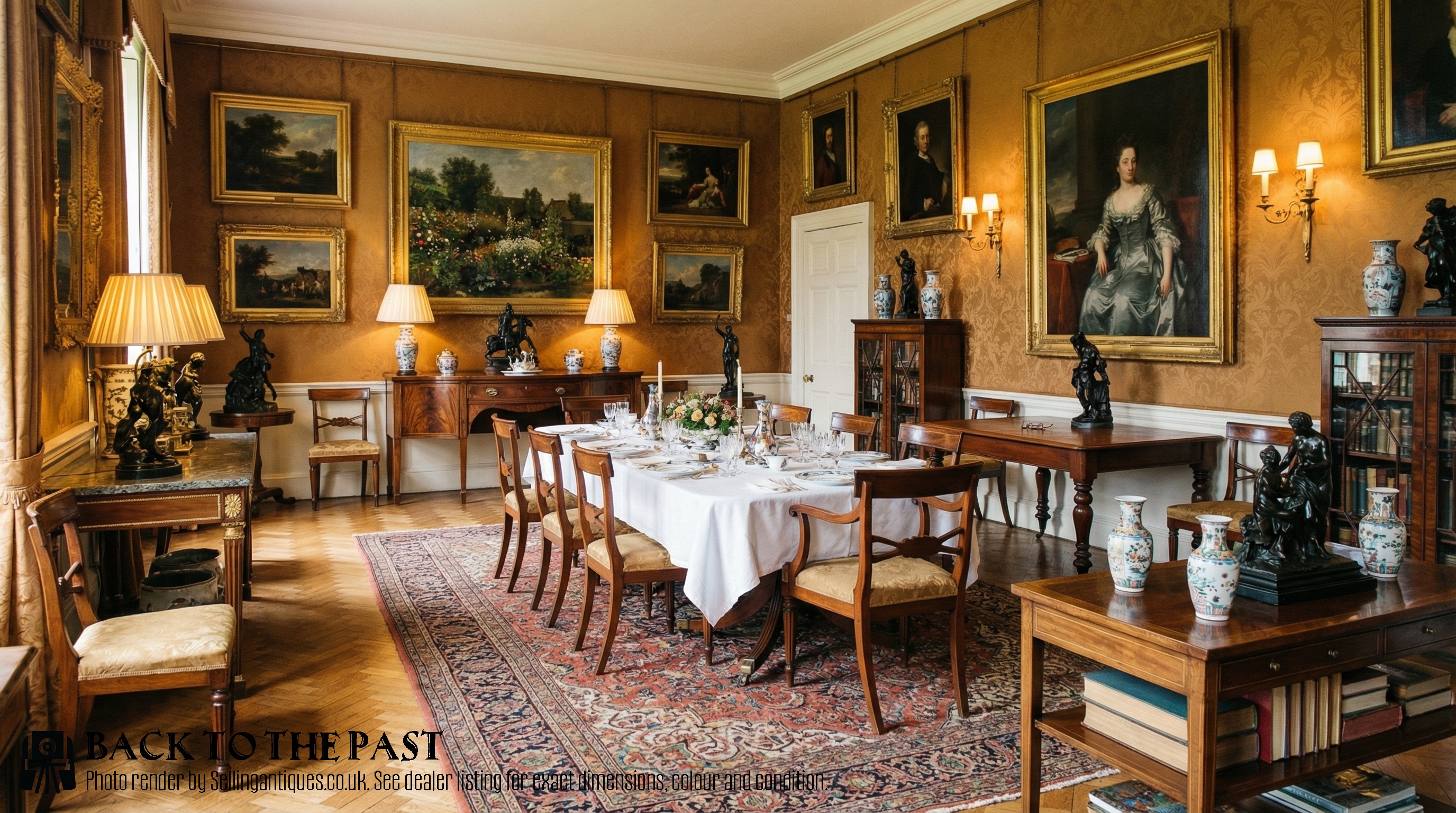
A warm brown kitchen table offers a solid centre for daily life, drawing on forms made for preparation, dining and work. When you search for a warm brown kitchen table, you encounter practical surfaces designed to withstand the demands of a busy domestic interior. The selection gathered here spans the nineteenth century, including examples from around eighteen-eighty and eighteen-fifty.
The objects take the form of kitchen tables, dining tables, farmhouse tables, refectory tables and large preparation tables. French provincial and French country styles sit alongside Victorian and Victorian country pieces, reflecting both continental farmhouse traditions and British domestic utility. These tables provide the functional scale needed for daily meals and food preparation without unnecessary ornamentation.
How They Were Made
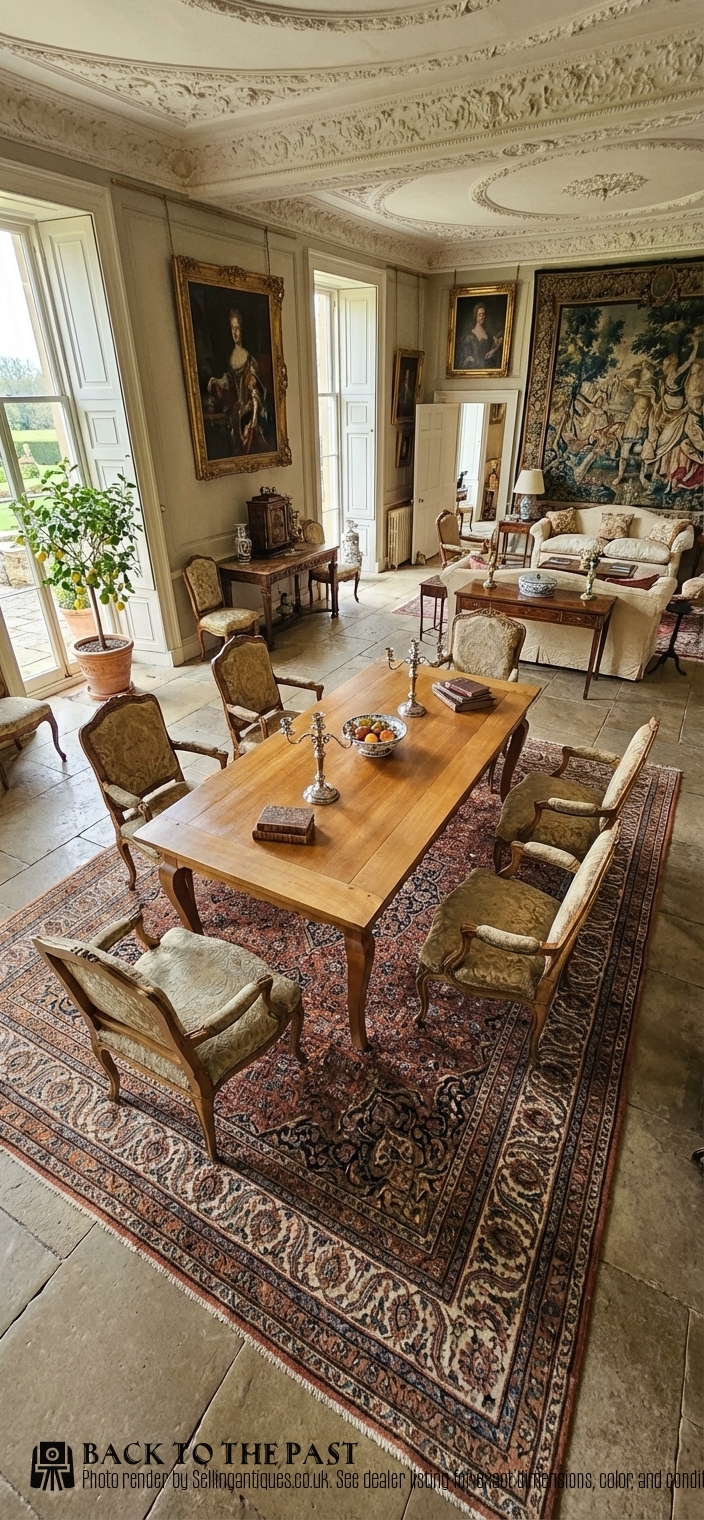
Construction relies upon honest, robust timbers selected for their durability and grain. The listings record materials such as pine, cherrywood, cherry, fruitwood, timber and iron, accompanied by brass details. Cabinet makers and joiners utilised these traditional woods to build sturdy frames capable of supporting heavy daily use.
Joinery techniques focus on absolute structural integrity, employing solid timber tops joined to substantial legs and aprons. The integration of iron or brass hardware serves functional purposes, from support braces to operational fittings on preparation surfaces. Every component reflects the practical requirements of nineteenth-century domestic and provincial work.
Retail Price Guide 2026
Typical UK retail prices for warm brown kitchen table, calculated from the Sellingantiques database of over a million retail prices indexed since 2003. This retail price guide relies exclusively on Sellingantiques data; no external sources or auction records are used, so the figures do not describe the wider market.
Materials documented across the current selection include pine, brass, cherrywood, cherry, fruitwood, iron and timber.
What Varies Across the Range
Quality reveals itself in the selection and conditioning of the timber rather than in decorative flourishes. A finer table displays a deeply patinated top born from generations of utility, whilst simpler examples show more straightforward utilitarian construction. The choice of wood plays a role, with dense fruitwoods and cherry offering a richer surface texture than standard pine.
Proportion and structural honesty separate the exceptional pieces from the ordinary ones. The balance between the top and the supporting base dictates the visual weight of the table in a modern room. Grain movement, surface warmth and the integrity of the original joints define where a piece sits within the spectrum of surviving examples.
The Warm Brown Kitchen Table Glossary
- Cherrywood
- A dense, close-grained timber yielding a warm reddish-brown tone. It is commonly found in French provincial and farmhouse furniture.
- Refectory table
- A long, narrow dining table originally designed for communal dining halls. Nineteenth-century interpretations bring this substantial scale into domestic kitchens.
- Fruitwood
- A term encompassing timbers from fruit-bearing trees such as pear or apple. These woods offer characterful grain patterns and a rich, honeyed appearance.
- Preparation table
- A heavy-duty work table designed specifically for culinary tasks. These surfaces often feature thick timber tops designed to endure constant chopping and kneading.
Frequently Asked Questions
How do I care for an antique wooden table?
Maintain the timber by cleaning with a damp cloth and applying natural beeswax periodically. Avoid excessive moisture and direct heat sources to protect the aged surface.
Allow the natural patina to develop over time without aggressive stripping or modern varnishes. Regular use simply adds to the historical character of the wood.
Are these tables suitable for daily dining?
These nineteenth-century pieces were built for active domestic kitchens and heavy daily use. Their sturdy construction makes them ideal for modern family dining and food preparation.
Check the height and leg clearance to ensure compatibility with your seating. Most farmhouse and kitchen tables offer generous proportions for everyday living.
What is the difference between a farmhouse and refectory table?
Farmhouse tables typically feature simpler stretcher arrangements and domestic proportions suited to rural kitchens. Refectory tables tend to be longer and narrower, designed for communal dining spaces.
Both styles utilise sturdy timber construction designed to anchor a room. The distinction lies primarily in their historical origins and overall length.
How can I tell a Victorian table from a French provincial one?
Victorian tables often reflect British domestic utility with straightforward timber frames and practical proportions. French provincial and country pieces frequently employ cherrywood or fruitwood with distinct regional turnings.
Examining the construction methods and wood species helps identify the likely origin. Both traditions prioritize utility over superfluous decoration.