


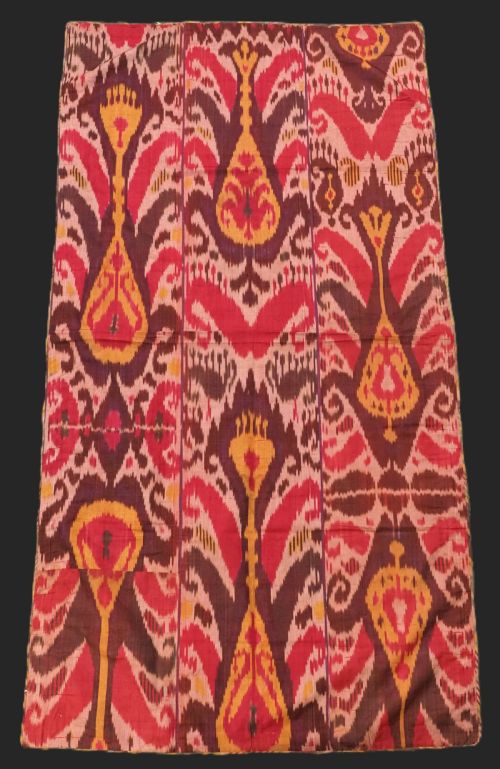
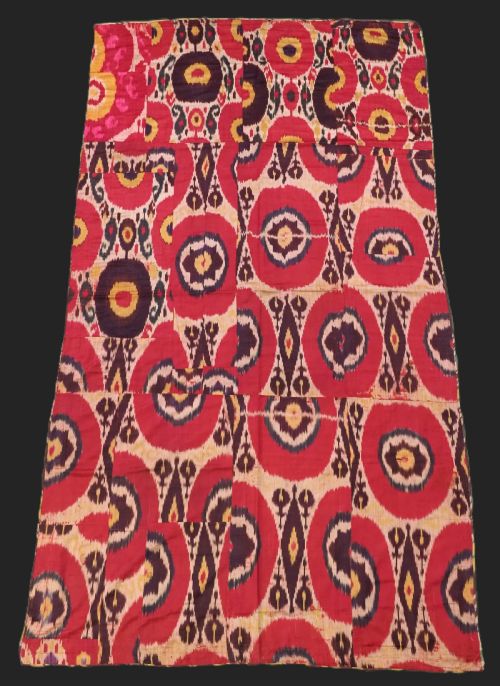
Vintage Tribal Rug Panel
When choosing a vintage tribal rug panel, you select a fragment of nomadic or village heritage framed by history to bring tactile warmth and distinct geometry into a modern interior.
Vintage Tribal Rug Panel
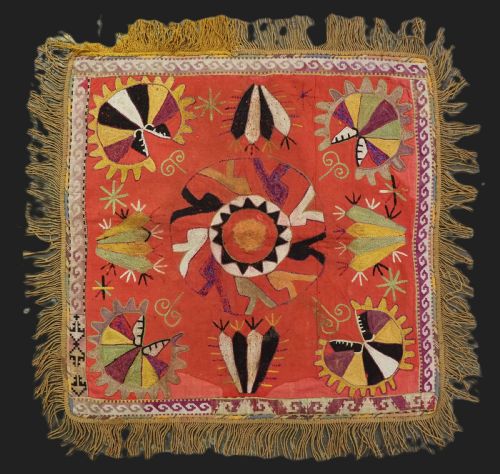
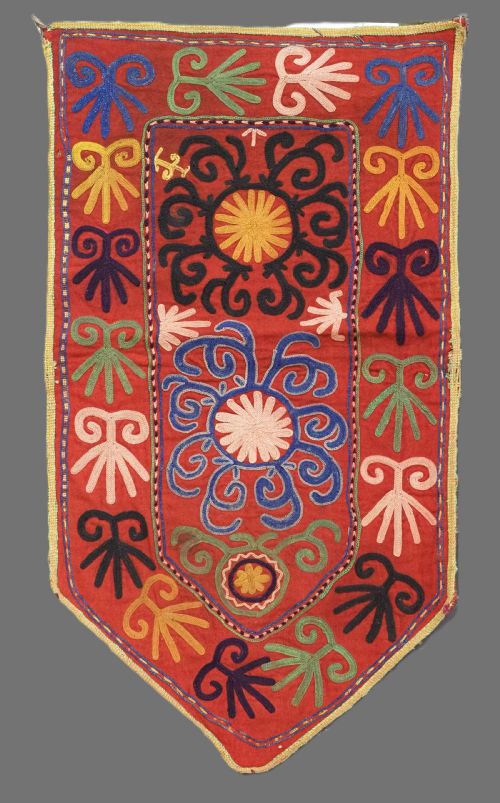
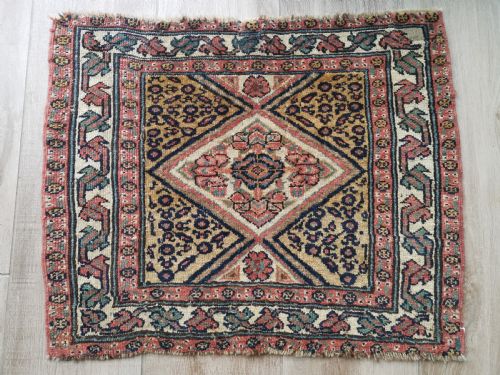
A vintage tribal rug panel represents repurposed nomadic weavings, dowry embroideries, and ceremonial trappings originating primarily from Central Asian and Persian regions. When exploring this category, collectors frequently encounter fragments of larger storage bags, saddle covers, tent bands, and wall hangings produced during the nineteenth and early twentieth centuries.
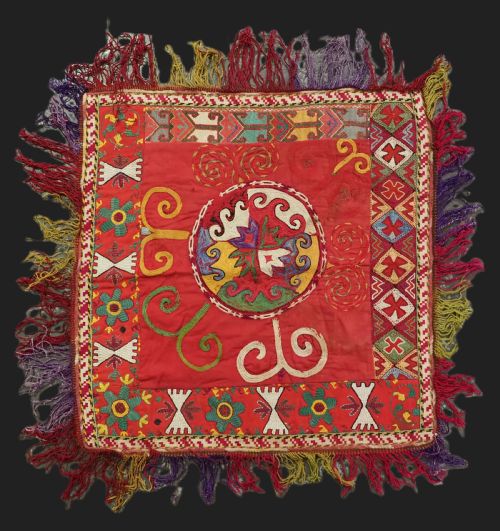
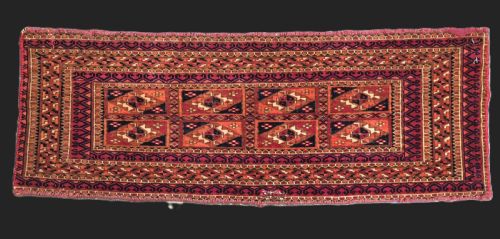
These textiles derive from distinct regional groups such as the Uzbek Lakai, Yomut and Tekke Turkmen, Shahsavan, and Qashqa'i tribes. Each piece reflects the specific utilitarian or ceremonial function of its origin, ranging from horse covers and tent-pole bags to domestic embroidery panels intended for daily living or marital dowries.
Materials and construction
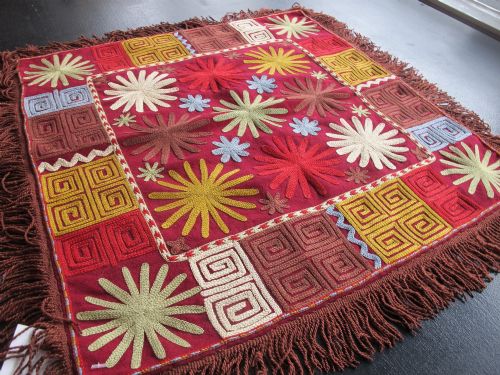
The construction relies heavily on hand-spun wool, cotton, and silk foundations worked with natural dyes derived from plants and minerals. Artisans utilised techniques such as pile weaving, flatweaving, sumac, and intricate silk embroidery laid over wool, cotton, or velvet grounds.
Many items were assembled in distinct sections or strips, particularly in kilim panels and storage bag faces designed for functional durability. The integration of leather and wooden elements further supports the utilitarian beginnings of these textile fragments.
Listings feature textiles spanning the nineteenth century through the 1930s, incorporating wool, silk, cotton, and felt.
Assessing the pieces
Quality rests upon the fineness of the execution, the density of the weave or embroidery, and the integrity of the natural colour palette. Finer examples display meticulous control over needlework or knotting, yielding sharp geometric precision or fluid floral motifs.
Preservation of the original material and the vibrancy of the dyes distinguish superior specimens from heavily degraded or uniformly faded examples. The complexity of the tribal design and the clarity of regional motifs also elevate certain pieces above standard utilitarian output.
The Vintage Tribal Rug Panel Glossary
- Ilgich
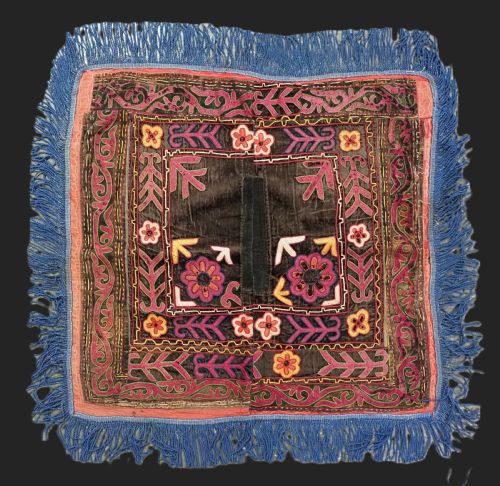
- A Central Asian nomadic embroidery type, frequently created by Lakai women as part of a dowry. These pieces often feature bold, dynamic shapes intended for wall hanging.
- Suzani
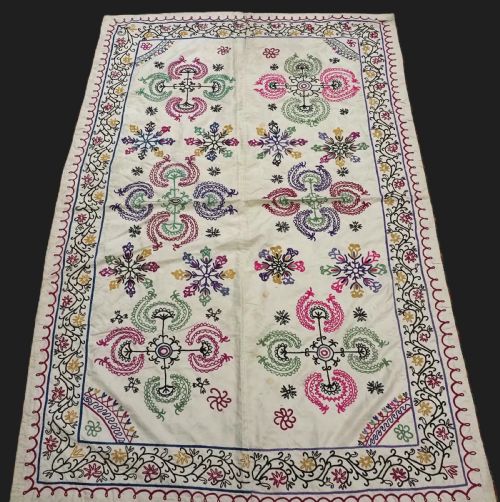
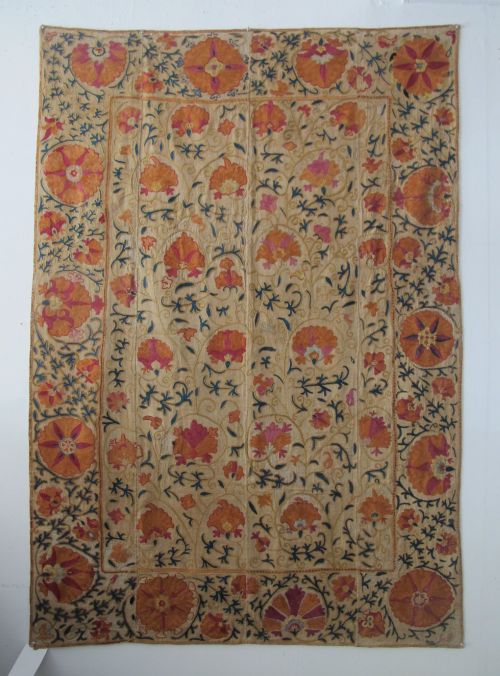
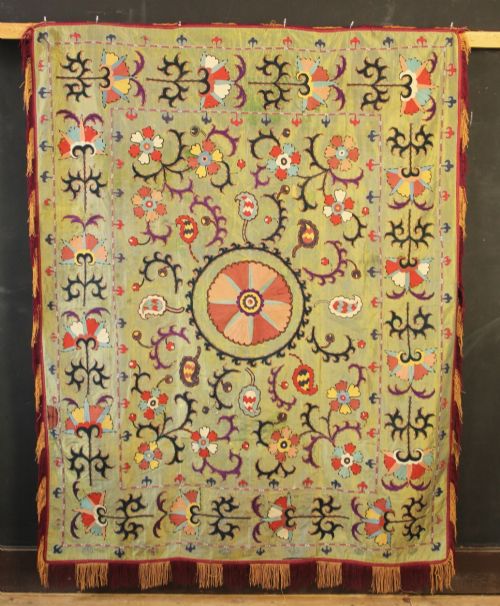
- A traditional embroidered textile from Central Asia, usually worked in silk thread on a cotton or wool ground. They were historically made by brides and their families.
- Asmalyk
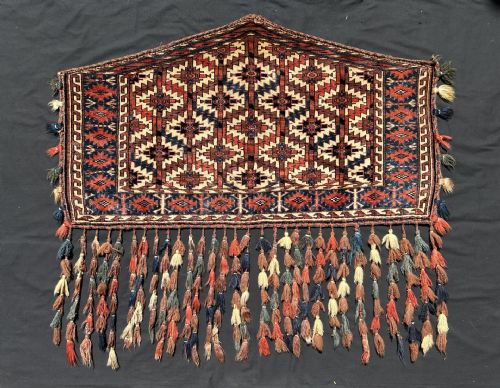
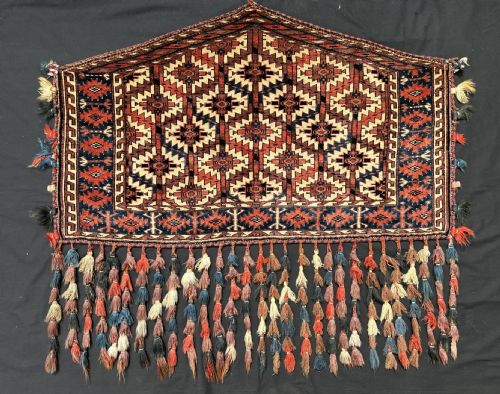
- A large, five-sided ceremonial trapping used in Turkmen weddings, hung on the flanks of a bride's camel. They showcase intricate geometric layouts specific to tribes like the Yomut.
- Sumac
- A warp-wrapping technique utilised in flatweaves that produces a durable structure with a ribbed surface resembling embroidery. This method allows for crisp diagonal lines in tribal designs.
Vintage Tribal Rug Panel: Frequently Asked Questions
What is a tribal rug panel?
A tribal rug panel is a surviving section or complete face of a nomadic textile, such as a storage bag, tent hanging, or saddle cover. These pieces isolate the most decorative portions of utilitarian items for display.
Originating largely from nineteenth and early twentieth-century Central Asian and Persian weaving traditions, they translate nomadic design into accessible formats for interior decoration.
How were these panels used originally?
Nomadic groups utilised these textiles for practical storage, animal trappings, and domestic decoration within tents and yurts. Bags held household goods, while embroidered covers served ceremonial roles during weddings.
Over time, many of these functional items were divided or preserved as panels when the original complete objects reached the end of their working lives.
How should I hang a textile panel?
Mounting a textile panel requires careful distribution of weight to avoid stressing the fragile wool, silk, or cotton foundation. Many collectors utilise conservation-grade Velcro stitching paired with a padded wooden batten.
Displaying panels away from direct sunlight prevents the natural dyes from fading over time, preserving the contrast of the original colour palette.
How can I tell different tribal designs apart?
Distinguishing between regional styles involves examining the specific palette, structural technique, and repeating motifs unique to groups like the Yomut, Lakai, or Shahsavan. Turkmen weaving often relies on deep madder reds and octagonal gull motifs.
Central Asian embroidery pieces, by contrast, frequently display exuberant silk needlework with curved, amulet-inspired shapes characteristic of Uzbek and Kyrgyz makers.