




Traditional Gul Motif Rug
These traditional gul motif rug pieces are woven tribal textiles carrying centuries of heritage, offering deep symbolic patterns that ground any interior with genuine history.
Traditional Gul Motif Rug
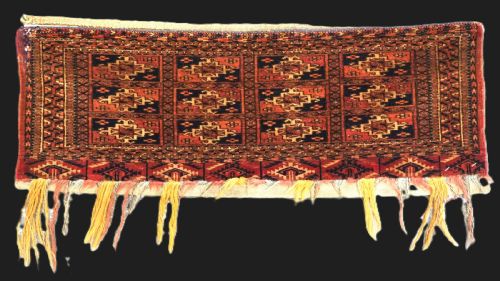
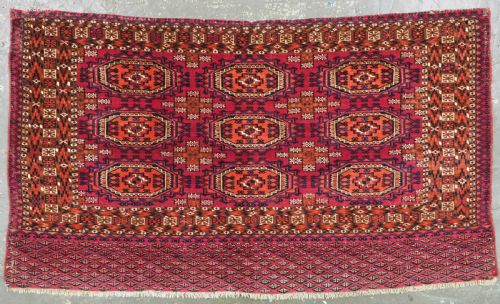
A traditional gul motif rug brings together centuries of tribal weaving traditions, mostly originating from Turkmen, Kurdish, Afghan, and Baluch makers across Central Asia and Persia. These pieces take various forms from full-scale carpets and runners to smaller torba and mafrash bag faces created for nomadic daily life.
The characteristic gul - the octagonal medallion motif repeated across the field - serves as the primary visual anchor for these tribal works. Buyers encounter pieces spanning from the mid-nineteenth century through the early twentieth century, each displaying the distinctive tribal geometry of its origin.
How they were made
Weavers constructed these textiles entirely from hand-spun wool, providing a durable foundation and thick pile designed to withstand nomadic existence. Artisans employed natural dyes to achieve rich colour palettes, ranging from deep madder reds to old golds and dark earth tones.
The structural integrity relies on careful knotting techniques executed on upright looms, yielding varying densities from standard village weaves to very fine work. This combination of natural materials and traditional hand-weaving ensures structural resilience across generations.
Nomadic weavers occasionally tucked small personal amulets directly into the wool knotting to ward off the evil eye.
What varies in quality
The distinction between standard examples and the finest pieces rests upon the density of the weave and the precision of the gul execution. Finer knots permit crisper botanical and geometric detailing, particularly in curled leaf designs and secondary ornaments.
Material preparation also dictates overall quality, specifically the lustre of the hand-spun wool and the depth achieved by natural dyes. Pieces retaining complete original formats, such as torba faces with backs intact, hold greater integrity for collectors.
The Traditional Gul Motif Rug Glossary
- Gul
- A repeated octagonal medallion motif central to Turkmen and related tribal weaving. It often denotes specific tribal lineages and family clans.
- Torba
- A small utilitarian bag or sack produced by Turkmen nomads for storage inside tents. Surviving examples frequently appear as mounted collector panels or face fragments.
- Mafrash
- A rectangular storage bag or bedding chest face created by nomadic tribes. These pieces typically display compressed gul patterns adapted for narrower formats.
- Chuval
- A large tent bag utilised by Central Asian tribes for household storage. They usually feature multiple rows of major guls across the field.
- Madder
- A natural red dye derived from the root of the Rubia tinctorum plant. It forms the primary reddish baseline for many antique tribal textiles.
Traditional Gul Motif Rug: Frequently Asked Questions
What is a gul motif?
A gul is a repeated octagonal medallion pattern originating in Central Asian tribal weaving. These symbols often identified specific clans or nomadic groups.
Over generations, weavers adapted these geometric forms into sophisticated field designs that remain the defining characteristic of these rugs.
How do I care for an antique rug?
Protect these textiles by avoiding direct, prolonged sunlight and vacuuming gently without a rotating brush roll. Regular rotation ensures even wear across high-traffic areas.
Professional cleaning tailored for antique wool and natural dyes maintains the integrity of the pile and prevents fibre breakdown.
Where were these rugs made?
Weavers produced these textiles across Central Asia, Afghanistan, and parts of Persia. Turkmen, Kurdish, and Baluch tribal groups fashioned them for domestic utility and nomadic life.
Regional variations in wool preparation and dye usage help distinguish between Afghan village pieces and finer Turkmen works.
What does pile thickness indicate?
Thick pile often suggests village production intended for heavy domestic use or later nineteenth and early twentieth-century manufacture. Thinner, extremely fine weaves typically point towards specialised nomadic or workshop environments.
Both heavy utility carpets and finely knotted bag faces represent authentic expressions of traditional tribal craftsmanship.