

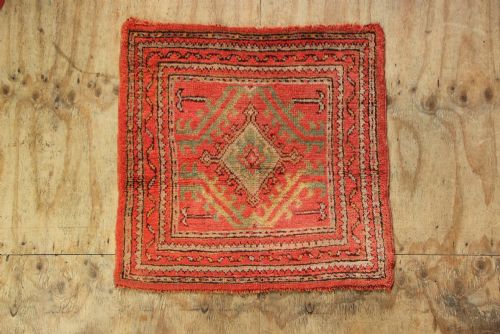
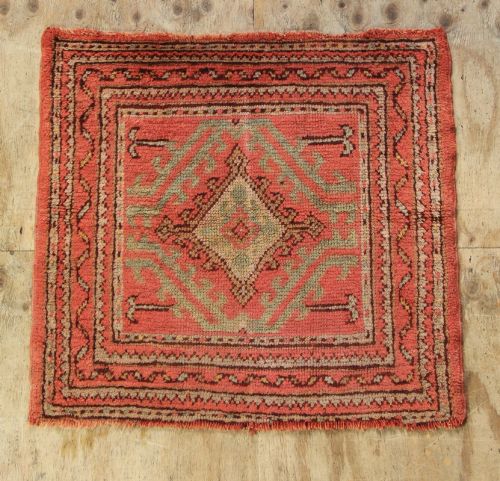
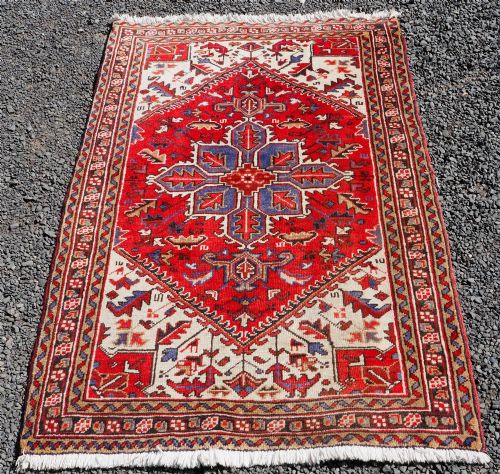
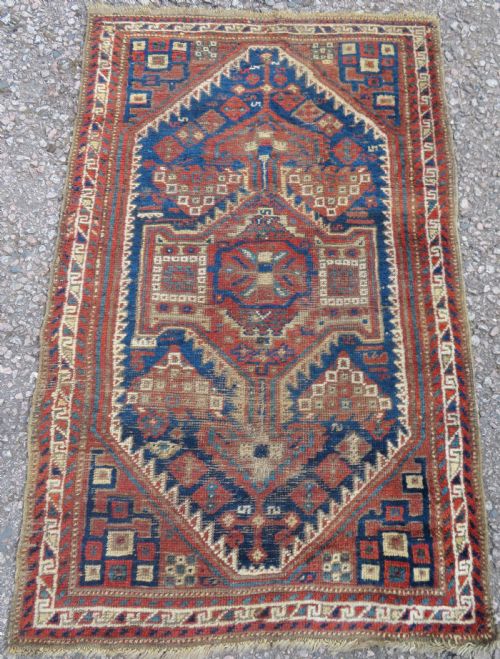
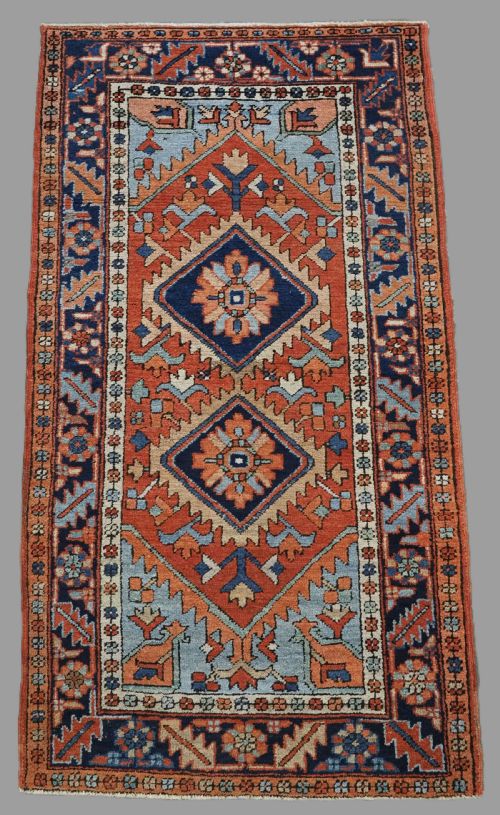

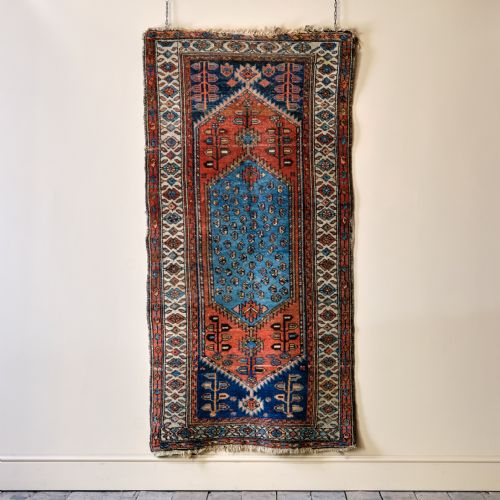
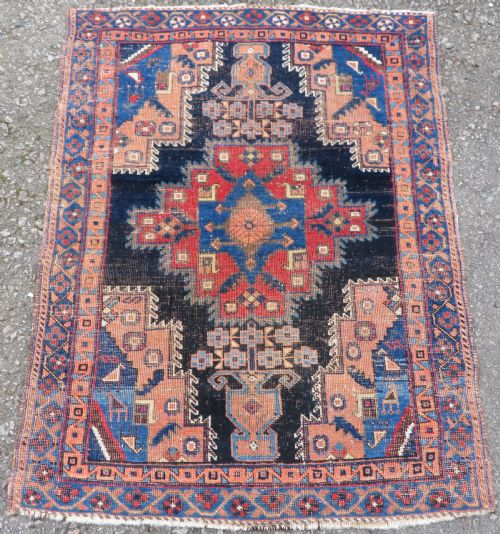
Vintage Tribal Hearth Rug
A vintage tribal hearth rug brings heavy texture and grounded character to a fireside.
Vintage Tribal Hearth Rug
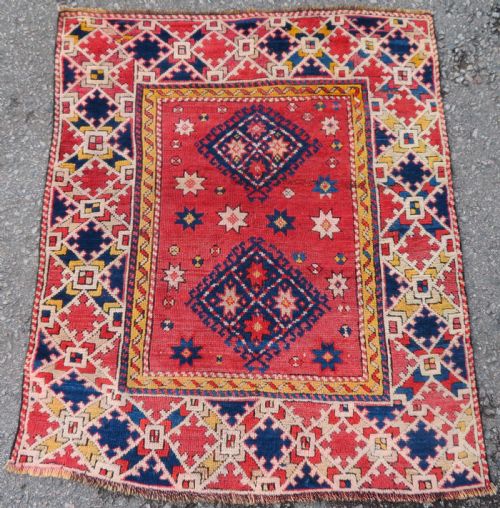
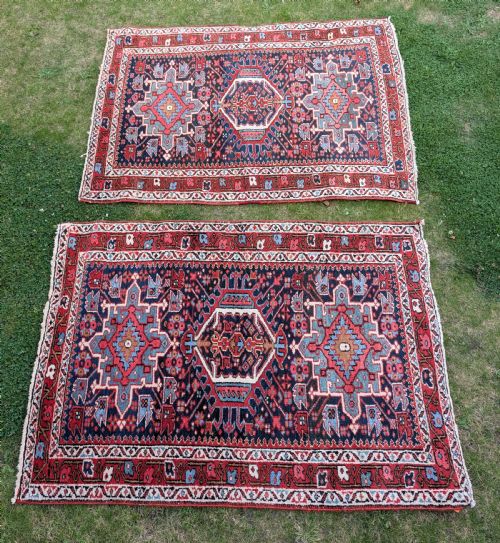
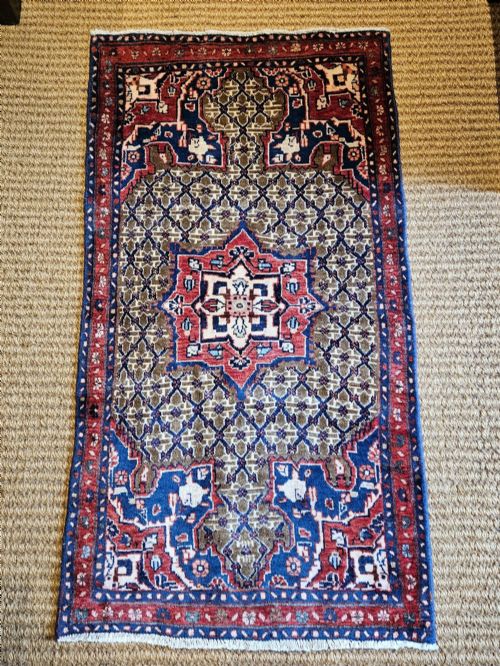
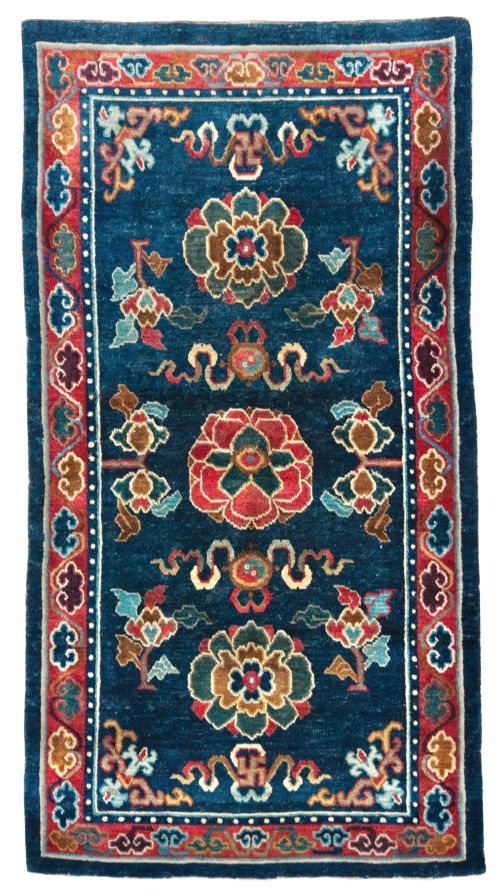
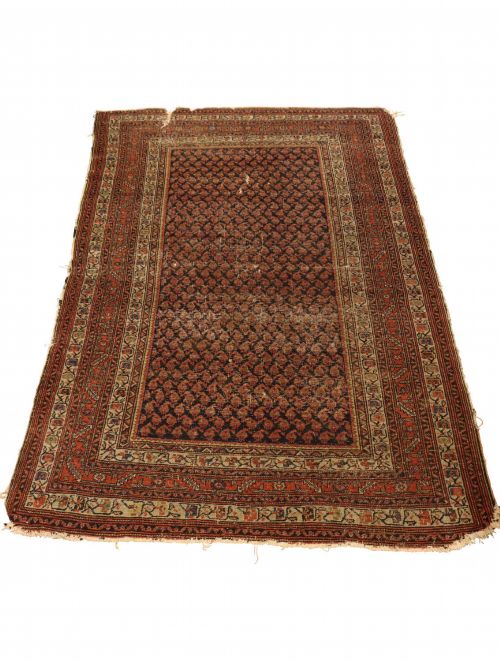
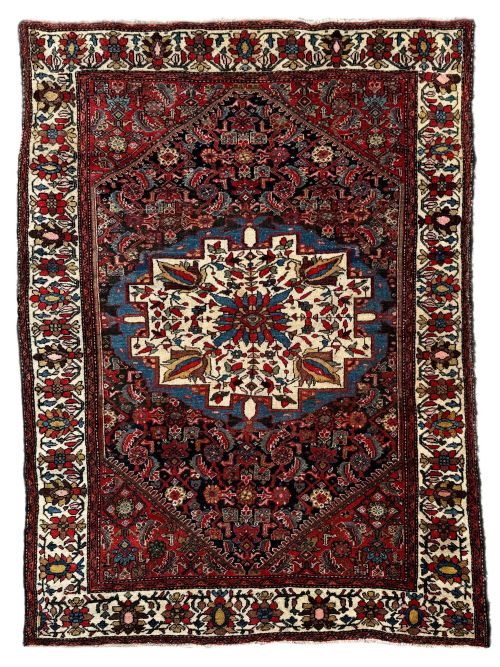
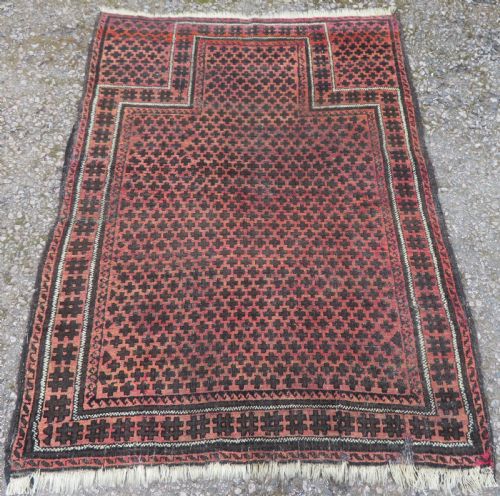
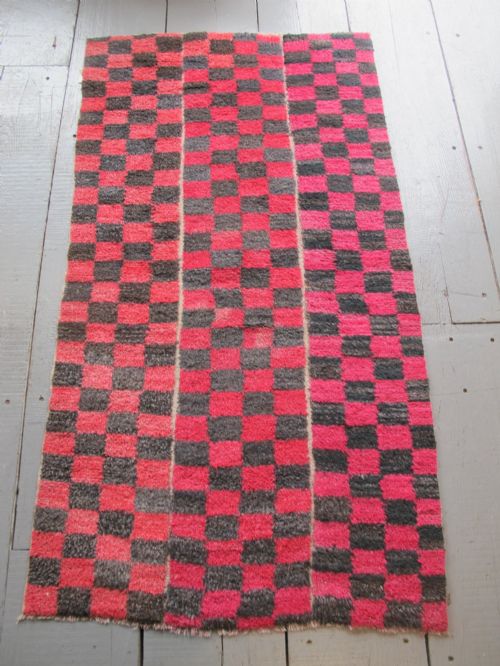
When searching for a vintage tribal hearth rug, buyers encounter compact woven floor coverings originating from village and nomadic traditions across Persia, Anatolia, the Caucasus, and Tibet. These pieces display robust geometric medallions, boteh motifs, and prayer designs tailored for placement beside a fireplace.
The selections on this page span the late nineteenth century through the Edwardian period and the early decades of the twentieth century. Forms range from small mats and square formats to longer runner-like proportions suited to narrow hearth spaces.
Geographic attribution covers specific regional styles such as Bergama, Karaja, Oushak, and Heriz. Each region imparts distinct design vocabulary, knotting density, and wool characteristics to its hearth-sized output.
What varies in quality
The grade of a hearth rug depends heavily on the quality of its wool and the tightness of its knotting. Softer, finer wool fleece yields a more pliable handle and greater longevity under daily use.
Design clarity and the depth of natural colour separation distinguish finer village output from standard commercial production. Well-preserved pile height and intact original borders maintain the structural integrity and visual balance of the piece.
Vintage Tribal Hearth Rug Retail Price Guide 2026
Typical asking prices for vintage tribal hearth rug among the pieces listed under this phrase on Sellingantiques today, from the lower quarter to the upper quarter. They describe what is for sale here now, not the wider market.
Listings feature regional pieces dated from the nineteenth century up to the 1930s, constructed with hand-spun wool on cotton or wool warps.
The Vintage Tribal Hearth Rug Glossary
- Warp
- The vertical threads stretched on a loom before weaving begins. These form the skeletal base of the rug and often show fringe at either end.
- Pile
- The upright tufts of wool that form the soft surface of the rug. Thicker pile provides more cushioning and warmth.
- Medallion
- A central ornamental motif placed in the middle of the field. Many regional rugs feature geometric or star-shaped variations.
- Boteh
- A pear-shaped or almond-shaped motif with a curved upper end. This ancient Persian symbol represents a cypress tree or a floral spray.
- Ensi
- A traditional carpet type woven by Turkmen tribes. These were traditionally used as tent door hangings rather than floor coverings.
Vintage Tribal Hearth Rug: Frequently Asked Questions
Where should I place a hearth rug?
These compact rugs suit smaller floor spaces, narrow gaps, and particularly the hearth area in front of an open fireplace. Their dense wool pile absorbs soot and provides a warm landing surface.
Position them where furniture weight is light, allowing the geometric patterns and rich natural colours to remain visible without heavy obstruction.
How do I clean an old wool rug?
Gentle surface brushing and careful vacuuming without a rotating beater bar remove loose dirt from the wool pile. Professional specialist cleaning is recommended for deep washing.
Avoid soaking the cotton foundation or using harsh chemical detergents that can strip the natural lanolin from the vintage wool fibres.
Are these rugs suitable for daily walking?
Hand-knotted tribal rugs from village workshops were built for utilitarian durability. The thick wool pile handles regular foot traffic well.
Placing a suitable underlay beneath the rug prevents sliding on hard floors and reduces internal fibre friction during daily use.
How can I tell a village rug from a city piece?
Village and tribal rugs display asymmetrical, charmingly irregular geometric motifs woven from memory rather than precise cartoon drawings. The designs feel spontaneous and rustic.
City carpets often feature exact symmetry, finer knot counts, and intricate curvilinear floral vines that require institutional workshop planning.