
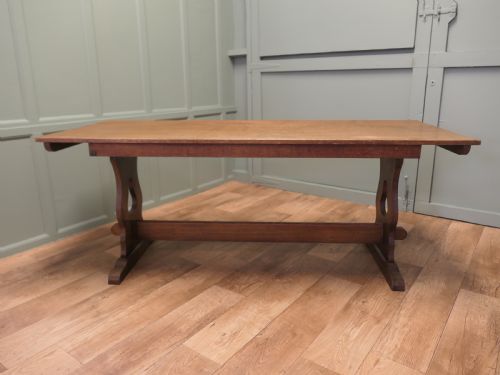
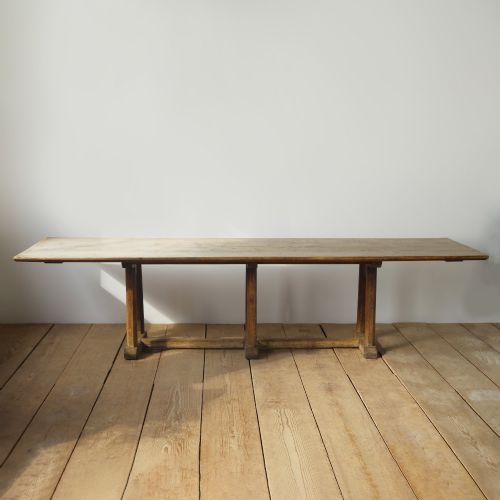
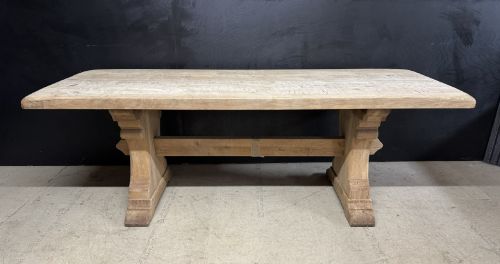
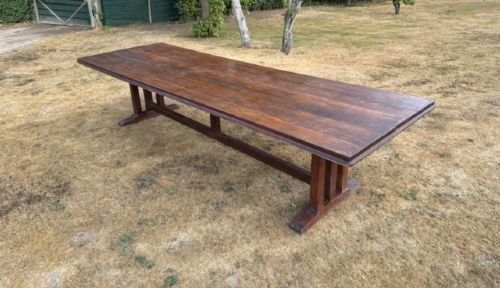
Vintage Trestle Dining Table
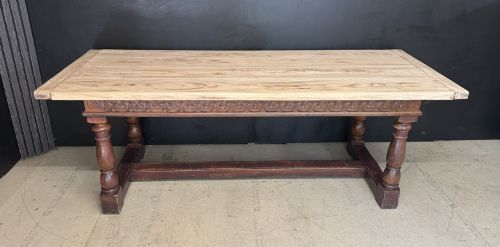
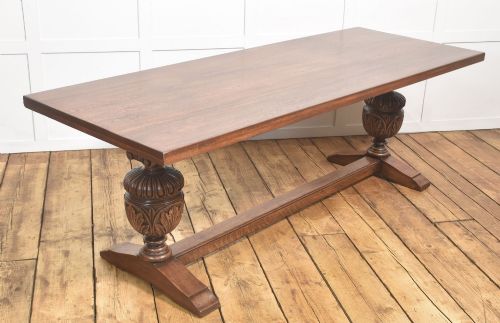
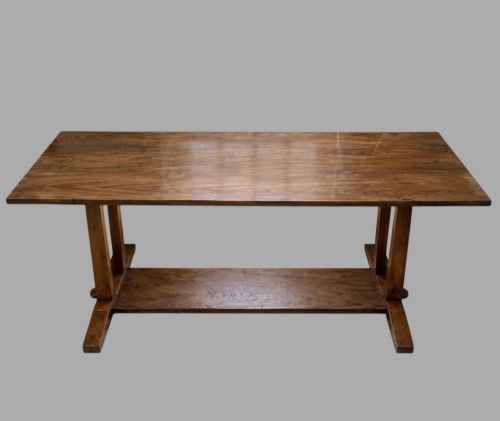
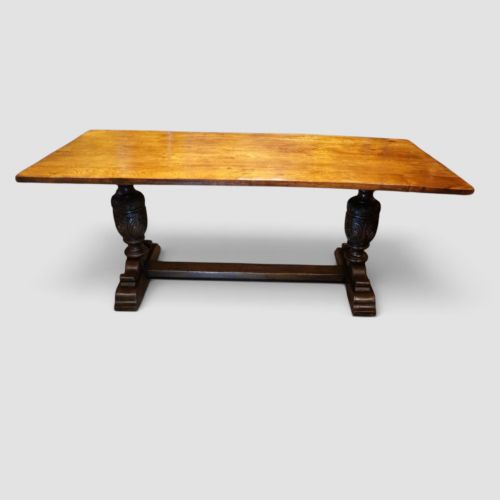
A vintage trestle dining table offers robust seating capacity and generous proportions, drawing together family and guests around solid timber construction.
Vintage Trestle Dining Table
When you search for a vintage trestle dining table, you encounter substantial dining surfaces supported by vertical end supports rather than standard corner legs. These pieces emerge primarily from the nineteenth and early twentieth centuries, spanning periods from the Edwardian era through the nineteen-forties.
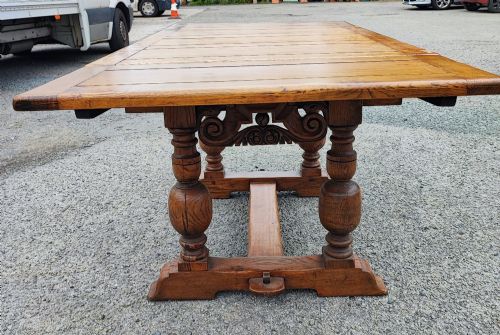
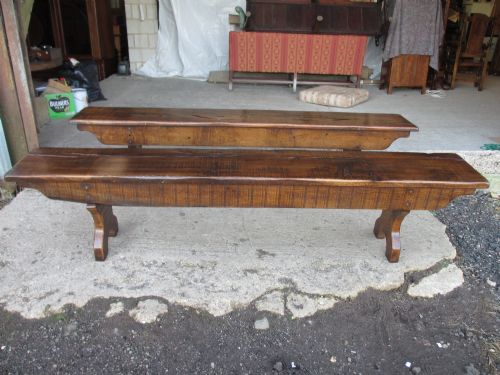
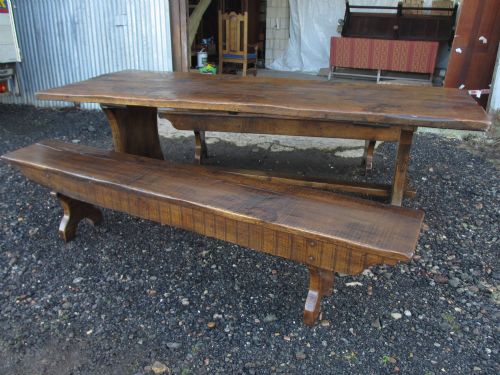
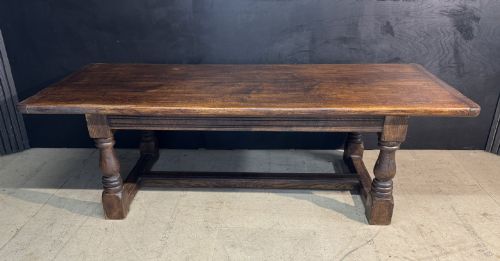
The most common examples you meet on this page utilise heavy oak construction in refectory, farmhouse, or Arts and Crafts styles. They frequently appear alongside matching benches or feature draw leaf mechanisms designed to extend the surface area for larger gatherings.
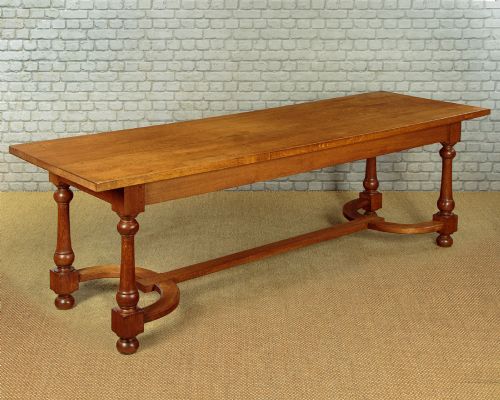
Origins stretch across English country workshops, French provincial kitchens, and Scandinavian interpretations, yielding forms that range from rustic tavern tables to formal library tables. Each iteration provides an unencumbered floor clearance beneath the top due to the specific placement of the trestle supports.
Construction materials and methods
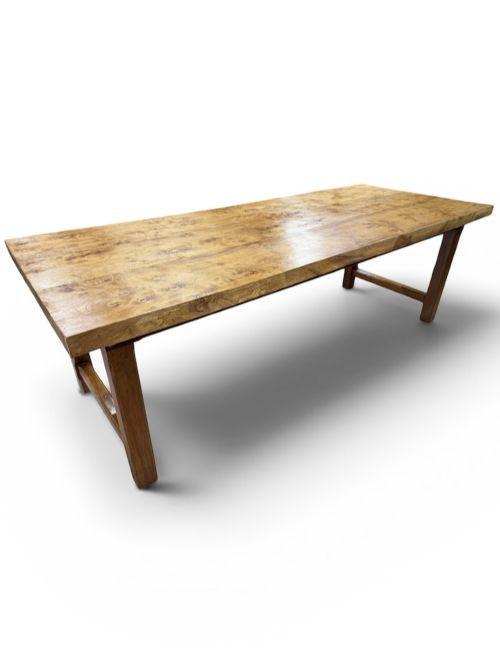
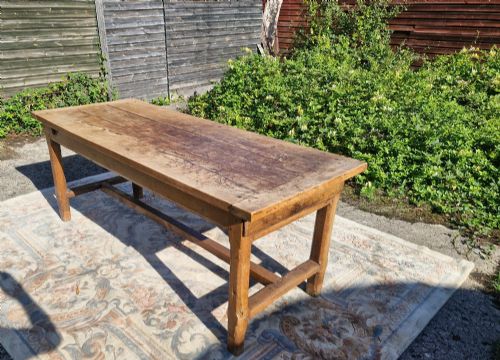
Makers relied heavily on solid hardwoods like oak, elm, cherrywood, and pine, selecting timber boards thick enough to withstand decades of daily family use. Tops often consist of two or three wide boards joined together, occasionally displaying visible grain patterns and natural weathering.
Joinery techniques prioritize structural rigidity through pegged mortise and tenon joints connecting the top to the trestle ends and central stretchers. Iron bracing or cast elements sometimes reinforce the wooden framework, particularly on heavy tavern and industrial library tables.
Some nineteenth-century boards retain stubborn ink stains from decades spent serving hungry pupils in public school libraries.
Assessing build quality and execution
The distinction between standard examples and superior pieces rests upon the selection of timber and the precision of the joinery. Tables featuring single-piece boards or quartersawn oak display greater stability and richer figure in the wood.
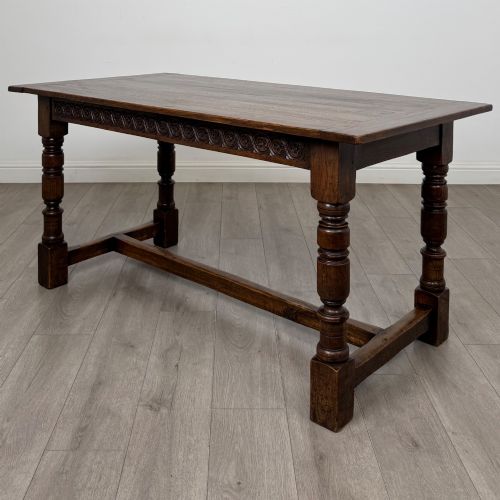
Proportion and carving define the upper tier of the market, where shaped trestle ends and understated period details complement the functional mass of the table. Lesser examples rely on utilitarian construction without the refined edge profiles or balanced weight distribution found in finer workshop production.
The Vintage Trestle Dining Table Glossary
- Trestle table
- A dining surface supported by two vertical frame structures connected by a horizontal stretcher running lengthwise beneath the top.
- Refectory table
- A long, narrow dining table historically utilised for communal dining in monasteries and schools, adapted later for domestic kitchens.
- Draw leaf table
- A table equipped with sliding extension leaves stored beneath the main surface that pull out to lengthen the table instantly.
- Quartersawn oak
- Timber cut radially from the log, producing a distinct medullary ray fleck pattern that increases dimensional stability.
- Mortise and tenon
- A traditional joint where a protruding tongue fits snugly into a corresponding cavity to lock wooden components together securely.
Vintage Trestle Dining Table: Frequently Asked Questions
How do I seat people comfortably around trestle legs?
Trestle ends sit inboard from the table corners, creating unobstructed legroom along the entire length of the sides. Guests can slide onto benches or chairs without traditional table legs blocking their feet.
Positioning the central stretcher requires attention if diners prefer to tuck their feet backward, though most standard dining chairs clear the horizontal beam easily.
Are these tables suitable for everyday family dining?
Solid timber construction and hardwearing finishes make these pieces exceptionally resilient for daily use. Spills and knocks blend into the patina of weathered oak and pine over time.
Routine maintenance involves simple wiping with a damp cloth and occasional waxing to nourish the dry wood grain against moisture damage.
How do I determine the period of a wooden table?
Dating relies on observing tool marks, timber selection, and construction hardware underneath the top. Edwardian and early twentieth-century pieces often display machine-sawn consistency alongside traditional hand-planed surfaces.
Earlier nineteenth-century examples reveal irregular board widths and hand-forged iron fixings that indicate workshop production prior to industrial standardisation.
Can I pair these tables with modern seating?
Combining antique timber surfaces with contemporary chairs creates a balanced interior scheme that highlights the natural grain of the wood. The neutral tones of bleached oak and pine adapt readily to varied dining chair designs.
Proportion remains the main consideration, ensuring seat heights match the apron clearance underneath the table top.