


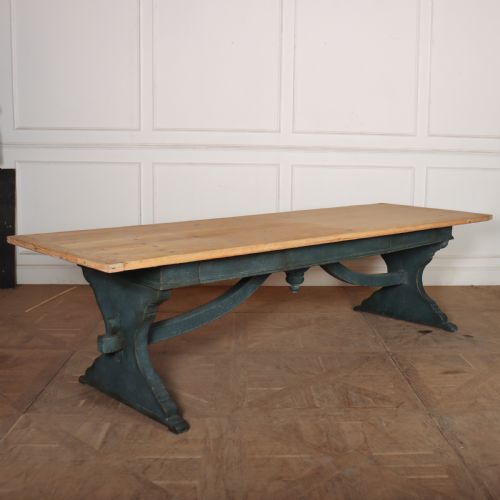


Rustic Pine Trestle Desk
A rustic pine trestle desk offers sturdy utility and honest character, bringing practical workspace and time-worn charm into any room.
Rustic Pine Trestle Desk
A rustic pine trestle desk sits within a lineage of utilitarian tables, tavern boards, and work surfaces recorded from the nineteenth and early twentieth centuries. These pieces combine simple timber tops with robust trestle or X-frame supports designed for heavy daily use.
Buyers browsing this selection will frequently encounter items drawing upon English, French, Scandinavian, and Italian vernacular traditions. While many forms originate as kitchen, tavern, or work tables, their straightforward construction adapts readily to modern writing and study tasks.
How they were made
Construction relies primarily on pine and pitch pine timbers selected for practical durability, occasionally supplemented by oak. Iron brackets, brass fittings, and structural iron elements provide additional reinforcement to the trestle bases.
Surfaces frequently show historical finishes including regional red paint, French Falu paint, or worn painted coats over bare wood. Joinery focuses on straightforward peg and joint methods suited to heavy workshop or kitchen duties.
Table forms on this page include tavern tables, work tables, and wash tables adapted to serve as practical desks.
What varies in quality
The distinction between standard utility items and finer examples rests on the retention of original painted surfaces, such as early red or Falu coatings. Unaltered structural integrity in the X-frame or trestle base also elevates a piece.
Proportions dictate the visual success of the desk, with narrow formats and balanced timber thicknesses commanding greater interest. The natural patina accumulated through decades of active service defines the ultimate character of the wood.
The Rustic Pine Trestle Desk Glossary
- Trestle
- A structural support consisting of a horizontal beam fixed to two splayed legs, providing stable weight distribution for long tabletops. This design allows generous legroom underneath the writing surface.
- Falu Paint
- A traditional Swedish matte red paint rich in copper mine waste, valued for its protective qualities on timber. It yields a distinctive earthy red tone found on Scandinavian country furniture.
- X-frame
- A support structure formed by two intersecting diagonal members resembling the letter X. This configuration offers robust load-bearing strength often utilised in heavy-duty tavern and work tables.
- Pitch Pine
- A dense, resinous softwood sourced primarily from North America and heavily utilised in nineteenth-century joinery. Its pronounced grain pattern and durability suit it well for demanding work surfaces.
Rustic Pine Trestle Desk: Frequently Asked Questions
How do I use a trestle desk?
These pieces provide a stable, spacious surface suited for daily writing, laptop use, or creative projects. Their open base design allows for flexible seating arrangements and easy placement of storage drawers underneath.
Ensure the working height aligns comfortably with your chair. The generous depth of these tables accommodates books and equipment without crowding.
Are these desks original antiques?
The selection spans authentic nineteenth-century and early twentieth-century pieces originating from English, French, and Scandinavian workshops. Each item bears the marks and patination of genuine historical use.
Examine the timber grain and surface wear to understand its age. Construction methods typically reflect period vernacular carpentry rather than modern mass production.
How should I care for old pine?
Protect the timber surface by using coasters and avoiding excess moisture or direct heat sources. Gentle dusting with a dry cloth preserves the dry-scraped or painted finishes.
Occasional application of natural wax helps nourish unpainted pine boards. Avoid harsh chemical cleaners that might strip historical patination or paint.
What defines farmhouse style?
Farmhouse furniture prioritises utilitarian function, robust construction, and straightforward materials over ornate decoration. Pieces reflect the practical needs of rural kitchens, workshops, and taverns.
This aesthetic embraces natural knots, surface dings, and worn paint as evidence of history. The resulting character suits both traditional interiors and contemporary spaces.