




Vintage Tree Landscape Painting
A vintage tree landscape painting captures the enduring appeal of woodland, riverbanks, and orchards through brushwork spanning from the late nineteenth century to the mid-twentieth century.
Vintage Tree Landscape Painting
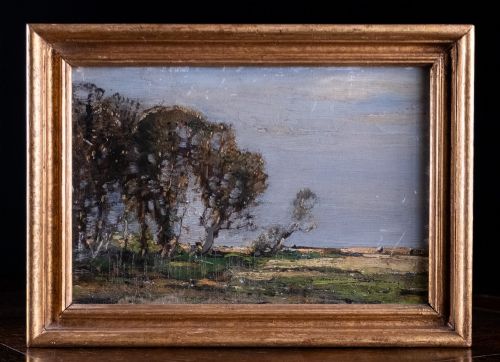
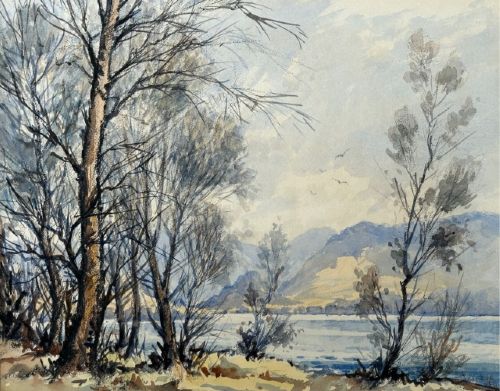
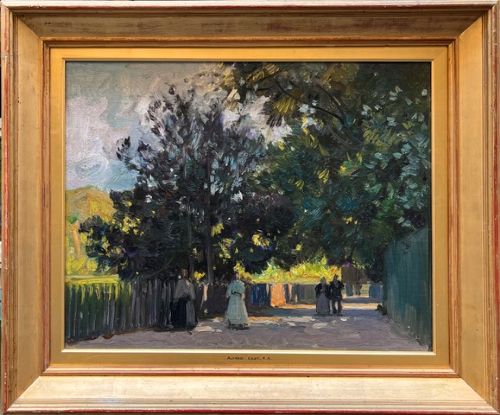
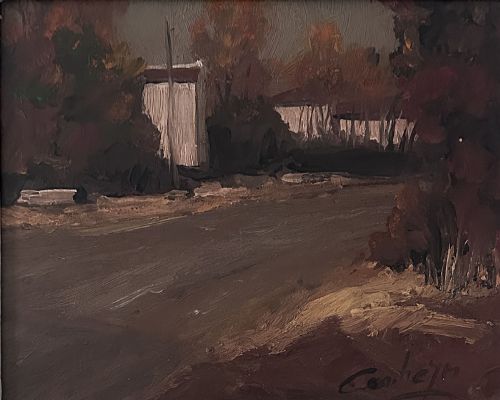
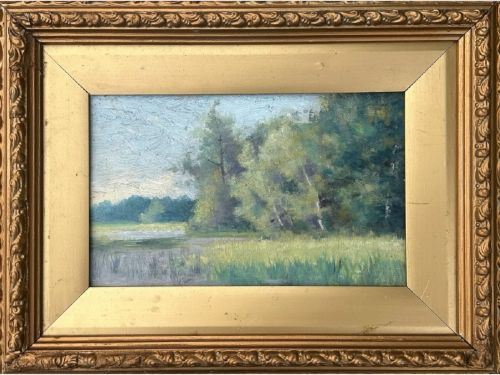
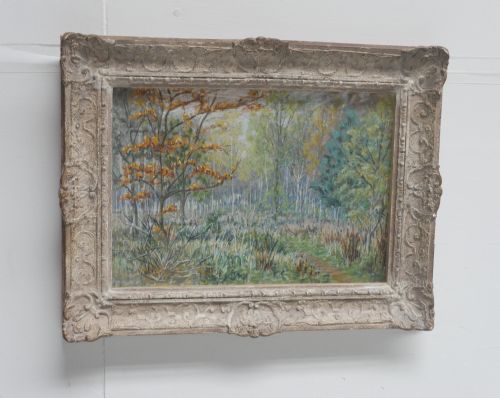
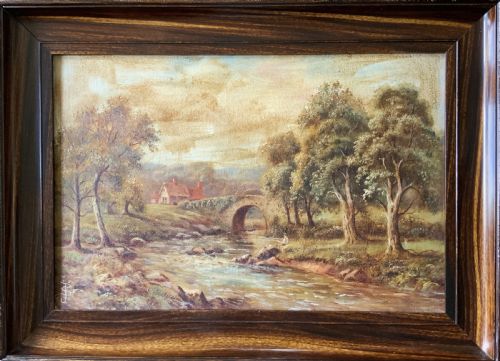
A vintage tree landscape painting focuses primarily on botanical and arboreal subjects set within rural or pastoral settings. Works representing this category frequently depict woodland scenes, riverside willows, apple orchards, and solitary trees along country lanes.
The selections available range widely in geographic origin and period. Pieces span from late Victorian watercolours and Edwardian oils to mid-century impressionist canvases and post-war studies originating from Britain, France, Canada, and the Middle East.
How They Were Made
Artists executed these works utilising oil paint, watercolour, gouache, pastel, and ink on diverse supports including canvas, paper, wood panels, and board. Oil compositions frequently employ thick application and visible brush marks, whereas watercolours rely on translucent washes layered on paper.
Framing forms an integral part of the physical object, with many works retaining period wooden frames, some finished with ebonisation, gilding, or ornate moulding. Support materials such as cardboard and stretched canvas boards also appear regularly across the decades represented.
At least one artist recorded chocolate factory connections alongside their woodland tree studies.
What Varies in Quality
Quality rests significantly in the handling of light, atmosphere, and spatial depth within the composition. Stronger examples demonstrate confident mark-making and a distinct command of tone, capturing seasonal nuances such as autumn foliage or winter light with precision.
Provenance and documentation also influence distinction. Signed works, attribution to documented artists, and exhibition or studio sale labels provide verifiable context that elevates individual pieces above anonymous decorative works.
Alfred Young Nutt·Kershaw Schofield·Robert Leslie Howey·Sir Alfred East·Maud Raphael Jones·Sydney Yates Johnson·Samuel Timmins·William JB Jenkins·George Graham·William Hoggatt·Herbert Royle·Rowland Henry Hill·Berthe des Clayes·John Inigo Richards·Frederick W. Jackson·Alois Arnegger·Max Martens·Fred Lawson·John Charles Moody·Joseph Alfred Terry·Owen Bowen
The Vintage Tree Landscape Painting Glossary
- British Impressionism
- A style adopted by British painters influenced by the French movement, focusing on everyday scenes and light en plein air. Practitioners often favoured softer brushwork and natural palettes.
- Gouache
- An opaque water-based medium that provides solid blocks of colour and allows for highlights over darker washes. It is frequently combined with watercolour on paper.
- Post-Impressionism
- A development following impressionism where artists explored emotional response and structural form rather than purely optical effects. Works in this vein often display bolder colour choices and expressive outlines.
- Provenance
- The documented history of ownership surrounding an artwork, which can include gallery labels, artist studio stamps, or exhibition records. This history helps confirm authenticity and origin.
Vintage Tree Landscape Painting: Frequently Asked Questions
How should I hang my painting?
Position the artwork at eye level on a wall shielded from direct, harsh sunlight to protect pigments from fading over time. Ensure the hanging hardware matches the weight of the frame and the wall type.
Allow adequate spacing around the piece to let the composition breathe within the room. Stable indoor humidity levels help preserve both the canvas or paper support and the wooden frame.
Can I identify the exact year?
Many works bear signatures, dates written by the artist, or exhibition labels that narrow down the creation period. Stylistic clues such as framing techniques and stretcher construction also offer chronological indicators.
When precise dates are absent, comparisons with documented works by the same artist or regional school provide a reliable estimated timeframe.
What framing is appropriate?
Period frames, including ornate gilt or ebonised wooden surrounds, complement the historic nature of these paintings. Selecting a frame that matches the era of the artwork maintains historical integrity.
Ensure any glazing used on watercolours or works on paper is non-reflective and offers UV protection. Proper backing materials prevent moisture ingress and acidic damage from old card.
How do I clean my painting?
Dust surfaces gently with a soft, dry brush or a clean microfibre cloth, taking care around exposed canvas or unglazed paper. Avoid using water, liquid cleaners, or household chemicals on painted surfaces.
Consult a professional conservator for deeper cleaning or to address any flaking paint or damaged canvas. Regular gentle dusting prevents particulate buildup without risking the medium.