




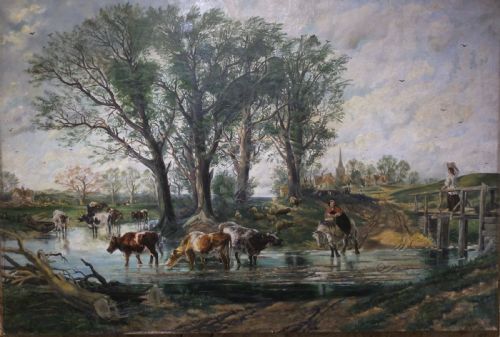
Countryside Stream Artwork
Countryside stream artwork captures rural rivers and pastoral banks in oil and watercolour, offering a peaceful window into historic landscapes.
Countryside Stream Artwork
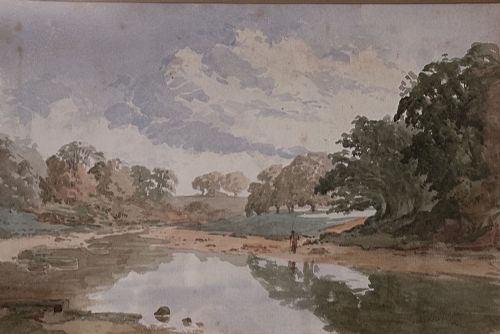
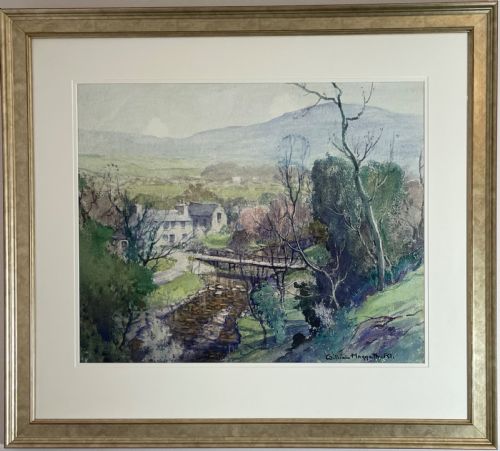
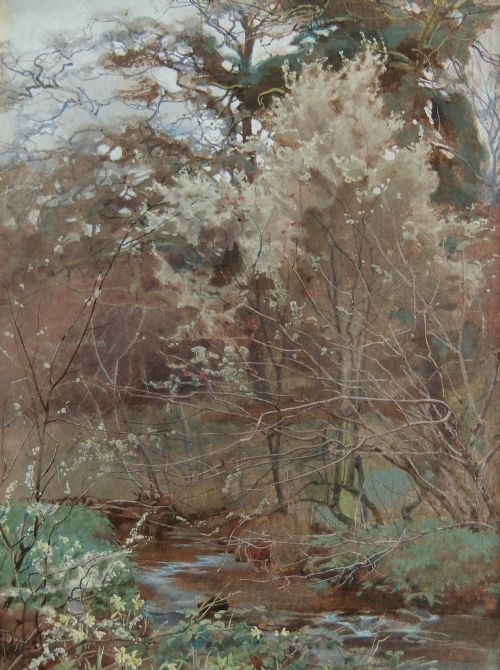
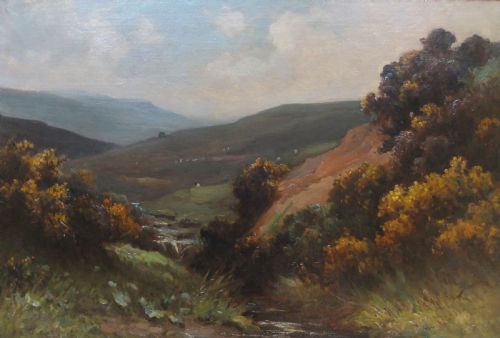
Countryside stream artwork encompasses oil paintings and watercolour paintings depicting rural waterways, cattle by streams, and pastoral valleys from the nineteenth century to the mid twentieth century. These pieces record rural British and Irish topography through the hands of regional artists working in styles such as British Impressionism, Victorian realism, and English pastoral realism.
A buyer examining this selection will frequently encounter watercolours on paper alongside oil paintings on canvas and wood panels. The depictions range from late nineteenth century English school river scenes to early twentieth century views of Irish hills and Yorkshire pastures.
Materials and methods
Artists painted these rural scenes utilising oil paint applied to canvas, wood panels, or gesso surfaces, or watercolour pigment brushed onto paper. The support material dictated the handling of the medium, with wood panels and heavy canvases allowing rich impasto for autumn landscapes, while paper suited translucent washes for river valleys.
Frames of wood and gilt moulding commonly house these artworks, preserving both oil paintings and watercolours behind glass where appropriate. Signed examples often bear the artist's hand directly on the face of the canvas or paper alongside period annotations.
Several cattle by streams persist in pausing eternally beside their painted waters, undisturbed by changing centuries.
Variations in quality
The distinction between standard works and finer examples lies in the handling of light, atmosphere, and naturalistic detail within the pastoral setting. Masterful brushwork captures the movement of water and the play of sunlight on pastureland, whereas lesser pieces rely on formulaic foliage and rigid composition.
Provenance and attribution elevate specific pieces, particularly when a painting bears a signature from a recognised nineteenth century academician or a noted regional watercolourist. The preservation of the original paint surface and contemporary framing further distinguishes museum grade watercolours and oils from unrestored studio remnants.
William Hoggatt·Sidney James Beer·Harry Sylvester Stannard·John Hobson Nicholson·Alfred W Parsons·Ernest Higgins Rigg·William Sidney Cooper·Owen Bowen·Henry John Sylvester Stannard·Thomas Creswick
The Countryside Stream Artwork Glossary
- Watercolour pigment
- Finely ground colour particles mixed with a water soluble binder, applied in translucent washes to paper to create luminous river landscapes.
- Wood panel
- A rigid wooden support used by painters instead of canvas, often found in nineteenth century landscape art.
- Gesso
- A plaster mixture applied to surfaces as a base for painting in oil or tempera.
- British Impressionism
- A late nineteenth and early twentieth century painting style focusing on light and everyday rural scenes.
- Pastoral realism
- An artistic approach depicting rural life and countryside views with close attention to natural detail.
Countryside Stream Artwork: Frequently Asked Questions
What is countryside stream artwork?
Countryside stream artwork consists of paintings and watercolours depicting rural rivers, streams, and pastoral valleys created during the nineteenth and twentieth centuries.
These works record historic rural views using oil paint on canvas or wood and watercolour pigment on paper.
How were these landscape paintings displayed?
Historic landscape paintings were typically mounted within wooden frames to protect the canvas or wood panel from environmental damage.
Watercolours required glass protection over the paper surface to prevent moisture and dust from degrading the pigments.
How do I date a stream painting?
Dating relies on stylistic clues, framing materials, artist signatures, and the medium used, such as nineteenth century canvas versus mid century paper.
Examining the back of the wood panel or canvas stretcher often reveals period inscriptions or dealer stamps.
Where were these pastoral scenes painted?
Artists painted these scenes across British and Irish locations, including Yorkshire pastures, Isle of Man rivers, and Kentish marshes.
Many painters worked plein air beside rural streams to capture natural light and cattle watering spots.