



Woodland Scene Painting
These woodland scene painting examples capture the quiet detail of trees and paths, drawing collectors who appreciate historic countryside views.
Woodland Scene Painting
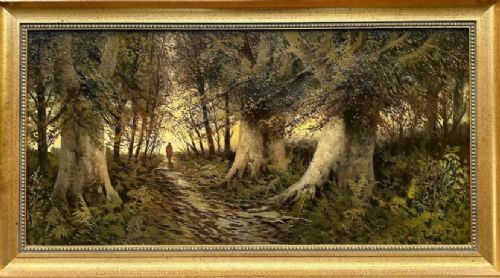
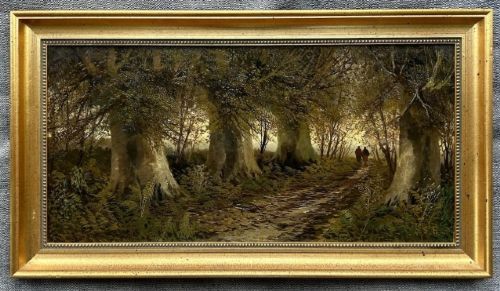
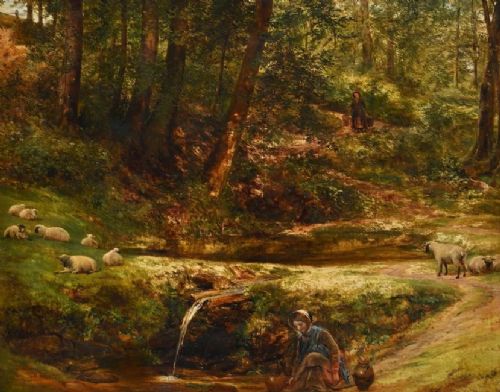
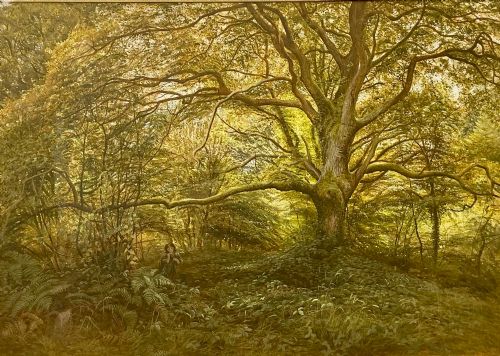
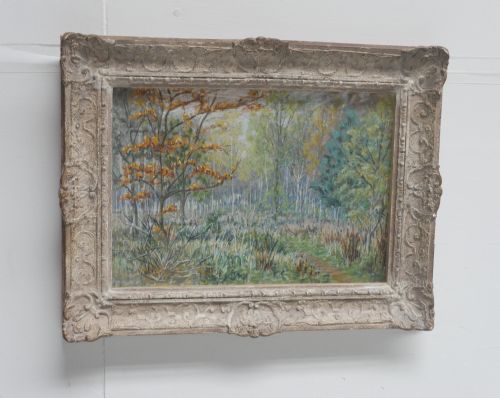
A woodland scene painting presents natural views dominated by trees, forests, and leafy paths. The pieces on this page span the nineteenth century through the mid-twentieth century, including Victorian works and later examples.
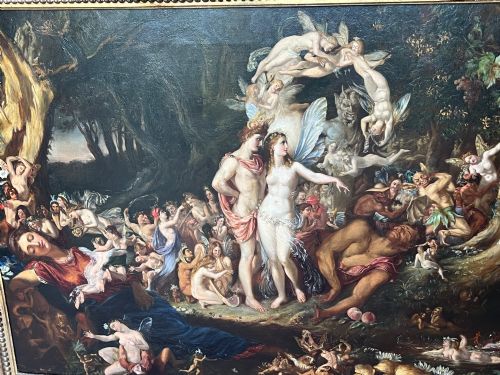
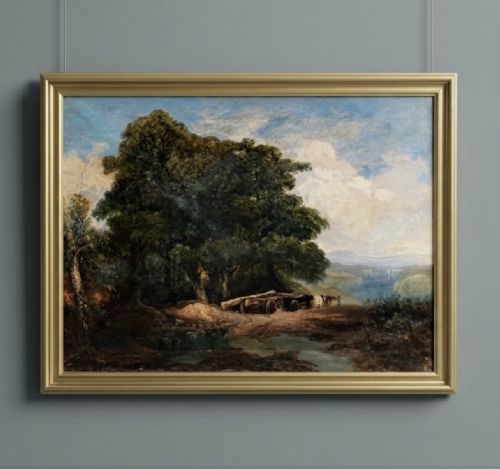
Most pieces take the form of framed paintings on canvas, panel, or paper. Subjects range from quiet forest interiors to riverbanks framed by mature timber and figures gathering firewood.
Makers and artists represented include figures like Richard Sebastian Bond, Thomas W Lascelles, and Arthur Herbert Rigg alongside ceramic items such as a Royal Vienna chocolate cup.
How They Were Made
Artists built these works using oil paint on canvas or wood panels, and watercolour or pastel on paper. The application varies from tight nineteenth-century academic brushwork to looser twentieth-century handling.
Supports range from heavy woven canvas stretched over wooden frames to sheets of paper behind glass. Framing typically involves gilt wood surrounds that complement the palette of the artwork.
Several canvases feature small domestic animals and children hiding among the bluebells.
What Varies in Quality
The strength of a composition determines much of its standing, particularly how light moves through the canopy to create depth. Works with confident brushwork and clear atmospheric perspective hold greater visual weight.
Condition plays a role, including the preservation of the paint surface and the stability of the canvas or paper. Original framing and clear artist signatures further distinguish the pieces.
Sir Joseph Noel Paton·Richard Sebastian Bond·William H Myers·Thomas W Lascelles·Arthur Herbert Rigg·James Mallard Bromley·David Watts·Alfred Grey RHA·John Wright Oakes·Walter Follen Bishop·James Proudfoot·Rowland Henry Hill·Edmund George Warren·Charles James Adams·George Graham·Charles Edward Holloway·Edward H Holder·George F Wetherbee·Lester Sutcliffe·George Arthur Fripp·John Cuthbert Salmon·Owen Bowen·H Barnett·S Shelton
The Woodland Scene Painting Glossary
- Oil on Canvas
- A painting medium where pigments are suspended in drying oil, applied to a stretched cloth support. This combination allowed artists to build rich textures and deep tones.
- Watercolour
- A paint consisting of colorants suspended in a water-soluble binder, typically worked on paper. It produces translucent washes well suited to atmospheric landscape studies.
- Victorian Naturalism
- An art movement focused on the careful observation of the natural world. Practitioners rendered flora and light with close fidelity to actual conditions.
- Impressionism
- A style emphasising unblended brush strokes and accurate depiction of changing light. Artists working in this mode prioritized overall visual effect over fine detail.
Woodland Scene Painting: Frequently Asked Questions
What periods do these paintings cover?
The selection spans the nineteenth century through the mid-twentieth century, featuring Victorian academic works alongside later impressionist and post-war interpretations of the countryside.
Buyers will find specific dates ranging from the eighteen-fifties through to nineteen-sixty, reflecting shifting tastes in landscape representation.
Are these works signed by the artists?
Many examples carry signatures or attribution to known nineteenth and twentieth-century painters and watercolourists. Documentation varies depending on the specific artist and medium.
Signatures often appear in the lower corners of the canvas or paper, sometimes accompanied by dates or titles on the reverse.
What materials were used for these artworks?
Artists utilised oil paint on canvas and wood panels, as well as watercolour and pastel on paper. These materials were chosen for their permanence and ability to capture natural light.
Glazing and gilt wooden frames frequently accompany the works to protect the surface and enhance the visual presentation.
How do I care for an antique woodland painting?
Keep the piece away from direct sunlight and steady humidity fluctuations to protect both the canvas or paper and the surrounding frame. Gentle dusting with a dry, soft cloth is sufficient for surface maintenance.
Avoid using liquid cleaners on the painted surface and consult a professional restorer if structural repairs become necessary.