
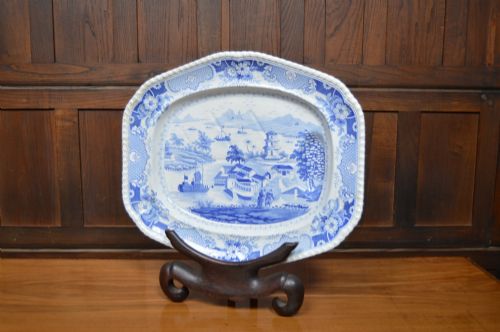
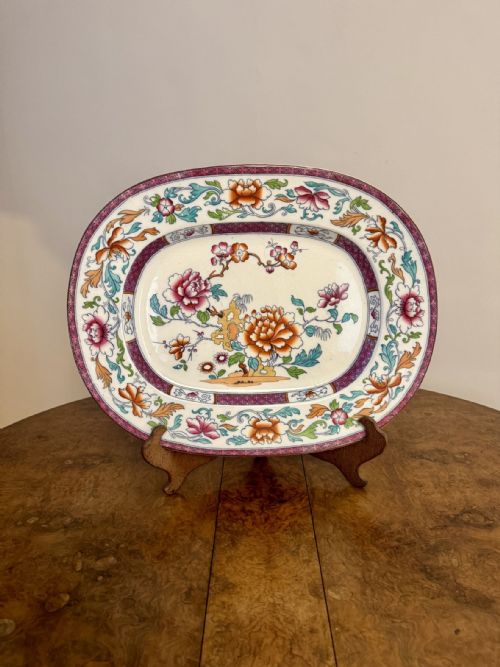
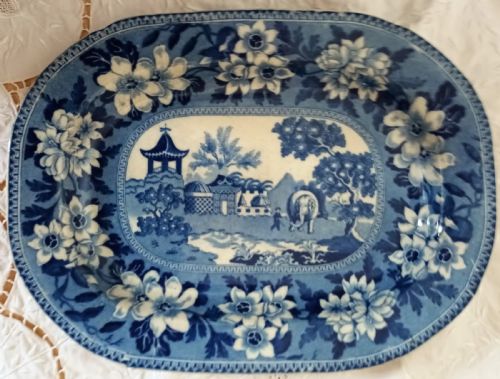


Vintage Transferware Meat Dish
A vintage transferware meat dish is a substantial ceramic platter carrying blue and white printed scenes, designed for serving large joints at table.
Vintage Transferware Meat Dish
A vintage transferware meat dish represents a substantial ceramic platter intended for service at the dining table. These large earthenware vessels span periods from the Georgian and Regency eras through to the Victorian period.
The most common form encountered here is the blue and white transfer printed platter, often featuring patterns such as India Temple, Elephant, Bridge of Lucano, Tower, and Chinese Garden.
Makers and origins include English potteries such as Spode and John Rogers and Son, utilising traditional earthenware bodies covered in a clear glaze.
How they were made
Potters shaped these large serving platters from earthenware clay, preparing the ceramic body to support heavy joints of meat during service. Artisans then applied transfer printed designs using cobalt pigment from engraved copper plates onto the ceramic surface.
A lead glaze or ceramic glaze was applied over the print before firing in the kiln, sealing the blue and white decoration beneath a glossy protective finish.
Early nineteenth-century diners relied on these vast blue and white platters to present enormous roasted joints with botanical serenity.
What varies in quality
Quality in a vintage transferware meat dish lies in the crispness of the transfer print and the depth of the cobalt pigment against the white earthenware. Stronger examples display clear pictorial details without blurring or smudging across the pattern.
The weight and presence of the platter also distinguish finer pieces, particularly substantial large meat platters and chargers that retain their structural integrity and clear glaze.
John Rogers and Son·Spode·Mason
The Vintage Transferware Meat Dish Glossary
- Transferware
- Earthenware decorated by applying a printed design from a copper plate onto paper and then onto the ceramic body. This technique allowed intricate patterns like Chinese Garden and India Temple to be produced consistently.
- Cobalt Pigment
- A metallic oxide used to achieve the deep blue colour seen in blue and white transfer printing. It remains stable at high kiln temperatures.
- Earthenware
- A porous ceramic body fired at lower temperatures, commonly used for nineteenth-century platters and serving dishes. It requires a glaze to become impermeable to liquids.
- Glaze
- A glassy coating fused to the ceramic surface during firing to seal the earthenware body and protect the transferred design. Lead glaze is typical of older pieces.
- Platter
- A large flat serving dish designed for presenting meat at the table. These objects form the primary form found in this selection.
Vintage Transferware Meat Dish: Frequently Asked Questions
What were vintage transferware meat dishes used for?
These large ceramic platters served roasted joints of meat and game at the nineteenth-century dining table. Their generous proportions accommodated substantial meals during formal dinners.
Today, buyers use them as decorative wall chargers, centrepieces, or functional serving platters for large gatherings.
How do I date a transferware meat dish?
Dating relies on the style of the ceramic body, the richness of the blue and white transfer print, and any maker marks on the reverse. Georgian and Regency pieces often feature lighter earthenware and specific topographical or romantic scenes.
Victorian examples display denser floral or Chinoiserie borders, while specific pattern names can narrow the production period to a particular decade.
Can I use antique meat platters for serving food?
Most nineteenth-century earthenware platters are safe for serving dry foods, though crazing in the glaze can absorb liquids over time. Hand washing is essential to protect the historic ceramic body and glaze.
Avoid dishwashers and harsh detergents to preserve the cobalt pigment and prevent further crazing.
What is the difference between Georgian and Victorian transferware?
Georgian and Regency transferware often exhibits finer copperplate engraving with sharp, distinct cobalt details and classic architectural or pastoral themes. The earthenware bodies tend to be slightly lighter in weight.
Victorian transferware frequently embraces heavier forms, including robust ironstone and intricate patterns like Chinoiserie, reflecting changing nineteenth-century dining fashions.