
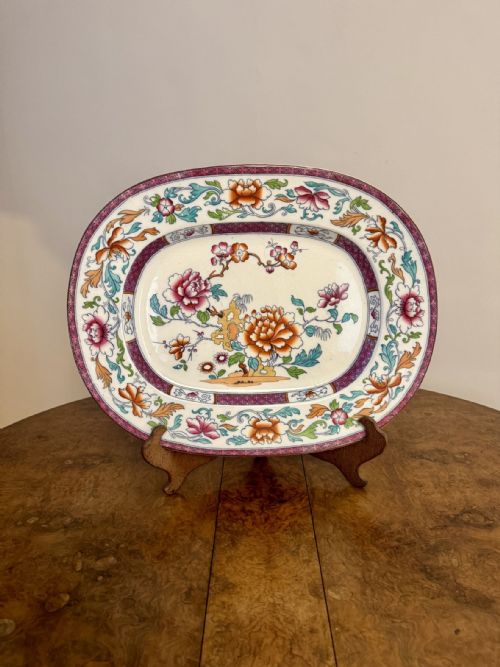


Antique Ceramic Turkey Platter
An antique ceramic turkey platter is a large historic serving dish built for festive gatherings, prized for carrying heavy joints and grand centrepiece birds.
Antique Ceramic Turkey Platter
An antique ceramic turkey platter is found mostly in large nineteenth-century formats designed for substantial feasts and family dining tables.
The pieces on this page span the Victorian era, alongside earlier nineteenth-century periods, showcasing forms such as serving platters and meat dishes.
Buyers will encounter traditional blue and white patterns, transfer prints of Chinese gardens, and robust ironstone bodies built for heavy daily use.
Materials and construction
Potters shaped these large serving platters from durable earthenware and dense ironstone, which provided the structural strength needed for heavy joints of meat.
Decoration relied on cobalt pigment under the glaze and intricate transfer printing to apply detailed architectural and botanical scenes across the wide surfaces.
Listings feature earthenware and ironstone bodies decorated with cobalt pigment and transfer print techniques from the nineteenth century.
Judging quality
Quality rests upon the clarity of the transfer print and the crispness of the cobalt pigment against the white ceramic ground.
Heavier ironstone bodies and well and tree drainage systems indicate utilitarian sophistication, separating standard service ware from superior production.
Copeland and Garrett·Minton·Mason
The Antique Ceramic Turkey Platter Glossary
- Ironstone
- A heavy, durable type of earthenware patented in the nineteenth century to imitate Chinese porcelain. It resists chipping and staining.
- Transfer print
- A decoration technique where an engraved copper plate transfers a design onto paper and then onto the ceramic body before firing. This allowed complex scenes to be repeated accurately.
- Well and tree
- A platter surface featuring a channel and a recessed well to catch juices from carved meat. It keeps the joint elevated during service.
- Cobalt pigment
- A metallic oxide used under the glaze to produce deep blue decoration on ceramics. It withstands high kiln temperatures without losing intensity.
- Earthenware
- Porous ceramic fired at lower temperatures and usually covered in glaze to ensure it holds moisture. It forms the body of many nineteenth-century serving dishes.
Antique Ceramic Turkey Platter: Frequently Asked Questions
What were antique turkey platters used for?
These large ceramic platters served as the central vessel for presenting roast meats and large festive birds at nineteenth-century dining tables. Their generous dimensions accommodated heavy joints alongside decorative garnishes.
Many examples feature built-in drainage channels or wells to manage juices during carving. They functioned both as practical kitchenware and as impressive display pieces for formal dining rooms.
How do I care for an antique platter?
Wash these ceramic and ironstone dishes gently by hand using mild soap and warm water. Avoid modern dishwashers, which can dull the historical glaze and damage old earthenware.
Store the platter flat or in a secure vertical rack designed for heavy serving dishes. Keep it away from sudden temperature changes to protect the nineteenth-century material.
How can I tell the period of a platter?
Examine the ceramic body, weight, and transfer printing style to understand the manufacturing era. Nineteenth-century pieces often display specific blue and white patterns or maker marks on the underside.
Victorian platters frequently combine dense ironstone with architectural or botanical scenes. Comparing the glaze texture and coloration helps place the dish within the 1800s timeline.
Did these platters come with drainers?
Some large nineteenth-century serving platters included a separate ceramic insert known as a drainer. This perforated piece sat inside the dish to elevate meat above accumulated juices.
Surviving pieces that retain their original drainers are particularly notable. The combination provided a practical solution for serving carved roasts cleanly at the table.