


Vintage Trade Scales
Vintage trade scales are robust instruments of commerce and measurement, offering tangible history and enduring mechanical design for modern interiors.
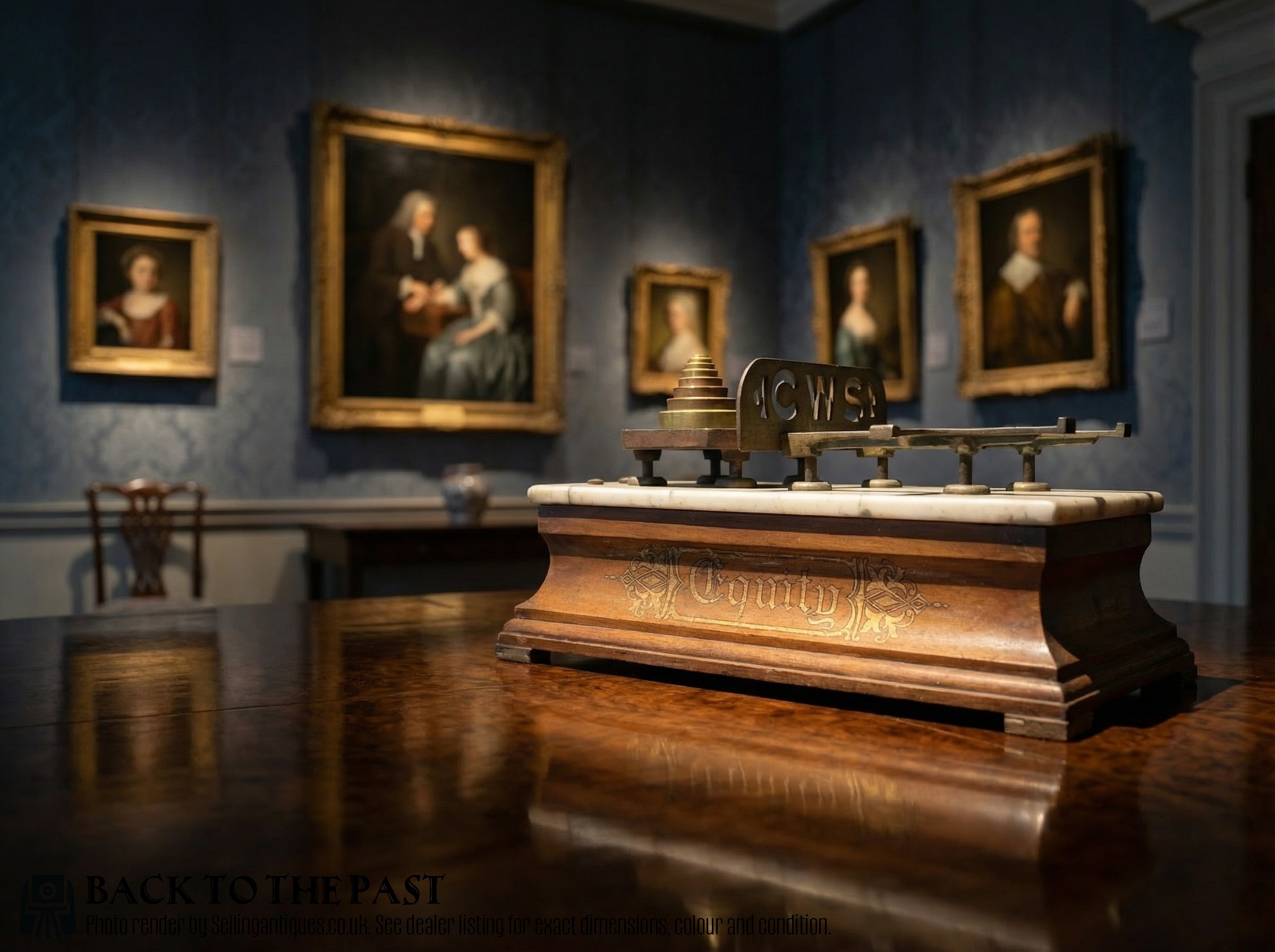
Vintage Trade Scales
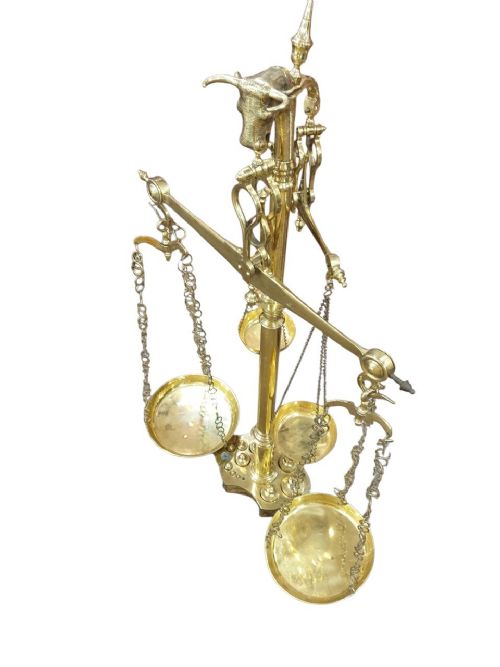
Vintage trade scales encompass a diverse array of measuring implements, from massive floor-standing butcher scales and grocers scales to intricate balance scales and scientific instruments. Buyers seeking vintage trade scales encounter utilitarian objects built for daily commerce, including specialised balance beams, hanging scales, and precision laboratory apparatuses.
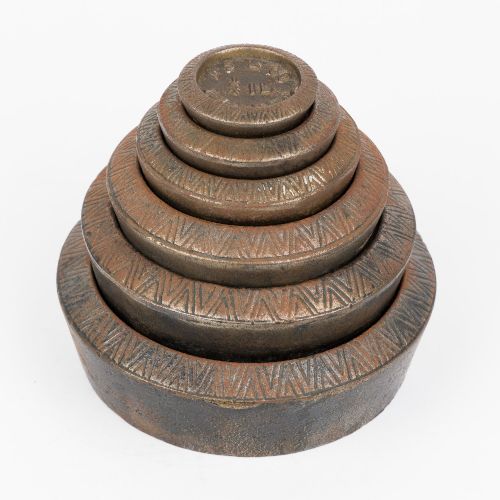
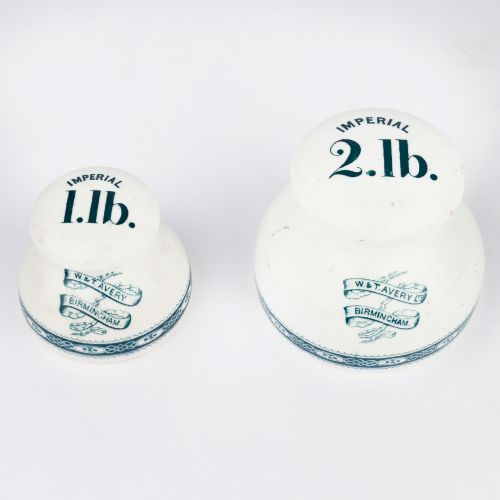
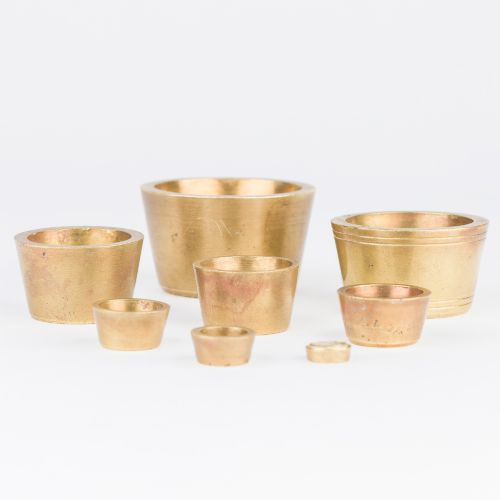
The selections span distinct periods, appearing frequently in Victorian and Edwardian iterations alongside early twentieth-century examples. Alongside the main weighing apparatuses, the category frequently includes related paraphernalia such as scale weights, ceramic scale pans, and advertising plates.
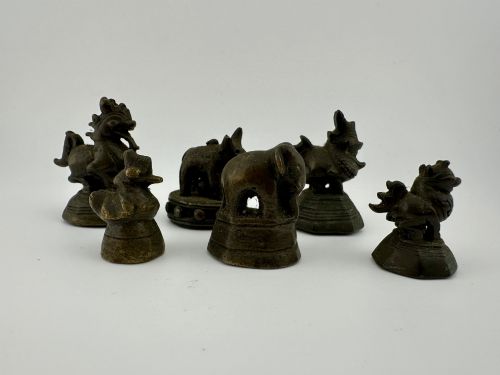
Geographic and functional variety defines the field, stretching from British regional verification balances stamped for cities like Liverpool and Lancaster to Dutch bushel balances and Southeast Asian animal trade opium weights. This mixture reflects the global reach of nineteenth and twentieth-century mercantile systems.
Materials and Construction
Construction relies heavily on durable metals, predominantly brass, cast iron, and bronze, chosen for their structural strength and resistance to wear. Beams, pans, and indicator arms often utilise polished brass to maintain precision and visual appeal, while heavier bases employ robust cast iron.
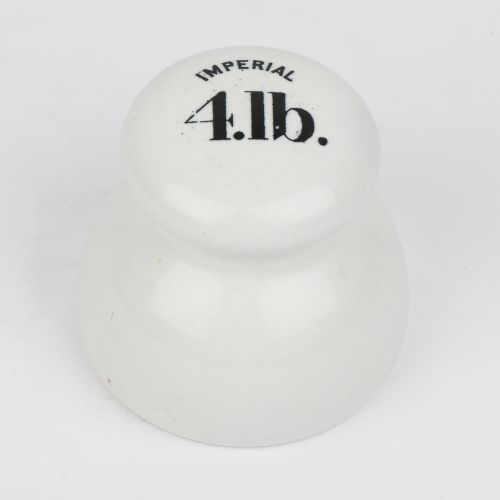
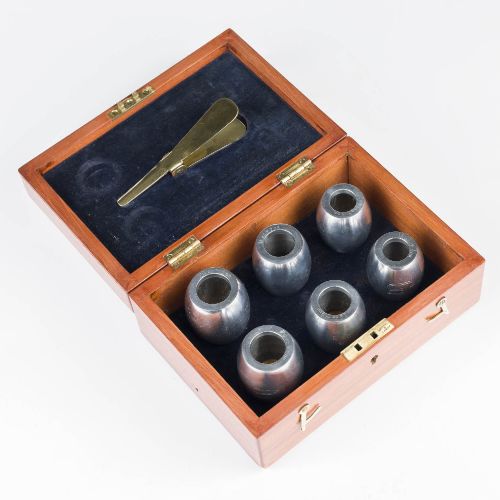
Wood plays a significant role in housing and supporting these mechanisms, utilising dense timbers such as mahogany and camphor-wood for boxes, trunks, and fitted block stands. Earthenware and ceramic appear frequently in the form of dedicated scale plates, advertising pans, and individual weight units.
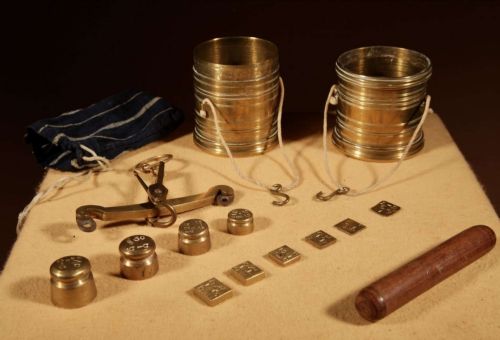
Assembly combines heavy smithing, casting, and precision engineering, particularly in verification balances and chemist beam scales where calibration required exact tolerances. Hand-painted lettering, stamped regional verification marks, and brass-bound joinery demonstrate the high level of specialised craftsmanship applied to utilitarian objects.
Cast-iron scales often wear the ghost of old grocer's flour, having spent a century watching biscuits and butter get measured.
Assessing Quality and Merit
Quality in these instruments rests upon the integrity of the mechanism and the completeness of the set. Retaining original matched sets of weights, such as Imperial stacking weights or Troy ounce sets in their fitted wooden blocks, elevates a piece significantly above partial assemblages.
The presence of official provenance, including stamped regional verification marks for specific cities, boroughs, or makers like De Grave Short & Co and W & T Avery, demonstrates institutional grade manufacture. Finer examples combine robust industrial utility with decorative flourishes, such as monumental floor-standing brass framing or polychrome painted camphor-wood housing.
De Grave Short And Co·W And T Avery·Bartlett And Sons·Day And Millward·Fairbanks Scales
The Vintage Trade Scales Glossary
- Balance scales
- Weighing instruments operating on the principle of equal arms, suspending loads from pans to determine mass against a standard weight. These devices form the foundation of most traditional mercantile transactions.
- Avoirdupois
- The system of weights based on a pound of sixteen ounces, commonly utilised for general merchandise and trade goods. Standard weights under this system were strictly verified for public markets.
- Verification balance
- A high-precision scale utilised by inspectors to test and certify local commercial weights and measures for accuracy. These carry official regional stamps indicating their jurisdiction.
- Opium weights
- Figural weights cast in bronze, typically shaped as animals, originating from Burma and Thailand for regional trade. They remain sought after by collectors for their sculptural form.
- Bushel balance
- A specialised mechanism designed to measure dry goods by volume rather than mass alone, often housed in fitted wooden equipment. Dutch examples frequently showcase intricate brass work.
Vintage Trade Scales: Frequently Asked Questions
How do I display large trade scales at home?
Massive floor-standing butcher scales or heavy beam balances require strong foundational support, such as a sturdy sideboard, a kitchen island, or direct placement on a flagged floor. Their industrial presence makes them natural focal points in large rooms.
Keep surrounding decor minimal to let the brass and cast iron details stand out without visual clutter. Pairing them with original weights enhances their historical context.
What is the difference between apothecary and trade scales?
Apothecary and chemist scales are built for extreme precision, featuring delicate beam balances enclosed in glass cases or paired with tiny Troy ounce weights. They measure small quantities for medical or scientific purposes.
Trade scales, conversely, are heavier commercial implements built for grocers, butchers, and public markets to weigh bulk goods. They prioritize robust iron and brass construction over minute laboratory measurements.
Are antique scale weights accurate today?
While many retain their physical mass, historical standards and calibration methods differ from modern legal-for-trade requirements. Regional verification sets were stamped for specific nineteenth-century jurisdictions.
Treat them primarily as historical display objects rather than precise instruments for modern culinary or commercial use. Their value lies in their craftsmanship and local history.
How do I identify the age of a scale?
Look for stamped maker names, regional verification dates, and stylistic cues in the casting and woodwork. Victorian and Edwardian pieces often feature ornate brass beams and cast iron bases with manufacturer stamps.
Materials also offer clues, as nineteenth-century pieces frequently utilise heavy mahogany bases and hand-lettered ceramic pans. Official inspection stamps often include specific geographic locations and reigns.