


Victorian Counter Scales
Victorian counter scales are sturdy weighing devices built for trade, bringing authentic period character and mechanical honesty to any countertop.
Victorian Counter Scales
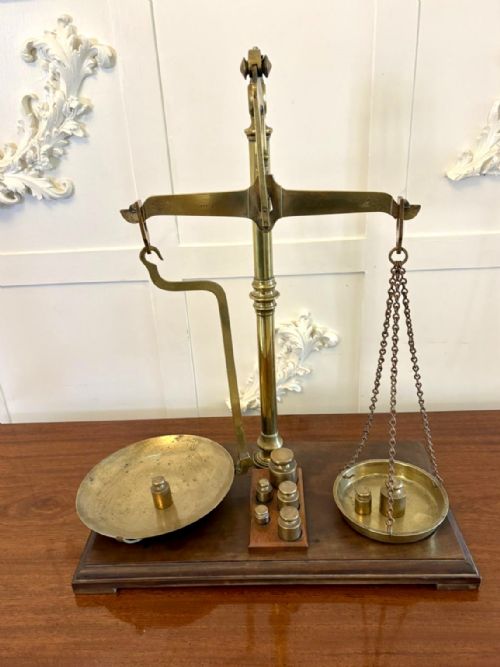
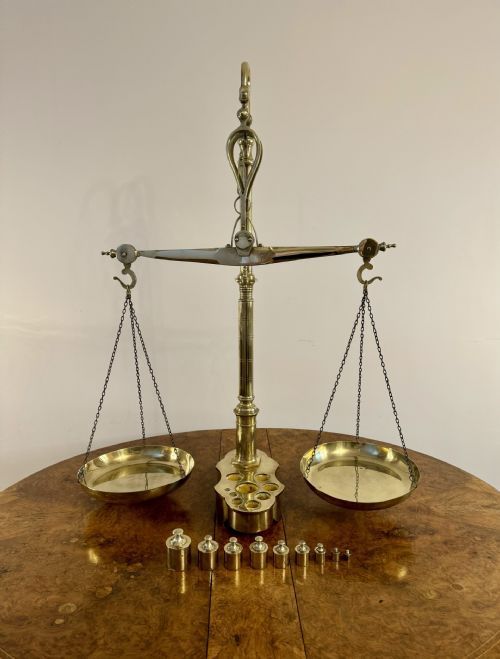
When you examine Victorian counter scales, you are looking at practical shop and apothecary equipment designed for daily commerce during the nineteenth century. The examples found here typically take the form of balance scales, beam scales, and grocers scales configured for heavy use.
Most pieces date from the Victorian period through to the early twentieth century, incorporating materials like brass, mahogany, cast iron, and ceramic. These functional objects served butchers, grocers, and pharmacists in weighing goods accurately across towns and cities.
Materials and construction
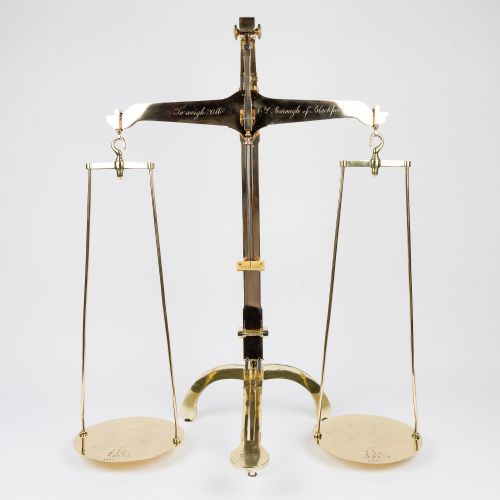
The construction of Victorian counter scales relies heavily on the combination of polished brass beams, cast iron bases, and fitted mahogany platforms. Makers selected these heavy metals and dense hardwoods to withstand the constant wear of commercial shops.
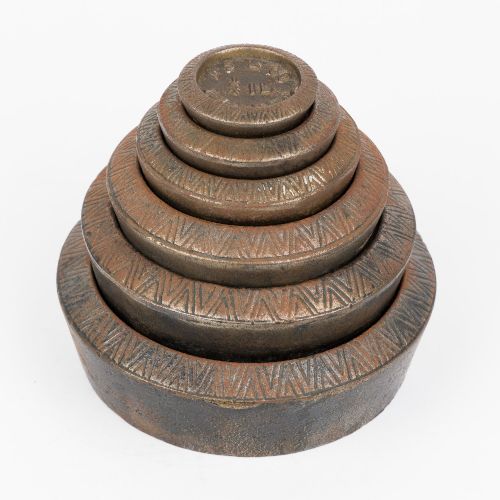
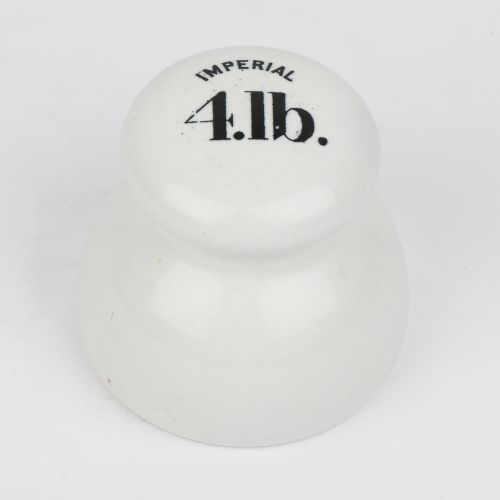
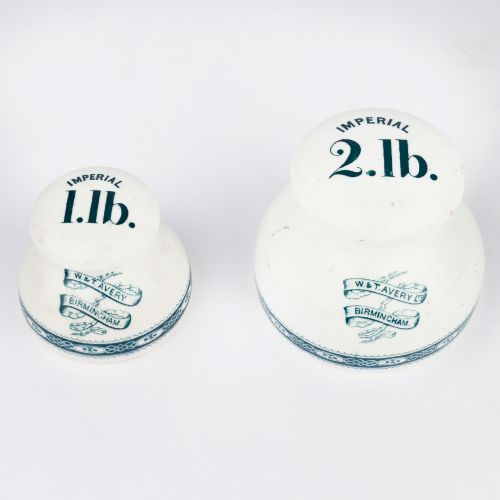
Ceramic components appear frequently, notably in glazed ceramic scale pans and individual weights designed for daily handling. Wrought iron and copper elements provide additional structural reinforcement for larger balance scales and hanging configurations.
Keep an eye out for butcher scales advertising sausages, proving that Victorian marketing was just as persuasive as today.
Distinctions in quality
Quality in Victorian counter scales depends on the crispness of the maker's markings, the proportion of the brass beam, and the integrity of the mahogany base. Finer examples retain their original matching weights and display balanced movement across the pivots.
Commercial scales commissioned for specific city boroughs or notable firms often exhibit superior finish and detailing compared to standard utilitarian models. The clarity of the cast lettering and the retention of original ceramic pans elevate certain pieces above everyday shop equipment.
W & T Avery·Day & Millward·Parnall & Sons of Bristol·Bartlett & Sons
The Victorian Counter Scales Glossary
- Balance scales
- Weighing devices that operate by suspending two pans from a central beam to determine mass against standard weights.
- Beam scales
- Scales featuring a horizontal metal bar that pivots on a central fulcrum to measure loads.
- Apothecary balance
- Precision scales traditionally utilised by pharmacists for measuring small quantities of medicinal ingredients.
- Scale weights
- Individual masses made of brass, iron, or ceramic used in conjunction with a balance to measure goods.
- Kitchenalia
- Domestic or commercial utilitarian objects associated with food preparation and storage.
Victorian Counter Scales: Frequently Asked Questions
How do balance scales work?
Balance scales operate on a fulcrum principle, where an item placed on one pan is measured by adding standard weights to the opposite pan until the horizontal beam levels.
This mechanical system requires careful calibration to ensure precise measurements for trade and apothecary use.
Were these used in grocery shops?
Grocers scales were essential fixtures in nineteenth-century shops for weighing loose provisions like tea, sugar, and flour directly for customers.
Many bear the names of specific cooperatives, butchers, or municipal boroughs reflecting their commercial origins.
How do I clean brass scale pans?
Brass pans benefit from gentle dusting with a soft cloth to maintain their aged surface without removing historical patina.
Avoid harsh chemical cleaners that strip the metal of its character and alter the appearance accumulated over decades.
Can I still use antique scales for weighing?
While these pieces retain their mechanical function, antique scales are primarily appreciated as decorative objects and historical artefacts.
Verification by a professional would be necessary if precise modern measurements are required for daily tasks.