


Vintage Apothecary Balance
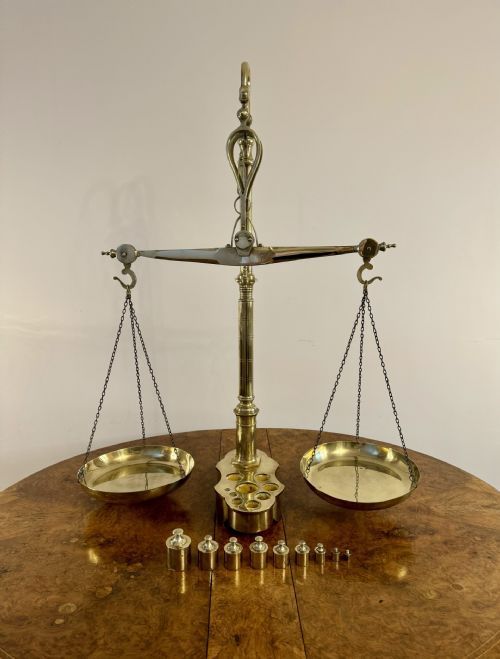
These vintage apothecary balance scales bring precise mechanical engineering and rich material presence into modern rooms through polished brass and warm timber.
Vintage Apothecary Balance
When you search for vintage apothecary balance, you encounter instruments designed for exact measurement in medical, scientific, and municipal contexts. These pieces comprise brass beams, hanging pans, and fitted timber bases or mounting blocks from the nineteenth and twentieth centuries.
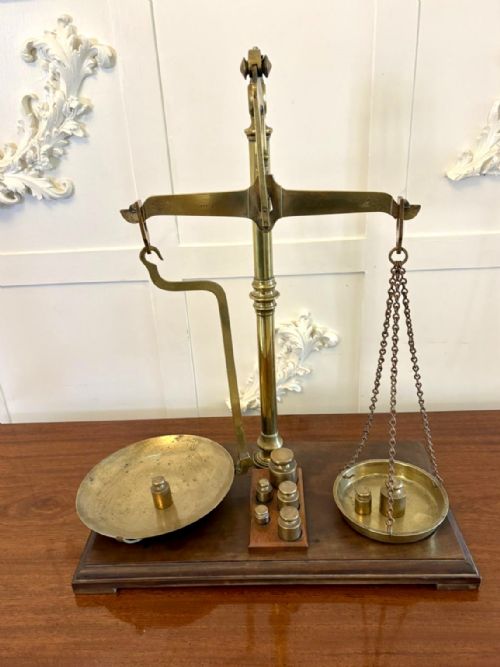
The most common examples on this page are Victorian brass beam scales mounted on mahogany or oak bases, often retaining their original weights. You also find larger industrial and municipal weighing scales constructed from iron, copper, and wrought iron.
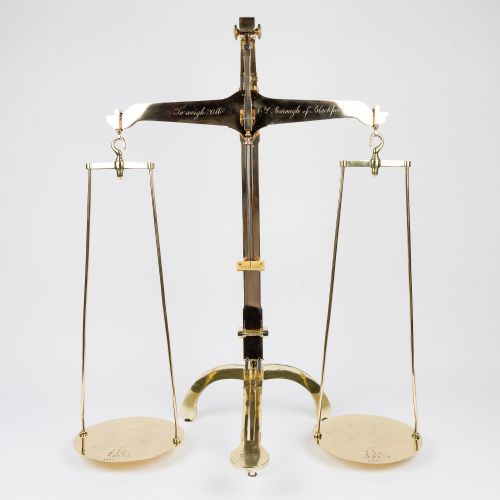
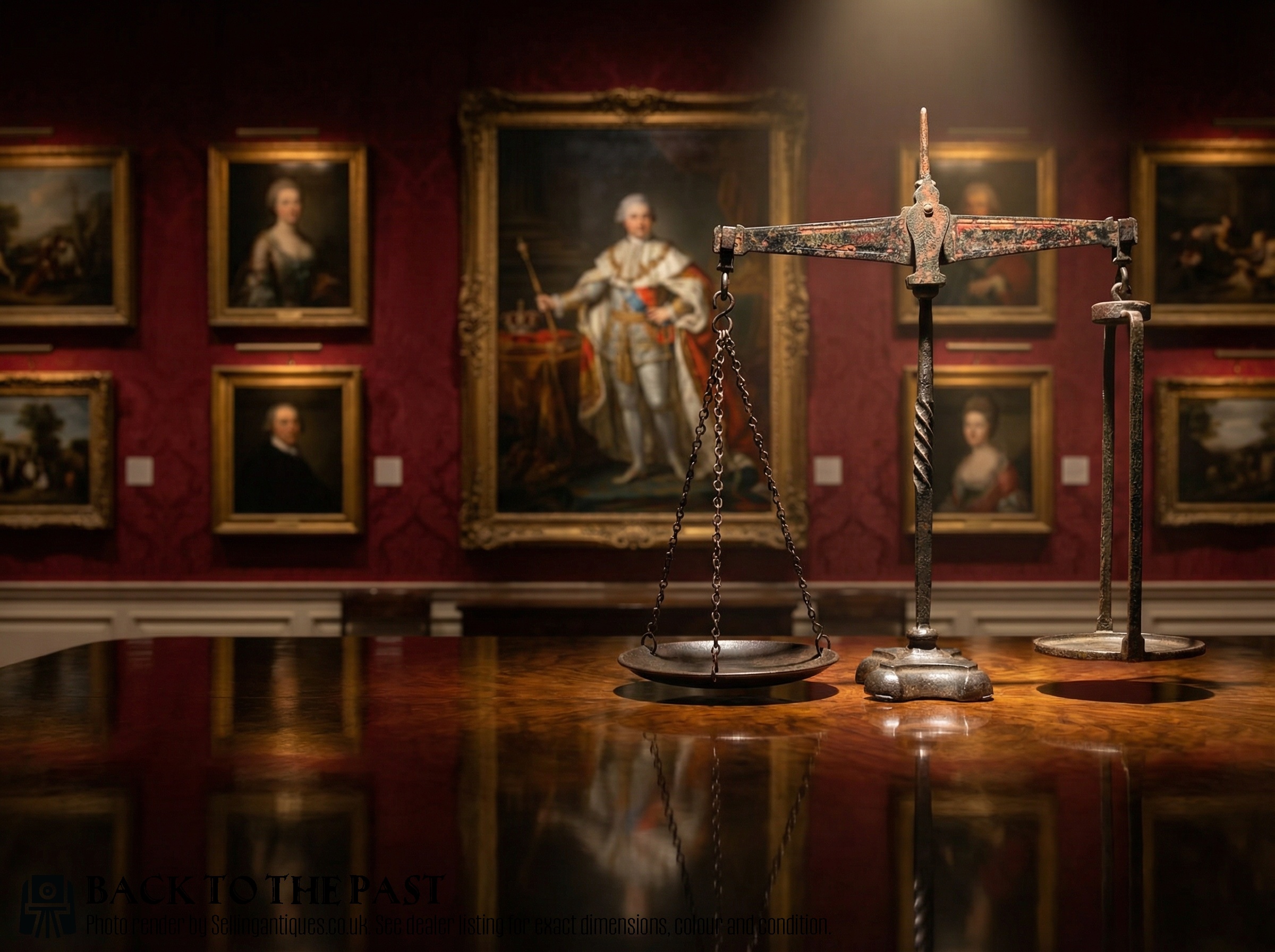
Originating from British, Dutch, and American workshops, these balances reflect both scientific utility and robust commercial design. Their forms range from small personal weighing devices to large verification balances built for city authorities.
Materials and construction
Makers constructed these balances using cast and sheet brass for the beams, pointers, and pans to prevent corrosion and ensure accurate movement. Hardwoods such as mahogany and oak provided stable, heavy bases that supported the delicate fulcrum without shifting.
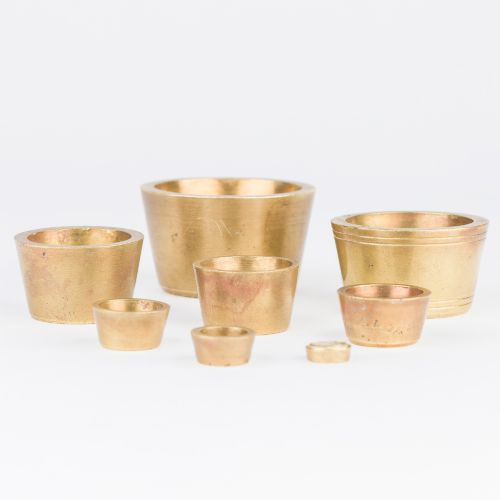
Weights sometimes hide inside snug wooden block stands like tiny metallic chess pieces waiting for a chemist to wake them up.
Distinctions in quality
The distinction between ordinary utility scales and finer examples lies in the precision of the beam pivot and the integrity of the maker's markings. Signed instruments from recognised makers retain sharper casting details and smoother mechanical response in the beam.
Quality also shows in the survival of original components, such as fitted wooden block stands for weights and matching brass pans. Unaltered surfaces on the timber and untouched patination on the brass distinguish superior pieces from heavily restored ones.
Day & Millward·Parnall & Sons of Bristol·De Grave Short & Co·Oertling·Bartlett & Sons
The Vintage Apothecary Balance Glossary
- Beam
- The horizontal metal bar that pivots on a central fulcrum to weigh objects placed on opposing pans. It must remain perfectly balanced for accurate measurement.
- Fulcrum
- The central pivot point upon which the balance beam rests and swings. Its friction-free movement determines the sensitivity of the instrument.
- Treen
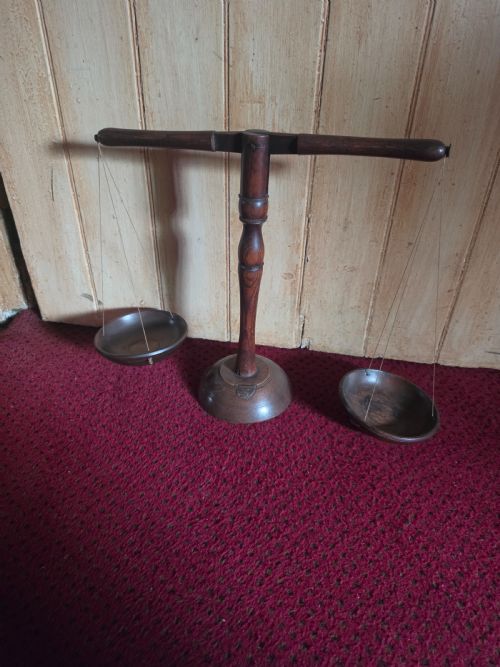
- Small domestic and scientific items made from turned or worked wood. Welsh treen scales represent a specific regional style of wooden construction.
- Troy ounce
- A system of units of mass traditionally used for precious metals and apothecary items. Sets of brass Troy ounce weights accompanied medical and scientific scales.
Vintage Apothecary Balance: Frequently Asked Questions
How do balance scales work?
A balance scale operates by comparing an unknown weight on one pan against known standard weights placed on the other. When the central pointer rests at the vertical centre, the loads on both sides are equal.
The sensitivity of this movement relies entirely on the precision of the fulcrum and the symmetry of the metal beam. Even slight variations in the mass of the pans affect the final resting position.
Where were these scales used?
These instruments served chemists, apothecaries, and medical practitioners for compounding precise doses of medicine. Municipal authorities also utilised them for verification and trade regulation.
Larger versions monitored commercial goods in markets or monitored personal weight in domestic and professional settings. Their presence spanned laboratories, pharmacies, and civic offices.
How do I clean brass scales?
You should generally preserve the natural patination and aged surface accumulation on antique metalwork rather than polishing it to a bright shine. Dust the timber bases gently with a dry, soft cloth.
Avoid abrasive cleaners or chemical polishes that strip away historical wear and diminish the visual character of the piece. Regular dusting is sufficient for ongoing maintenance.
Are original weights usually included?
Many surviving sets retain their matching brass weights, often housed in fitted wooden block stands designed specifically for the instrument. Complete sets with their original weights command higher interest from collectors.
When weights are absent, replacement sets can be sourced separately, though finding exact period matches requires careful attention to sizing and material.