


Antique Iron Balance
These antique iron balance scales combine utilitarian honesty with sculptural presence, offering a tangible link to trade and domestic life across the centuries.
Antique Iron Balance
An antique iron balance forms the backbone of historical commerce and household measurement, appearing in utilitarian forms ranging from butcher and grocer scales to delicate kitchen and doctor variants. Buyers searching this phrase encounter hardworking industrial tools alongside domestic equipment, occasionally branching into balance toys and kinetic sculpture.
The material vocabulary centres firmly on cast iron, wrought iron, and painted iron, frequently paired with copper and brass pans or hardwood structural elements. Pieces span the Victorian and Edwardian eras, stretching back to mid nineteenth century French, Dutch Colonial, and American workshop origins.
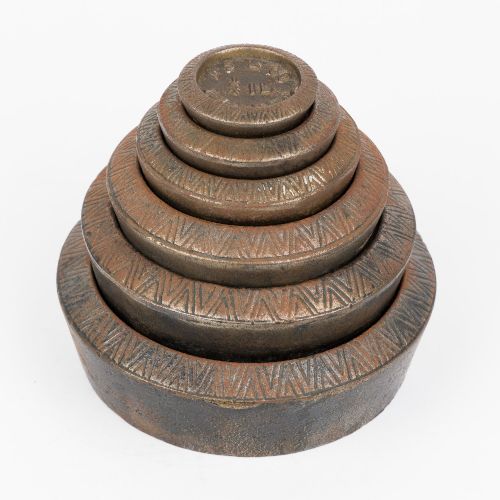
Functional variants dominate the selection, including complete sets of imperial stacking weights and original iron weight configurations. These objects bridge the gap between heavy industrial utility and decorative folk art appeal.
How they were made
Maker workshops combined robust cast iron frames with wrought iron components to provide structural stability under heavy loads. Copper and brass were utilised for pans and bearing points to resist corrosion and ensure smooth pivoting action.
Surface treatments typically involved dark protective finishes or applied paint, while commercial scales often incorporated hand painted advertising lettering directly onto the iron or wooden bodies.
Some nineteenth century engineers clearly possessed a playful side, crafting metal balance toys that rock gently like tiny mechanical acrobats.
What varies in quality
The upper tier of the range displays crisp casting marks, intact original paint, and matching brass or copper pans that retain their harmonious proportions. Maker attribution and surviving original weight sets elevate an example above anonymous workshop production.
Lesser examples show heavy pitting, mismatched replacement pans, or loss of the original balance mechanism sensitivity due to wear. The distinction lies in whether the piece retains its honest working character or has suffered unsympathetic restoration.
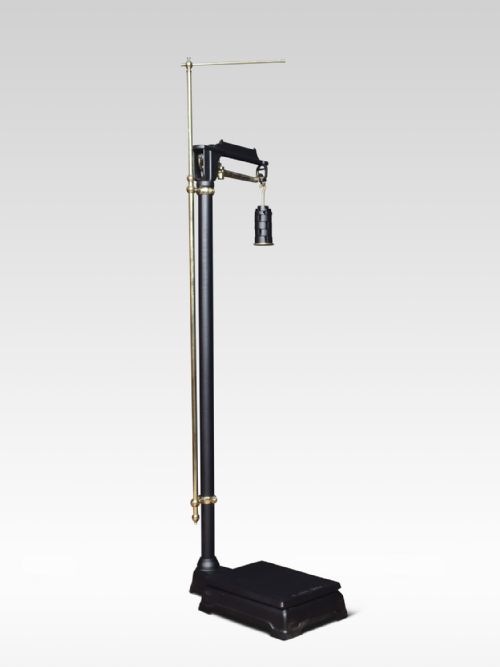
Palethorpes·Fairbanks Scale Co
The Antique Iron Balance Glossary
- Balance scales
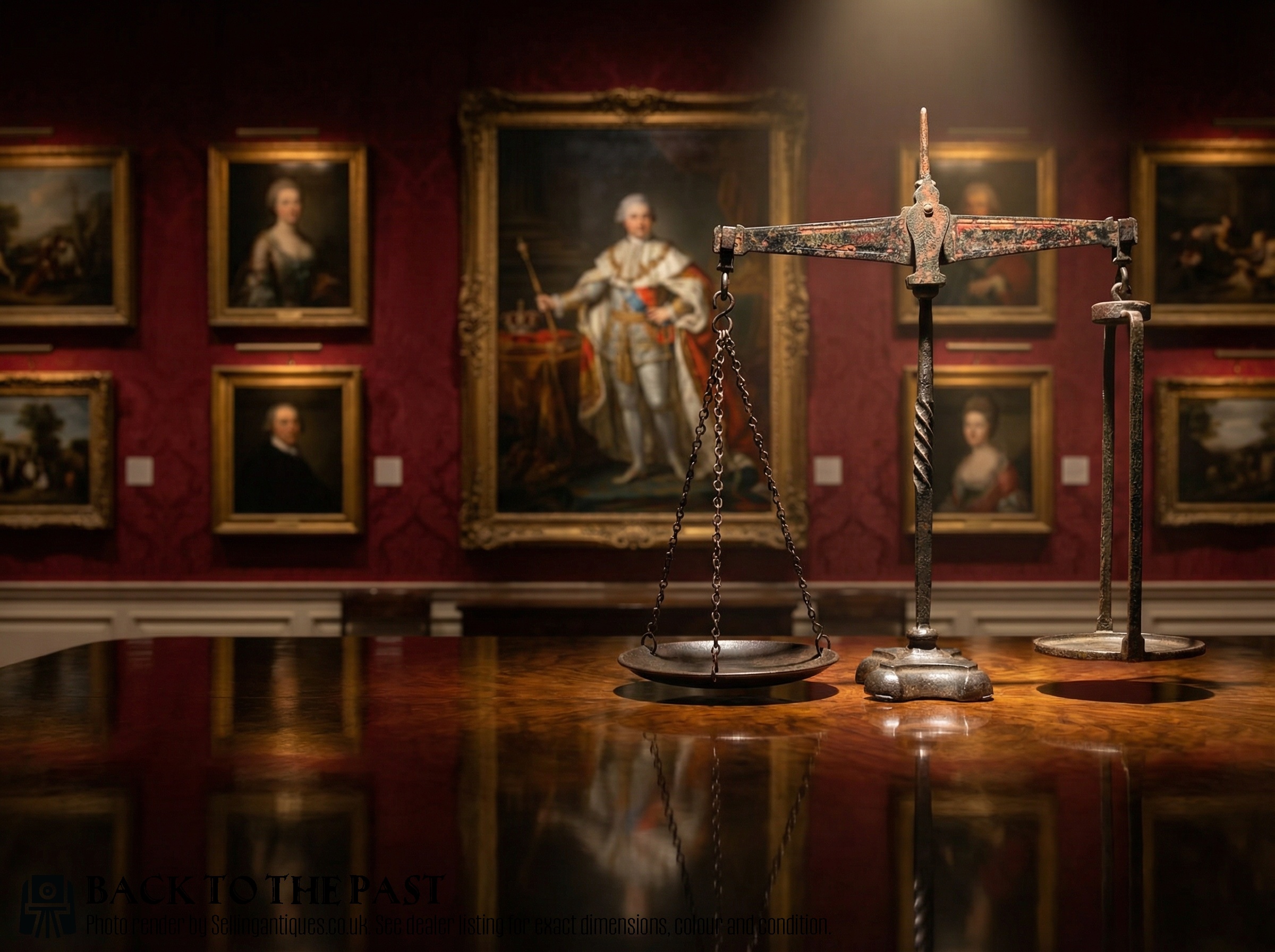
- A weighing device operating on the principle of equal arms, where an object in one pan is measured against standard weights in the other. This mechanical layout forms the standard configuration for commercial and domestic weighing.
- Imperial stacking weights
- A nested set of calibrated metal masses conforming to British imperial measurement standards. These items fit precisely inside one another for compact storage.
- Wrought iron
- Iron that has been heated and shaped by a blacksmith's hammer rather than cast in a mould. This material provides superior tensile strength for structural balance arms.
- Kinetic sculpture
- An artwork or object containing parts that move, often powered by gravity or manual interaction. Balance toys utilise this principle to create continuous motion.
Antique Iron Balance: Frequently Asked Questions
How do balance scales work?
These devices operate using a central fulcrum and a rigid beam with two suspended pans. When an unknown mass sits on one side, standard weights are added to the opposing pan until the beam levels completely.
This physical equilibrium provides an exact measurement of mass through gravity. The sensitivity depends entirely on the precision of the pivot point and the balance of the arm.
Can I still use them for weighing?
Most surviving examples serve primarily as decorative objects or sculptural elements in modern interiors. Calibration can drift over decades of storage and transport.
If you intend to use them actively, you will need to verify the alignment of the fulcrum and check that the pans hang level. Regular maintenance of the pivot points ensures the mechanism moves freely.
How do I date an iron balance?
Dating relies on identifying the manufacturing style, casting techniques, and any surviving maker stamps or painted commercial lettering. Victorian and Edwardian pieces often display distinct decorative flourishes on the iron frame.
Materials also offer clues, as mid nineteenth century examples frequently combine wrought iron with heavy cast components before later industrial standardisation took over.