



Brass Shop Counter Scales
Brass shop counter scales are working weights and measures of trade, built from brass, iron and mahogany to serve customers across the nineteenth and early twentieth centuries.
Brass Shop Counter Scales
Brass shop counter scales are functional commercial instruments designed for weighing goods in retail environments such as butchers, grocers and cooperative stores. When searching for brass shop counter scales, buyers encounter various formats including balance scales, beam scales and quick action scales from the Victorian, Edwardian and early twentieth-century periods.
The versions most commonly met on this page span the nineteenth century up to the 1930s, featuring robust materials like cast iron, mahogany and marble alongside polished brass components. These utilitarian objects reflect the daily operations of historical trade, often bearing the marks or names of notable makers who supplied merchants of the era.
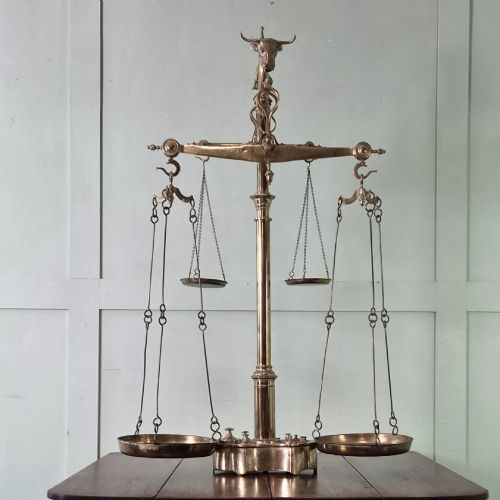
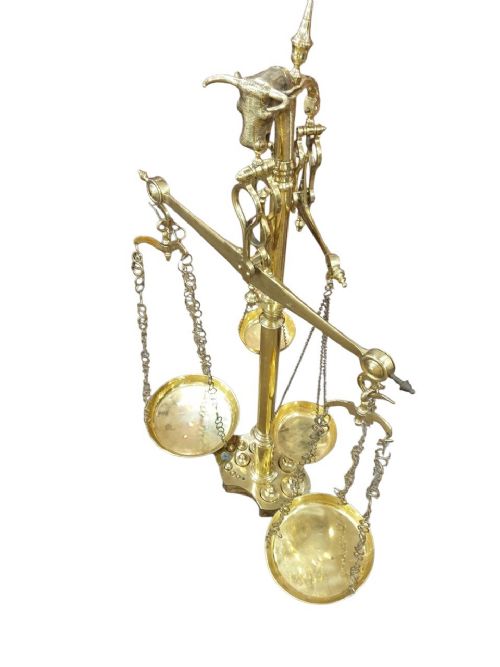
Examples range from large butchers scales equipped with hanging brass pans to decorative advertising pieces associated with specific brands of provisions. Each configuration serves a distinct commercial purpose, whether measuring meat, dry goods or general provisions across the counter.
Materials and construction
Makers constructed these commercial instruments using a combination of durable metals and dense timbers to withstand heavy daily use in retail settings. Brass provides the gleaming balance beams and pans, while cast iron and iron form the heavy structural bases required for stability during weighing.
Wooden elements such as mahogany frequently appear in the platform bases, offering a solid foundation that complements the polished metalwork. Additional components like ceramic, glass and marble are occasionally integrated into the pans or dials, adding both hygiene and visual contrast to the utility of the design.
Brass Shop Counter Scales Retail Price Guide 2026
Typical asking prices for brass shop counter scales among the pieces listed under this phrase on Sellingantiques today, from the lower quarter to the upper quarter. They describe what is for sale here now, not the wider market.
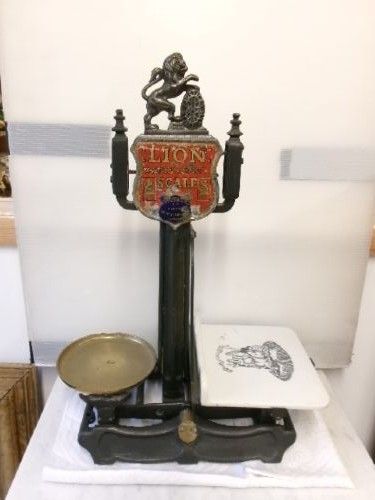
Palethorpes scales arrived in shops accompanied by the delicious prospect of advertising sausages, proving that even a butcher's balance needed a good marketing campaign.
Judging quality in commercial scales
Quality in these commercial instruments resides in the precision of the engineering and the substantial weight of the materials employed by the maker. Superior examples exhibit finely balanced brass beams, crisp casting detail on iron bases and well-finished mahogany mounts that remain tight and true.
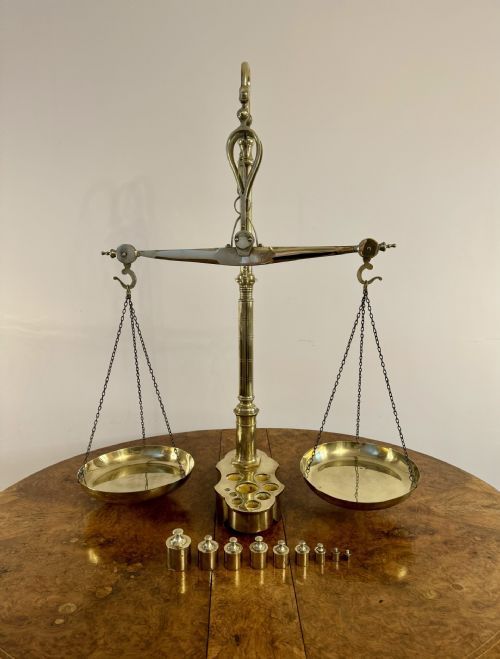
The presence of original maker inscriptions, maker stamps or surviving commercial provenance elevates an example above standard utility wares. Pieces that retain their matched brass pans and associated weight sets demonstrate a higher degree of original integrity and careful preservation.
Herbert & Sons London·Parnall & Sons of Bristol·Palethorpes
The Brass Shop Counter Scales Glossary
- Balance scales
- Weighing instruments utilising a central fulcrum with equal arms and suspended pans for determining mass. They represent a traditional design used extensively by grocers and general merchants.
- Beam scales
- Devices featuring a rigid horizontal metal bar that pivots on a central bearing to compare weights placed on opposing pans. These are often mounted on substantial wooden or iron stands.
- Quick action scale
- A mechanical weighing mechanism designed for rapid retail transactions, typically incorporating cast iron housing and spring-assisted movement. They allowed busy shopkeepers to weigh goods quickly during peak trading hours.
- Grocers scales
- Commercial weighing apparatus tailored for dry goods and provisions, frequently housed on mahogany or cast iron bases with brass pans. They were staples of nineteenth and early twentieth-century high street shops.
- Counter scales
- Utility weighing devices built specifically for placement on retail shop counters rather than hanging or floor-standing use. Their proportions ensured ease of access between the merchant and the customer.
Brass Shop Counter Scales: Frequently Asked Questions
What are brass shop counter scales?
Brass shop counter scales are commercial weighing machines used by merchants and shopkeepers during the nineteenth and early twentieth centuries. They combine functional brass beams and pans with sturdy iron or mahogany bases to measure goods for retail customers.
These instruments were essential fixtures on high street shop counters, serving businesses ranging from butchers to grocers and cooperative stores.
How were these scales used?
Merchants utilised these scales to weigh provisions accurately in front of customers during daily retail transactions. Goods were placed on the brass pans while the balance beam or quick-action mechanism determined the correct mass against standard weights.
Some scales were dedicated to specific trades, such as butchers handling heavy cuts of meat, while others served general grocery purposes.
How do I live with shop scales?
Living with these pieces involves placing them on sturdy surfaces where their substantial weight and polished brass details can be appreciated as decorative objects. They integrate well into kitchens, pantries or living spaces as focal points of historical trade.
Maintenance generally requires gentle cleaning of the brass surfaces to maintain their lustre without removing the character accumulated over decades of use.
How do I tell periods apart?
Distinguishing periods relies on observing stylistic details, materials and construction methods associated with Victorian, Edwardian and later twentieth-century manufacturing. Earlier nineteenth-century examples often feature simpler lines and heavy timber mounts, while Victorian and Edwardian pieces frequently showcase more ornate cast iron bases.
Maker signatures and patent dates stamped into the metalwork also provide clear chronological markers for dating an individual set.