
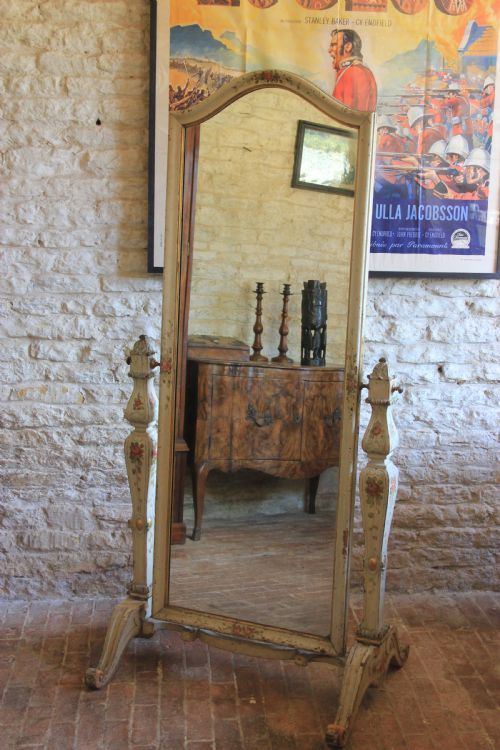
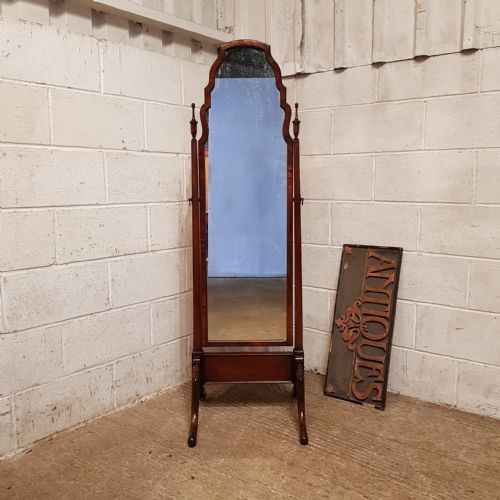


Vintage Tilting Floor Mirror
These vintage tilting floor mirror pieces, principally formed as cheval mirrors, offer adjustable full-length reflections that anchor a dressing room.
Vintage Tilting Floor Mirror
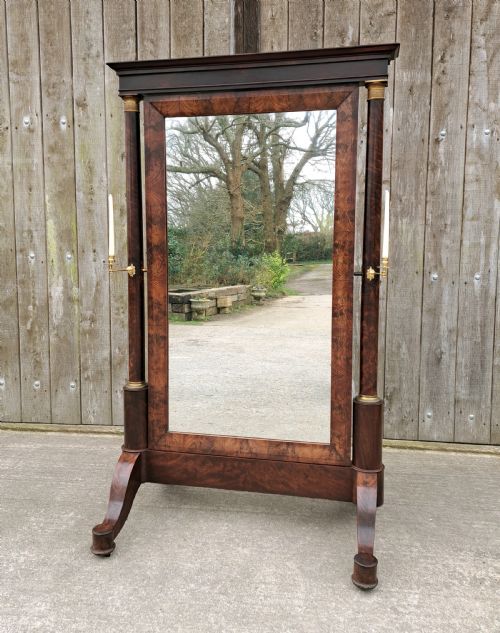
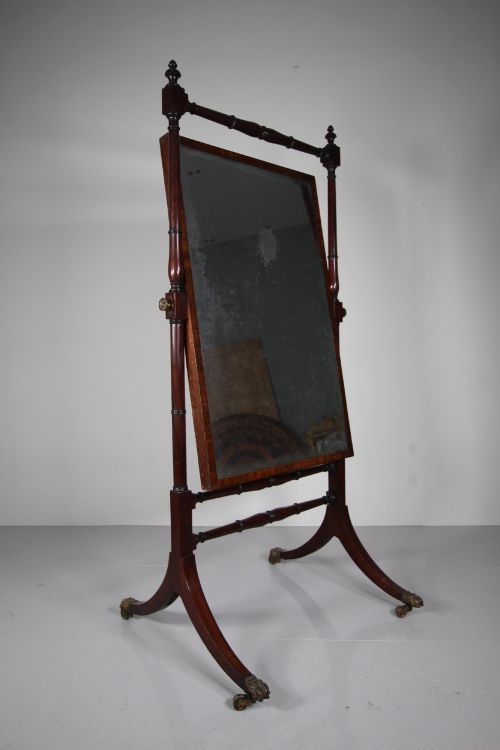
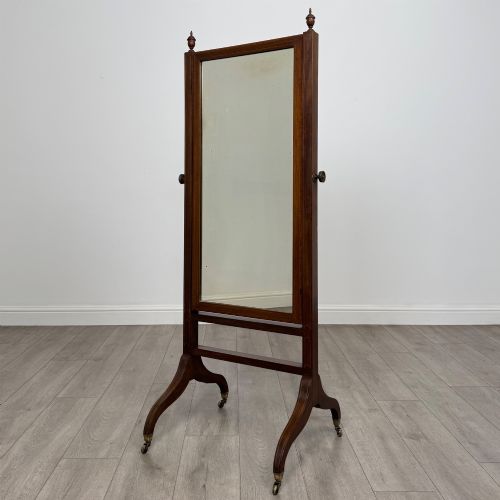
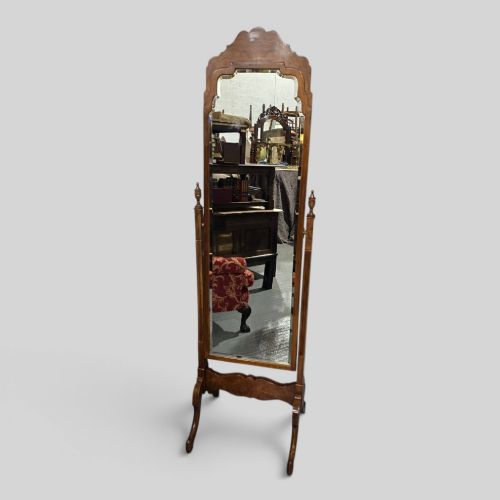
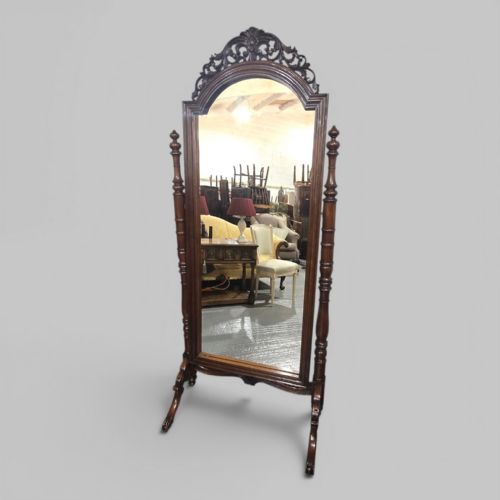
When you search for a vintage tilting floor mirror, you find a collection of cheval mirrors spanning the Georgian, Regency, Victorian, Edwardian, and 1920s periods. The selection on this page consists predominantly of mahogany frames, alongside examples in oak, burr walnut, and lacquered wood.
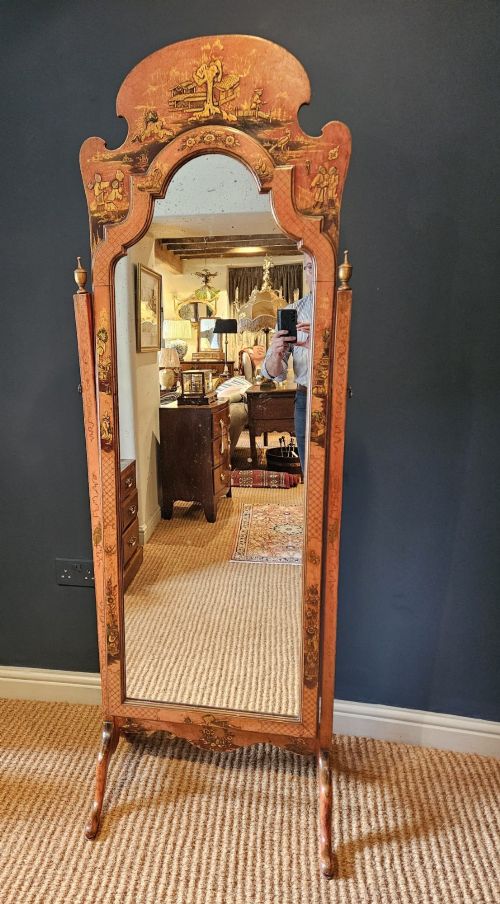
Most pieces stand upright on floor supports with pivoting frames that allow the glass to angle. You encounter forms referencing Regency, Queen Anne style, French Chateau, and Chinoiserie aesthetics amongst the inventory.
How They Were Made
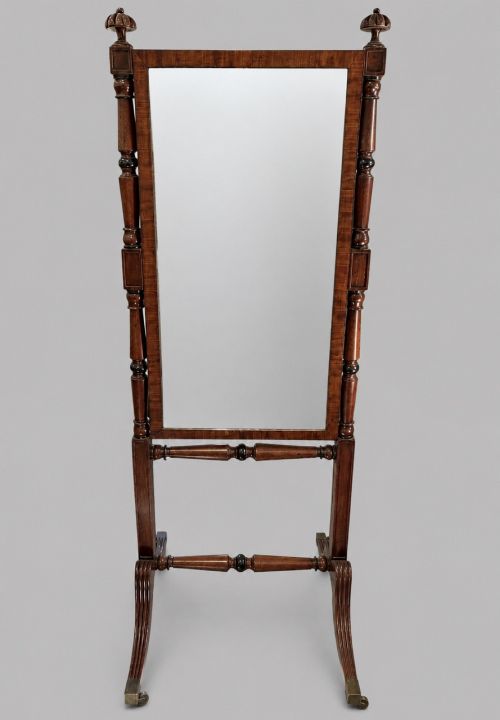
Joiners and cabinetmakers constructed the upright frames using solid timbers and veneers, notably mahogany and walnut, frequently incorporating brass pivots and sabots. Some pieces feature inlaid details or painted Chinoiserie decorations upon timber surfaces.
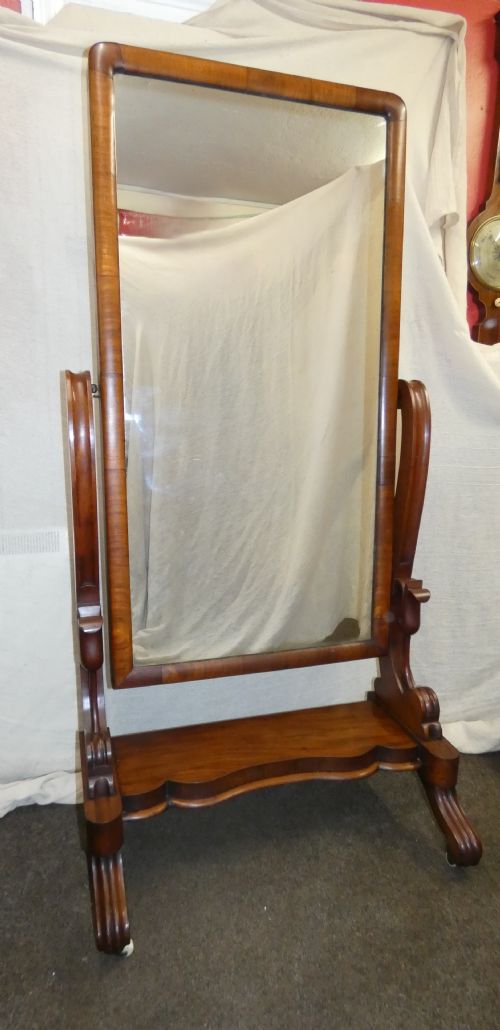
The pivoting mechanism relies on side-mounted screw pins or trunnions set into sturdy floor standards, allowing the heavy glass plate to tilt securely to various angles.
The inventory includes specialised regional styles such as Italian Country alongside formal Regency and Chinoiserie pieces.
What Varies in Quality
The sophistication of the timber figure and the subtlety of cabinetmaking define the upper tier of these mirrors. Finely grained burr walnut or select mahogany, coupled with crisp brass hardware such as castors and sabots, marks out superior examples.
Proportion and execution of period details, from Regency sabre legs to detailed Chinoiserie motifs, distinguish standard production pieces from bespoke workshop creations.
Waring and Gillow
The Vintage Tilting Floor Mirror Glossary
- Cheval mirror
- A freestanding full-length mirror mounted on a frame that permits it to swing or tilt.
- Sabots
- Metal sleeves or caps fitted to the foot of a furniture leg for protection and decoration.
- Sabre leg
- A concave sweeping leg that tapers toward the foot, typical of Regency furniture design.
- Chinoiserie
- European decorative style employing Chinese artistic motifs and lacquer techniques.
Vintage Tilting Floor Mirror: Frequently Asked Questions
How do these mirrors tilt?
The glass frame hangs between two upright floor standards on metal pivot pins or screws. Tightening these pivots holds the mirror plate at your chosen angle.
This mechanical setup allows you to adjust the reflection angle without straining the supporting structure.
Are these mirrors full length?
Yes, cheval mirrors are designed specifically to provide a complete head-to-toe reflection. Their height makes them suited for dressing areas and bedrooms.
The tall proportions require adequate floor clearance when the glass swings forward or backward.
What woods are most common?
Mahogany forms the vast majority of the frames across Georgian, Victorian, and Edwardian examples. Walnut, burr walnut, and oak also appear less frequently.
Some specialist pieces feature painted finishes or lacquered wood in the Chinoiserie style.
How do I date a mirror?
Dating relies on stylistic details such as Regency sabre legs, Edwardian inlay work, or Victorian proportions. Timber choice and construction methods also indicate the period.
Comparing the decorative motifs against known historical styles helps establish the approximate age.