



Vintage Thames Landscape Art
Vintage Thames landscape art brings the historic river, bridges and maritime traffic of London into focus through oils and watercolours.
Vintage Thames Landscape Art
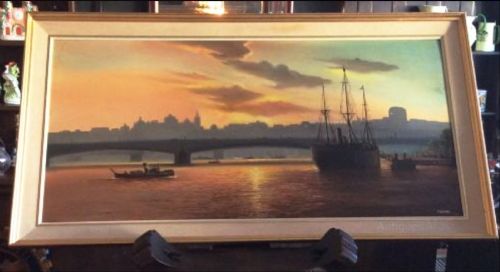
When you search for vintage Thames landscape art, you find depictions of the river, its bridges, and its bustling maritime traffic spanning several centuries. The selections here range from early Georgian prints and 19th-century watercolours to mid-century oil paintings capturing London landmarks like St Paul's Cathedral and the Pool of London.
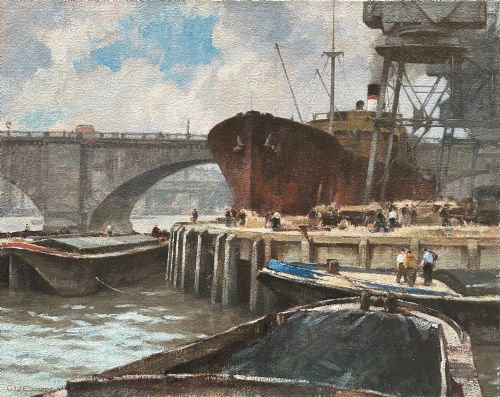
The most common formats on this page are framed watercolours on paper and oil paintings on canvas or wood. These pieces document changing industrial and urban landscapes, recording wharves, barges, and historic bridges along the riverbanks.
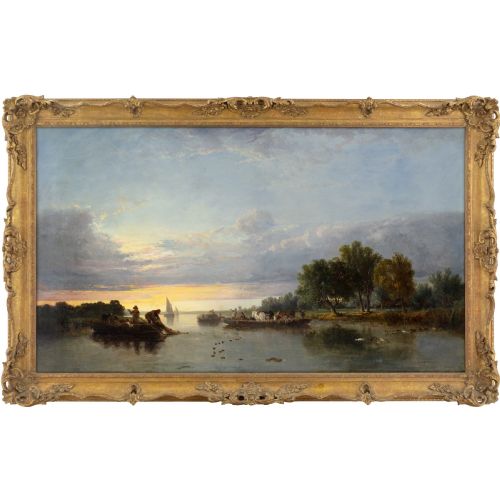
Subjects stretch from rural river stretches near Eton and Richmond to the dense industrial traffic around London Bridge and Westminster. Artists balance topographical precision with atmospheric impressions of fog, smoke, and changing light.
Materials and techniques
Artists record the river using watercolour pigments on paper or oil paint applied to canvas, wood panels, and glass-fronted framed prints. Watercolour allows for translucent washes that capture river mists and open skies, while oil on canvas accommodates heavier impasto and layered textures for industrial estuary scenes.
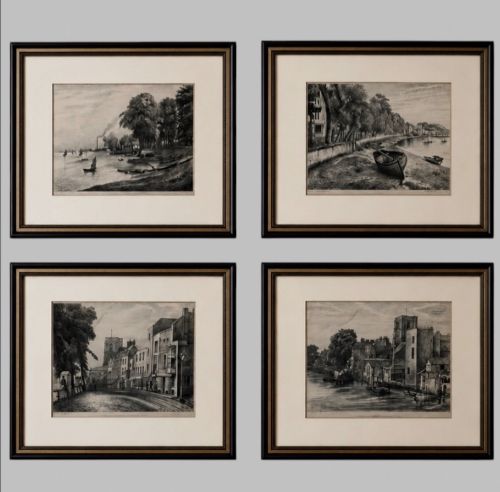
Support materials range from traditional woven canvases stretched over wooden frames to thick art paper used for detailed topographical watercolours and early lithographs. Engravings and aquatints rely on copper plates and hand-colouring techniques to reproduce early architectural views of Chelsea and Westminster.
Frames vary from period wood mouldings to later surrounds, protecting delicate paper works and securing heavy oil paintings. Pigment application shifts from precise 18th-century linear hatching to looser British Impressionist brushwork in the 19th and 20th centuries.
Artists frequently braved damp river mists to paint London's coal smoke, occasionally letting real soot settle permanently into the wet watercolour wash.
Judging the range
Quality rests on the precision of topographical detail and the artist's ability to render the specific atmospheric conditions of the London basin. Stronger works capture the scale of maritime traffic and architectural landmarks with confident brushwork, whereas weaker examples rely on formulaic compositions.
The handling of light and water surface reflection separates accomplished works from ordinary decorative views. Skilled painters use colour gradations to suggest movement and depth in the river current, while lesser pieces present static, flat water surfaces.
Provenance and attribution influence standing, with signed works by known topographical artists holding more documentary weight than unsigned studio pieces. The preservation of the paper support in watercolours, free from heavy foxing, also marks the better-surviving examples.
Edward Henry Eugene Fletcher·Frank W. Scarborough·EW Haslehurst·Herbert John Finn·William A. Macdonald
The Vintage Thames Landscape Art Glossary
- Aquatint
- An intaglio printmaking technique that produces tonal areas resembling watercolour washes. It achieves this by using acid-biting through a porous resin ground on a copper plate.
- Impasto
- Paint applied thickly to a canvas or panel so that it stands out from the surface. This technique allows brush marks and knife strokes to retain a tactile three-dimensional quality.
- Topographical
- Representing specific real places with accurate geographic and architectural detail. These works serve as visual records of historic townscapes and river layouts.
- Lithography
- A planographic printing method based on the repulsion of oil and water. Artists draw on a limestone slab or metal plate to produce multiple graphic impressions.
- Maritime art
- Painting or printmaking that focuses significantly on ships, shipping, and marine environments. This genre encompasses both naval engagements and commercial river traffic.
Vintage Thames Landscape Art: Frequently Asked Questions
What subjects appear most often?
Paintings frequently feature central London landmarks, including St Paul's Cathedral, Waterloo Bridge, and Westminster Bridge. Industrial river traffic, such as Thames barges and tugboats, also forms a dominant subject across these views.
Rural stretches further upriver near Richmond, Eton, and Petersham appear alongside bustling urban docks. This mix records both the natural bends of the waterway and its heavy commercial use.
How do watercolours differ from oils here?
Watercolours utilise transparent pigment washes on paper to capture atmospheric effects like London fog and river mist. They offer a lighter, more delicate rendering of skies and water surfaces.
Oils employ heavier pigments on canvas or wood, allowing for textured impasto and rich colour layering. This medium suits the darker, industrial tones of Victorian and mid-century shipping scenes.
How can I tell the period?
Stylistic clues, framing materials, and architectural changes in the London skyline help date each work. Georgian and 19th-century pieces often display hand-coloured aquatints or precise topographical watercolours.
Mid-century works shift toward looser impressionistic brushwork and industrial estuary subjects. Signatures and stretcher construction on canvas paintings provide further chronological markers.
Where were these pieces displayed?
Most works originated as framed art for domestic interiors, capturing familiar local views for London residents and collectors. Some were produced as book illustrations or portfolio prints.
Topographical watercolours often served to document changing urban developments before widespread photography. They hung in town houses and offices as both decoration and record.