
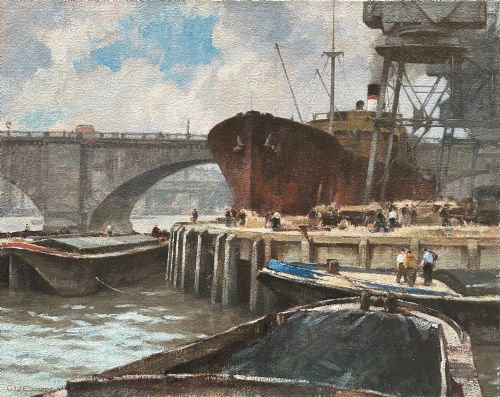
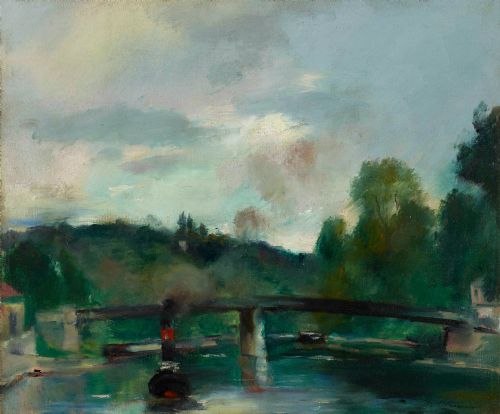
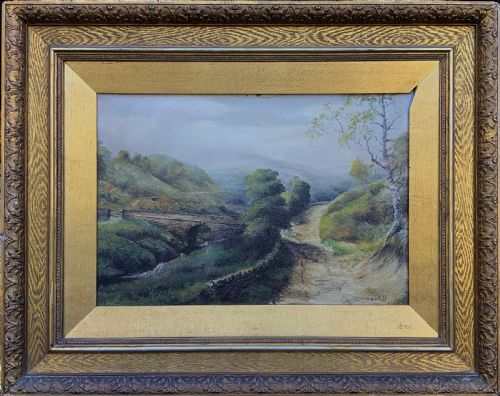
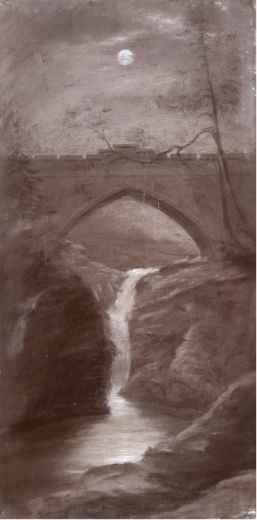



Antique Bridge Landscape Artwork
These antique bridge landscape artworks capture spans crossing rivers and canals in oil and watercolour from the nineteenth and early twentieth centuries.
Antique Bridge Landscape Artwork
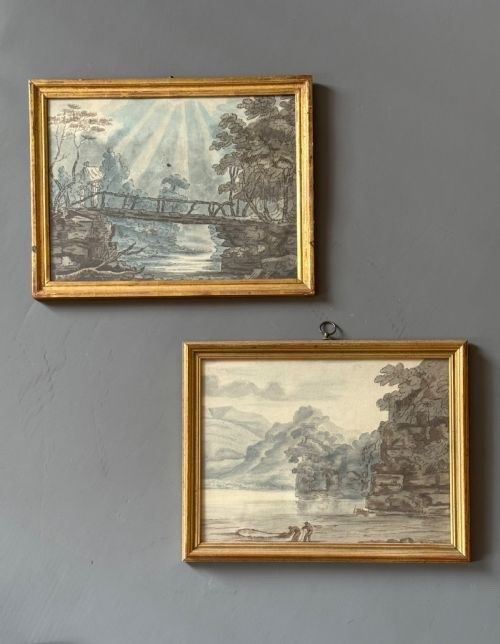
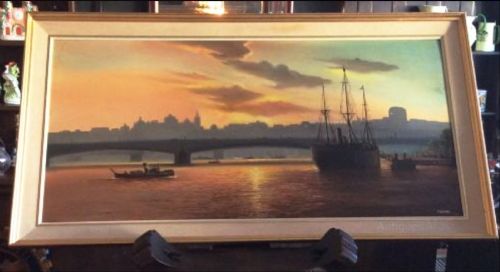
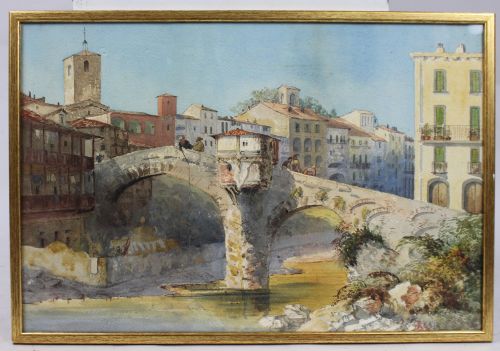
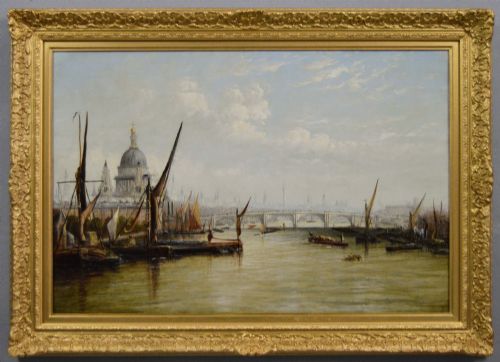
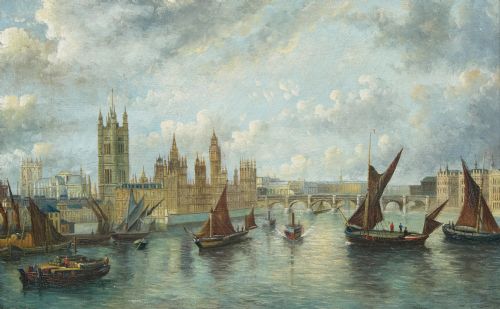
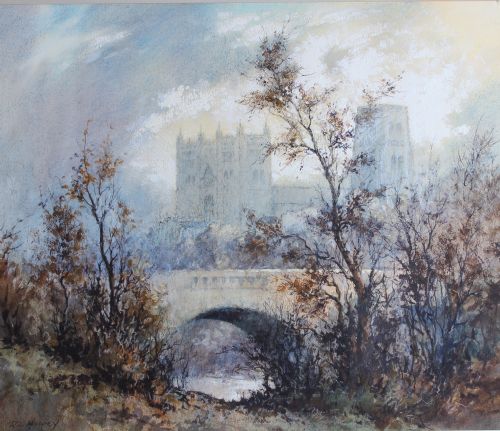
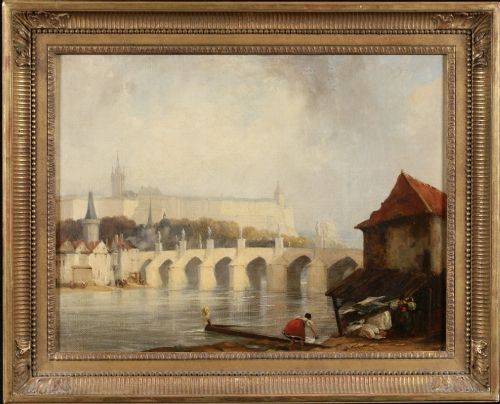
An antique bridge landscape artwork depicts architectural spans crossing rivers, canals and streams within topographical or pastoral settings. These pieces range from grand cityscapes featuring famous metropolitan crossings to quiet rural watercolours of stone arches in Scottish highlands or Welsh valleys.
The version most commonly met on this page is the nineteenth-century or early twentieth-century British school watercolour or oil painting. Painters of this era recorded specific localities, from London riversides to rural toll bridges, often framing the crossing as the focal point of a broader view.
How they were made
Artists painted these scenes primarily using oil paint on canvas or wood panel, alongside watercolour pigment applied to paper. Support materials varied according to the medium, with heavy canvas utilised for larger oil compositions and fine paper for watercolours.
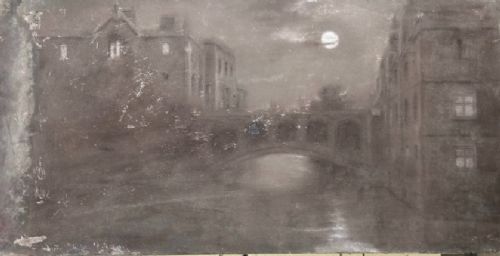
Techniques combined traditional brushwork with charcoal underdrawings to map out the architectural geometry of the bridge structure before adding pigment. Frames typically consisted of wood, occasionally complemented by glass protection for paper works.
Materials recorded across the selection include oil paint, canvas, wood panel, watercolour paint, paper, and glass.
What varies in quality
Quality rests upon the artist's command of perspective when rendering the complex stone or iron geometry of a bridge arch. Stronger works demonstrate precise handling of light reflected on water beneath the span.
The fidelity of topographical detail distinguishes finer examples from generic topographical output. Evidence of direct observation of the site elevates the artistic merit of the composition.
Francis Moltino·Henri Ottmann·Florence Adelina Hess·Frederick Waters Watts·Thomas Lound·William Traies·Noel Harry Leaver·Frederick Tully Lott·Claude Muncaster·Fred Lawson
The Antique Bridge Landscape Artwork Glossary
- Topographical landscape
- A depiction of a specific real-world location rather than an imaginary scene. These works document actual bridges, rivers and towns.
- British Impressionism
- A style characterised by loose brushwork and an emphasis on light and atmosphere. Artists working in this manner focused on outdoor scenes.
- Watercolour paint
- A medium consisting of water-soluble pigments applied to paper. It allows for translucent washes that suit river and sky effects.
- Oil on canvas
- Pigment mixed with drying oil applied to a woven fabric stretched over a wooden frame. This combination provided durability and rich colour depth.
Antique Bridge Landscape Artwork: Frequently Asked Questions
What subjects do these bridge artworks show?
The artworks depict bridges across rivers, canals and estuaries in urban and rural settings. Scenes range from London Thames crossings to Welsh mountain streams.
Many pieces record named locations such as Westminster Bridge, the Bridge of Sighs in Venice or Cambridge, and various regional toll bridges across Britain and Europe.
Which materials were used to create them?
Makers worked primarily with oil paint on canvas, wood panel, or paper, and watercolour paint on paper. Charcoal was occasionally utilised for preliminary sketching.
Frames generally comprise wood, with glass protecting works executed on paper.
How do I date an antique bridge painting?
Dating relies on stylistic indicators, artist signatures, inscriptions on stretchers, and the costume of any figures depicted near the bridge. Victorian and early twentieth-century pieces dominate the selection.
Period framing and labels on the reverse of the panel or canvas often provide additional chronological evidence.
How should I display these artworks at home?
Display works away from direct sunlight to protect watercolours and oil pigments from fading. Maintain stable room humidity to preserve paper supports and wooden panels.
Ensure paper pieces behind glass have adequate spacing from the mount to prevent moisture accumulation.