
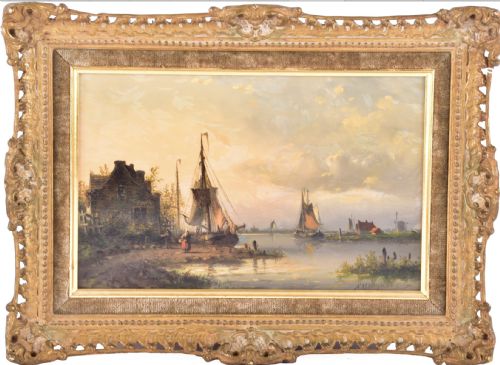
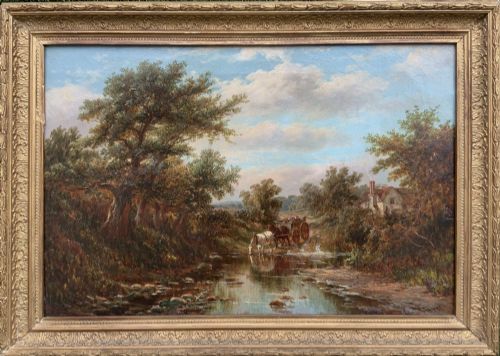
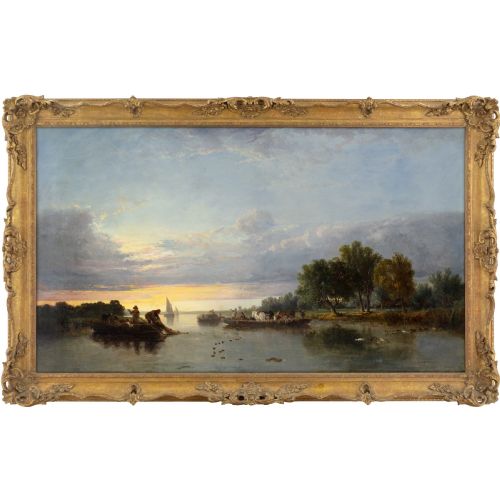

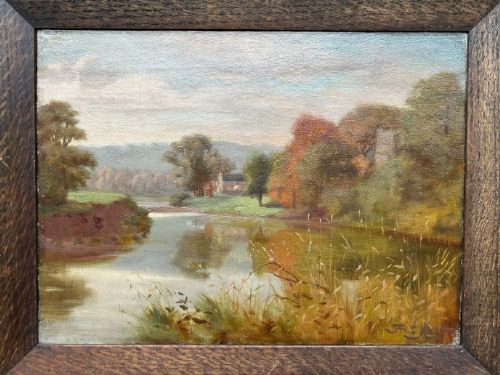
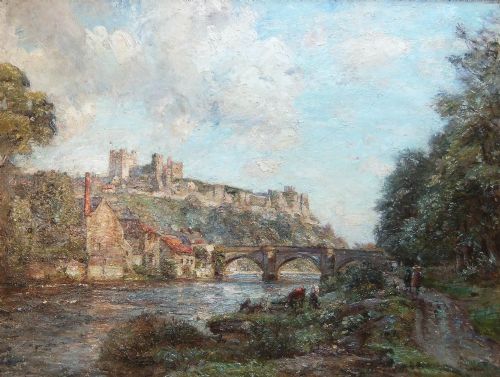
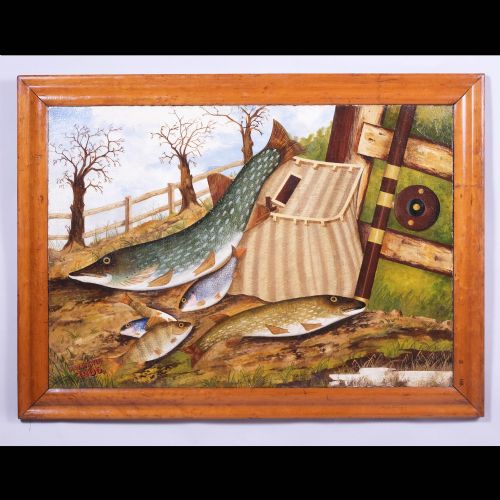
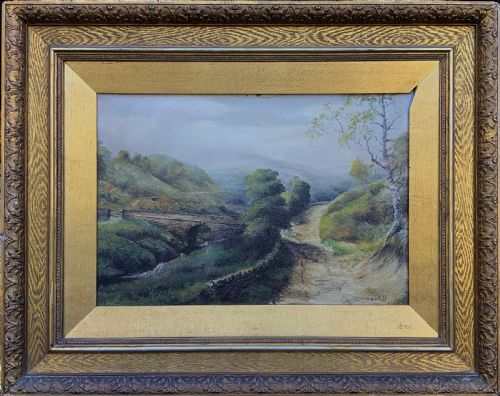
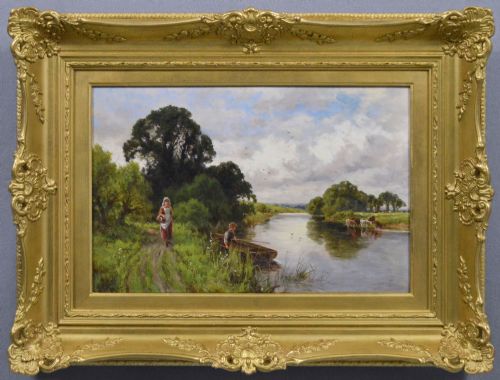
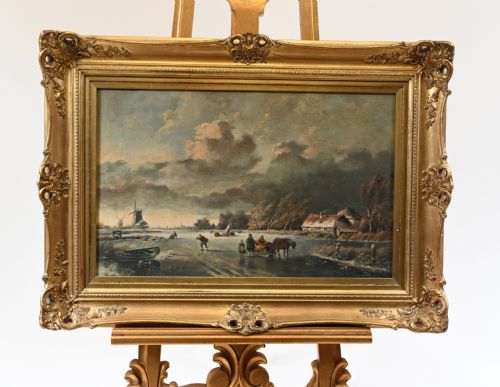
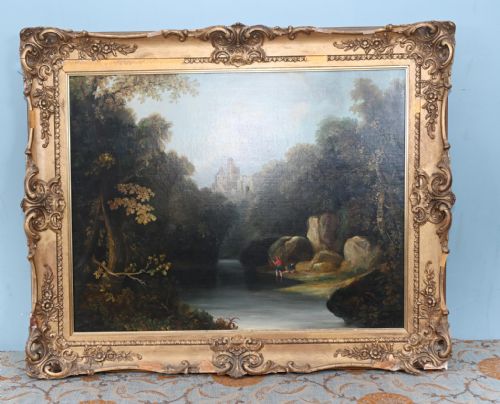
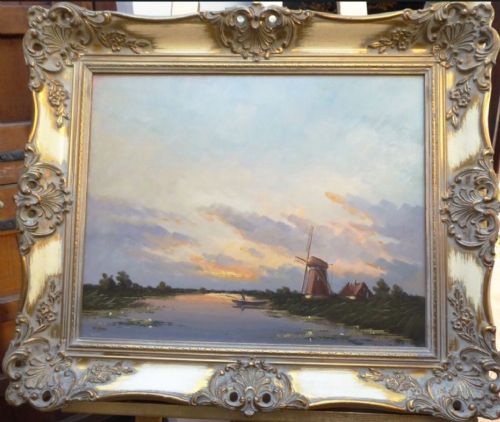
Framed River Scene Canvas
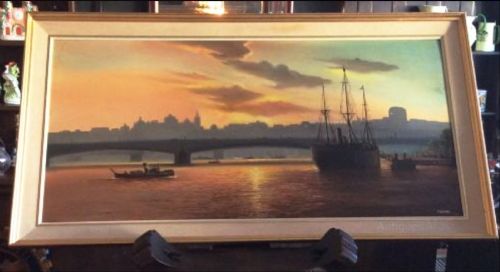
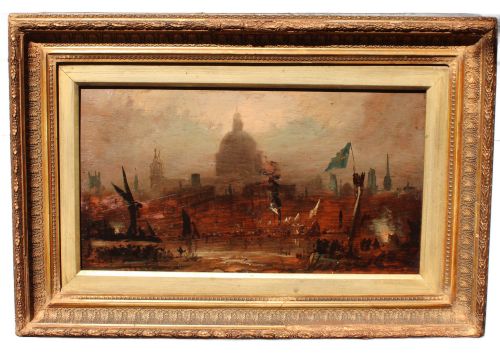
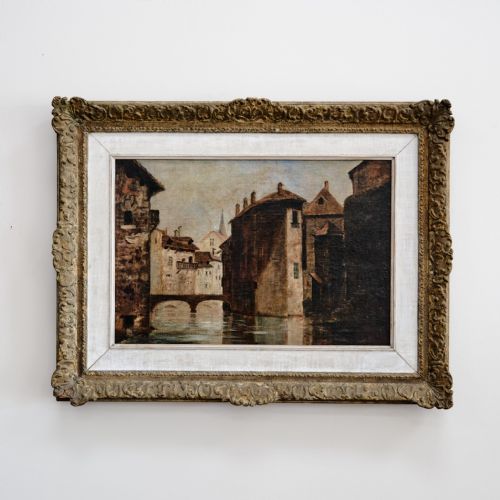
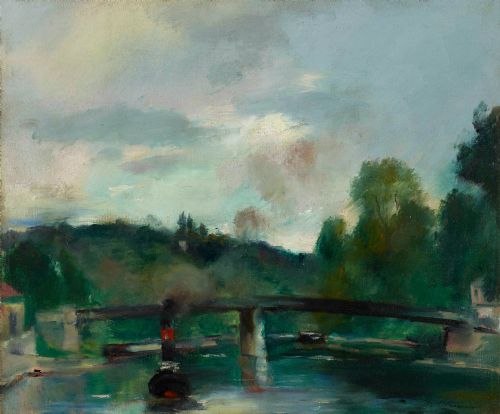
When you search for framed river scene canvas, you are looking at oil paintings on canvas depicting waterways, captured across the nineteenth and twentieth centuries.
Framed River Scene Canvas
A framed river scene canvas brings together landscapes and waterways, spanning British, French, and Dutch schools from the nineteenth and twentieth centuries. These works record pastoral riverbanks, industrial stretches of the Thames, and quiet European canals.
The most common form on this page is the nineteenth-century oil painting on canvas, housed in a wooden frame, often bearing the signature of a regional British or continental artist.
How they were made
These works are painted in oil on stretched canvas, utilising oil paint applied with brushes or palette knives to build texture and depth. Canvas provides a flexible support that holds rich pigments across decades.
The surrounds are constructed from wood, frequently finished with gesso and giltwood to create ornate frames that complement the pastoral or impressionist artwork within.
Canvases capture everything from misty Welsh rivers and London bridges to dogs splashing beside golden retrievers.
What varies in quality
Quality rests in the handling of light and atmospheric perspective, where accomplished artists capture the reflection of water and sky with conviction. Weaker examples rely on repetitive formulas and flat brushwork.
The framing also dictates distinction, as original period giltwood and gesso surrounds carry greater presence than later replacements.
George Graham·Frederick Marriott·Henri Ottmann·Herbert Royle·Sydney Yates Johnson·Archibald Kay·André Prévot Valéri·Arthur Herbert Rigg·Ron Folland·Thomas Spinks·Robert John Hammond·David Watts·Edward Henry Eugene Fletcher·Frank Hider·Walter J Watson·William Grant Murray·James Gunson Atkinson·Benjamin Williams Leader
The Framed River Scene Canvas Glossary
- Oil on Canvas
- A painting medium where pigment suspended in drying oil is applied to a woven fabric surface stretched over a wooden frame. This combination allows for blended tones and visible impasto texture.
- Giltwood
- Wood that has been coated with a thin layer of gold leaf or metallic gilt powder. It is frequently seen on nineteenth-century picture frames.
- Gesso
- A paint mixture consisting of a neutral binder mixed with chalk, gypsum, or pigment. It is applied to wooden frames to create a smooth surface for gilding.
- Impressionism
- A nineteenth-century art movement characterised by relatively small, thin, yet visible brush strokes and an emphasis on accurate depiction of light. Works in this style focus on open compositions and ordinary subject matter.
Framed River Scene Canvas: Frequently Asked Questions
How do I date a river painting?
Dating relies on stylistic clues, canvas stamps, and framing techniques. Nineteenth-century works often feature distinct academic or pastoral conventions.
Twentieth-century pieces tend towards impressionism or mid-century modern palettes, aligning with the attire and architecture depicted.
Where should I hang these canvases?
These works suit well-lit living spaces away from direct sunlight and damp conditions. Stable indoor temperatures protect both the canvas and the wooden frame.
They pair effectively with traditional interiors or act as a contrasting focal point in modern rooms.
Are all these pieces signed?
Many works bear visible artist signatures in the lower corners, while others remain attributed through gallery provenance or style. Indistinct signatures are common on period landscape studies.
Unsigned pieces are judged entirely on their technical execution and materials.
What frames come with the paintings?
The listings include a mix of original period giltwood frames, gesso mouldings, and later wooden surrounds. Each frame is selected to house the specific canvas securely.
Period frames often display minor knocks that reflect their age and history.