
Vintage Tea Caddy Box
A vintage tea caddy box holds dry leaves securely, taking the form of mahogany, silver, and Tunbridge inlay across Georgian and Edwardian eras.
Vintage Tea Caddy Box
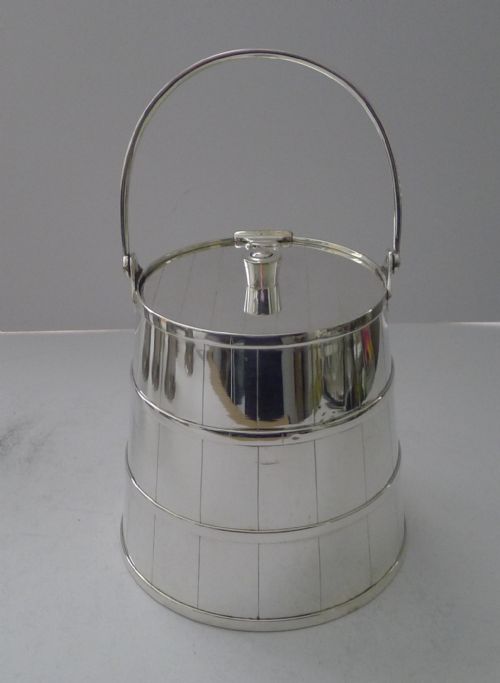
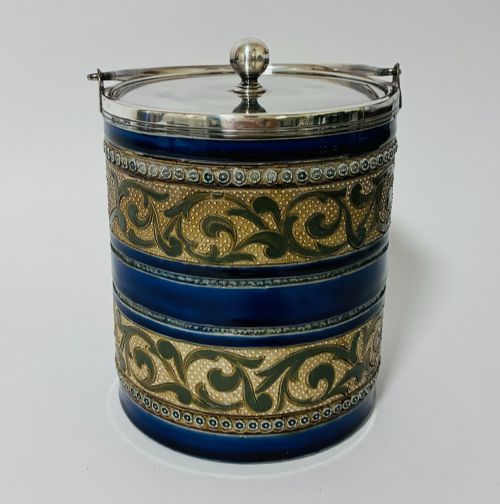
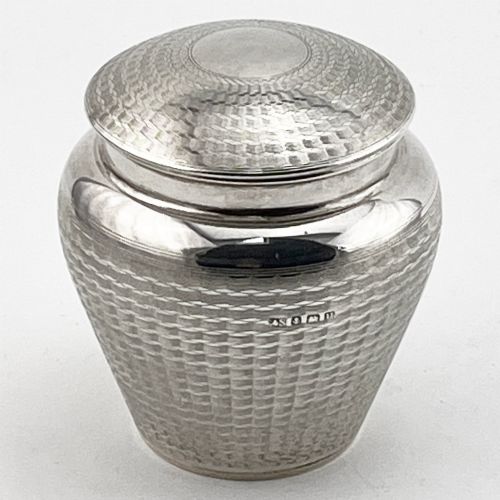
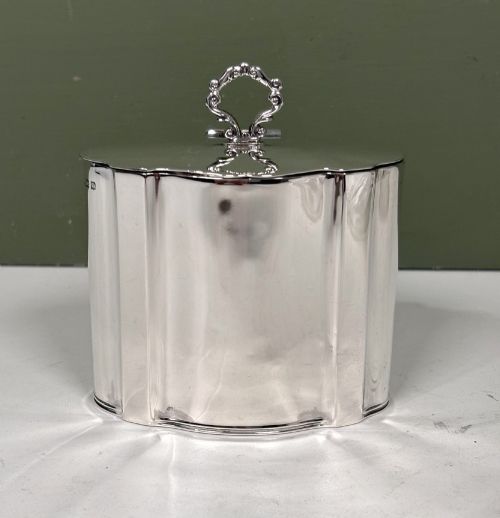
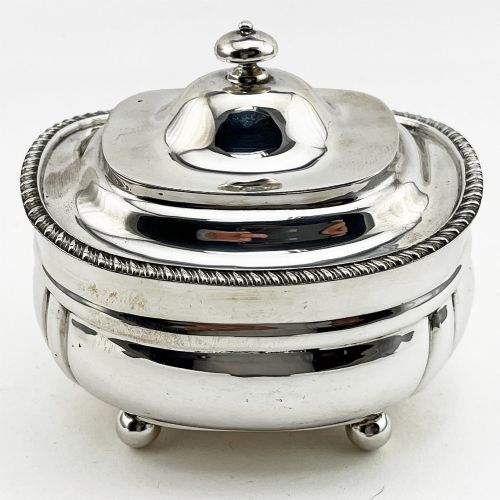
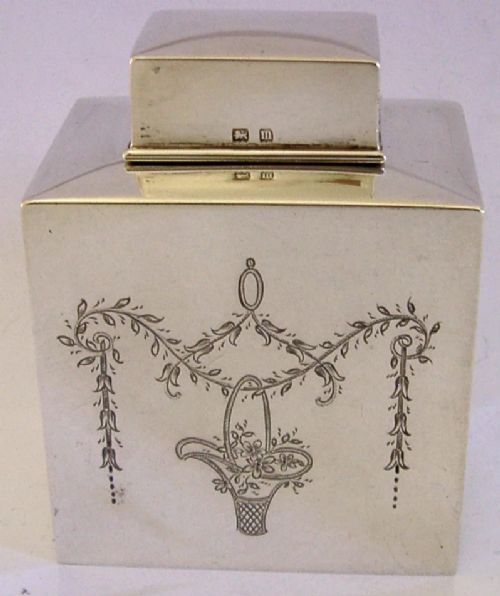
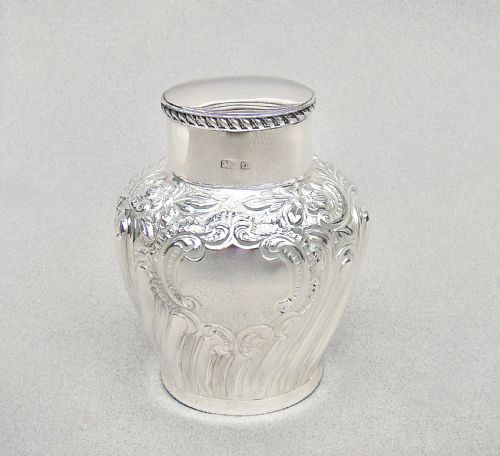
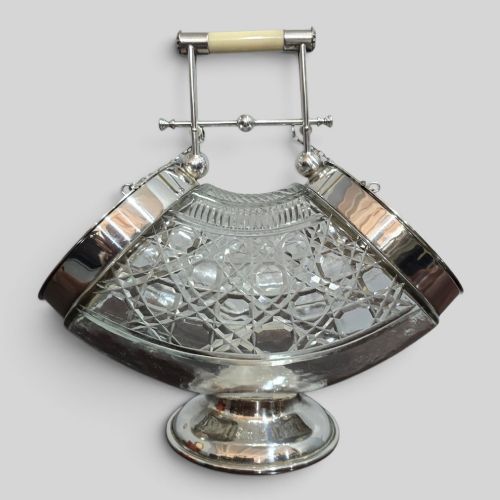
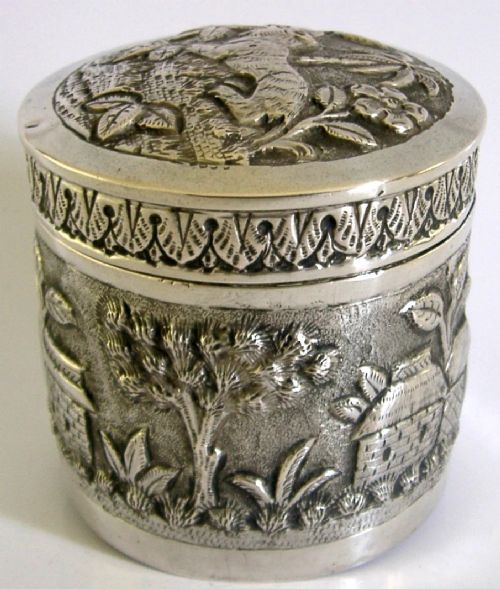
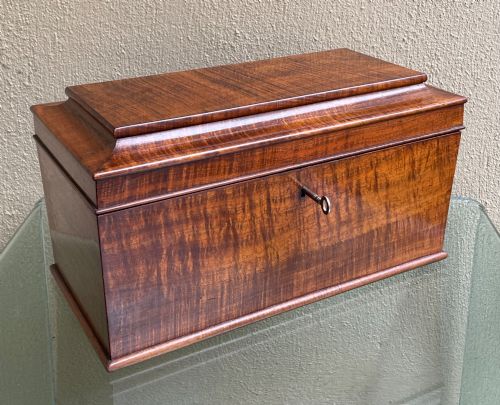
A vintage tea caddy box is a vessel designed originally to store dry leaf tea safely away from damp air and strong odours. On this page, the forms range widely from Georgian mahogany chests to Edwardian silver canisters and biscuit barrels.
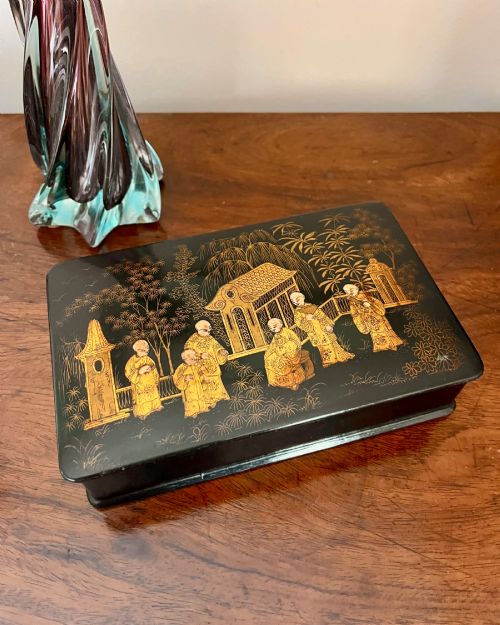
The materials span native and exotic timbers such as walnut, satinwood, and rosewood alongside solid sterling silver, silver plate, and occasional brass or papier mâché. Many examples survive from the eighteenth, nineteenth, and early twentieth centuries.
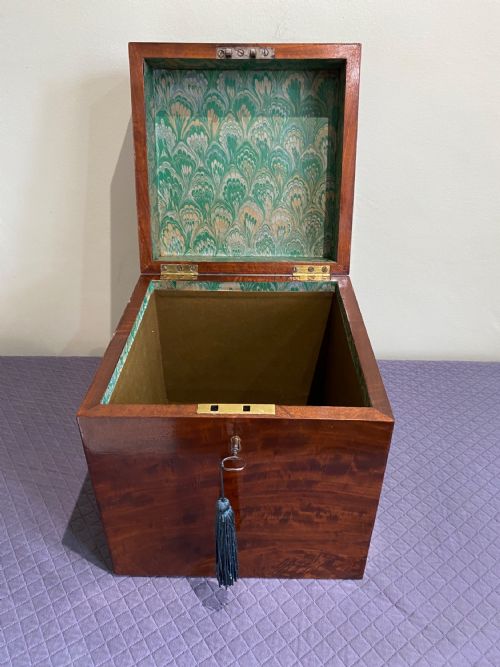
Buyers encounter everything from simple wooden domes to inlaid satinwood ovals and novelty biscuit boxes. Interiors often reveal remnants of foil lining or divided compartments intended to keep different leaf grades separate.
Materials and construction methods
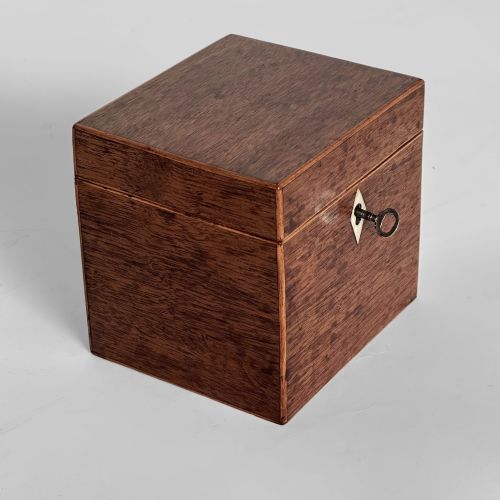
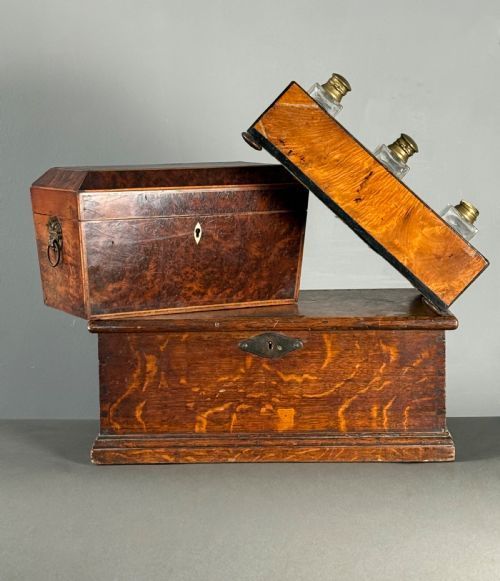
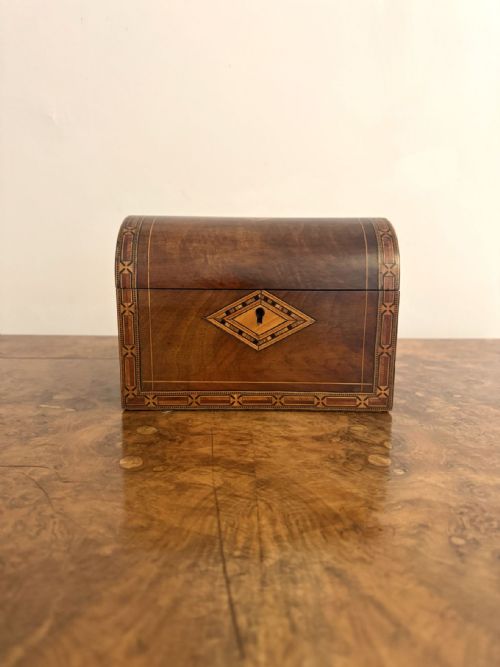
Cabinetmakers constructed wooden boxes using dense hardwoods like mahogany, walnut, and rosewood, frequently applying intricate veneers and Tunbridge inlay in fine geometric patterns. Mother of pearl, bone, and ebony details appear set into the lids and panels of eighteenth and nineteenth century pieces.
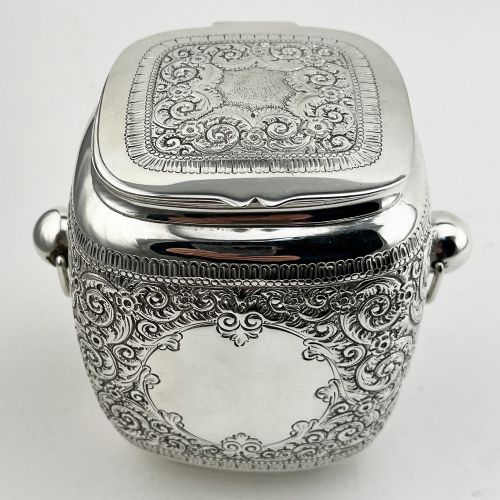
Silversmiths hammered, cast, and pierced sterling silver and silver plate to create gleaming tea canisters, often incorporating lion mask handles or repoussé decoration. Glass and ceramic bodies, seen in biscuit barrels and Doulton Lambeth pieces, received heavy silver plated mounts and hinged lids.
Judging quality and craftsmanship
Quality rests upon the precision of the cabinetwork or metal smithing, visible in the tightness of mitred joints, the crispness of inlay, and the weight of silver used. Superior wooden boxes retain original fitted interiors, functioning locks with keys, and unwarped lids that close flush against the body.
The distinction between standard production and top tier pieces lies in decorative ambition, such as flame mahogany grain selection, delicate stringing, and well-executed mother of pearl or Tunbridge details. Maker attribution, through clear hallmarks or stamped signatures, adds certainty to the provenance.
Martin Hall & Co·Thomas Hayes·Mappin & Webb·Zimmermann
The Vintage Tea Caddy Box Glossary
- Tea caddy
- A small box or jar used to store tea leaves. The word derives from catty, a Chinese unit of weight.
- Tunbridge inlay
- A meticulous form of woodwork utilising tiny coloured wood prisms to create mosaic pictures and geometric borders. It originated in the Kent town of Tunbridge Wells during the eighteenth and nineteenth centuries.
- Hallmark
- A stamp applied to precious metals indicating the standard of purity, the assay office, and the date letter. British silver pieces carry these official marks to confirm authenticity.
- Biscuit barrel
- A covered ceramic, glass, or metal container designed to keep biscuits fresh on the dining table. They frequently date from the Victorian and Edwardian periods with silver plated mountings.
- Papier mâché
- A composite material made from paper pulp or layers of paper reinforced with glue, moulded and lacquered. Victorian makers utilised it for decorative boxes inlaid with mother of pearl.
Vintage Tea Caddy Box: Frequently Asked Questions
What is a vintage tea caddy box used for today?
These boxes function primarily as decorative storage on sideboards or mantelpieces, holding small trinkets, jewellery, or modern tea bags.
Collectors appreciate them for their fine cabinetry and historical connection to the domestic rituals of past centuries.
How can I tell a Georgian tea caddy box from a Victorian one?
Georgian examples often feature restrained classical proportions in mahogany, satinwood, or burr yew, frequently relying on fine veneer and stringing for decoration.
Victorian pieces introduce bolder forms, including papier mâché with mother of pearl, heavier mouldings, and a wider use of silver plate.
Are all silver tea caddy boxes made of solid silver?
The evidence shows a mix of solid sterling silver items bearing hallmarks and silver plated pieces created over base metals.
Listings specify the material and weight where applicable, distinguishing between solid metal and plated wares.
Did these boxes always include keys?
Tea was an expensive commodity in the eighteenth and nineteenth centuries, so many boxes were fitted with functional locks to restrict access.
Some surviving pieces retain their original keys, while others do not affect the decorative or historical appeal of the box.