


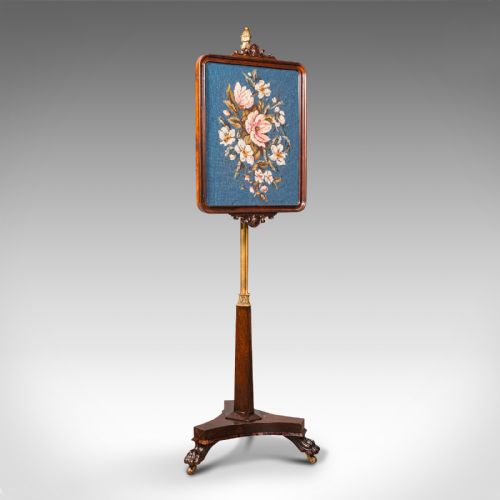
Vintage Tapestry Screen
These vintage tapestry screen pieces bring hand-worked textile panels and carved timber frames into the room, offering both decorative warmth and functional division.
Vintage Tapestry Screen
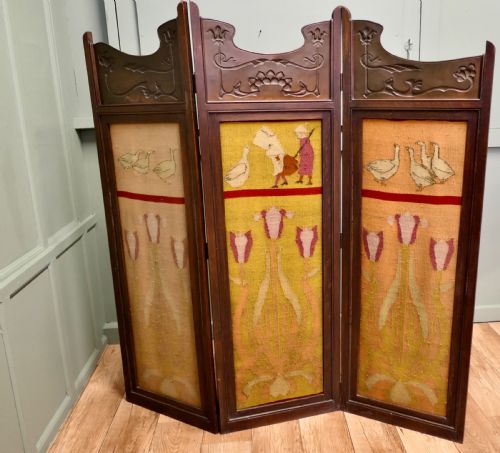
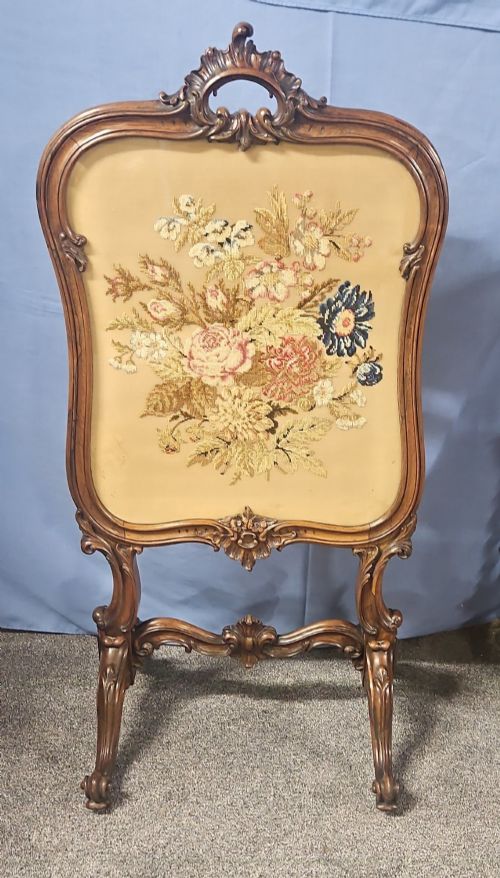
When you search for a vintage tapestry screen, you are looking at items designed to block hearth heat or divide interior spaces using textile panels.
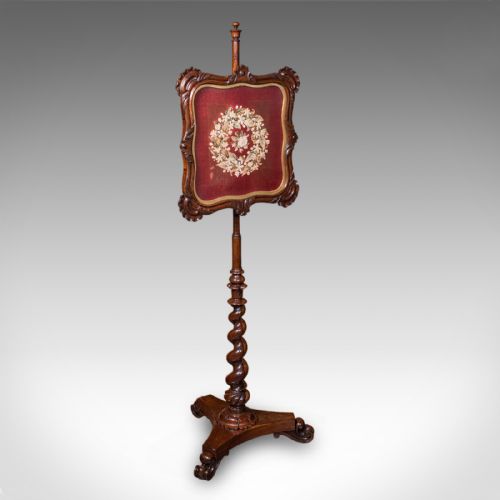
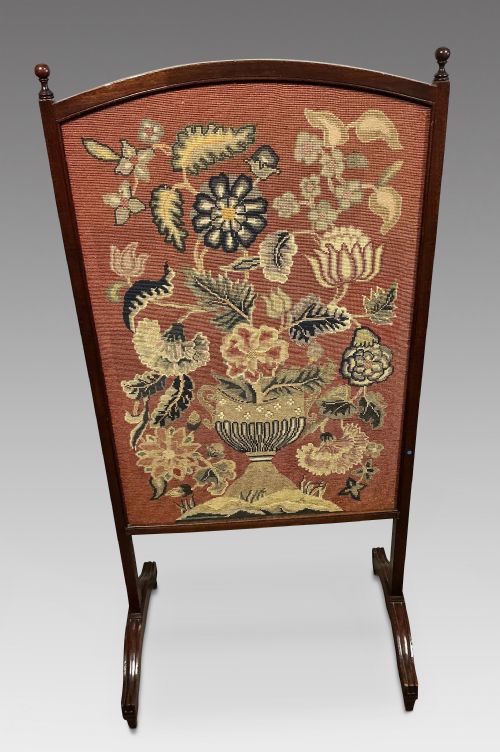
The evidence shows these objects take the form of fire screens, folding room dividers, and adjustable pole screens made during the nineteenth and early twentieth centuries.
You will most commonly encounter Victorian and William IV examples featuring needlepoint, wool, and canvas panels set into timber frameworks.
How they were made
Carpenters and cabinet makers shaped the structural elements from timbers such as mahogany, walnut, oak, and rosewood, often incorporating carved details or bobbin turning.
Makers integrated hand-woven wool, needlepoint, and embroidered textiles into the timber frames, sometimes mounting them with brass or copper hardware.
Certain designs utilised mechanical adjustments, enabling panels to slide on poles or fold across multiple hinged sections.
Vintage Tapestry Screen Retail Price Guide 2026
Typical asking prices for vintage tapestry screen among the pieces listed under this phrase on Sellingantiques today, from the lower quarter to the upper quarter. They describe what is for sale here now, not the wider market.
Periods represented span from the Georgian era through Victorian designs to early twentieth-century examples.
What varies in quality
The execution of the textile work dictates much of the character, ranging from simple naive wool stitching to intricate needlepoint and gold thread embroidery.
Timber selection and the depth of carving in the frame, particularly on pole screens and folding room dividers, distinguish standard production from more ambitious workshop pieces.
The Vintage Tapestry Screen Glossary
- Pole screen
- A vertical fireside screen with an adjustable panel that slides up and down a central wooden or brass stand to block heat from the hearth.
- Needlepoint
- A type of canvas work embroidery stitched with yarn, frequently seen forming the pictorial panels of these screens.
- Bobbin turned
- A method of woodturning that creates a series of rounded, spool-like shapes along furniture legs and frame supports.
- William IV
- A British design period spanning the 1830s, characterised by robust classical proportions and substantial timber construction.
Vintage Tapestry Screen: Frequently Asked Questions
What is a pole screen used for?
These adjustable stands were placed near fireplaces to shield a person's face from the intense radiant heat of an open coal fire.
The sliding panel could be raised or tilted to block the warmth exactly where needed in the room.
How do I tell a pole screen from a regular fire screen?
A pole screen rests on a central vertical shaft with a weighted base, featuring a panel that slides up and down.
Standard fire screens stand on feet or legs as a fixed barrier rather than operating on a vertical rod.
Where should I place a room divider screen?
These folding pieces work well to partition corners of larger reception rooms or to create visual privacy.
They can also stand flat against a wall to display the textile panel as a piece of wall art.
How do I care for the textile panels?
Keep the wool and needlepoint panels out of direct sunlight to prevent the coloured fibres from fading over time.
Gentle surface dusting with a soft brush helps maintain the fabric without disturbing the vintage weave.