


Vintage Swivel Office Chair
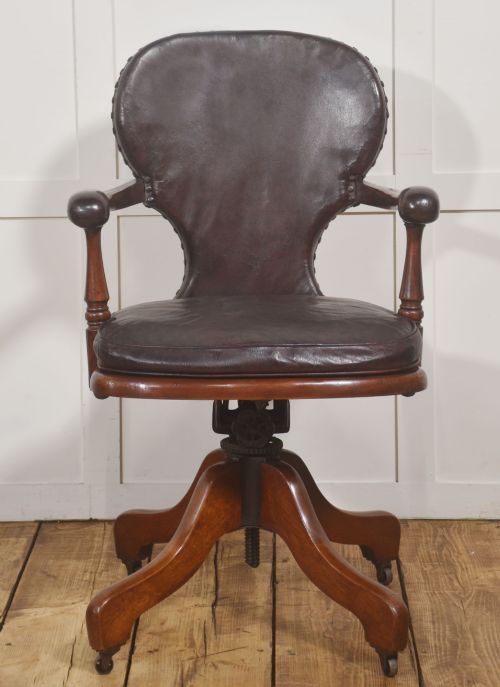
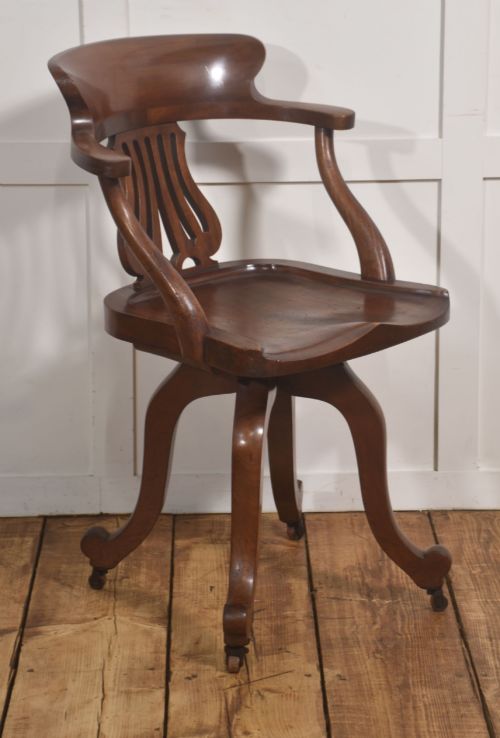
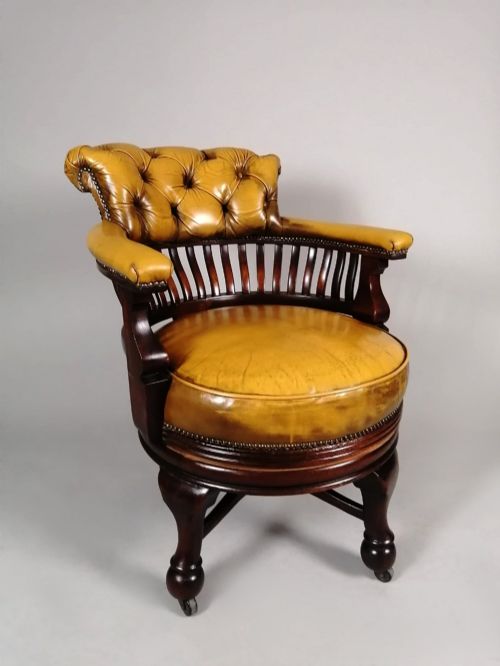
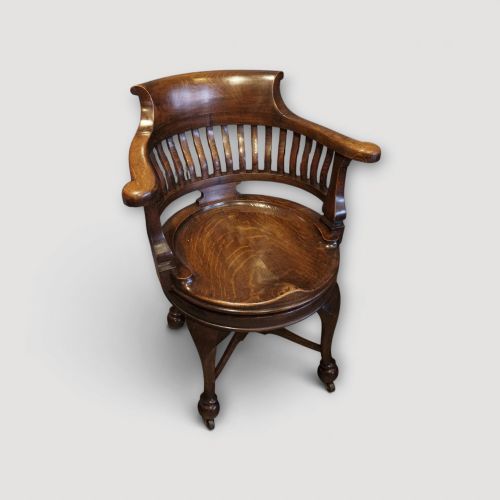
These vintage swivel office chair examples bring historic utility to a study, combining period timber and leather with working mechanical movement.
Vintage Swivel Office Chair
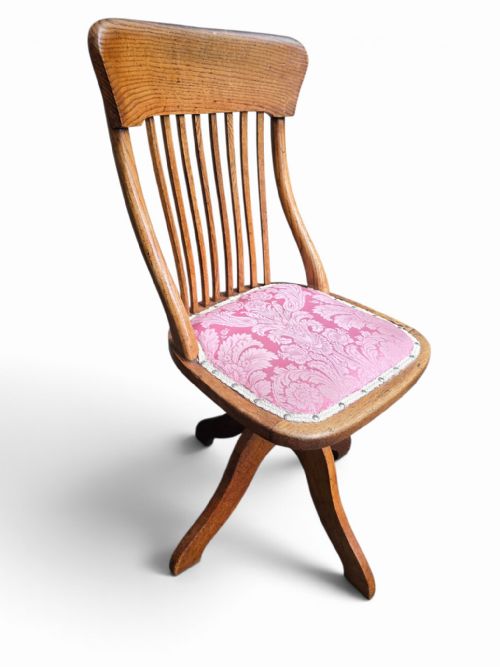
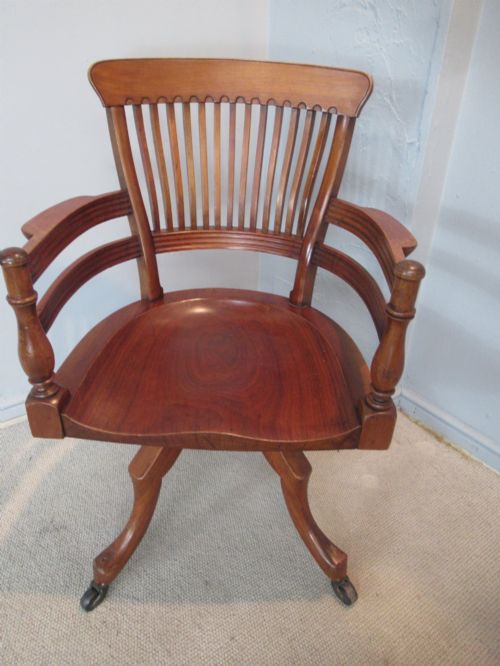
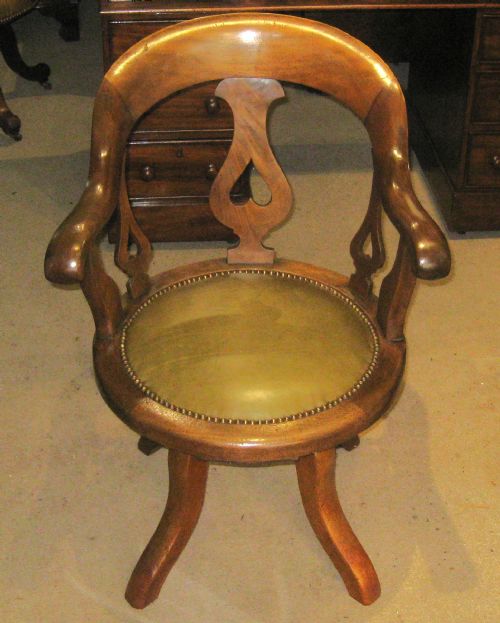
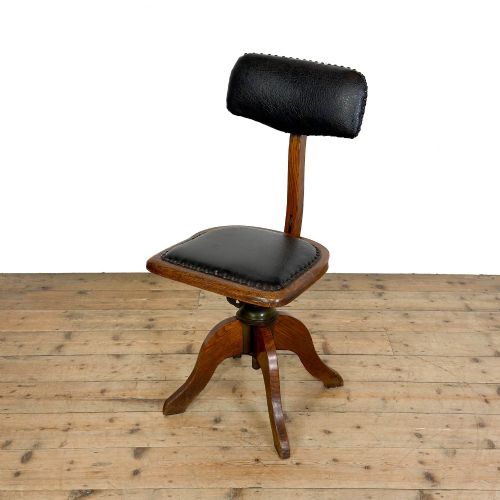
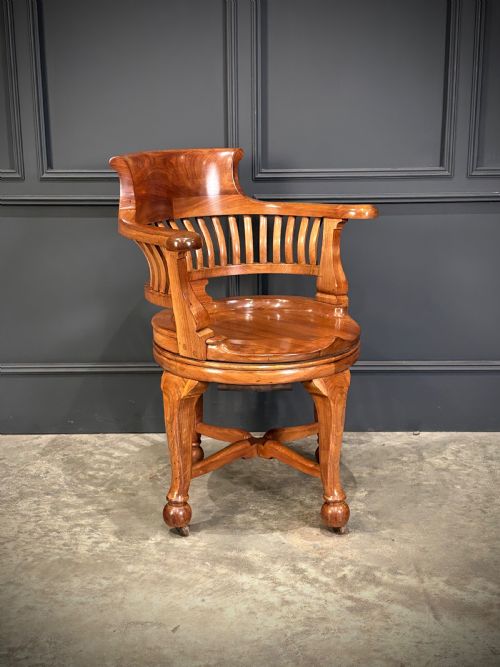
A vintage swivel office chair is a working seat designed for a desk, combining a revolving mechanism with timber frames and upholstered or cane seats. When you search for this phrase, you meet heavy functional seating built during the Victorian, Edwardian and early twentieth century periods.
The most common versions on this page are revolving armchairs and desk chairs framed in mahogany, oak or walnut. Many incorporate height adjustment and tilting actions intended for long hours at a ledger or writing table.
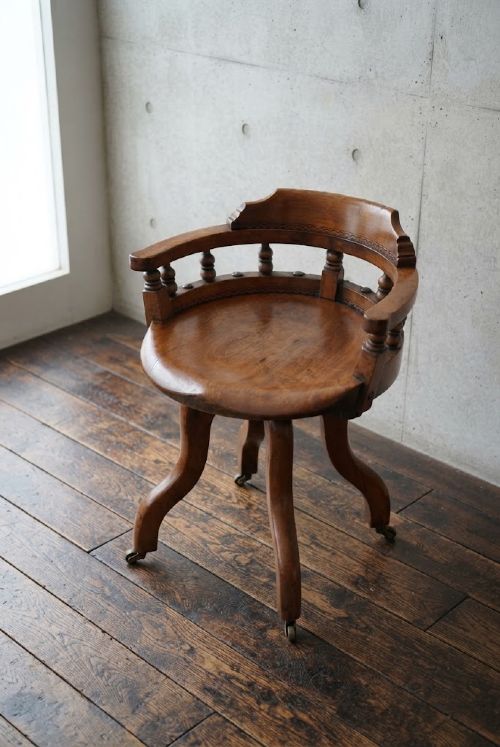
Origins stretch from standard office and library seating to maritime environments, including specialised ships chairs and machinist models. These pieces span styles from plain utility to Gothic Revival, Arts and Crafts and Aesthetic Movement designs.
How they were made
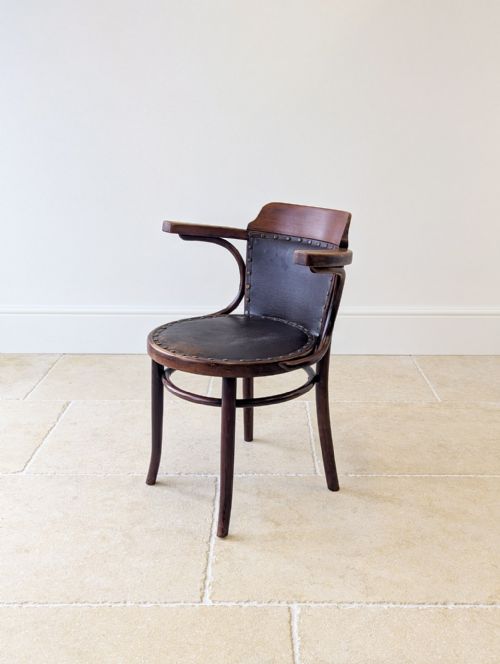
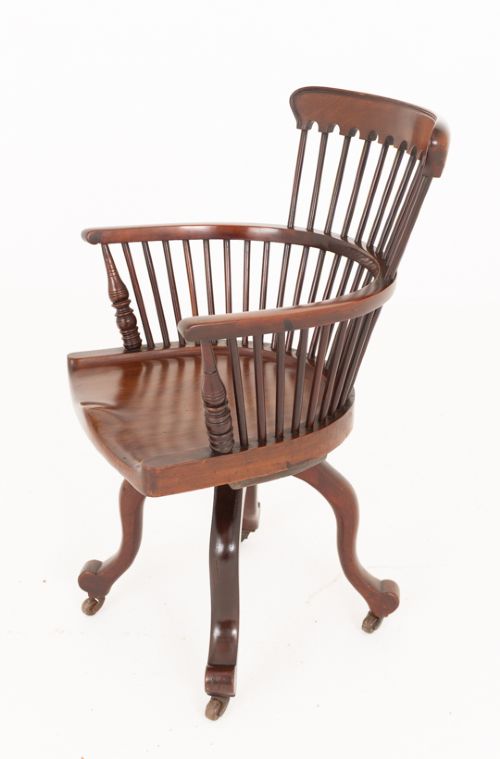
Frames rely on hardwoods like mahogany, oak, walnut, beech and ash, joined to bear the stress of constant turning and tilting. Turners and cabinetmakers shaped spindles and armbows, while bentwood techniques provided curved structural elements.
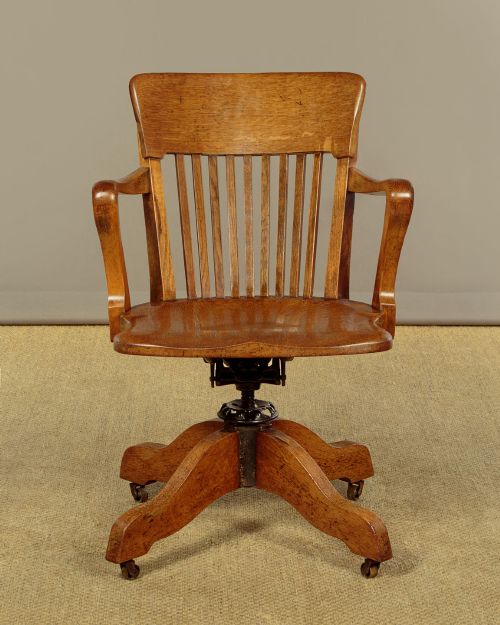
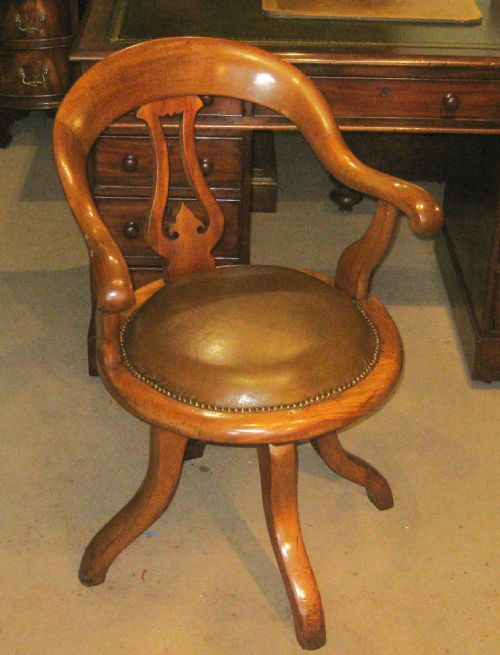
Mechanisms utilise cast iron and brass for the central spindle, spider base and swivel pivot. Upholstery consists of leather, green leather, tan hide or bergere cane panels secured over stuffing.
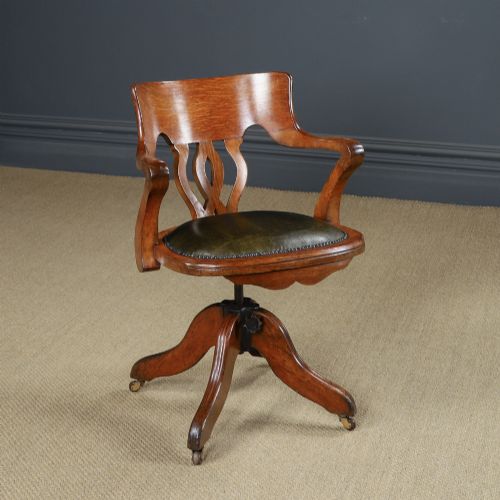
Adjustability is achieved through threaded metal spindles or rise and fall mechanisms that allow the seat height to change. Brass castors typically finish the feet, permitting smooth movement across office floors.
Vintage Swivel Office Chair Retail Price Guide 2026
Typical asking prices for vintage swivel office chair among the pieces listed under this phrase on Sellingantiques today, from the lower quarter to the upper quarter. They describe what is for sale here now, not the wider market.
Several chairs left dry land entirely behind to serve aboard ships.
What varies in quality
Quality rests in the integrity of the timber framing and the sturdiness of the revolving mechanism beneath the seat. Superior examples use dense hardwoods with precise joinery that keeps the movement stable during use.
The finish of the leather and the depth of patination on the wood separate fine workshop production from basic utility pieces. Finer chairs retain original swivel hardware and smooth-turning brass actions without excessive play in the spindle.
Thonet
The Vintage Swivel Office Chair Glossary
- Revolving
- Turning through a full circle on a central axis. This action defines the core function of an office desk chair.
- Bentwood
- Wood softened by steam and bent into curved shapes. This technique creates rounded chair backs and armrests.
- Bergere
- A type of canework woven in a tight pattern. It forms breathable seat and back panels on certain chairs.
- Rise and fall
- An adjustable height mechanism operated by a screw thread. It allows the seated user to alter their working level.
- Chesterfield
- A deep buttoned upholstery style associated with padded leather seating. It provides traditional cushioning on executive models.
Vintage Swivel Office Chair: Frequently Asked Questions
How do I adjust the height?
Most period chairs use a threaded central iron spindle beneath the seat. You rotate the entire upper chair body clockwise or anticlockwise to raise or lower the seating level.
Older mechanisms rely on a simple screw pin or a rise and fall lever to lock the height into place.
Can I use one at a modern desk?
Many historical desk chairs fit under standard modern writing tables, provided you check the clearance height. The compact footprint of Edwardian and Victorian models makes them suitable for contemporary home studies.
Take measurements of your desk kneehole before choosing an armchair version with wide wooden elbows.
How do I tell Victorian from Edwardian?
Victorian chairs often feature denser mahogany timbers, heavier carved details and dark finishes. Styles lean towards Gothic Revival or robust turnings.
Edwardian examples frequently use lighter oak or walnut with simpler lines, often incorporating Arts and Crafts influences or steam bentwood elements.
How do I care for the leather?
Feed the hide periodically with a quality leather balsam or wax to keep the surface supple. Avoid placing the chair near direct heat sources that can dry out the material.
Gentle dusting with a dry cloth protects the original patination and prevents dirt from settling in the button creases.