





Solid Wood Office Chair
A solid wood office chair brings proper craft and daily comfort to a workspace, combining sturdy timbers with practical swivel and desk designs.
Solid Wood Office Chair
A solid wood office chair sits at the intersection of traditional woodworking and practical workplace history, offering sturdy seating for daily tasks. When searching for a solid wood office chair, buyers encounter pieces spanning the eighteenth, nineteenth, and early twentieth centuries, reflecting changing demands for workplace comfort.
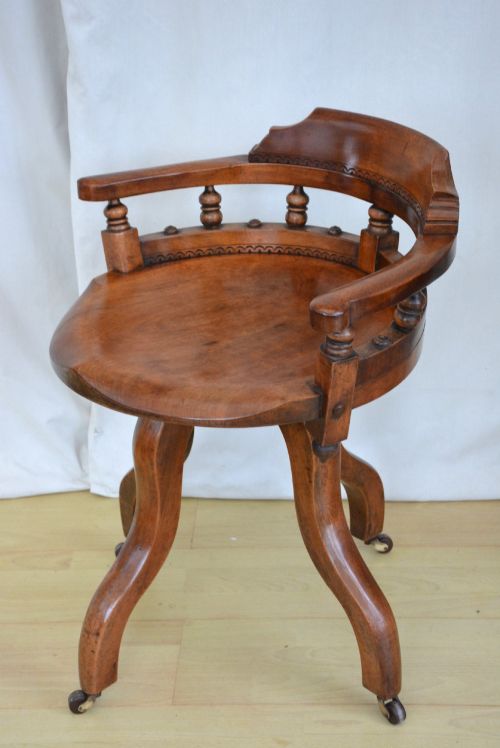
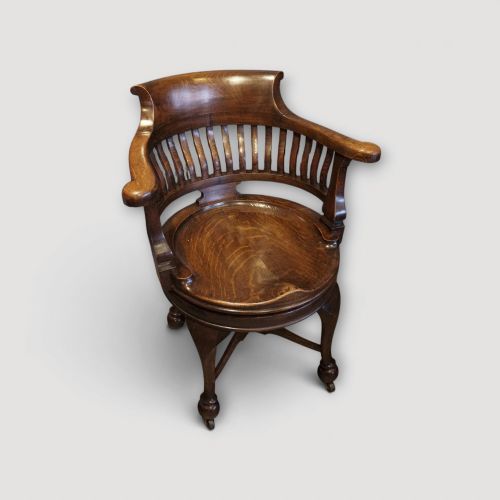
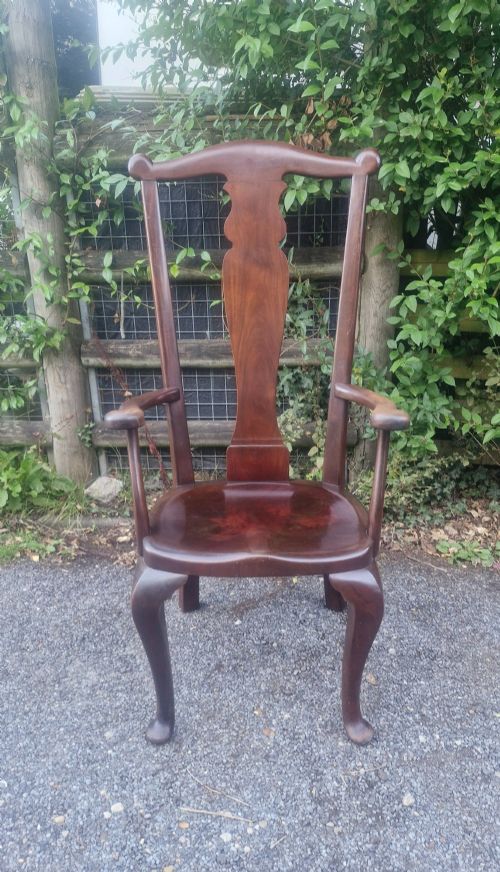
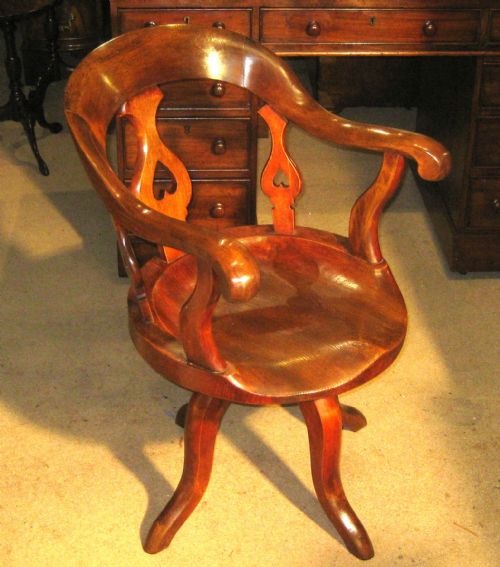
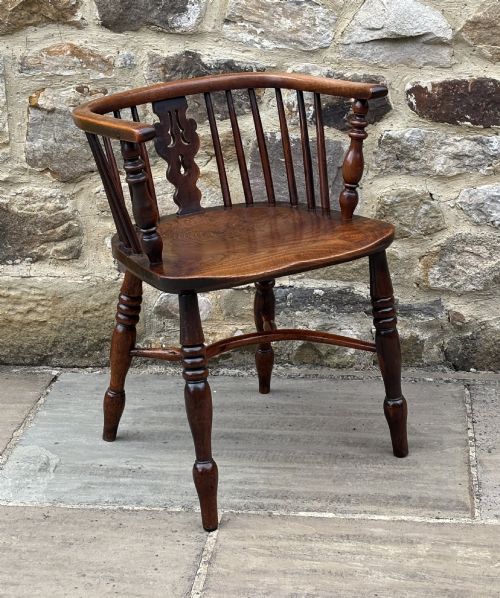
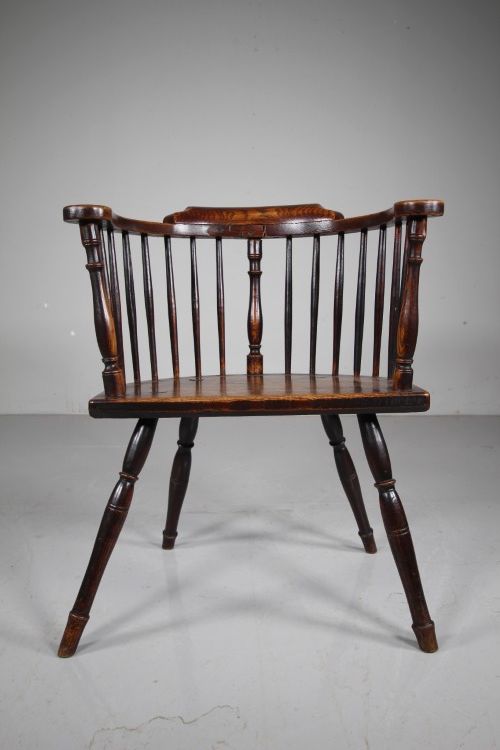
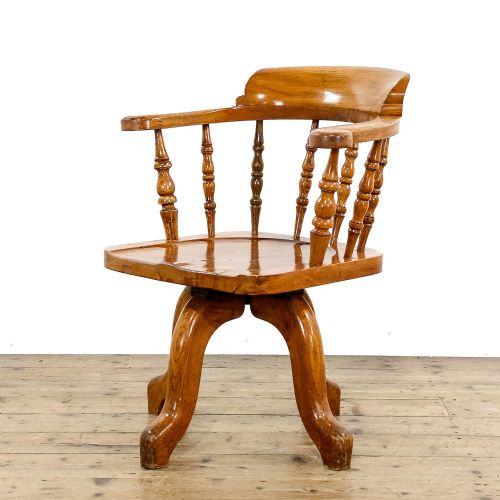
The selection here encompasses various forms, from Victorian walnut revolving designs and Edwardian oak desk chairs to traditional elm Windsor captains chairs and mahogany swivel models. Provincial country styles and revival pieces also appear, demonstrating the wide scope of timber seating produced for offices and studies over successive generations.
Buyers are most likely to meet nineteenth-century revolving desk chairs and traditional smokers bows in timbers like mahogany, walnut, oak, and elm. These pieces range from formal library armchairs to robust provincial seating built to withstand constant use.
Materials and construction
These chairs rely upon hardwearing timbers such as mahogany, walnut, oak, elm, beech, and ash, selected for their grain strength and capacity to hold carved or turned details. Iron and brass mechanisms are frequently integrated into revolving and swivel desk models, allowing for adjustable height and movement.
Joinery methods combine traditional framing, spindle turning, and steam bending, particularly in Windsor and captains chair variants. Selected timbers are finished to highlight natural grain patterns, ensuring both structural integrity and a warm visual character.
Assessing quality and craftsmanship
Quality in these chairs rests upon the selection of timber, the integrity of the joinery, and the smoothness of any mechanical swivel or revolving action. Superior examples demonstrate thoughtful timber selection, precise turning, and balanced proportions that ensure both stability and comfortable seating.
The distinction between standard utility seating and finer examples lies in the refinement of the carving, the complexity of the frame construction, and the retention of original brass or iron mechanisms. Well-executed repairs and honest patination distinguish pieces that have aged gracefully through decades of use.
Howard and Son's
The Solid Wood Office Chair Glossary
- Captain's chair
- A sturdy wooden armchair with a low, rounded back rail supported by spindles, designed for office or study use. These often feature shaped wooden seats for added comfort.
- Smokers bow
- A robust nineteenth-century Windsor-style armchair with a continuous curved back and arm rail. This form is closely related to the captain's chair and frequently appears in elm and beech.
- Windsor chair
- A chair constructed with a solid wooden seat into which the legs and back spindles are directly inserted. Regional variations utilise woods such as ash, elm, and yew.
- Provincial style
- Furniture made outside major metropolitan centres, often utilising local timbers such as elm and fruitwood. These pieces prioritise practical construction and regional tradition over high-fashion ornamentation.
Solid Wood Office Chair: Frequently Asked Questions
What makes a revolving desk chair work?
Revolving desk chairs utilise a central iron or brass spindle mechanism concealed beneath the seat. This allows the upper portion of the chair to pivot smoothly on a fixed base.
Many nineteenth-century examples also include adjustable height screws, enabling the sitter to customize the position for writing desks.
How do I identify an elm or Windsor chair?
Elm is distinguished by its distinctive, interlocking grain pattern and deep brown colour, which resists splitting under heavy pressure. Windsor chairs utilise this timber alongside ash and beech for seats and spindles.
Construction involves boring holes directly into a thick solid wooden seat to secure the legs and back components without traditional mortise and tenon frames.
Are these chairs comfortable for daily work?
Solid wood office chairs are designed with ergonomically curved back rails and saddled wooden seats that support upright posture. While lacking modern upholstery, their contoured shapes provide steady support for desk tasks.
Adding a loose seat pad can increase comfort for extended seating periods without altering the historic character of the timber.
How do I tell a Victorian chair from an Edwardian one?
Victorian office chairs generally feature heavier proportions, rich walnut or mahogany timbers, and robust cast-iron revolving mechanisms. Their carving often displays deep relief and dark patination.
Edwardian pieces tend to be lighter in scale, frequently constructed in brighter oak with simplified turned spindles and more streamlined swivel frames.