




Walnut Revolving Chair
A walnut revolving chair offers a clever mechanical pivot combined with rich timber, spanning desk and music room forms.
Walnut Revolving Chair
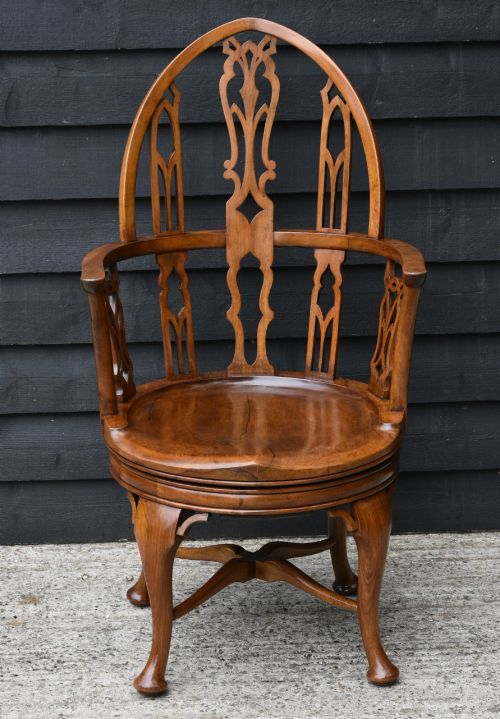
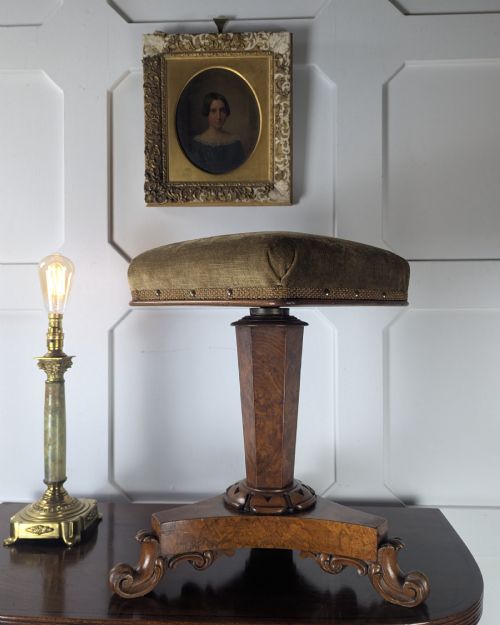
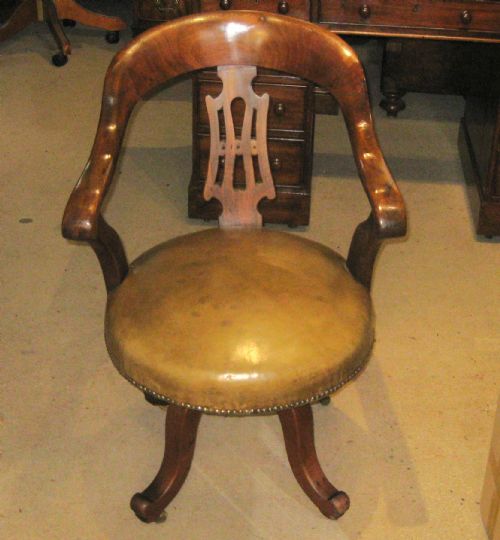
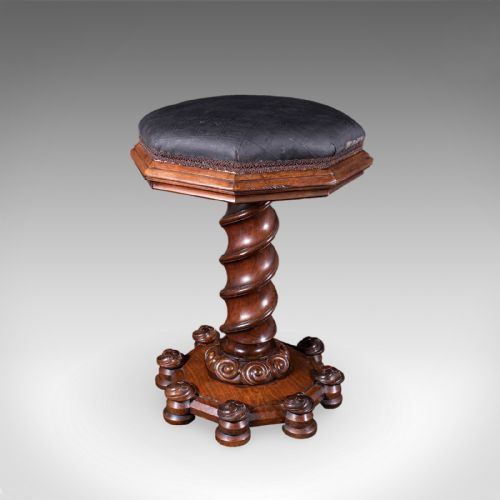
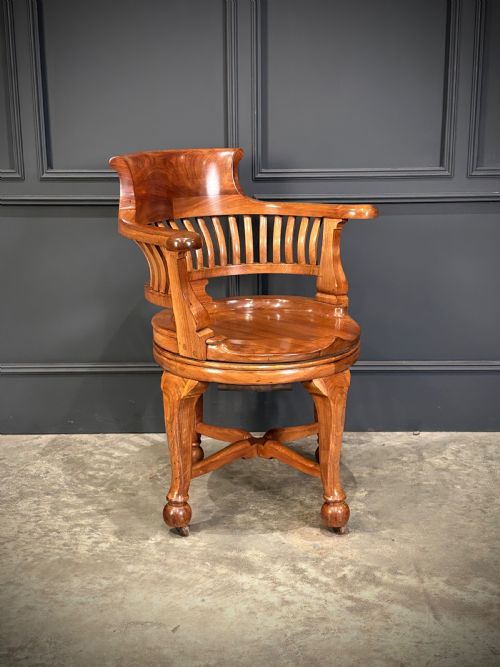
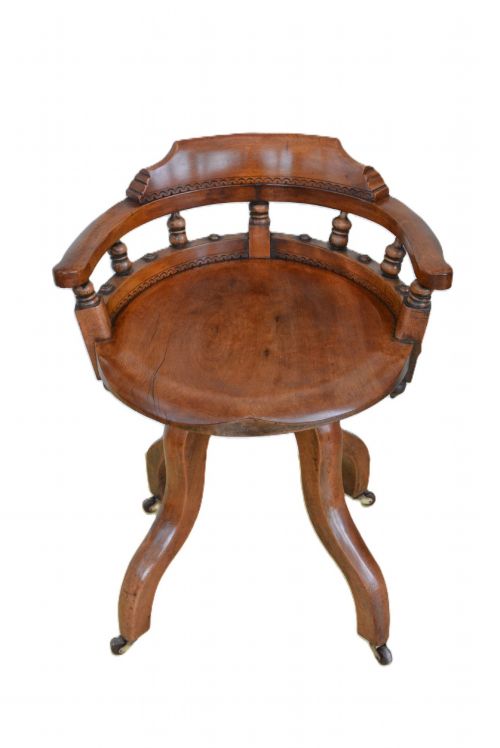
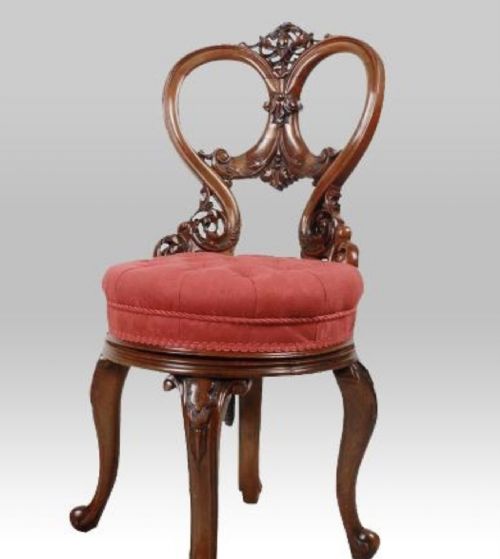
A walnut revolving chair spans several functional forms, appearing most frequently as a desk chair, a captain's armchair, or an adjustable piano and music stool.
The pieces on this page originate predominantly from the Victorian period, the Edwardian era, and the William IV or Regency phases, utilising solid walnut or burr walnut.
Buyers seeking a walnut revolving chair will encounter variants ranging from tall chapel organist stools and tripod piano seats to leather-upholstered office armchairs.
Materials and Technique
Makers utilised solid walnut and burr walnut veneers, often combining the timber with cast iron mechanisms, brass fittings, and turned wooden screw threads to achieve height adjustment and rotation.
Upholstery materials include leather, velvet, fabric, and horsehair stuffing, secured to frames shaped through carving, joinery, and steam bending during the nineteenth and early twentieth centuries.
Chapel organists and harpists required seats that spun freely to manage sheet music and foot pedals simultaneously.
Quality and Construction
Quality rests in the precision of the revolving mechanism and the robustness of the central screw or swivel pivot, which determines whether the seat turns smoothly without excessive play.
Carved detail on the walnut frame, the integrity of the joinery, and the retention of original leather or velvet upholstery separate standard production pieces from finer workshop examples.
Maple & Co.·J.S. Ford, Johnson & Company
The Walnut Revolving Chair Glossary
- Burr walnut
- A figured wood veneer taken from the wart or burl of a walnut tree, prized for its swirling grain patterns on chair backs and desk seats.
- Revolving mechanism
- The internal swivel hardware, often combining iron and brass, that allows a chair seat to turn or rise and fall via a threaded spindle.
- Captain's armchair
- A sturdy office or library chair featuring a rounded enclosing backrest supported by vertical spindles above a swivelling base.
- Piano stool
- An adjustable seat designed for musicians, frequently featuring a revolving top or a rise and fall screw mechanism to alter the playing height.
- Aesthetic Movement
- A late nineteenth-century design style focusing on visual beauty rather than narrative meaning, often visible in the simpler lines of walnut office seating.
Walnut Revolving Chair: Frequently Asked Questions
How do I adjust the height on these chairs?
Most walnut revolving chairs and piano stools adjust via a central wooden or metal screw mechanism hidden beneath the seat. Turning the seat clockwise or anticlockwise raises or lowers the height.
Older Victorian and William IV examples rely on threaded spindles that require manual rotation of the entire upper portion until the desired seating level is achieved.
Were these chairs originally meant for desks or music rooms?
They were made for both purposes, which explains the variety in their forms. Stools with rise and fall mechanisms served piano players, harpists, and chapel organists.
Those with arms and leather upholstery functioned as captains' chairs, library seats, and office desk chairs for writing and administrative work.
How can I tell a Victorian walnut chair from an Edwardian one?
Victorian examples often feature heavier carved walnut frames, elaborate pedestals, tripod bases, and deep buttoned leather or velvet upholstery. They frequently date from the mid to late nineteenth century.
Edwardian pieces, emerging around the turn of the twentieth century, tend to display lighter Arts and Crafts influences with simpler lines and less ornamental carving.
How do I care for the leather and walnut?
Walnut benefits from occasional application of natural wax to nourish the grain and protect the polished surface from drying out. Avoid placing the timber in direct sunlight.
Leather upholstery should be treated gently with specialist leather conditioners to preserve flexibility and prevent cracking across the seat surface.