


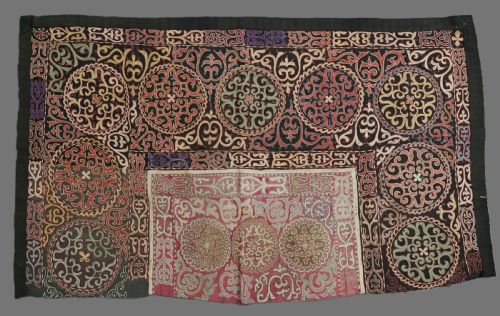


Vintage Suzani Wall Tapestry
When you search for a vintage suzani wall tapestry, you encounter richly embroidered Central Asian textiles created to celebrate domestic life and personal milestones.
Vintage Suzani Wall Tapestry
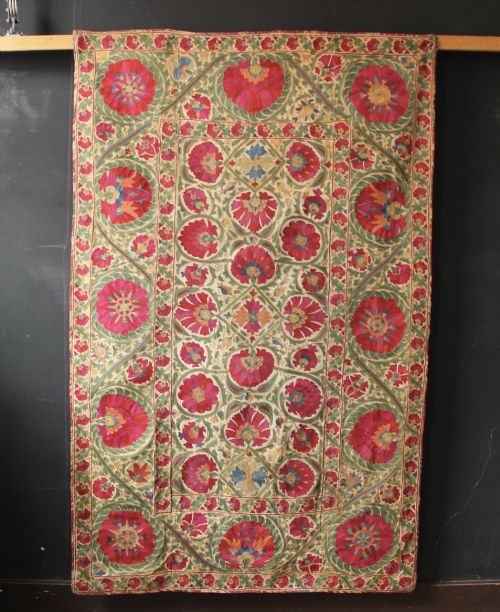
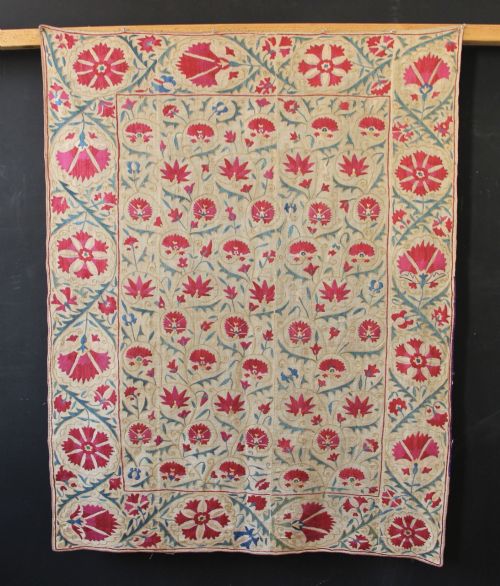
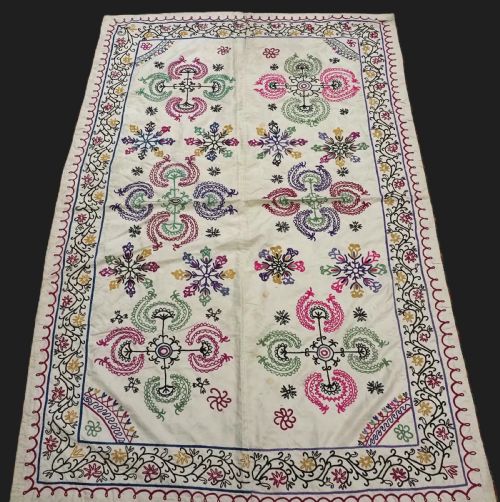
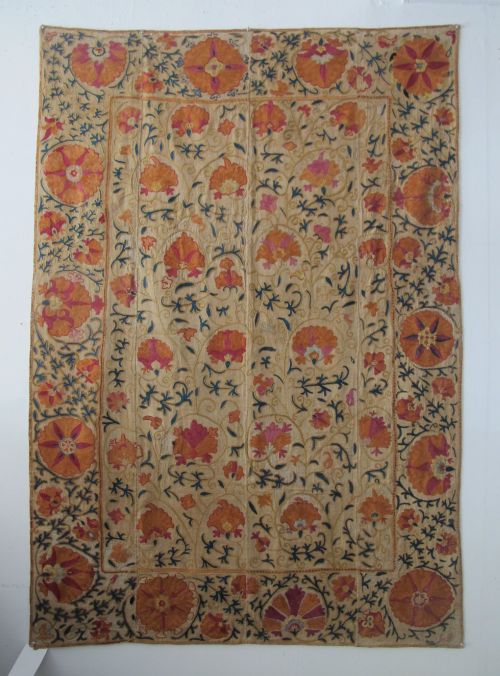
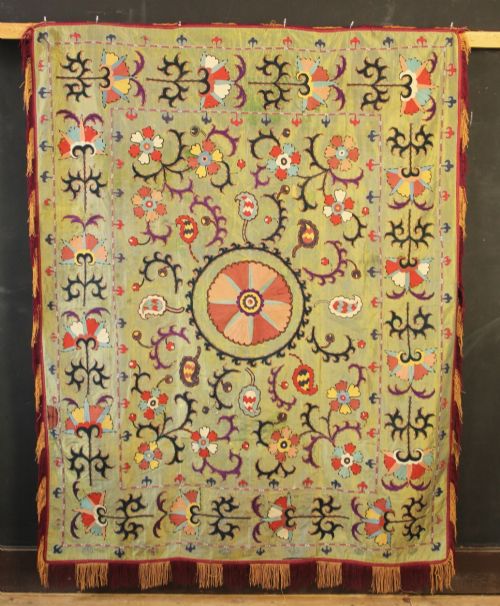
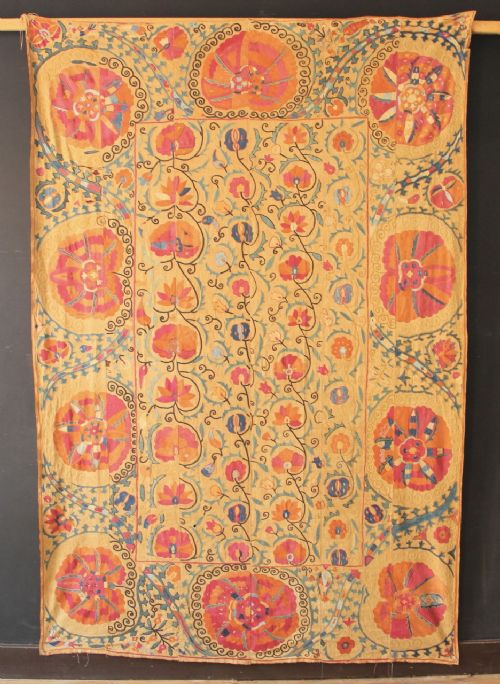
A vintage suzani wall tapestry encompasses traditional Central Asian needlework originating primarily from Uzbekistan, including major historical centres such as Bokhara, Tashkent, Samarkand, and Shahrisabz. These textiles were traditionally produced as dowry items by brides and their families, functioning as wall hangings, bed covers, or ceremonial hangings.
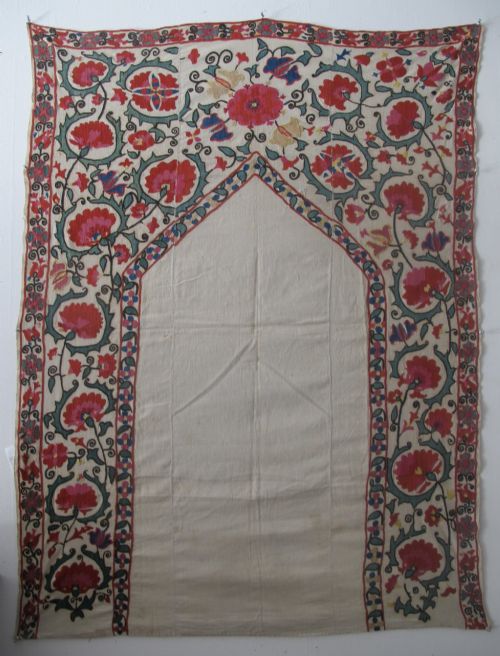
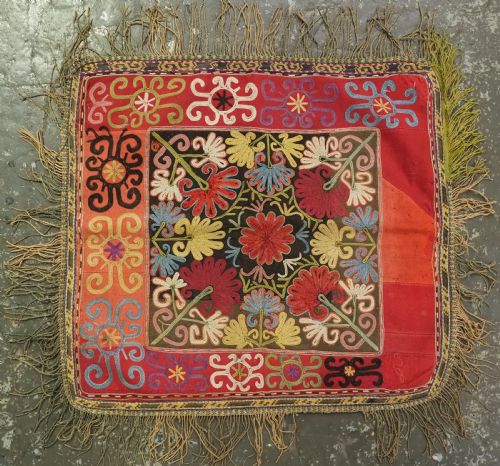
The pieces available on this page range from full-scale wall coverings to smaller nim suzanis and specialised formats like prayer suzanis and tribal ilgiches. Regional variations dictate the layout, with Tashkent palaks featuring dense, all-over star designs, while Lakai tribal pieces display distinct geometric and zoomorphic motifs.
Dating across these textiles spans from the mid-nineteenth century through the early twentieth century, capturing a period of vibrant traditional craftsmanship. Collectors encounter diverse formats including medallion variants, architectural designs, and ceremonial horse covers adapted for display.
Materials and Construction Techniques
The foundational structure typically relies on a woven cotton or silk ground fabric, occasionally rendered in yellow, red, or black hues. Upon this base, artisans applied silk thread embroidery executed predominantly in tambour stitch, basma stitch, or surface couching.
Regional workshops utilised specific palettes and thread densities, creating either 'full work' examples where the ground is densely covered in needlework or lighter compositions that let the fabric ground show. Wool and velvet also appear in select tribal and regional textile groups.
Several textiles served dual lives, beginning as ceremonial horse and saddle covers before finding retirement on living room walls.
Evaluating Quality and Execution
Quality in a vintage suzani wall tapestry rests upon the density of the embroidery work and the finesse of the needle technique. Full-work pieces requiring extensive hours of skilled hand-stitched silk display a superior level of commitment compared to more sparsely decorated examples.
The visual impact depends heavily on the harmony of the natural dye palette and the crispness of the design execution. Well-preserved ground fabrics and securely anchored silk threads separate robust examples from those showing heavy structural fatigue.
The Vintage Suzani Wall Tapestry Glossary
- Suzani
- A traditional embroidered tribal textile from Central Asia, taking its name from the Persian word for needle. These pieces served functional domestic purposes before being collected as wall art.
- Nim Suzani
- A smaller half-scale version of a full-sized suzani, often easier to display in domestic interiors while retaining the same intricate embroidery techniques.
- Palak
- A large-scale Tashkent suzani type characterised by a heavy, fully embroidered background dominated by central star or medallion motifs.
- Ilgich
- A small embroidered hanging produced by the Lakai tribe, historically utilised as part of wedding dowries.
Vintage Suzani Wall Tapestry: Frequently Asked Questions
How were suzanis originally used?
These textiles were created as functional household items and dowry components in Central Asian societies. Families used them as wall hangings, bed covers, and ceremonial furnishings for important life events.
Over time, their decorative qualities led to them being preserved and displayed primarily as textile art in modern interiors.
What is a nim suzani?
A nim suzani is a smaller variant of the standard large-scale embroidery. The word 'nim' denotes half, referring to dimensions that are more compact than full-sized bed or wall covers.
These smaller formats make them practical for contemporary wall display while maintaining the traditional needlework.
How do regional styles differ?
Regional centres in Uzbekistan developed distinct design vocabularies and stitching densities. Tashkent pieces often feature dense palak patterns with central stars, while Bokhara and Samarkand examples focus on floral and architectural compositions.
Tribal groups like the Lakai introduce more geometric and abstract zoomorphic motifs into their smaller dowry pieces.
How should I hang a textile?
Mounting a heavy textile requires distributing the weight evenly across the top edge to prevent distortion of the ground fabric. Professional conservators often recommend using a fabric sleeve sewn to the back through which a flat support rod is passed.
Direct pinning or sustained exposure to strong sunlight should be avoided to protect the silk threads and natural dyes.