
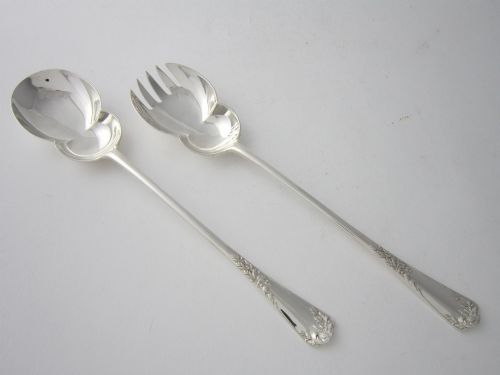


Vintage Silver Table Serving Spoon
These vintage silver table serving spoons bring genuine period character to any dining table, offering both practical utility and solid historic craftsmanship.
Vintage Silver Table Serving Spoon
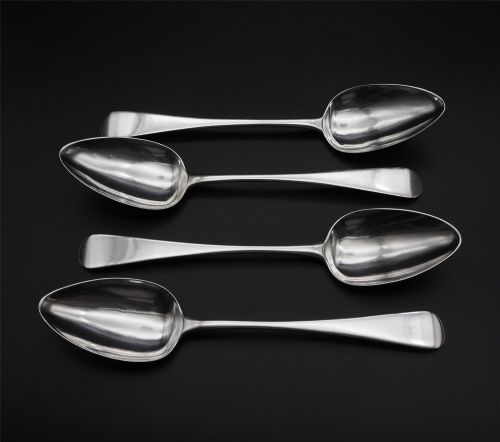
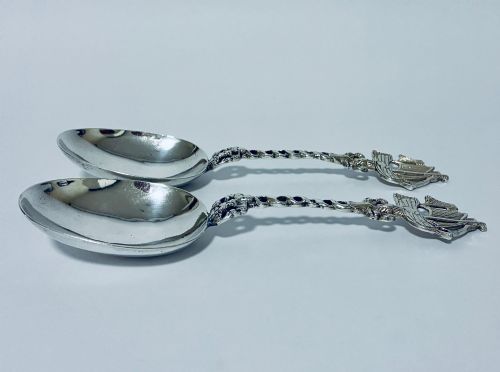
A vintage silver table serving spoon represents larger flatware designed for dishing food at the table rather than individual dining. The pieces seen here span periods from the Georgian and Regency eras through Victorian, Edwardian, and early twentieth-century designs, including distinct regional styles from the Netherlands, Denmark, and France.
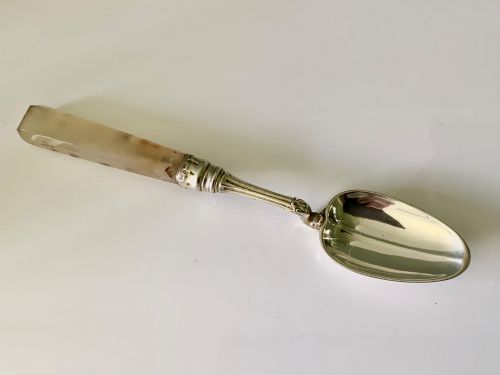
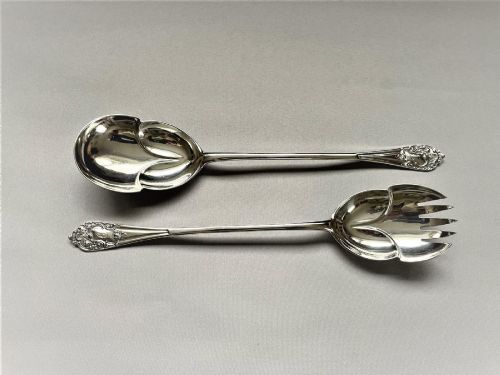
Buyers will encounter various forms, ranging from standard berry spoons with scallop shell bowls and large soup ladles to specialised salad servers and agate-handled bifurcate spoons. Materials primarily include solid silver and sterling silver, occasionally complemented by agate handles or housed in fitted boxes with silk, velvet, and leatherette linings.
The selection reflects diverse aesthetic movements, notably George III styling, Art Deco, Dutch Regional or Neo-Renaissance, and Scandinavian antique designs. Such variety means collectors can source both matching pairs and singular statement utensils suited to period table settings.
How they were made
Silversmiths shaped these utensils from solid silver or sterling silver, employing traditional hammering, casting, and hand-finishing techniques appropriate to their respective centuries. Bowls were frequently beaten out to form deep contours, while handles incorporated chased detailing, cast patterns like King Edward, or seal top finials.
Specialist variations demonstrate mixed media integration, such as natural agate handles fitted to silver shafts. Fitted presentation cases utilise materials like velvet, silk, and leatherette, pointing to the high status these items held as giftware or prized household possessions.
The inventory spans multiple design eras, including Georgian, Victorian, Edwardian, Regency, and Art Deco styles.
What varies in quality
The distinction between ordinary and exceptional examples rests largely on the heaviness of the gauge, the crispness of chased or embossed bowl decoration, and the integrity of maker marks. Pieces bearing distinct regional or prominent maker attribution command particular attention.
Design complexity also sets items apart, moving from plain utility spoons to elaborately pierced strainer spoons, matching pairs, and multi-piece boxed sets with intact original linings.
Georg Jensen·Henri Soufflot·Whiting Co.
The Vintage Silver Table Serving Spoon Glossary
- Berry spoon
- A large serving spoon, often dating from the Georgian or Victorian eras, featuring embossed and chased fruit decoration added to the bowl. These were frequently repurposed from earlier spoons during later periods.
- Bifurcate
- A utensil ending in two prongs rather than a standard rounded bowl, often used for serving specific foods like fish or sliced meats. Regency examples sometimes combined this form with agate handles.
- Seal top spoon
- An early form of spoon featuring a flat, circular terminal resembling a signet seal on the end of the handle. This traditional style echoes seventeenth-century English silver design traditions.
- Strainer spoon
- A specialised spoon with a pierced or slotted bowl designed to separate liquid from solid food during serving. Irish Georgian examples demonstrate this particular functional variation.
- Solid silver
- A term describing items composed of silver throughout rather than plated base metals. Continental pieces frequently reference high silver fineness standards such as point nine five zero.
Vintage Silver Table Serving Spoon: Frequently Asked Questions
What is a silver serving spoon used for?
These large spoons were made for dishing out vegetables, puddings, or meats at the dining table rather than for individual use. Their generous bowl sizes and sturdy construction suited them for heavy communal service.
Over the centuries, specific variations developed for different foods, including deep berry spoons, ladle bowls for soups, and pierced bowls for straining liquids from greens.
How do I date a silver serving spoon?
Dating relies heavily on stylistic markers, handle shapes, and bowl forms characteristic of periods like Georgian, Victorian, or Edwardian design. Neo-Renaissance and Art Deco influences also point to specific decades.
Physical inspection of hallmarks, where present, provides official clues to the year of manufacture and the silversmith responsible, though regional items may carry different assay marks.
Can I use antique silver spoons daily?
Solid silver serving spoons are robust enough for occasional modern dining use, provided they are handled with care and washed by hand rather than in a dishwasher. Regular use helps maintain a natural lustre.
Many collectors prefer to use them for special dinners, while others house boxed sets or delicate items like agate-handled pieces primarily for display or collection.
What does sterling silver mean on a spoon?
Sterling silver denotes an alloy containing a high fixed proportion of pure silver combined with other metals, usually copper, to add strength. This standard has been utilised by silversmiths for centuries to ensure durability in flatware.
Items marked as solid silver or sterling silver indicate that the entire utensil is made from the precious metal rather than plated over a base metal core.