


Vintage Silver Snuff Box
A vintage silver snuff box offers a tactile glimpse into personal grooming habits of past centuries.
Vintage Silver Snuff Box
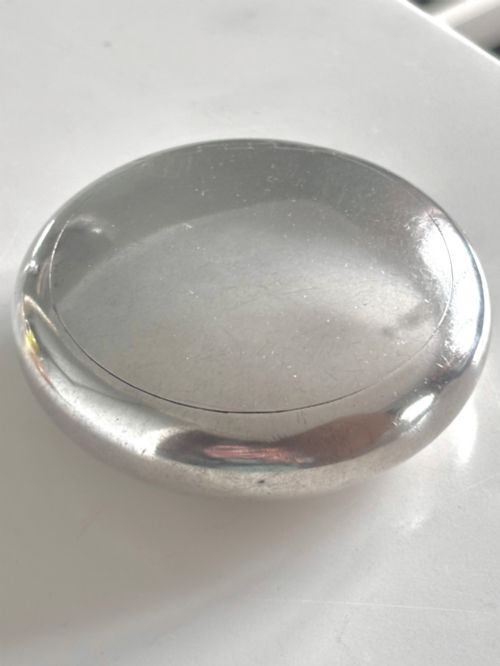
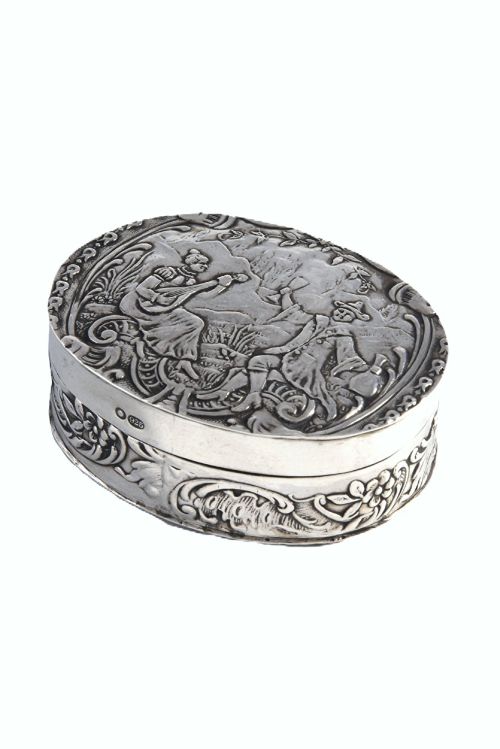
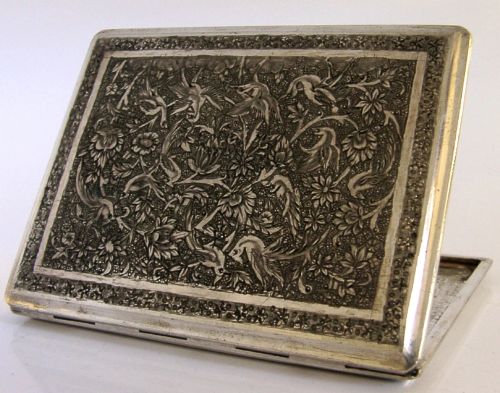
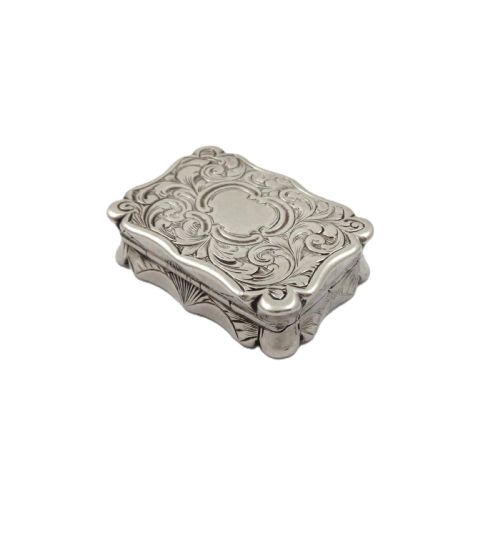
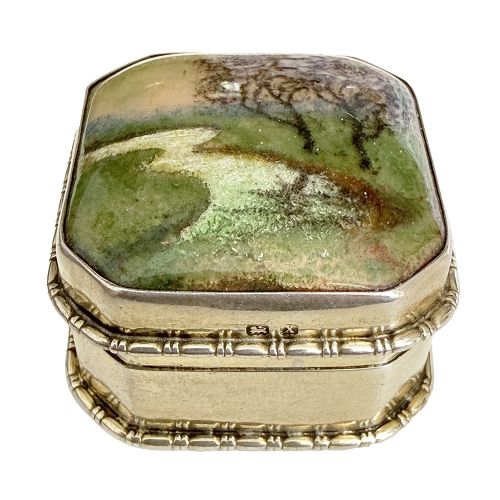
A vintage silver snuff box is a small pocket or table container designed to hold powdered tobacco, though many survivors now serve as pill or trinket boxes. The pieces on this page span several eras, moving from Georgian and Victorian designs through to Edwardian and Art Deco examples.
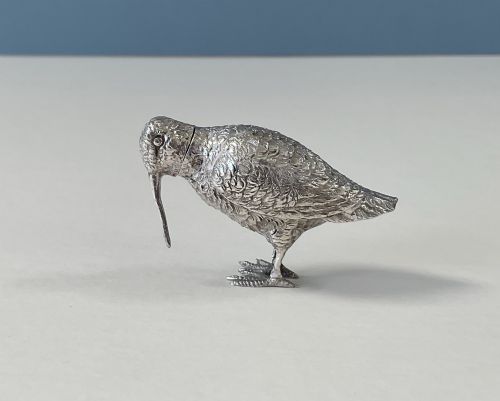
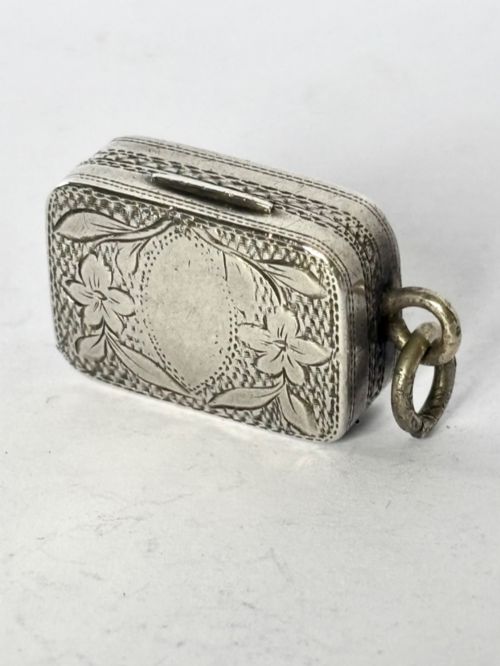
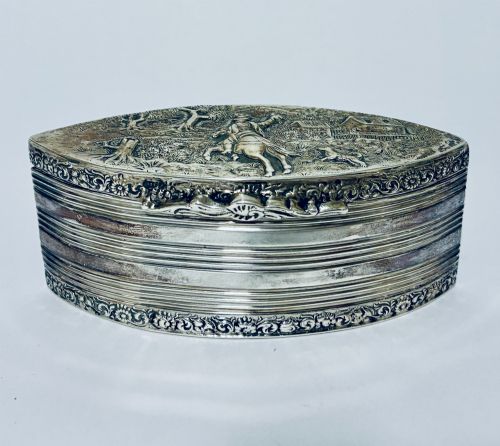
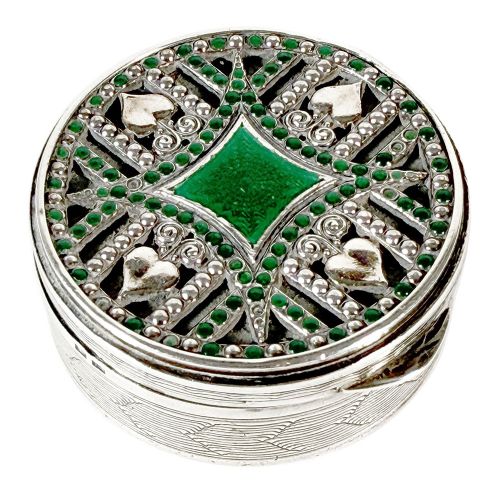
Most items you will encounter here take the form of compact pocket boxes, alongside larger desk-top boxes, novelty animal shapes, and vinaigrettes fitted with internal pierced grilles. Materials range from solid sterling silver and silver-gilt to pieces enriched with vitreous enamel, niello, and mother of pearl.
How they were made
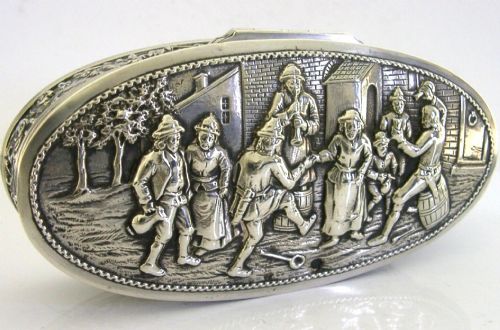
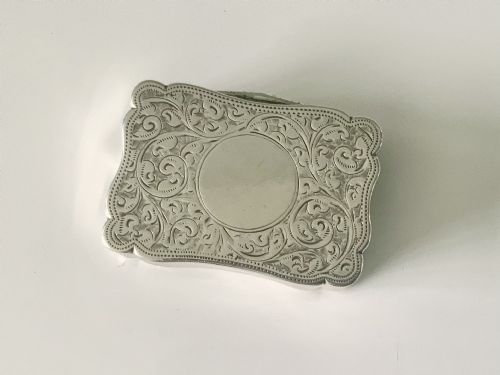
Makers shaped these containers using sterling silver and solid silver, often applying a thin layer of gold known as silver-gilt to the interior to protect the metal from the corrosive nature of tobacco. Heavy cast pieces display deep relief ornamentation, while others rely on precision engine-turning and detailed hand engraving.
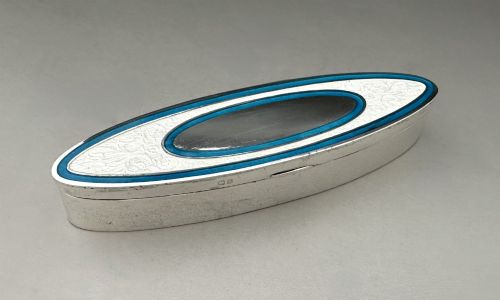
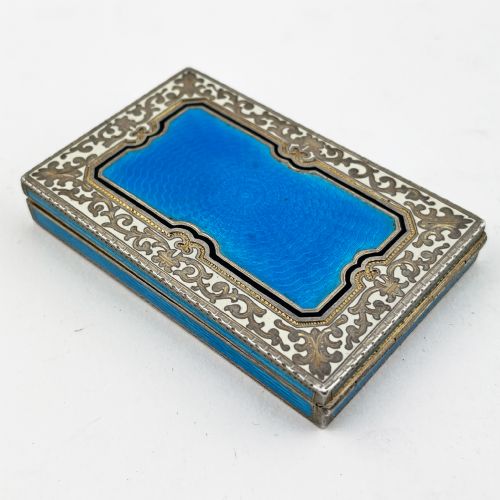
Coloured decoration appears through intricate enamel work, including guilloche and cloisonne techniques fused onto the silver base. Hinges and lids are tightly engineered to ensure a secure closure for pocket use.
What varies in quality
The distinction between standard examples and superior pieces rests on the crispness of the chased decoration and the weight of the metal used. Heavier cast boxes with distinct architectural or pictorial motifs demand greater skill from the silversmith than plain stamped alternatives.
The preservation of delicate surfaces, such as intact guilloche enamel or undamaged silver-gilt interiors, elevates the standing of a piece. Maker marks and clear hallmarks further separate ordinary utilitarian items from masterworks.
Mappin & Webb·Samuel Pemberton·Fleetwood Varley·George Adam Scheid·Joseph Wilmore·Hermes Paris·Edward Farrell·Nathaniel Mills
The Vintage Silver Snuff Box Glossary
- Vinaigrette
- A small hinged box containing a perforated internal grille that held a sponge soaked in aromatic vinegar. These were carried to mask unpleasant odours in public spaces.
- Silver-gilt
- Silver that has been coated with a thin layer of gold on its surface. This technique provided a rich golden interior that resisted tarnishing from acidic contents.
- Guilloche
- A decorative technique where a precise repeating pattern is mechanically engraved into a metal surface. Enamel is often applied over this pattern to create translucent waves of colour.
- Niello
- A black metallic alloy used as an inlay on engraved silver. It creates stark contrasting geometric or pictorial designs against the bright metal.
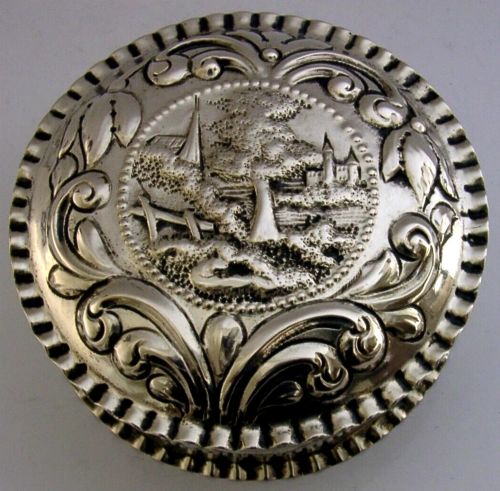
- Castle Top
- A specific style of box lid featuring a high-relief engraving or cast depiction of a famous building or landmark. These date largely from the nineteenth century.
Vintage Silver Snuff Box: Frequently Asked Questions
What is a vintage silver snuff box?
A vintage silver snuff box is a small lidded container originally built to carry dry powdered tobacco for inhalation. These portable items were shaped to fit easily into a waistcoat pocket or rest upon a parlour table.
Over time, many of these small silver containers transitioned from tobacco use to holding pills, stamps, or small trinkets. Their survival reflects the high quality of their original silver construction and hinges.
How do I date a silver box?
Dating relies primarily on the hallmarks stamped into the metal, which indicate the assay office, year of manufacture, and maker. Stylistic clues like Rococo Revival curves or geometric Art Deco lines also point to specific eras.
Looking at the construction methods, such as cast versus stamped hinges, helps confirm whether a piece belongs to the Georgian, Victorian, or Edwardian periods.
How do I care for antique silver?
Care requires gentle cleaning with a soft cloth to maintain the natural patina built up over centuries. Avoid harsh chemical dips that strip away the desirable darker tones in recessed engraved details.
If the piece includes enamel or mother of pearl panels, keep moisture away from the edges to prevent lifting or damage to the delicate decorative surfaces.