





Art Deco Enamel Box
When seeking an art deco enamel box, collectors discover portable vessels spanning vanity jars, powder compacts, and small trinket containers.
Art Deco Enamel Box
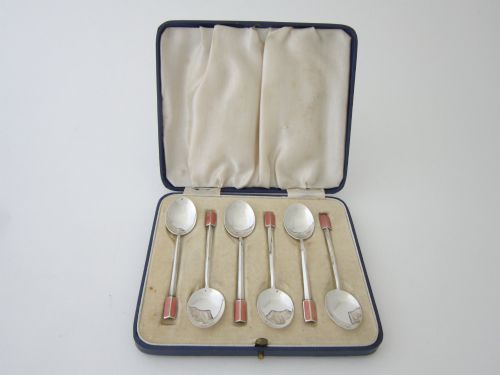
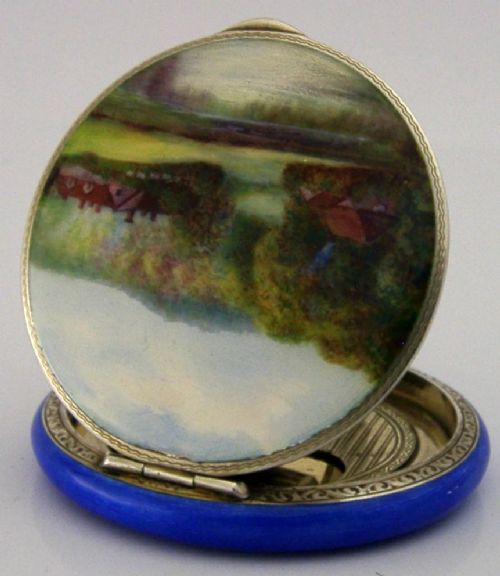
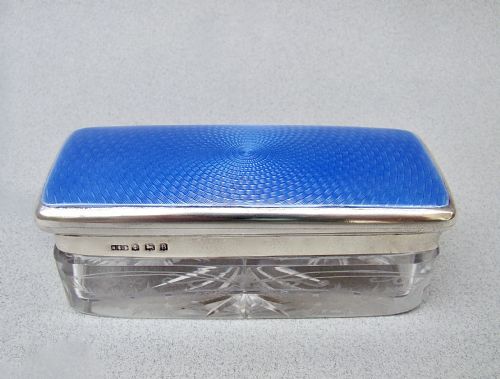
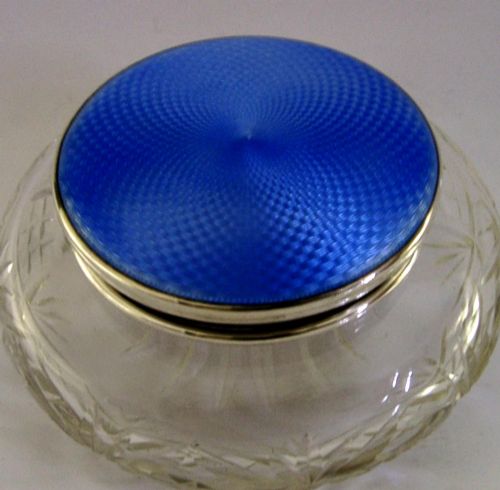
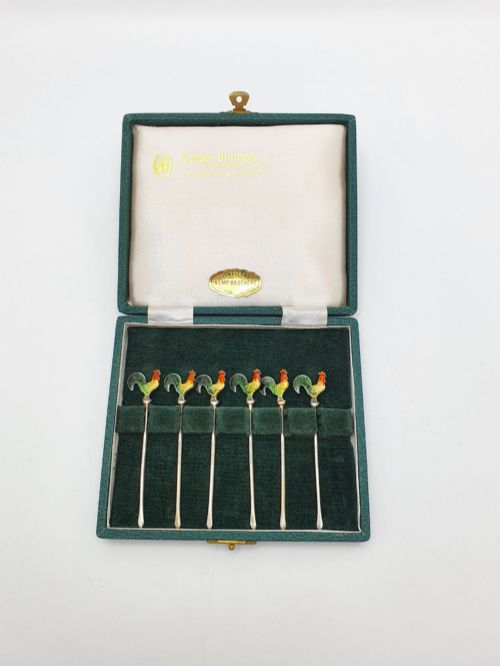
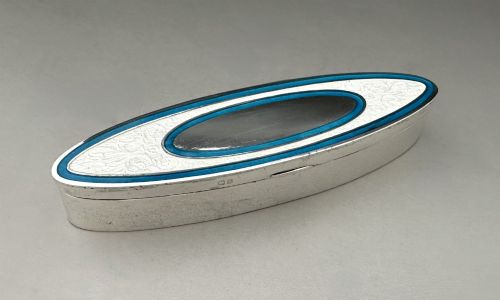
An art deco enamel box encompasses a variety of small lidded containers designed for personal adornment, grooming, and storage. These pieces range from substantial glass dressing table jars with silver and enamel lids to pocket-sized pill boxes, patch boxes, and powder compacts.
The selection on this page draws heavily from the early twentieth century, particularly the 1920s and 1930s, alongside Edwardian and mid-century examples. British assay offices in Birmingham and London stamp many of the silver mounts, while continental European and Italian workshops contribute distinct geometric and coloured variations.
How They Were Made
Silversmiths constructed the foundational bodies and mountings using sterling silver, silver-gilt, chrome, or gilt metal, often pairing metal bases with cut or etched glass reservoirs. Vitreous enamel provides the colourful surface layer, fused to the metal through intense kiln firing.
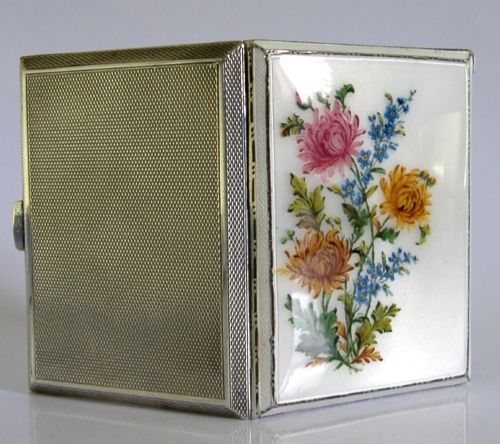
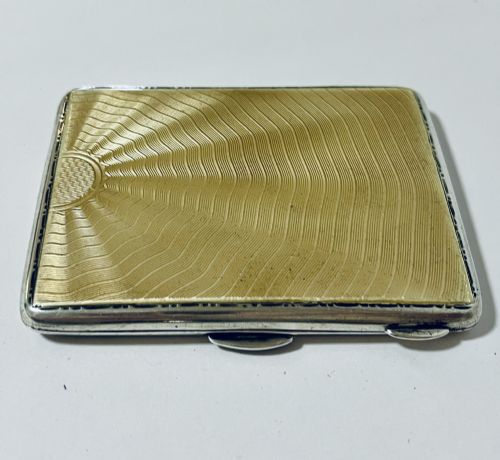
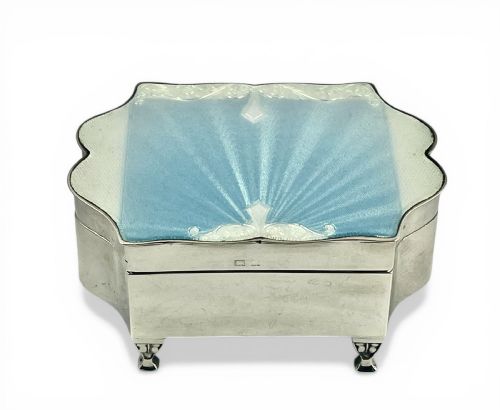
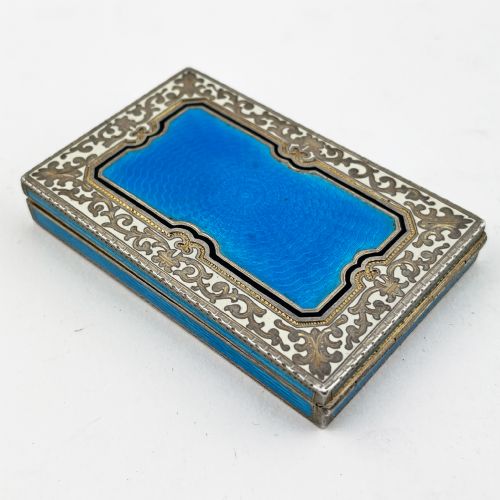
Guilloche enamel required an engine-turning lathe to engrave precise geometric patterns onto the metal beneath, creating a shimmering, translucent effect beneath layers of coloured enamel. Hand-painted floral motifs and chrysanthemums occasionally supplement these machine-turned backgrounds.
What Varies in Quality
The sophistication of the enamel work dictates much of the distinction between standard vessels and exceptional examples. Fine guilloche engraving creates depth and light refraction that flat, opaque enamel surfaces cannot replicate.
Maker attribution and the crispness of British hallmarks also separate ordinary containers from distinguished pieces. Heavy-gauge metal mounts and intact, undamaged interior linings demonstrate superior original manufacture.
Henry Clifford Davis·Henry Matthews·Goldsmith's and Silversmith's Co.·Deakin & Francis·Turner & Simpson·F B Reynolds·Cohen & Charles·Elkington & Co·Karl Palda·Richard Hudnut·Alfred Dunhill·Houbigant·Evans
The Art Deco Enamel Box Glossary
- Guilloche
- A decorative technique where a mechanical lathe etches precise, repeating geometric patterns into a metal surface before transparent enamel is applied. This method produces a distinctive, light-catching wave or sunburst effect beneath the glass.
- Vitreous Enamel
- A material made by fusing powdered glass to a metallic substrate through high-temperature firing. The resulting surface offers smooth durability and rich, permanent colouration.
- Sterling Silver
- An alloy consisting of pure silver and other metals, usually copper, standardised at a specific purity level for strength and durability. British pieces typically display lion passant hallmarks indicating this standard.
- Powder Compact
- A small vanity case equipped with a mirror and a lidded compartment for holding facial powder. Many surviving specimens from the twentieth century incorporate decorated enamel lids.
- Dressing Table Jar
- A container with a glass body and a matching metal lid, utilised for holding cosmetics, cotton balls, or small trinkets. These items often form part of larger matching vanity sets.
Art Deco Enamel Box: Frequently Asked Questions
What were art deco enamel boxes used for?
These containers served practical and decorative functions on dressing tables and inside handbags during the early twentieth century. Owners stored cosmetics, loose powder, medicinal pills, stamps, and small items of jewellery within them.
Many pieces were designed for travel, allowing individuals to carry grooming accessories discreetly. Others remained stationary on dressing trays as part of coordinated vanity sets.
How do I identify the date of an enamel box?
British silver mounts usually feature a set of hallmarks indicating the assay office, metal standard, and a specific date letter corresponding to the year of manufacture. Examining the style of the enamel work, the latch mechanism, and the shape also helps narrow down the period.
Pieces originating from continental Europe or produced in chrome rather than silver often rely stylistic cues, such as distinct geometric motifs typical of the interwar decades.
What is guilloche enamel?
Guilloche is a decorative metalworking process where a specialised lathe cuts intricate geometric patterns into a silver or metal base. Transparent enamel is then layered over the engraving, allowing the underlying pattern to shine through with distinct visual depth.
This technique was widely utilised during the Edwardian and Art Deco eras to decorate compacts, cigarette cases, and vanity jars with shimmering colour.
How should I clean a silver and enamel box?
Enamel surfaces require gentle cleaning with a soft cloth dampened in lukewarm water and mild soap, avoiding harsh chemical dips that can damage the glass coating. Care must be taken to prevent moisture from seeping behind the enamel or into old mirror mountings.
Silver mounts can be polished separately using a standard silver cloth, taking care to keep abrasive polishes away from the delicate enamelled areas.