



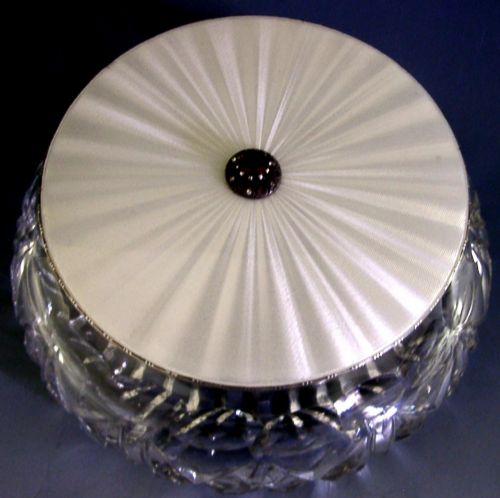
Enamel Vanity Box
An enamel vanity box brings together coloured glasswork and precious metals to hold powder, trinkets, or pills on a dressing table.
Enamel Vanity Box
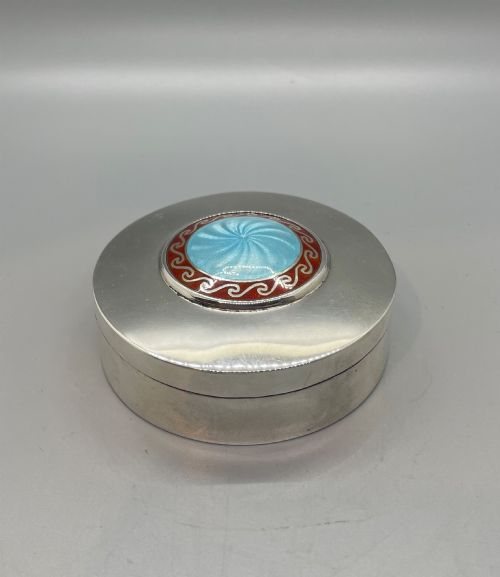
An enamel vanity box encompasses a diverse group of dressing table containers designed for cosmetics, small trinkets, and personal accessories. The selection spans compacts, powder jars, pill boxes, and patch boxes originating from various periods including the eighteenth, nineteenth, and twentieth centuries. Buyers encounter objects ranging from small pocket pieces to substantial dressing table jars.
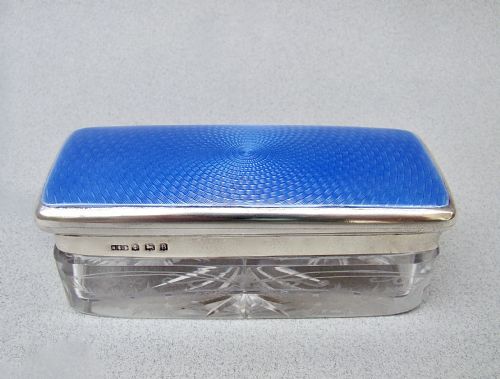
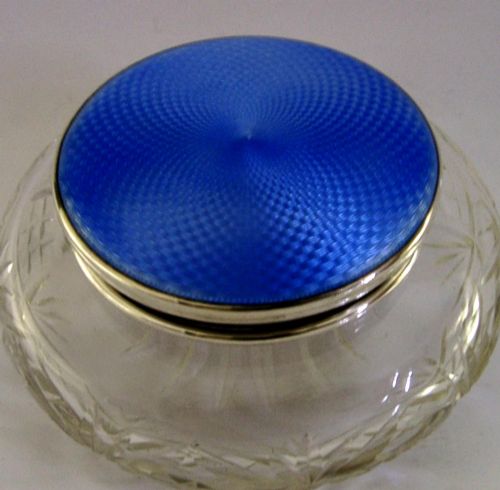
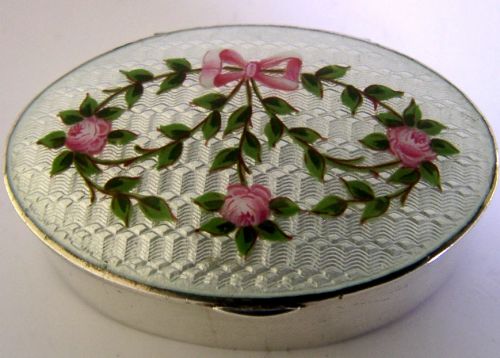
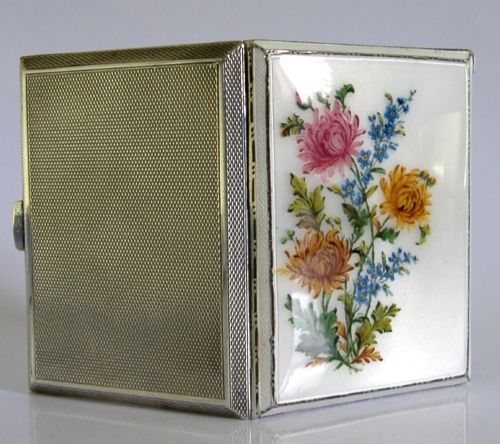
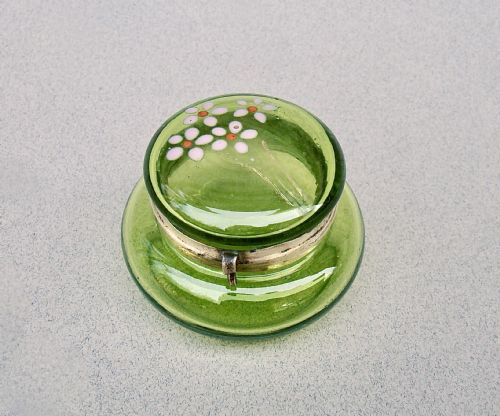
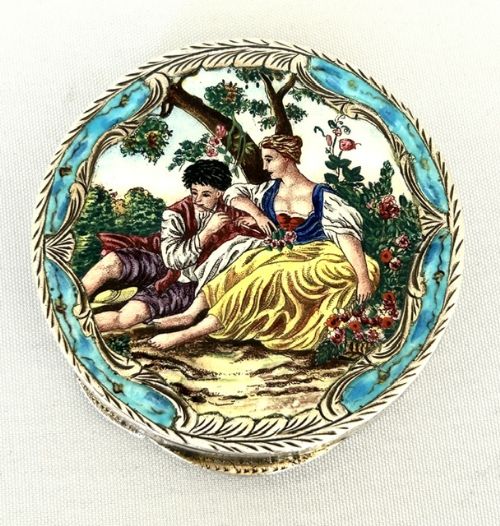
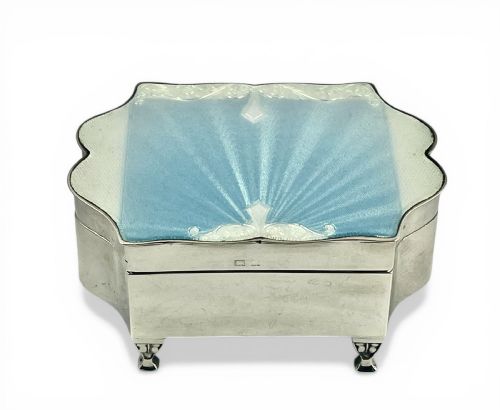
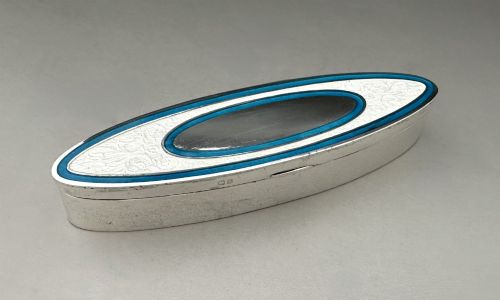
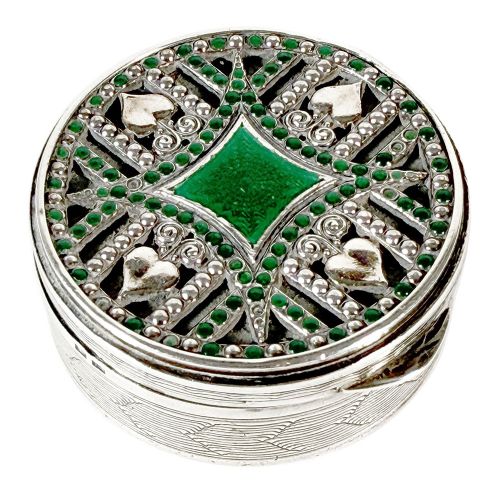
The versions met most frequently on this page date from the Edwardian era and the Art Deco period. These twentieth-century examples frequently combine sterling silver mounts with machine-turned guilloche enamel lids in shades of blue, pink, and green. Alongside these, nineteenth-century glass and porcelain pieces with hand-painted details appear regularly.
How they were made
Maker's workshops combined sterling silver, brass, or chrome frames with vitreous enamel fused to metal surfaces under high heat. Glass vessels, including cut glass and coloured Bristol blue or cranberry glass, were frequently fitted with hallmarked silver lids.
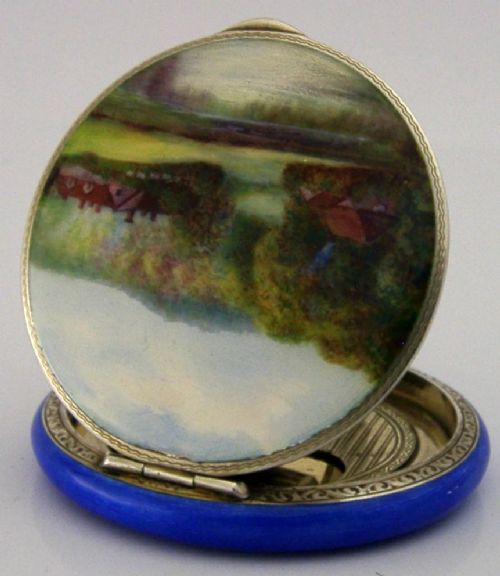
Techniques such as guilloche engraving created precise geometric background patterns beneath translucent enamel layers. Artisans also applied hand-painted floral motifs, scenic views, and figural designs directly onto the enamel or porcelain bodies.
Listings feature pieces spanning from the eighteenth century through the Edwardian era and Art Deco period to mid-century modern.
What varies in quality
Quality differences stem from the complexity of the metalwork, the depth and clarity of the enamel, and the precision of any guilloche patterning. Pieces bearing clear hallmarks from recognised silversmiths or established makers demonstrate higher workshop standards.
The preservation of the vitreous surface dictates desirability, as does the crispness of hand-painted details. Heavier gauge silver mounts and intact, undamaged enamel layers separate standard production items from finer masterworks.
Henry Clifford Davis·George Adam Scheid·Henry Matthews·Goldsmith's and Silversmith's Co.·Richard Hudnut
The Enamel Vanity Box Glossary
- Guilloche enamel
- A decorative technique where a mechanical lathe etches a precise, repeating geometric pattern into a metal base before translucent enamel is applied over the top. This allows light to reflect through the coloured glass layer.
- Vitreous enamel
- Glass powder fused to a metal substrate at high temperatures to create a durable, glossy coloured coating. It forms the smooth outer surface seen on many antique compacts and jars.
- Patch box
- A small, shallow container traditionally used in the eighteenth century to hold small fabric beauty spots or patches worn on the face. Georgian examples in Bilston enamel are particularly notable.
- Dressing table jar
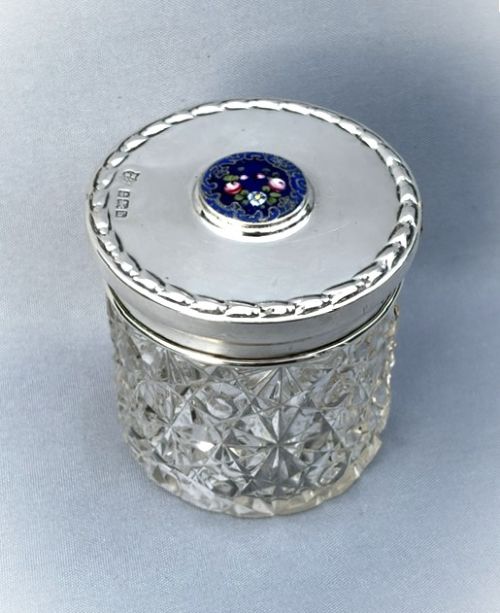
- A container designed to hold cosmetics, pins, or creams on a vanity, typically featuring a glass or porcelain body with a fitted silver lid.
Enamel Vanity Box: Frequently Asked Questions
How were dressing table jars used?
Dressing table jars held powders, creams, pins, and small personal items on Victorian and Edwardian vanity surfaces. They kept grooming accessories tidy and decorative.
Many incorporated cut glass bases with heavy hallmarked silver lids.
How do I date an antique enamel box?
Silver mounts on British pieces carry hallmarks indicating the assay office, standard of metal, and a specific date letter. These stamps provide precise years for items made in Birmingham, London, and other cities.
Stylistic markers such as Art Deco geometry or Georgian enamel painting styles further help determine the period.
What are Bilston enamel patch boxes?
Bilston enamel patch boxes are small eighteenth-century containers made in the English Midlands to hold cosmetic face patches. They feature hand-painted lids and delicate copper bodies.
Collectors prize these Georgian items for their age and miniature artistry.