




Georgian Engine Turned Silver
Georgian engine turned silver brings together small, tactile boxes and personal items shaped by precise mechanical lathe work.
Georgian Engine Turned Silver
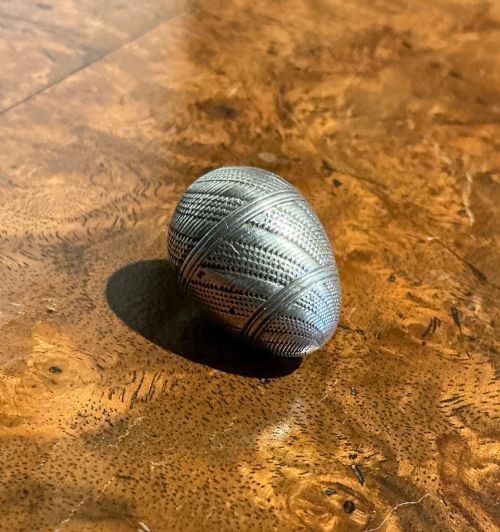
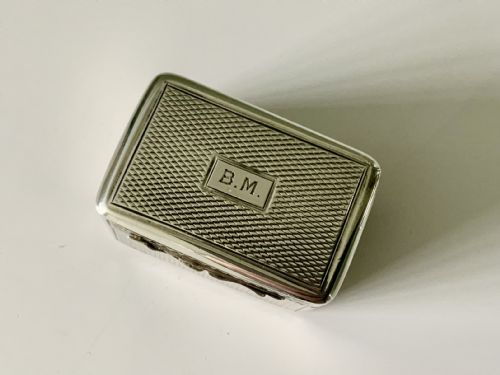
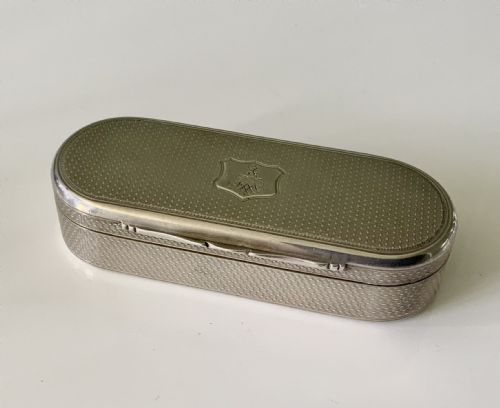
Georgian engine turned silver comprises pocket items and small containers designed for personal use, such as snuff boxes, vinaigrettes, and cigar cases. The pieces span the Georgian, Regency, and early Victorian periods, showcasing precise geometric patterns incised directly into the metal.
Vinaigrettes and pocket snuff boxes dominate the forms found in these selections, frequently lined with silver gilt and occasionally accompanied by fitted leather cases or internal sponges. Makers applied these decorative incisions to create textured surfaces that held light differently from plain polished silver.
How they were made
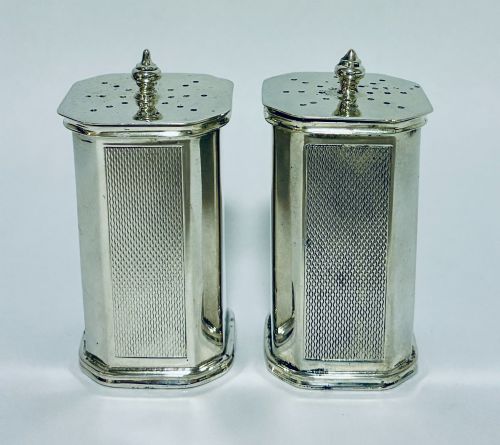
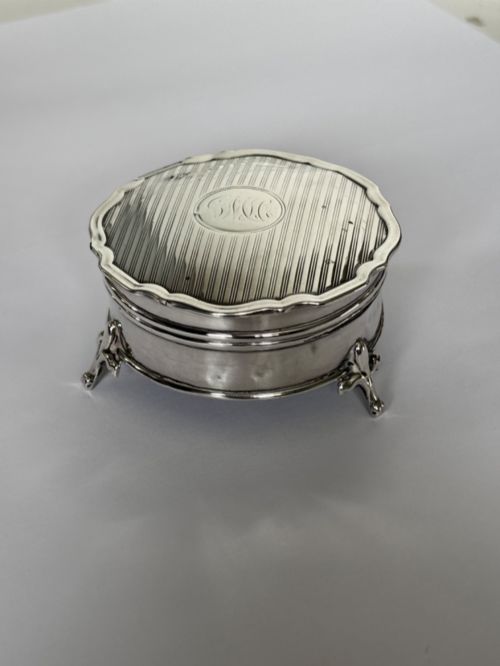
Silversmiths utilised specialised lathes to cut intricate, repeating geometric motifs into sterling silver and silver gilt surfaces. This mechanical process, known as engine turning, produced regular patterns of lines, waves, and basket-weave textures.
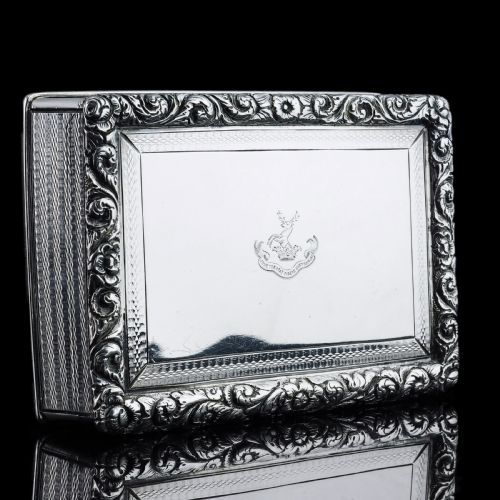
Selected examples incorporate cast floral borders or engraved accents applied by hand alongside the machine-turned panels. Interior gilt finishes protected the silver from corrosive contents like snuff or aromatic vinegars.
Listings feature sterling silver, silver-gilt, leather, silk, and cut glass across Georgian, Regency, and Victorian periods.
What varies in quality
Depth and crispness of the engine turned pattern dictate the visual impact of each piece, with worn or shallow incisions reducing the sharpness of the geometric design. The weight of the solid silver and the crispness of maker marks also distinguish standard production from exceptional output.
Survival of internal elements, such as original gilt washes, sponges in vinaigrettes, or fitted leather cases, elevates the integrity of surviving items.
Joseph Willmore·Nathaniel Mills·William Eaton·Edward Edwards·John Bettridge·Reily And Storer·Archibald Douglas
The Georgian Engine Turned Silver Glossary
- Engine turning
- A mechanical decoration technique using a lathe to engrave precise geometric patterns into metal. This method creates repetitive textures like basket weave or radiating lines.
- Vinaigrette
- A small hinged box containing a perforated grill, designed to hold a sponge soaked in aromatic vinegar. These were carried in pockets or handbags for use when encountering unpleasant odours.
- Silver gilt
- Sterling silver that has been coated with a thin layer of gold through fire gilding or electroplating. This process protects the interior silver from tarnishing or corrosive substances.
- Snuff box
- A small pocket container with a tight-fitting lid meant for holding dry powdered tobacco. They appear in various geometric and chased configurations across the Georgian era.
Georgian Engine Turned Silver: Frequently Asked Questions
What is a silver vinaigrette used for?
A silver vinaigrette held a small sponge soaked in scented vinegar or smelling salts. People carried them in pockets or reticules during the Georgian and Regency periods to counter foul odours in public spaces.
The internal pierced grill allowed the fragrance to diffuse while keeping the damp sponge secure. Many examples feature delicate gilt interiors to prevent the vinegar from corroding the silver.
How do you clean engine turned silver?
Engine turned silver requires gentle care to avoid wearing down the shallow mechanical incisions. Soft cloths and mild cleaning agents prevent the accumulation of polish residue inside the fine geometric grooves.
Aggressive scrubbing or harsh dips can flatten the sharp edges of the engine turned pattern. Preserving the crisp texture is essential for maintaining the visual clarity of the surface.
What periods do these silver pieces date from?
The pieces span the Georgian, Regency, William IV, and early Victorian eras. Most marked items fall into the late eighteenth and early nineteenth centuries.
Stylistic shifts appear across these decades, moving from plain geometric engine turning to combinations with heavy floral borders. Hallmarks stamped inside the lids or bezels provide precise assay office and date letters.