


Vintage Shirvan Rug
A vintage shirvan rug brings the geometric discipline of the Eastern Caucasus into a room through dense wool and saturated natural dyes.
Vintage Shirvan Rug
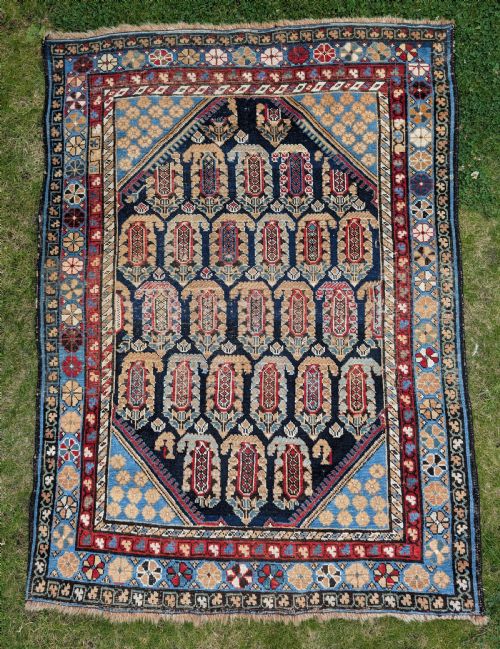
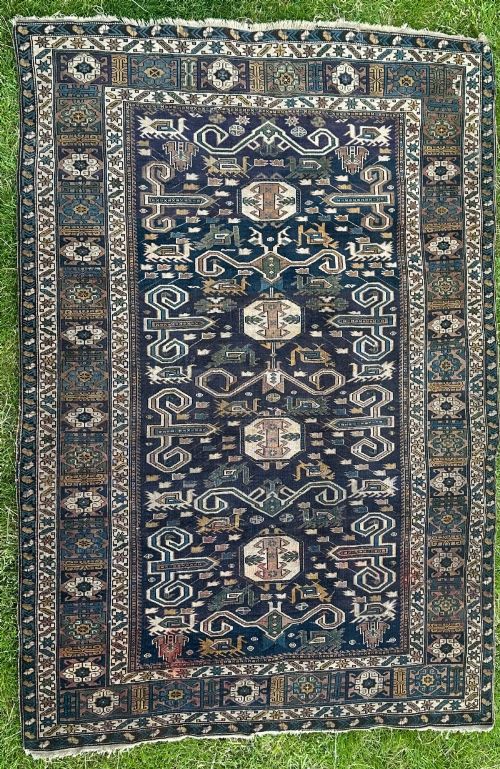
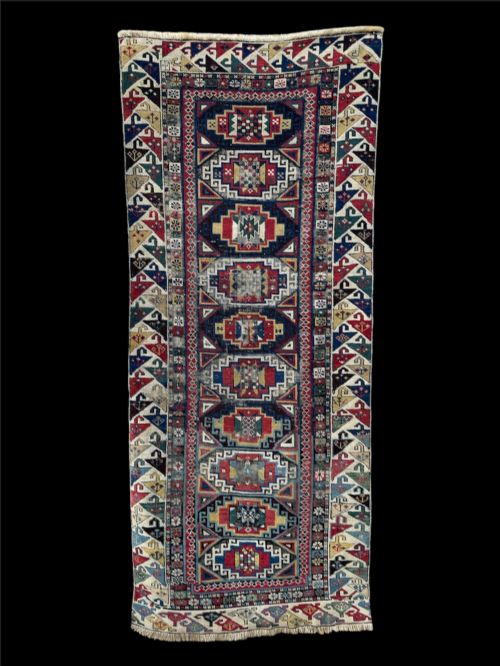
A vintage shirvan rug originates from the Caucasus region, specifically associated with weaving traditions from the nineteenth and early twentieth centuries. These floor coverings and flatweaves display distinct tribal motifs and structured medallion layouts.
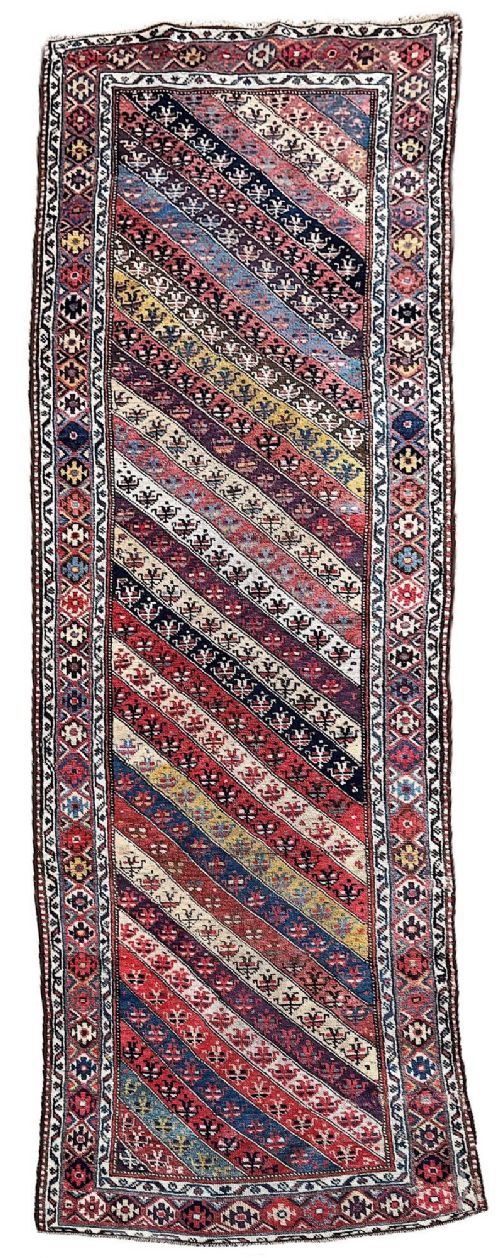
The pieces on this page appear in various formats, including standard area pieces, elongated runner formats, flatwoven kilims, and directional prayer formats. Collectors encounter them grouped under broader Caucasian classifications alongside related regional styles like Kuba, Talish, and Marasali.
The dating spans the Victorian era through to the early twentieth century, encompassing works produced around eighteen eighty, eighteen ninety, and nineteen hundred. Each example reflects the traditional aesthetic vocabulary of East Caucasian village and workshop weavers.
Materials and construction methods
Makers utilised wool and hand-spun wool for the pile and structure, frequently combining these with cotton foundations in specific village and workshop pieces. This fibre choice provides the resilience necessary for traditional floor use while retaining a supple handle.
Colour comes from natural dyes, yielding deep blues, ivory grounds, and soft faded tones that age with considerable character. The combination of hand-spun yarn and natural colourants creates the characteristic abrash and subtle tonal shifts seen across the surface of these textiles.
Weavers occasionally included small animal and bird motifs hidden among the geometric fields to ward off the evil eye.
Factors of quality and execution
The distinction between standard examples and superior pieces rests on the precision of the knotting, the complexity of the geometric drawing, and the clarity of the border systems such as the Kufic or bird motifs. Tightly woven structures allow intricate patterns to remain sharp and legible across the field.
The handling of natural dyes dictates the visual depth of a piece, with harmonious palettes and well-preserved colour saturation elevating the overall success of the weaving. The integrity of the original format, whether runner, prayer rug, or kilim, also contributes to desirability.
The Vintage Shirvan Rug Glossary
- Kilim
- A flatwoven textile produced without a pile. These pieces rely on interlocking Weft threads to form crisp geometric patterns.
- Prayer rug
- A small format textile featuring a mihrab or arch design indicating the direction of prayer. Weavers often orientated these for personal devotion.
- Abrash
- A natural variation of colour within the same dye lot, visible as horizontal bands of differing shades. This occurs due to subtle shifts in hand-dyed wool batches.
- Runner
- An elongated narrow format designed for hallways or corridors. These pieces balance repeated border motifs with central medallion or field designs.
Vintage Shirvan Rug: Frequently Asked Questions
How do I clean a vintage rug?
Professional specialist cleaning is essential for antique pile and flatwoven textiles. Water immersion and correct drying prevent wool shrinkage and dye migration.
Domestic cleaning products and modern washing machines cause irreversible damage to natural dyes and hand-spun foundations.
Can I place these rugs in high traffic areas?
Traditional village weaves constructed from sturdy wool withstand normal domestic foot traffic when paired with a quality underlay. Placing a suitable pad underneath reduces friction and prevents slipping.
Delicate prayer formats or pieces with fragile structural areas benefit from placement in lighter traffic zones to preserve the weave.
What is the difference between a rug and a kilim?
A standard rug possesses a cut wool pile knotted onto a warp and weft foundation, creating a plush surface. This construction provides thickness and tactile depth.
A kilim is entirely flatwoven with no pile, utilising a technique where the coloured wefts are tightly packed over the warp threads to create geometric designs.
How do I date a Caucasian piece?
Dating relies on examining the specific wool preparation, the chemical composition of the natural dyes, and the structural characteristics of the foundation. Stylistic traits such as border designs and palette choices also provide indicators of the period.
Comparison with documented village and workshop examples helps narrow the decade of production between the nineteenth and early twentieth centuries.