


Shirvan Tribal Rug
These Shirvan tribal rugs are woven treasures from the Eastern Caucasus, prized for geometric precision and saturated dyes that ground a room with history.
Shirvan Tribal Rug
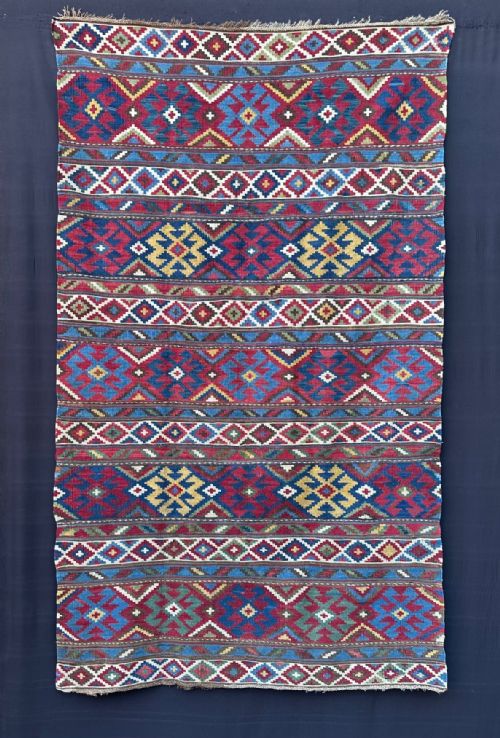
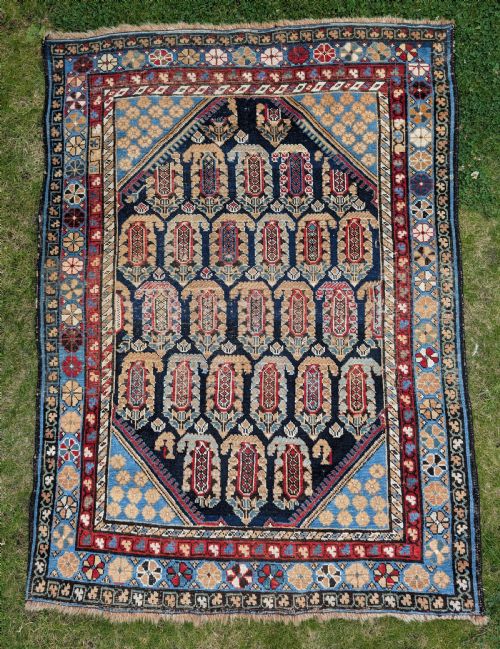
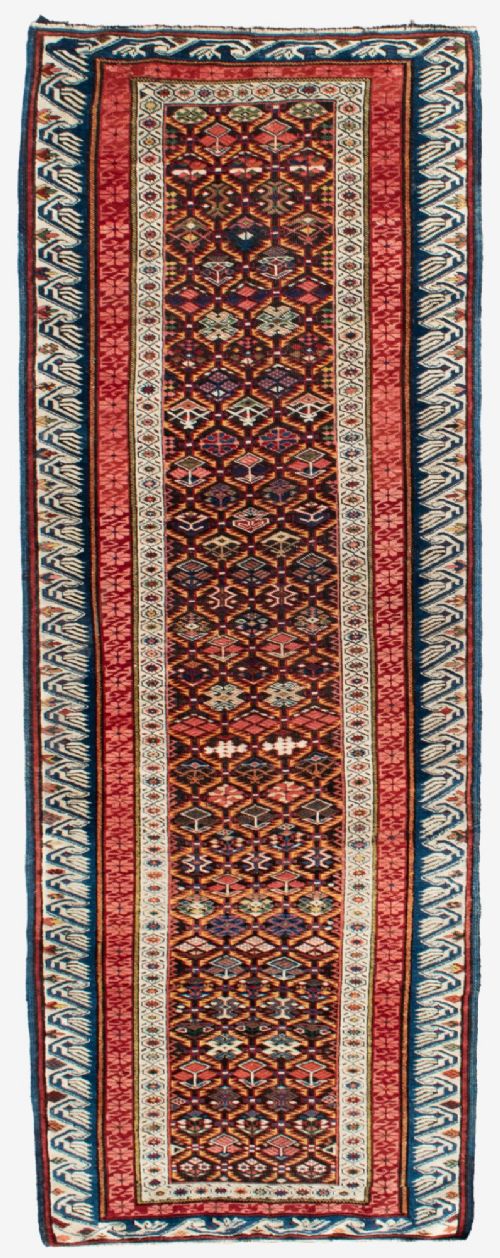
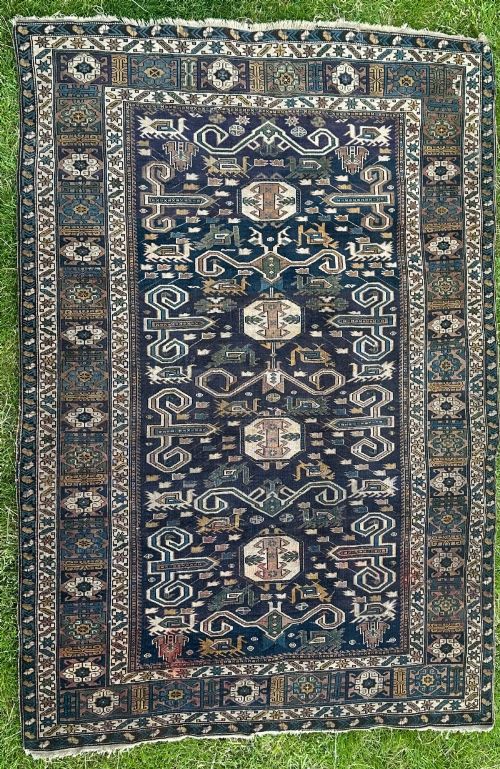
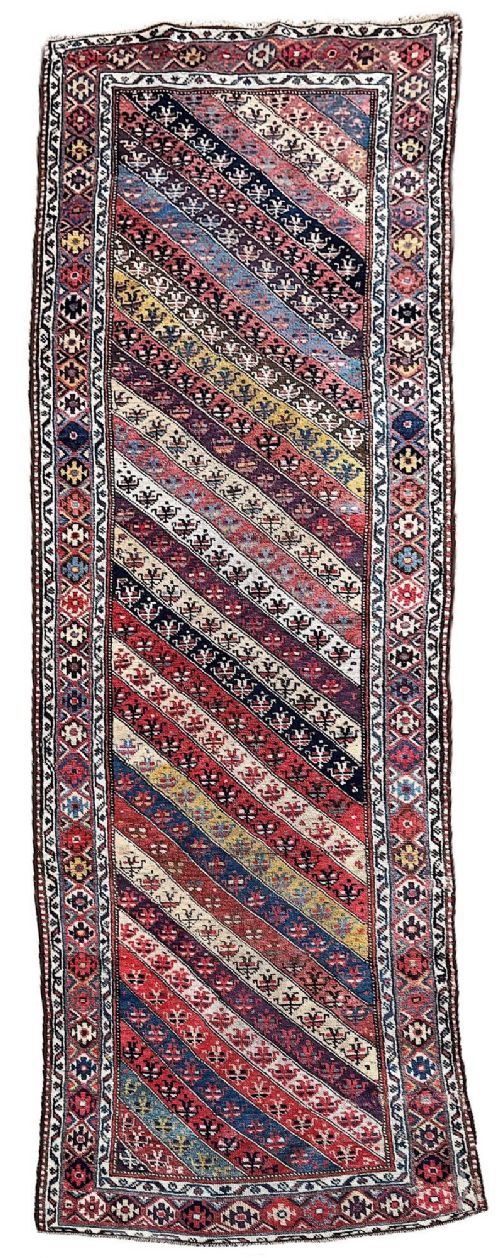
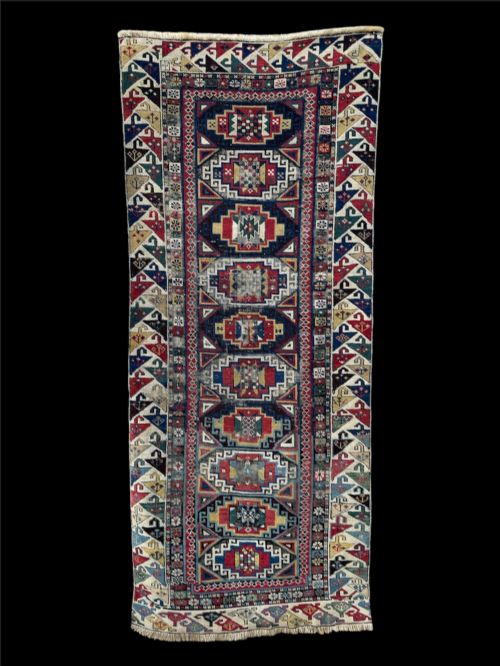
A shirvan tribal rug originates from the Eastern Caucasus mountains during the nineteenth and early twentieth centuries, capturing a distinct regional weaving heritage. These pieces span compact formats like prayer rugs and kilims to elongated runners and carpets with precise geometric layouts.
The aesthetic leans heavily into Caucasian and tribal traditions, showing structured medallions, stylized birds, and diagonal borders. Collectors encounter various sub-types, including Marasali, Bidjov, and Baku pieces, each bearing characteristic motifs rooted in local village workshops.
How they were made
Weavers relied on hand-spun wool for the pile and foundation, providing a dense, resilient texture that withstands generations of use. Cotton foundation threads appear alongside wool, giving structural stability to the finer geometric alignments.
Natural dyes infused the fleeces with enduring colour palettes, ranging from ivory grounds to deep blues and soft faded hues. Artisans utilised traditional vegetable and insect extracts to achieve these rich tones before synthetic chemistry reached the region.
Regional subtypes represented include Seychor, Kuba, Chajli, and Surakhani alongside standard Shirvan formats.
What varies in quality
The crispness of the drawing and the complexity of the internal motifs separate standard pieces from exceptional examples. Tightly executed Kufic borders, unusual field designs like flaming boteh or large peacocks, and scarce yellow or ivory grounds elevate a piece.
Handle and pile depth also dictate distinction, with finer knots yielding a more supple fabric and sharper linear definition. The purity of the natural dyes and the preservation of the original wool create depth of colour that lesser pieces lack.
The Shirvan Tribal Rug Glossary
- Boteh
- A teardrop or almond-shaped motif with a curved upper end, frequently seen in Persian and Caucasian weaving representing a floral sprout or cypress tree.
- Kilim
- A flat-woven carpet or rug produced without a pile, created by tightly interweaving warp and weft strands to form geometric patterns.
- Prayer rug
- A small rug featuring a mihrab or arch design at one end, traditionally laid on the floor to direct the user toward Mecca during daily prayers.
- Runner
- A long, narrow carpet format designed specifically for hallways, corridors, or staircases.
- Warp
- The vertical threads stretched tightly on the loom that form the structural foundation of the textile.
- Weft
- The horizontal threads passed through the warp strands to lock the knots and structure in place.
Shirvan Tribal Rug: Frequently Asked Questions
How do I clean an antique rug?
Gentle surface brushing and professional dusting are the safest methods for antique wool textiles. Avoid harsh detergents or immersion washing unless handled by a specialist familiar with natural dyes.
Water can destabilize nineteenth-century vegetable pigments and cause cotton foundations to shrink unevenly. Regular vacuuming with a suction-only attachment prevents grit from wearing down the wool pile.
Where should I place a runner?
Narrow formats fit naturally along hallways, entrance passages, or beside a bed. Their elongated proportions guide the eye through architectural spaces without overwhelming the floor.
Keep them out of damp areas like kitchens or unsealed porches to protect the natural wool and vegetable dyes from moisture damage.
Are these rugs durable enough for daily walking?
Hand-spun wool and dense knotting give these nineteenth-century textiles remarkable resilience for everyday use. Placing a quality underlay beneath the rug prevents slipping and cushions the fibres against hard flooring.
High-traffic hallways tolerate them well, provided heavy grit is vacuumed away regularly to protect the foundation threads.
How do I identify a prayer rug?
Look for a distinct pointed arch or triangular niche depicted at one end of the field design. This architectural feature points the worshipper in a specific directional orientation.
Surrounding motifs often incorporate floral lattices or stylized borders distinct from standard central medallion carpets.