



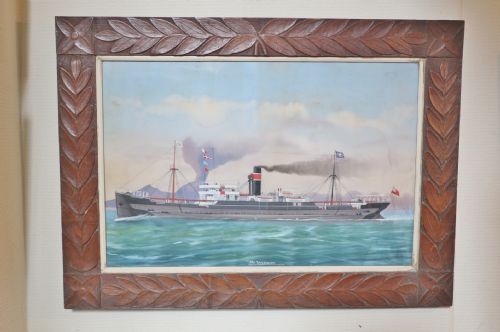
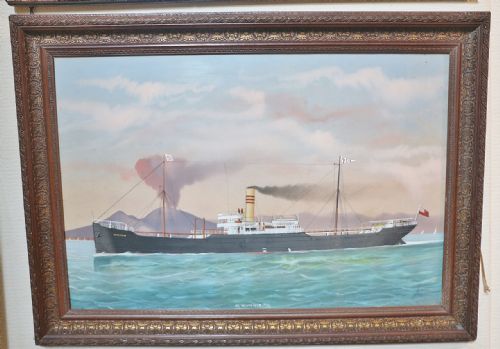
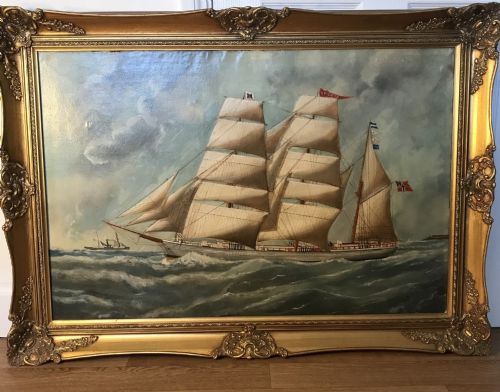
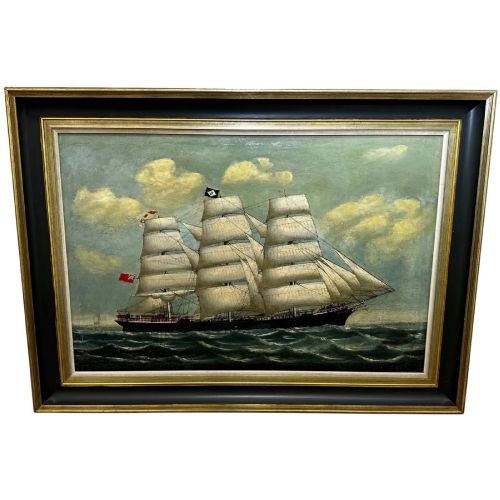
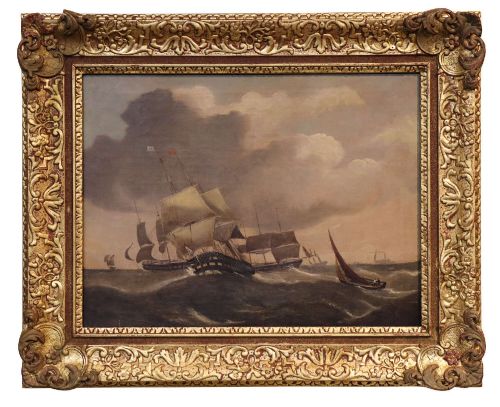
Vintage Ship Oil Artwork
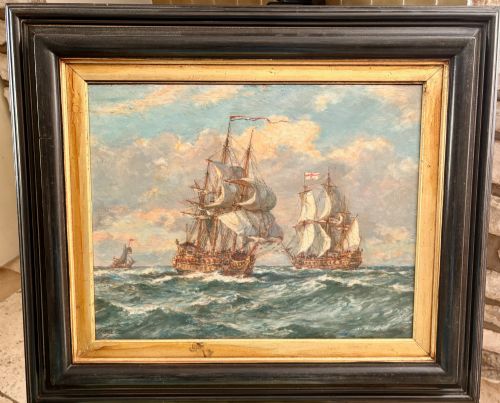
Vintage ship oil artwork captures maritime history on canvas, bringing historical vessels and stormy seas directly into domestic rooms.
Vintage Ship Oil Artwork
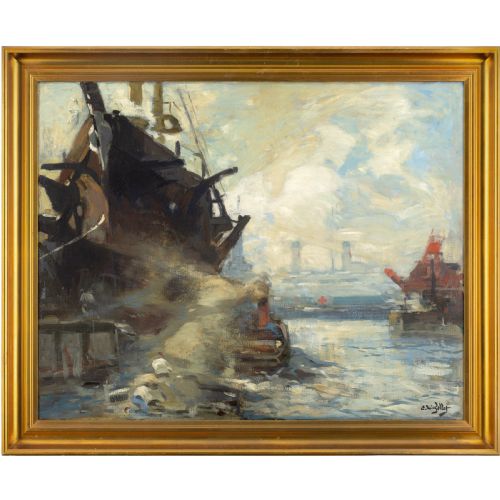
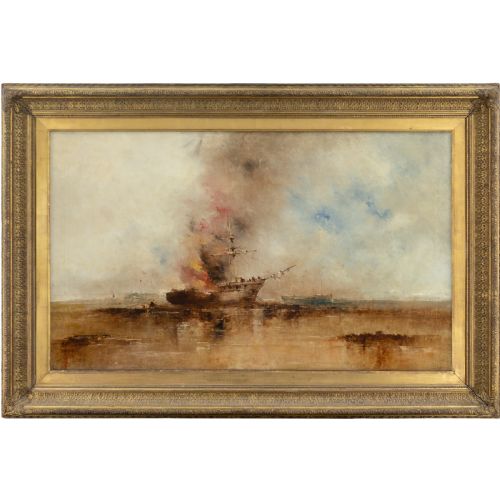
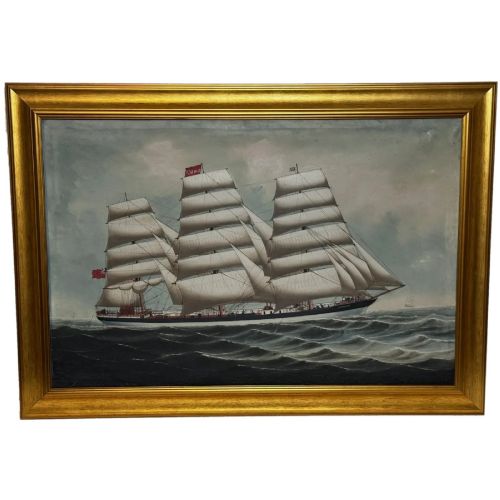
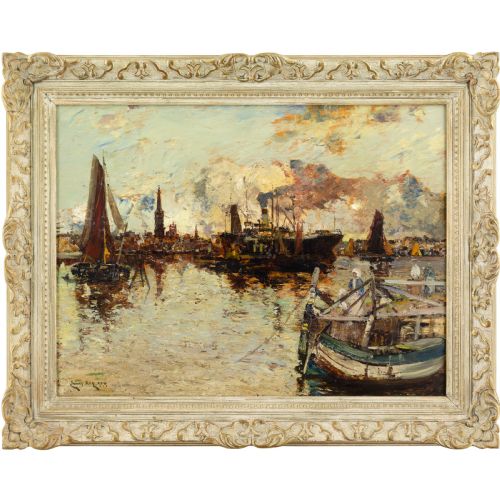
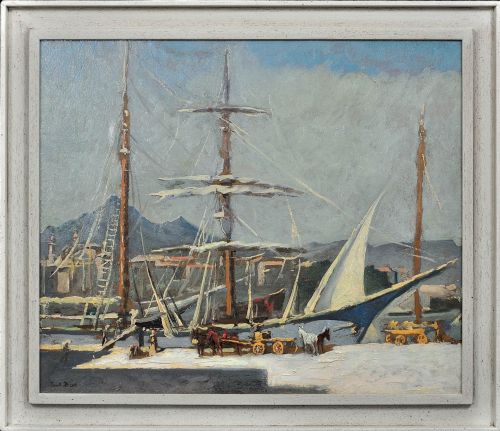
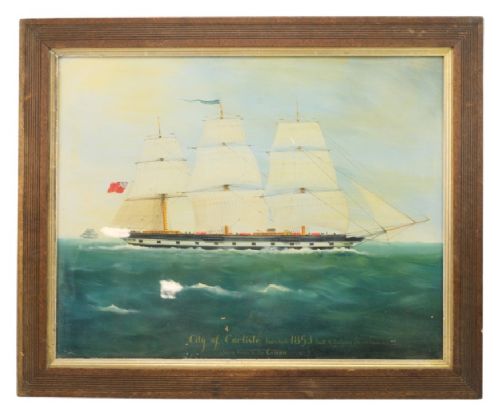
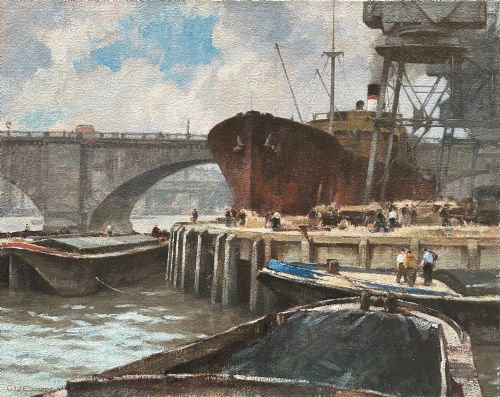
Vintage ship oil artwork comprises oil paintings and marine art depicting vessels, coastal views, and naval engagements from the nineteenth century through the mid twentieth century. These works range from detailed portraits of specific steamships and three masted schooners to atmospheric depictions of fishing boats in heavy seas.
The selections span Victorian marine art and Edwardian pieces, alongside later twentieth century interpretations. Common subjects include merchant vessels, royal yachts, and harbour scenes set in locations from Palermo to the Pearl River.
Buyers encounter both signed works by known artists and pieces from regional British or European schools executed on canvas, board, or card.
How they were made
These works rely primarily on oil paint applied to prepared canvas, wood panel, or board, sometimes complemented by gold leaf or gilt framing. Artists build up maritime scenes using pigments that capture the shifting light on water, smoke from steamships, and the texture of churning waves.
Many canvases are housed in period gilt frames that reflect the decorative standards of the nineteenth and early twentieth centuries.
Listings feature works spanning the eighteenth century to the 1950s, utilising canvas, wood, card, and oil paint.
What varies in quality
Quality rests in the precision of the vessel rigging, the handling of water and atmospheric perspective, and the integrity of the original support. Superior works demonstrate an accurate understanding of nautical architecture and maritime conditions rather than generic ship forms.
The distinction also lies in the strength of the composition and the depth of the pigment layers, separating standard decorative school pieces from masterworks by named marine painters.
Eugène Louis Gillot·William McAlpine·Reginald Arthur Borstel·James Kay·Bernard Gribble·Paul Bret·Bernard Benedict Hemy·Cyril Walduck Edwards·Lai Fong·Nicholas Condy·Abraham Hulk I·George Shaw·Hendrik Willebrord Jansen·Dion Pears
The Vintage Ship Oil Artwork Glossary
- Pierhead painting
- A genre of ship portraiture commissioned by sailors or ship owners, usually depicting a named vessel outside a specific port. These works prioritize accurate details of rigging and flag signalling.
- Seascape
- A painting depicting the sea, coast, or maritime activity. This broad term encompasses both calm coastal scenes and dramatic depictions of vessels in heavy gales.
- Barque
- A sailing vessel with three or more masts where the rear mast is fore-and-aft rigged and the others are square-rigged. This configuration appears frequently in nineteenth century maritime art.
- Gilt frame
- A wooden picture frame coated with a thin layer of gold leaf or metallic paint. These frames often accompany Victorian and Edwardian marine oil paintings.
Vintage Ship Oil Artwork: Frequently Asked Questions
What is vintage ship oil artwork?
These pieces are oil paintings created between the nineteenth and mid twentieth centuries that focus on maritime subjects. They record historical vessels, naval battles, and coastal trade across various global waters.
Subjects range from named steamships and clippers to anonymous fishing boats navigating heavy seas.
How were marine paintings used?
Maritime art typically hung in the homes of ship owners, captains, merchants, and naval officers who maintained close ties to shipping commerce. They served as personal mementos of specific vessels or commercial routes.
Owners also displayed them in domestic parlours as decorative expressions of national maritime dominance.
How do I live with these paintings?
Position these works away from direct sunlight to protect oil pigments and delicate gilt frames from fading. Pairing them with traditional interiors allows the dark marine palettes and water tones to stand out.
Ensure stable room humidity to prevent the canvas or wooden board from warping over time.
How do I identify periods?
Examine the subject matter, such as the transition from three masted schooners and clippers to WWI steamships. Clothing styles of figures, framing materials, and artist signatures also help date the work.
Victorian pieces often feature romanticized coastal drama, while mid twentieth century examples lean towards broader impressionistic sea studies.