
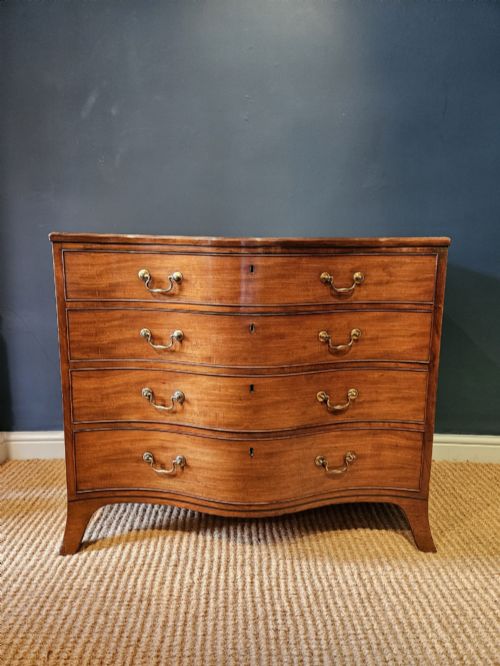
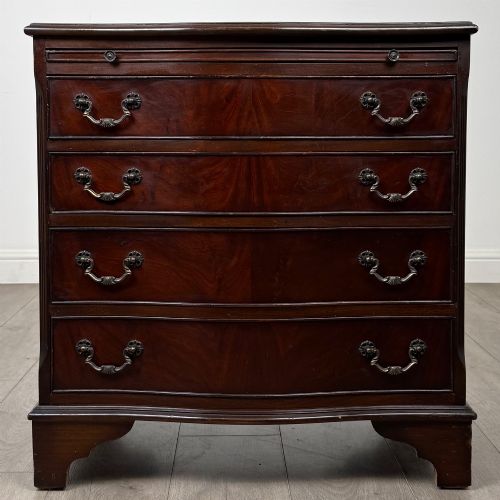
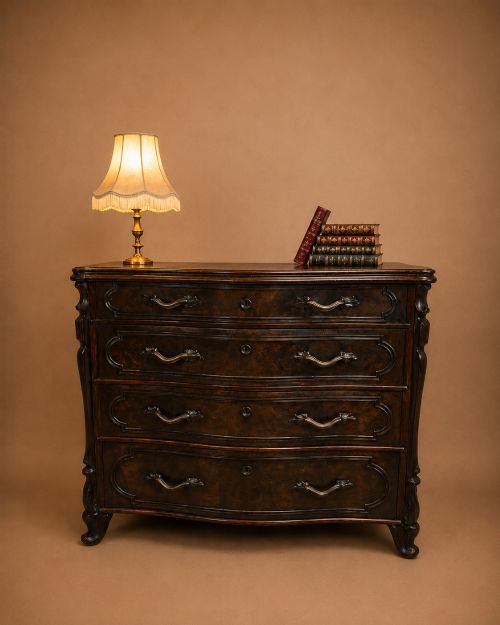
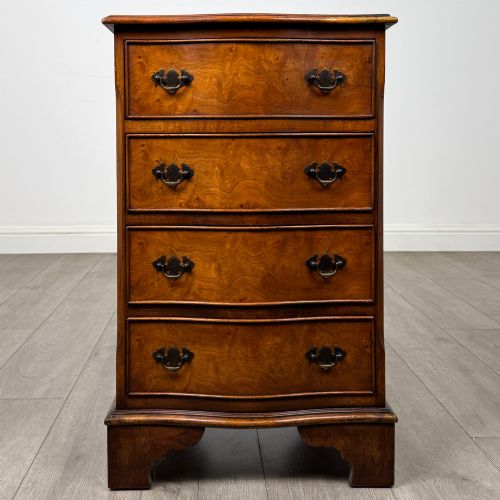

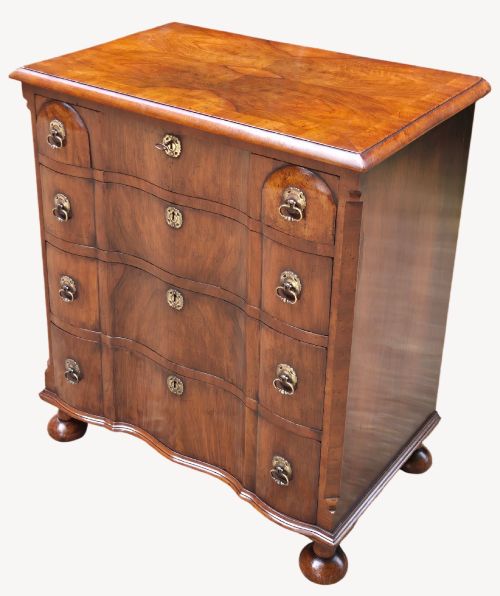
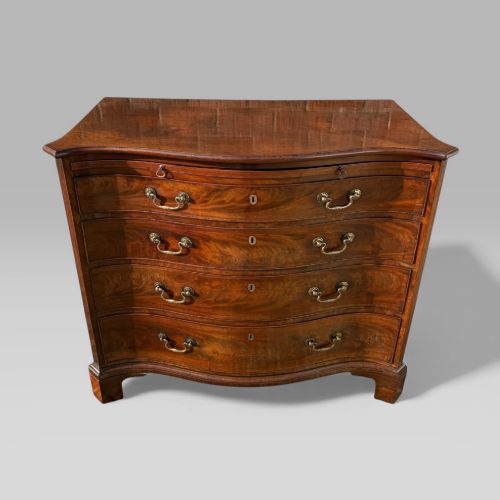
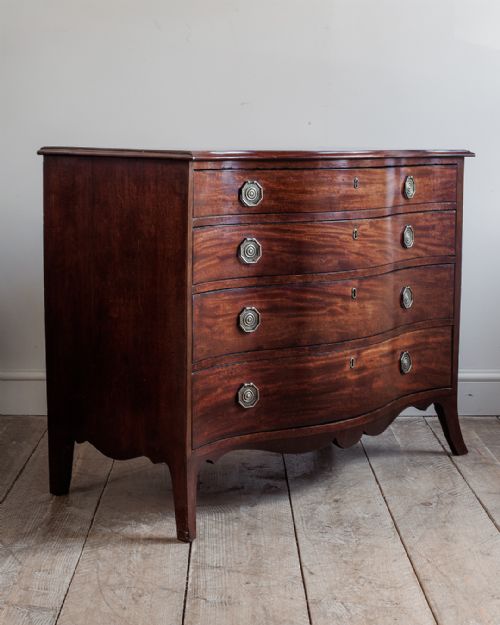
Vintage Serpentine Commode
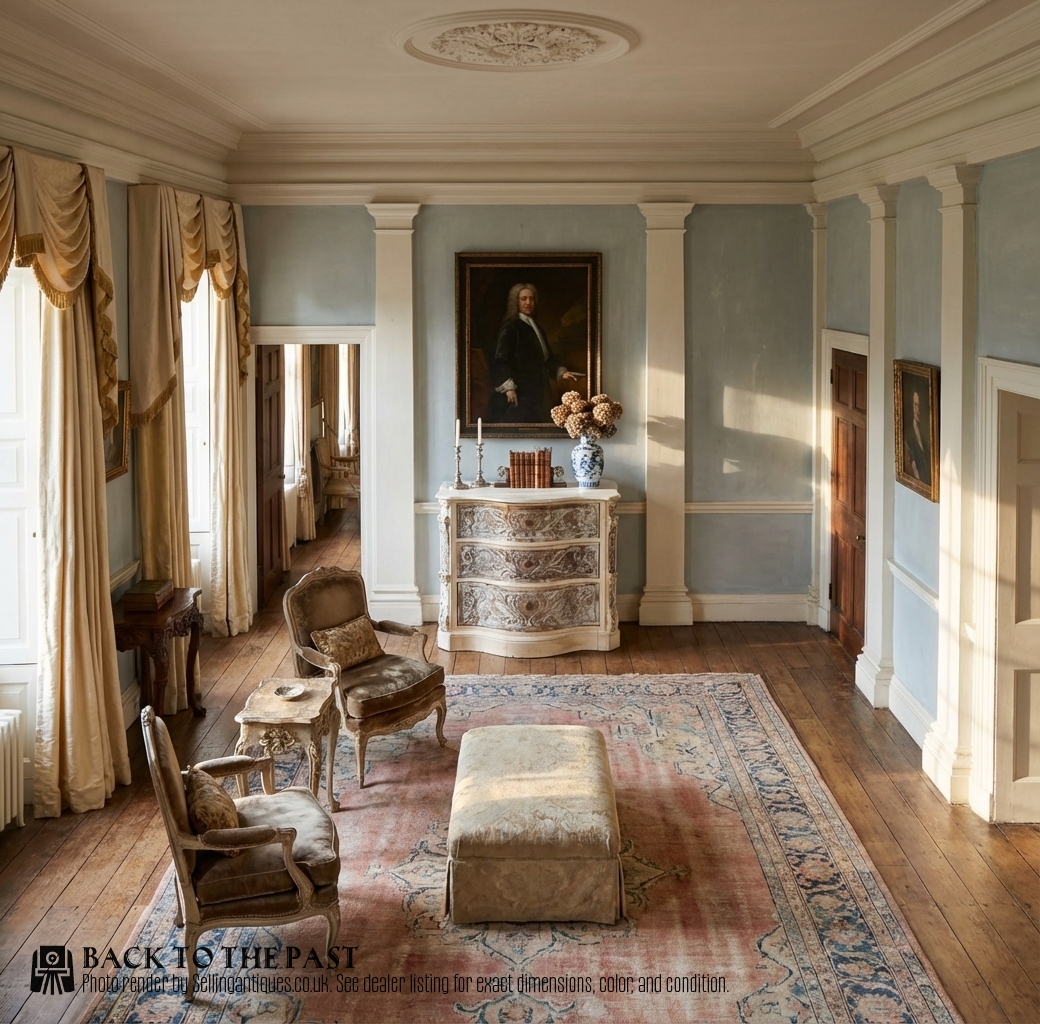
A vintage serpentine commode brings fluid, undulating lines and rich cabinet-making traditions into a room.
Vintage Serpentine Commode
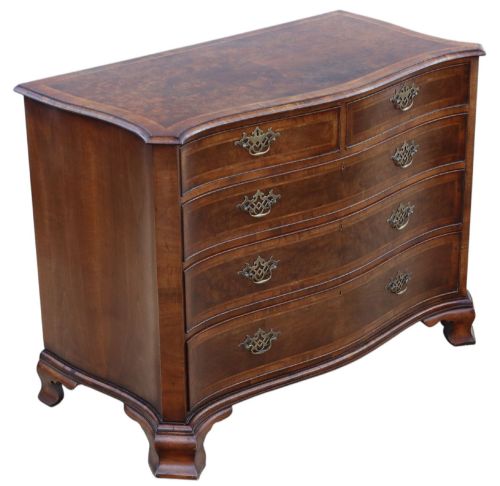
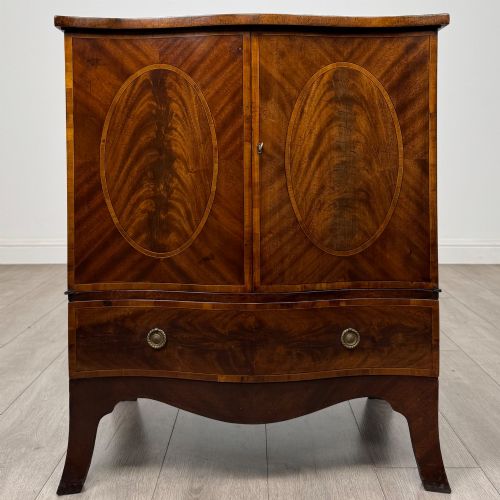
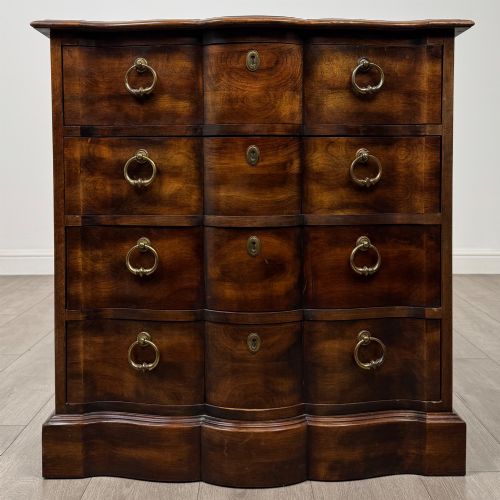
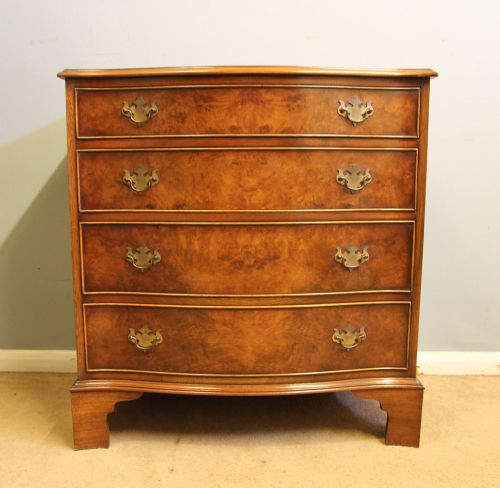
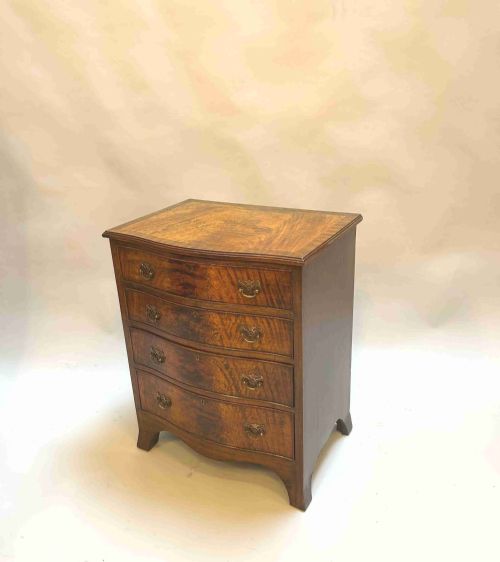
A vintage serpentine commode takes the form of a chest of drawers or bedside cabinet characterised by a distinctive convex-concave-convex front profile. The pieces collected here span the eighteenth century through to the Edwardian era and the 1930s, reflecting both original period cabinet-making and later revivals.
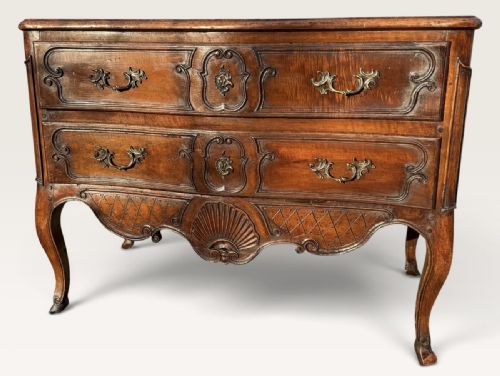
Mahogany and walnut dominate the offerings on this page, alongside marquetry, kingwood, burr walnut, and marble tops. Buyers will encounter forms ranging from large Georgian examples to smaller Edwardian variants and French Louis XV style bedside cabinets.
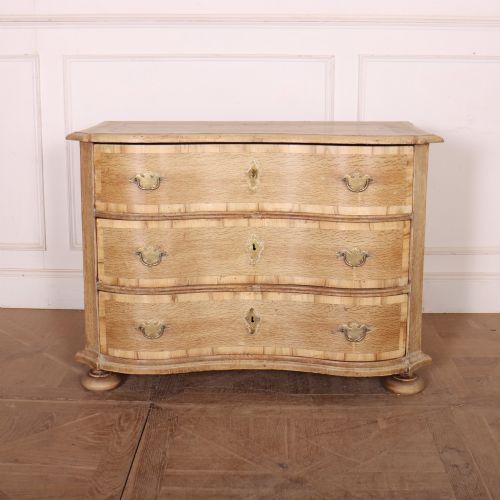
Continental origins appear regularly alongside British pieces, featuring Dutch baroque designs, Austrian bleached oak, and German craftsmanship. The variation in styles covers Georgian revival, French provincial, and Sheraton revival interpretations of the serpentine shape.
How they were made
Cabinet-makers constructed these curved fronts by shaping solid timbers or applying complex crossbanding and marquetry veneers over stable carcases. Burr walnut and mahogany feature extensively, matched with brass handles, escutcheons, and occasionally ormolu mounts.
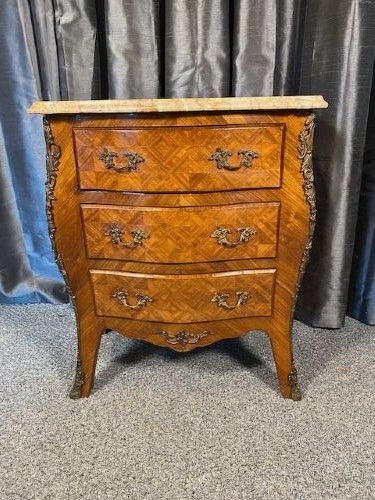
Marble tops appear frequently on continental and French-influenced pieces, requiring precise stone-cutting to follow the undulating contour of the commode below. Inlays of lighter woods form intricate patterns across drawer fronts, particularly in French Louis XV style and marquetry pieces.
The listings on this site encompass eighteen-century origins, Georgian revivals, Edwardian interpretations, and pieces dated into the 1930s.
What varies in quality
The sophistication of the timber selection dictates much of the distinction between pieces, particularly in the figuring of burr walnut or the precision of mahogany crossbanding. Grain matching across undulating drawer fronts demands exceptional skill from the maker.
The execution of the curved profile itself sets apart standard production from finer work, as maintaining clean, crisp lines through convex and concave sections requires meticulous hand-planing. Original hardware, intact marble slabs, and refined marquetry further elevate a piece.
The Vintage Serpentine Commode Glossary
- Serpentine
- A front profile shaped with a convex centre flanked by concave curves, creating an undulating wave effect. This design requires advanced woodworking techniques to construct.
- Crossbanding
- A border of veneer laid around the perimeter of a drawer front or tabletop with the wood grain running perpendicular to the centre panel. It frames the primary timber.
- Marquetry
- Decorative patterns formed by fitting together contrasting veneers of wood, shell, or ivory onto a carcase. It often depicts floral or geometric scenes.
- Ormolu
- Gilded bronze mounts applied to furniture for decoration, commonly found on French-influenced commodes. The technique involves mercury gilding on bronze.
- Bombe
- A swollen or bulging out-swpt shape typical of continental furniture styles, particularly associated with Dutch and French commodes. It adds substantial visual weight to the piece.
Vintage Serpentine Commode: Frequently Asked Questions
What is a serpentine commode?
A serpentine commode is a chest of drawers or cabinet featuring a front edge that curves outward in the middle and inward at the sides.
Originating primarily in eighteenth-century workshops, these pieces continued to be produced through various revival periods up to the 1930s.
How do I place one in a modern room?
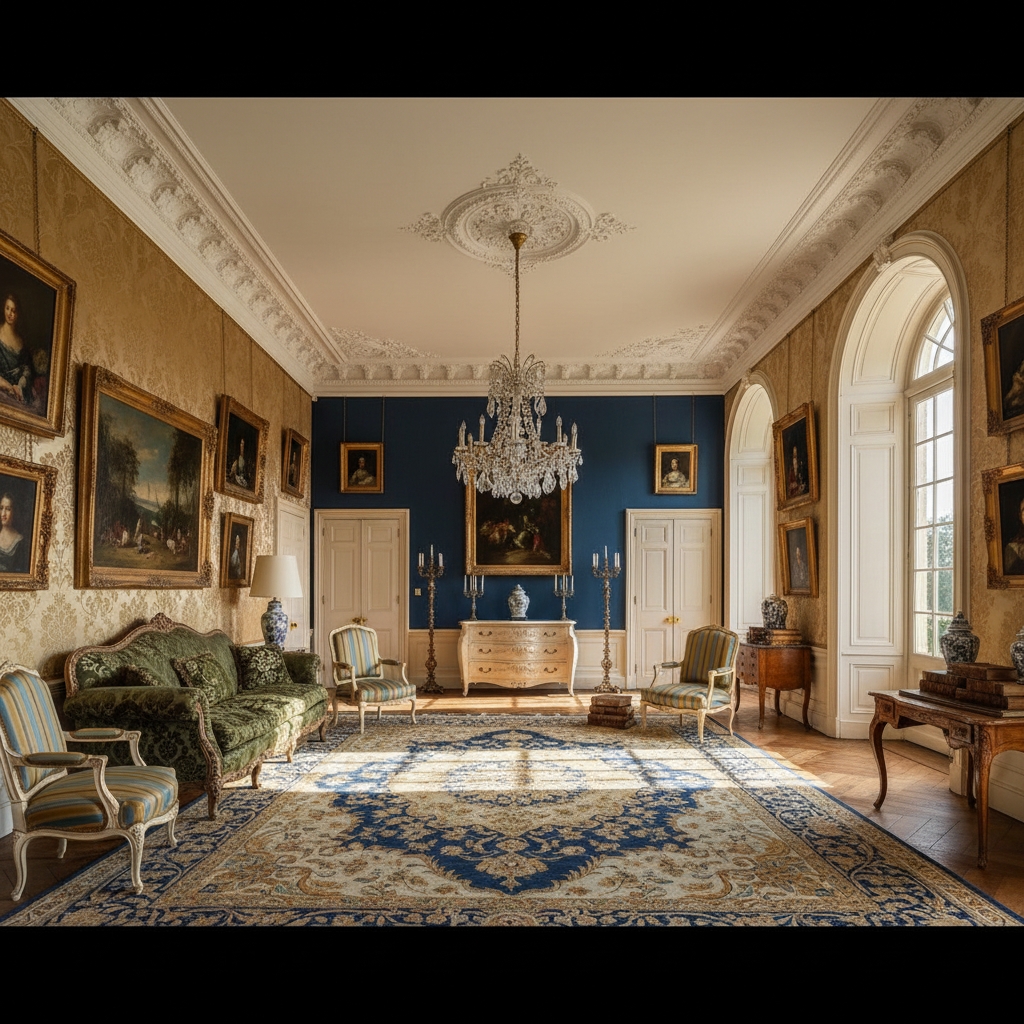
These commodes function effectively as statement storage pieces in hallways, living rooms, or bedrooms, providing surface space for lamps or decorative objects.
Their curved profiles soften rectilinear contemporary interiors and mix well with various design schemes.
How do I date a serpentine commode?
Dating relies on examining the secondary timbers, construction methods of the drawer linings, and the style of the brass hardware.
Revival pieces from the Edwardian era or 1920s often combine older aesthetic influences with machine-assisted construction techniques.
Are marble-topped commodes French?
Marble tops appear frequently on continental pieces, particularly those influenced by French Louis XV and Dutch baroque styles.
They provide a durable, decorative surface that complements the inlaid kingwood, walnut, or marquetry below.