

Rococo Style Chest
A rococo style chest brings fluid curves and botanical inlay into a room, offering both sculptural presence and functional storage.
Rococo Style Chest
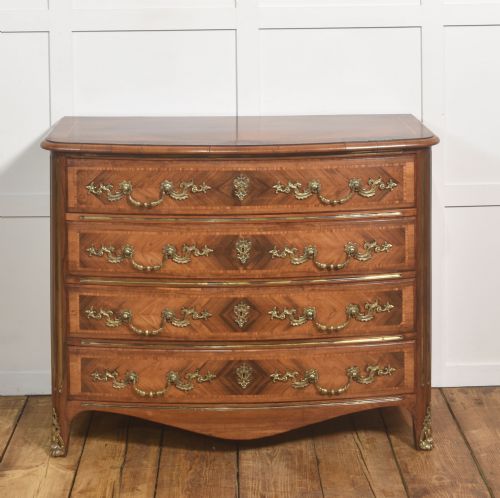
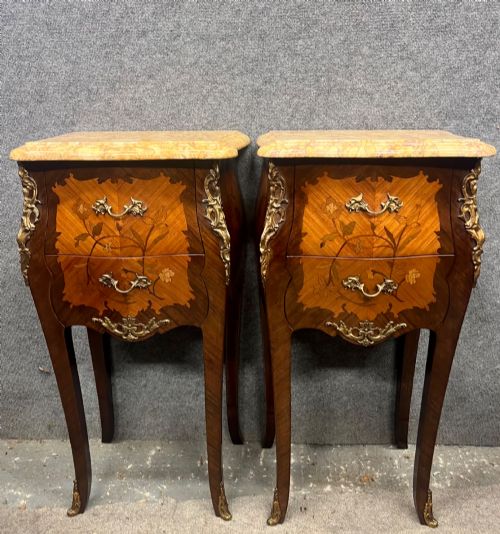
When searching for a rococo style chest, buyers encounter commodes, bedside chests, and side cabinets spanning from the eighteenth century through the twentieth century. These pieces originate largely from French, Italian, and English workshops, adapting the dynamic symmetry and asymmetric curves characteristic of the movement.
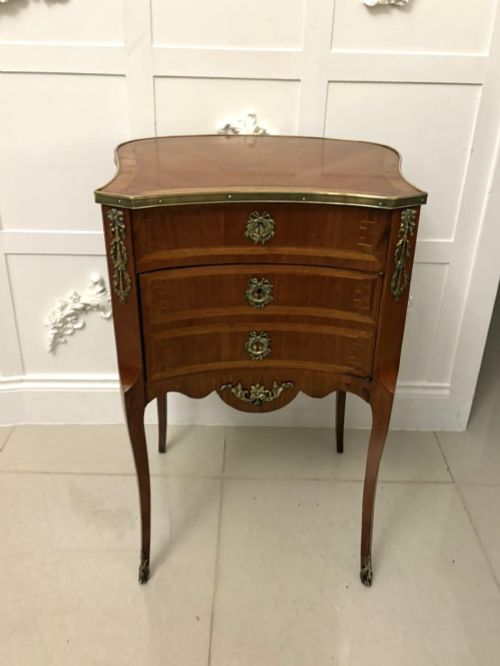
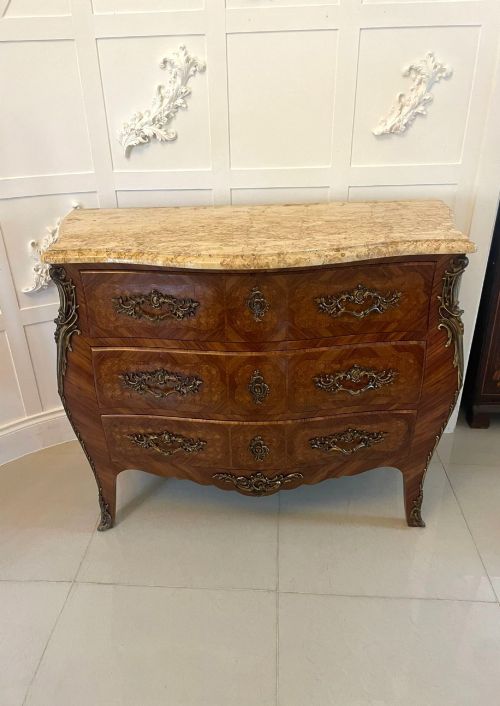
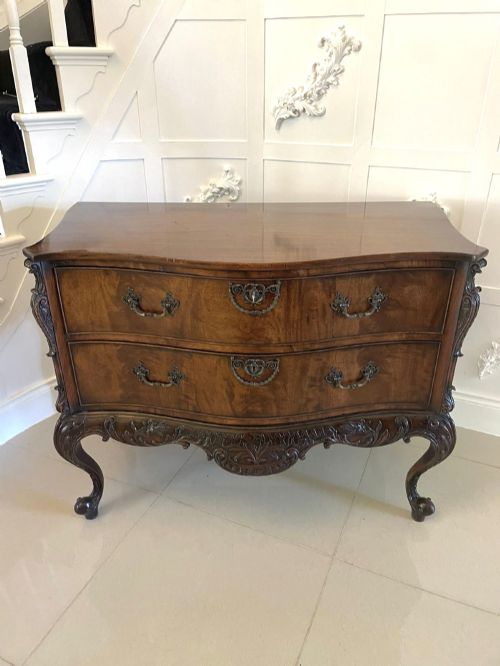
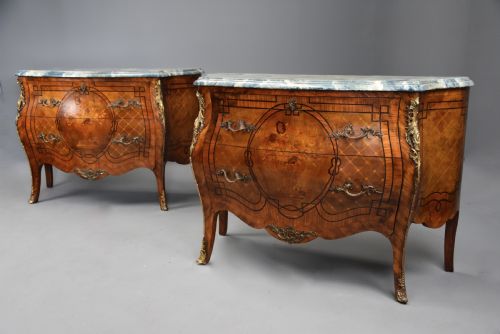
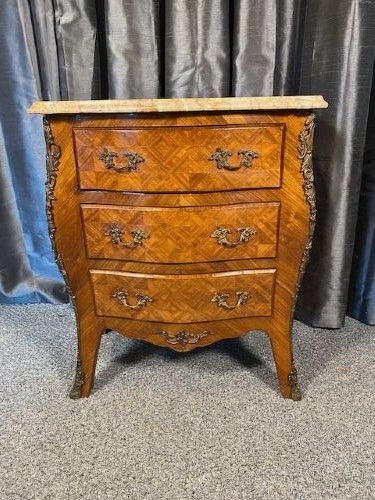
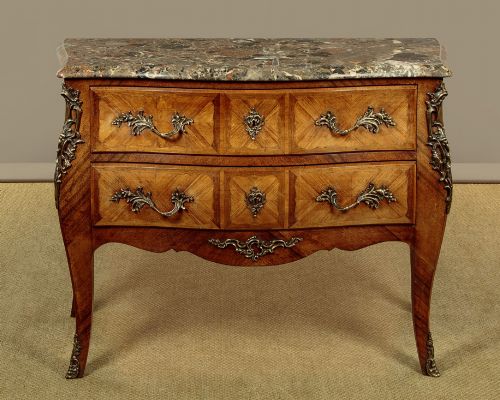
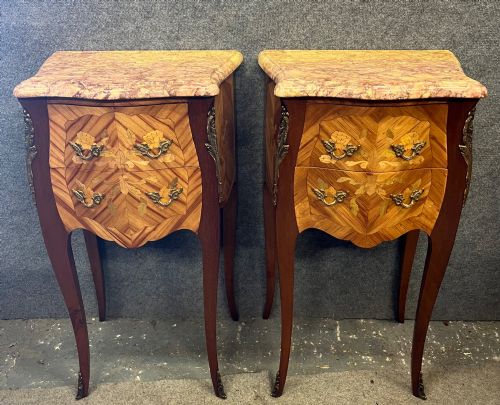
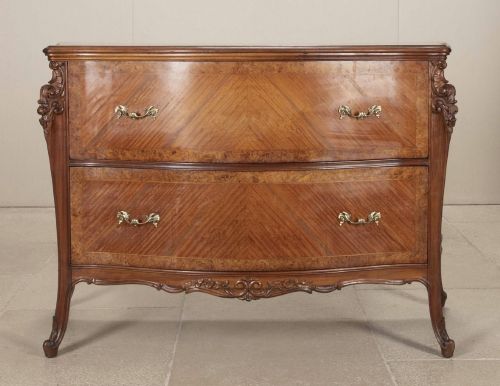
The most common forms on this page are marble-topped commodes and bombé chests of drawers featuring serpentine fronts. Walnut, kingwood, and mahogany provide the foundational structure for these varied storage pieces, often enhanced by elaborate marquetry.
Makers across different decades embraced revival periods, resulting in nineteenth-century and early twentieth-century interpretations that sit alongside genuine eighteenth-century examples. The overarching design language relies on organic outlines rather than rigid rectilinear geometry.
Materials and construction
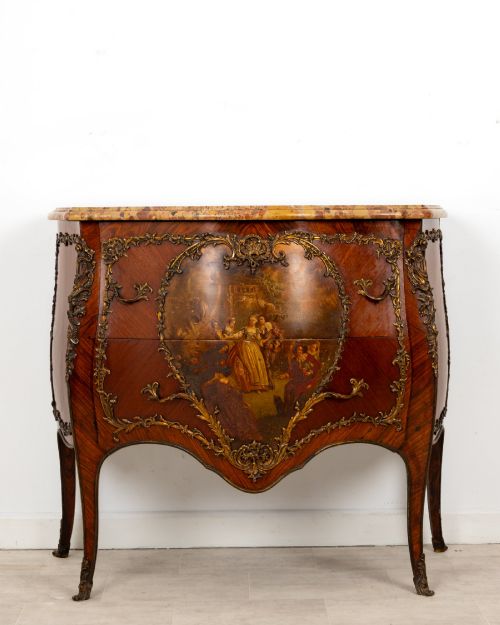
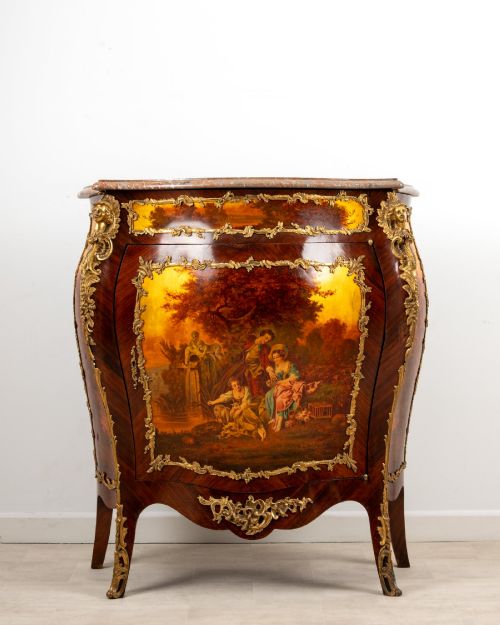
Cabinet makers utilised dense hardwoods such as walnut, oak, and mahogany as carcase foundations, frequently applying kingwood, satinwood, and burr walnut veneers in geometric or floral marquetry patterns. Vernis Martin finishes and hand-painted lacquer appear on specific decorative interpretations.
Marble tops, ranging from white to variegated grey and coloured slabs, sit neatly upon the serpentine and bombé contours of the upper carcase. Cast ormolu and gilt-bronze mounts accentuate the corners, handles, and apron scrolls of the furniture.
The sweeping bombé profiles require complex multi-directional curving of the wood veneers and frame timbers. Joinery relies on traditional dovetailing for drawer construction alongside precision-cut carcase frames.
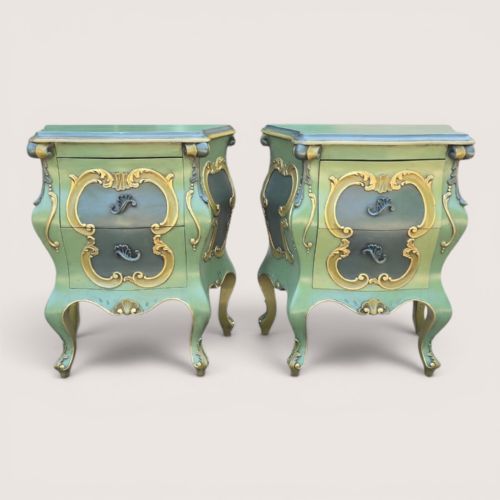
Some mid-century Italian craftsmen added whimsical Venetian scenes to their painted chests.
Assessing craftsmanship and finish
The separation between standard production and exceptional work rests on the precision of the veneer matching and the crispness of the bronze or ormolu mounts. Finer examples display continuous, unbroken flow in their marquetry across drawer fronts and sides.
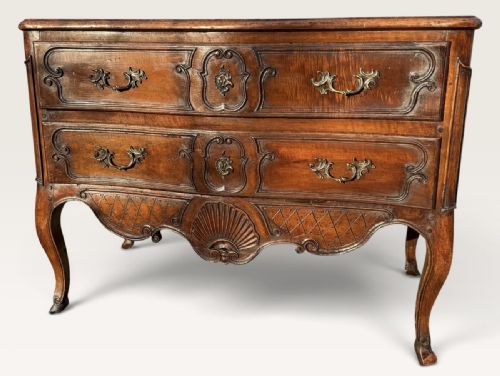
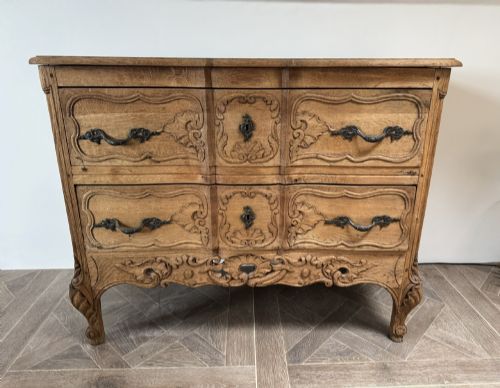
The weight, thickness, and finishing of the marble top indicate the grade of the piece, alongside the fluidity achieved in the serpentine shaping of the solid timber carcase. Hand-carved details show depth and undercut definition rather than flat, machine-cut profiling.

The Rococo Style Chest Glossary
- Bombe
- A bulging, outward-curved commode or chest shape swollen at the sides and front. This profile demands advanced woodworking skill to maintain structural integrity.
- Marquetry
- Inlaid wood veneers assembled to form decorative pictures or patterns. Artisans cut contrasting timber grains together to achieve tight joints.
- Ormolu
- Gilt bronze mounts applied to furniture corners, escutcheons, and legs. The brass alloy undergoes chemical or fire-gilding processes.
- Serpentine
- A furniture front curving inward centrally and outward at the sides. This rhythmic line defines much of the movement's case furniture.
- Vernis Martin
- A simulated Japanese lacquer finish developed in France. The technique involves multiple layered applications of varnish to achieve a translucent depth.
Rococo Style Chest: Frequently Asked Questions
Where should I place a rococo style chest?
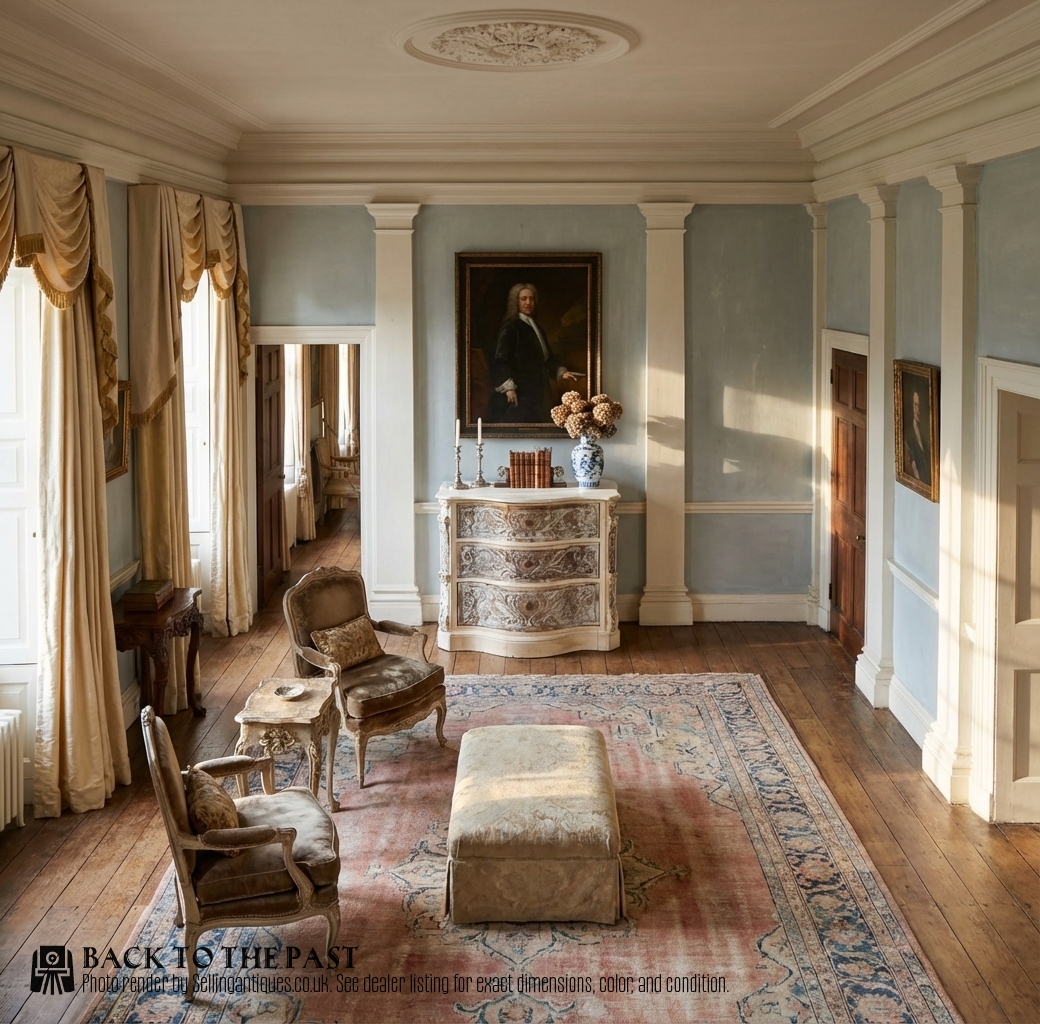
These pieces function effectively as focal points in drawing rooms, hallways, or bedrooms where their curved profiles can be appreciated from multiple angles. Their surface area also accommodates lamps, mirrors, or decorative objects.
Ensure adequate clearance around the piece to allow drawers to open fully without obstruction from surrounding furniture.
How do I clean marble top surfaces?
Wipe the marble surface regularly using a soft, damp cloth with mild, pH-neutral soap. Avoid acidic cleaners, vinegar, or harsh abrasives that can etch or dull the polished stone.
Dry the surface thoroughly after cleaning to prevent water spots from forming on the polished finish.
Are these chests practical for everyday storage?
Most commodes and cabinets offer deep drawer capacity suitable for clothing, linens, or household items. The internal dimensions often vary due to the swelling bombé contours.
Drawers glide on traditional wooden runners, so keeping the tracks clean and lightly waxed ensures smooth daily operation.
How do I distinguish older pieces from later revivals?
Examine the secondary woods inside the drawer linings and carcase backs, as older regional workshops utilised local timbers distinct from later factory-produced frames. Tool marks, hand-cut dovetails, and wear patterns offer clues to the age of the construction.
Revival pieces from the nineteenth and twentieth centuries frequently employ machine-sawn elements alongside period-correct styling.