
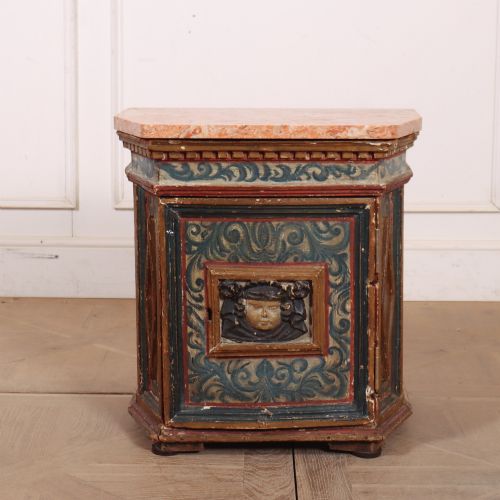


Italian Painted Chest
An italian painted chest brings centuries of continental craftsmanship into a room, offering both practical storage and a bold decorative surface.
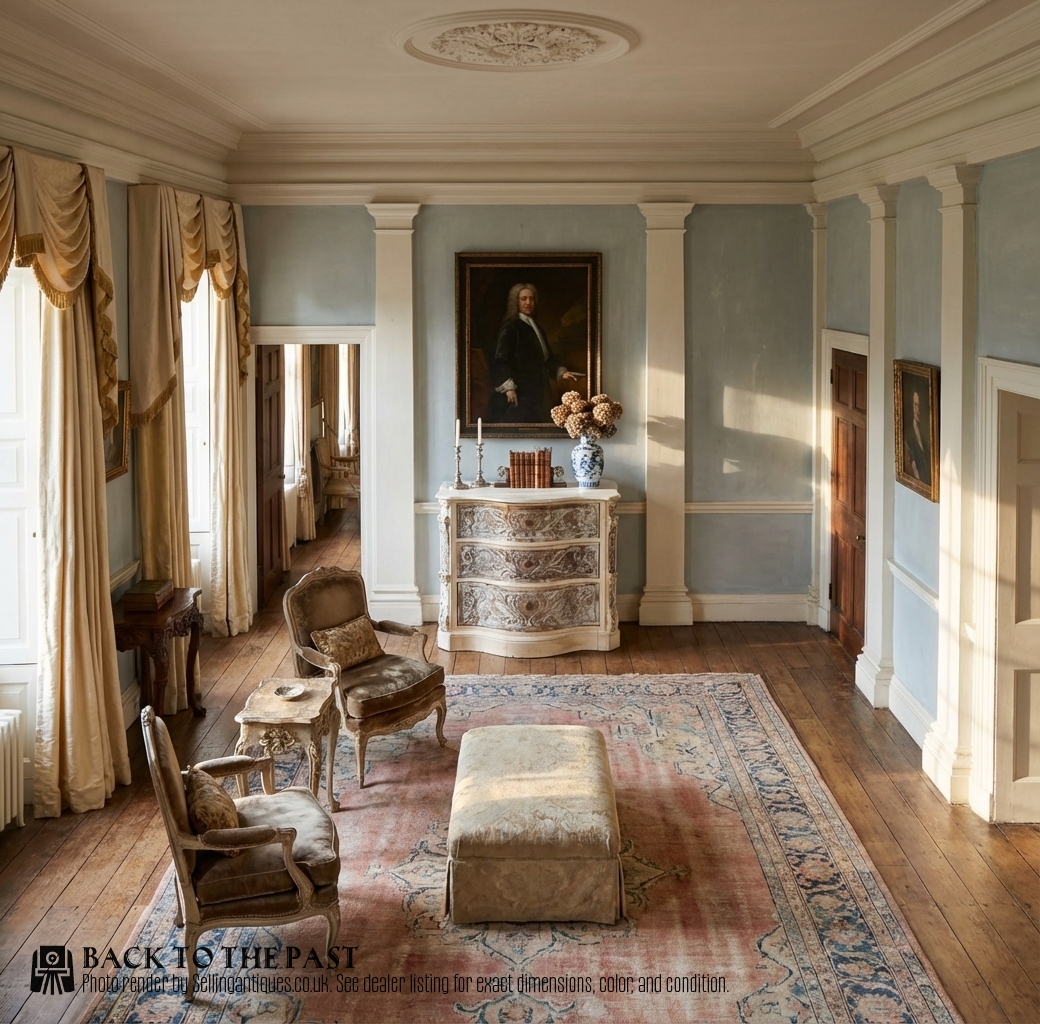
Italian Painted Chest
When you search for an italian painted chest, you encounter a diverse group of storage furniture spanning from the seventeenth century through to the early twentieth century. The selection ranges from robust marriage chests and coffers to elegant serpentine commodes and side cabinets.
You are most likely to meet eighteenth and nineteenth-century commodes and chests of drawers on this page. These pieces often display regional decorative traditions, from Venetian scenes to simple folk art motifs.
Form follows function across the eras, shifting from heavy seventeenth-century walnut cassones to curved commodes designed for formal drawing rooms. Smaller bedside cupboards and apothecary cabinets also appear, showing the wide scope of domestic storage produced in Italy.
Materials and technique
Makers built these pieces using native timbers such as walnut and general wood substrates, preparing the surfaces with gesso before applying layers of paint and decorative finishes. Giltwood accents and hand-painted scenes frequently adorn the exterior panels.
Hardware played an essential structural and decorative role, with iron and brass hinges, locks, and handles securing the heavy timber doors and drawers. Later nineteenth-century pieces occasionally incorporate marble tops above the painted wooden frames.
Marriage chests were sometimes measured by how many pairs of embroidered stockings could fit inside the painted lid.
What varies in quality
The distinction between standard domestic items and superior pieces lies in the sophistication of the painted surface and the ambition of the cabinetry. Serpentine fronts and carved wooden details demand greater joinery skill than straight-lined carcases.
The preservation of the original pigment and the subtlety of figurative or architectural painting elevate a piece significantly. Finer examples maintain crisp decorative details on the gesso and woodwork, whereas lesser items show heavy restoration or simplified folk motifs.
The Italian Painted Chest Glossary
- Cassone
- A large Italian chest, often traditionally associated with marriage and dowries. These heavy storage pieces frequently feature elaborate carvings or painted panels.
- Commode
- A decorative chest of drawers or low cabinet developed in the seventeenth and eighteenth centuries. They often feature curved serpentine fronts and painted or gilt finishes.
- Gesso
- A plaster-like mixture applied to wood surfaces to prepare them for painting or gilding. It provides a smooth base for detailed decoration.
- Serpentine
- A curved furniture front that undulates outward and inward in a wave-like shape. This contour requires precise carpentry and sophisticated design.
Italian Painted Chest: Frequently Asked Questions
How do I date an Italian painted chest?
Dating relies on examining the underlying construction timber, hand-cut nails or joinery methods, and the style of the painted decoration. Seventeenth-century examples tend to be heavy walnut coffers, whereas eighteenth and nineteenth-century pieces often take the form of curved commodes.
Changes in hardware and the composition of the gesso base also offer clues to the period. Comparing the piece to documented regional styles helps narrow down the decade of manufacture.
Where should I place a painted chest?
These pieces function well as focal points in hallways, living rooms, or bedrooms where their decorative surfaces can be fully appreciated. Their primary role remains practical storage, whether holding linens, tableware, or everyday items.
Keep them away from direct sunlight and excessive heat sources to protect the aged paint and gesso from cracking. Placing them against an interior wall helps maintain a stable ambient temperature.
How do I care for antique painted wood?
Dust the surface regularly with a soft, dry cloth to prevent dirt accumulation on the delicate painted layers. Avoid using modern chemical polishes or abrasive cleaners that can strip or soften historical pigments.
Maintain stable humidity levels in the room to prevent the underlying wood from expanding or contracting. This protects both the structural timber and the brittle gesso layers from damage.
What is the difference between a cassone and a commode?
A cassone is a traditional chest or coffer with a hinged lid, typically associated with earlier centuries and marriage customs. It offers deep, open internal storage for large textiles or valuables.
A commode is a chest of drawers with pull-out compartments, generally emerging in later periods for sophisticated domestic interiors. Commodes prioritise organised drawer storage over open chest cavities.