



Vintage Satinwood Sideboard
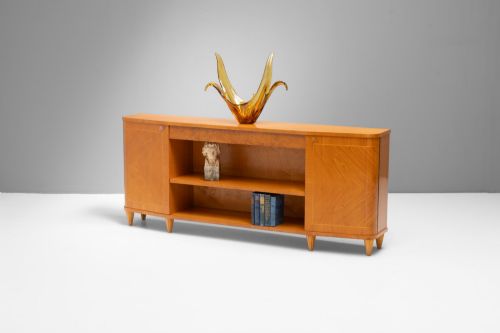
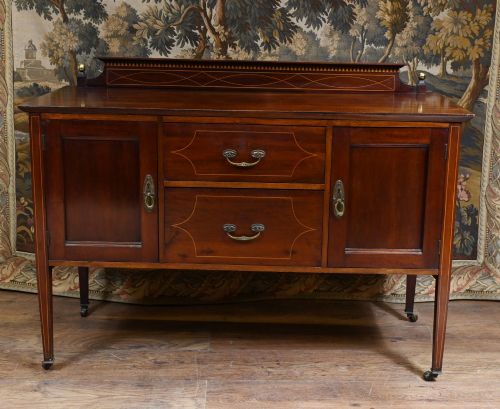
A vintage satinwood sideboard brings pale, figured timber and refined neoclassical revival lines into a dining room or hall.
Vintage Satinwood Sideboard
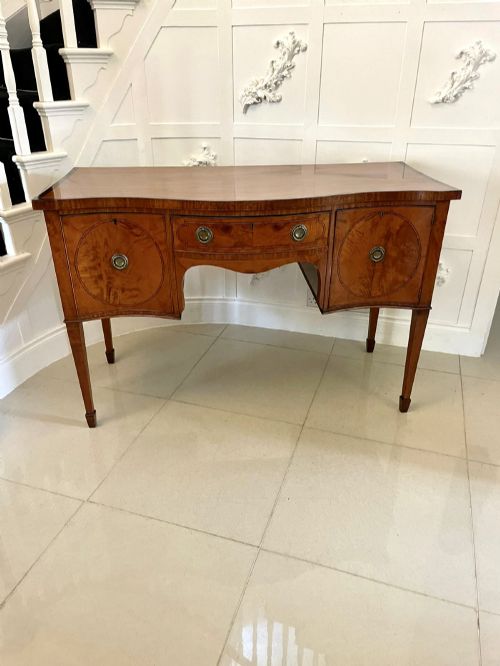
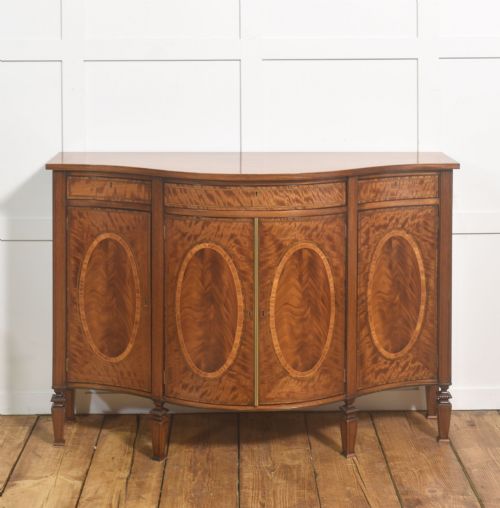
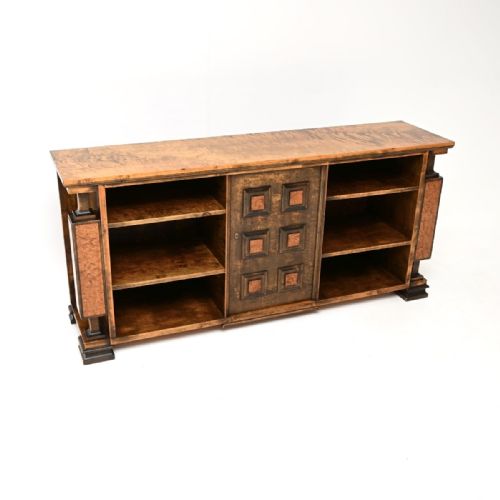
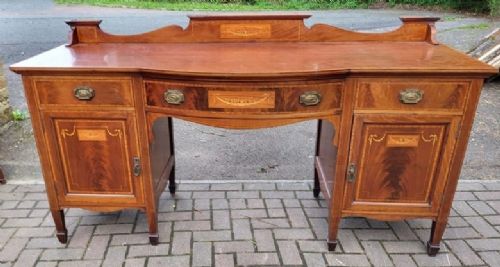
When you search for a vintage satinwood sideboard, you encounter large dining furniture, bow-front servers, and serpentine cabinets spanning the Victorian, Edwardian, and Art Deco eras. These pieces serve as functional storage for china and linen while introducing distinctive light-toned wooden surfaces to an interior.
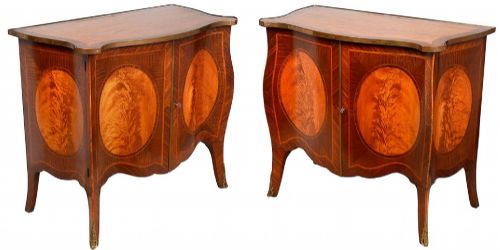
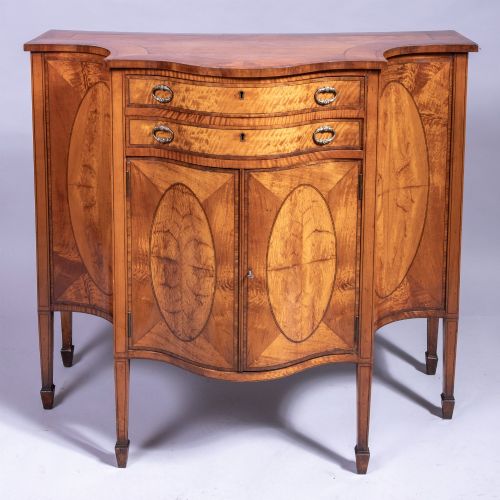
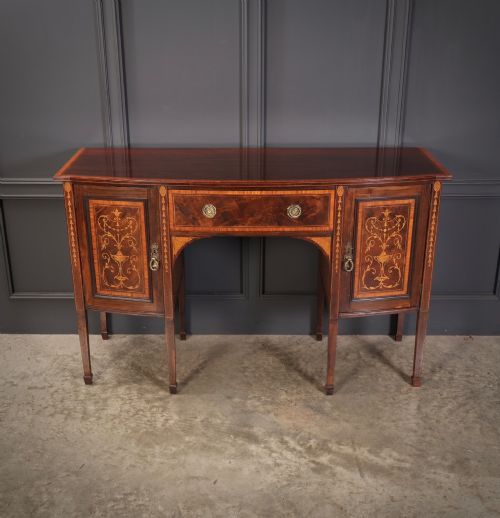
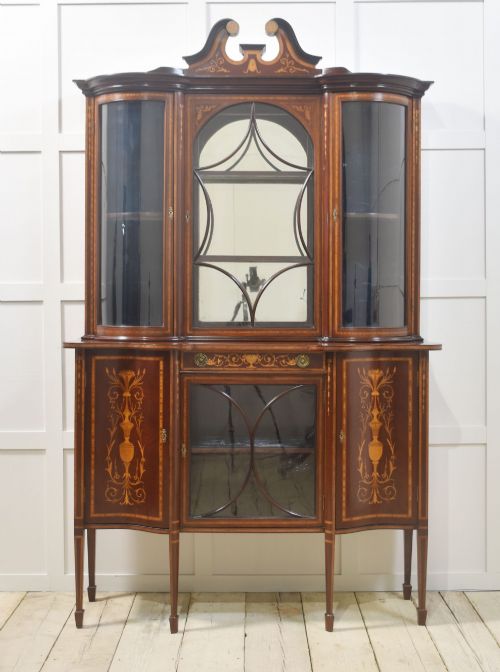
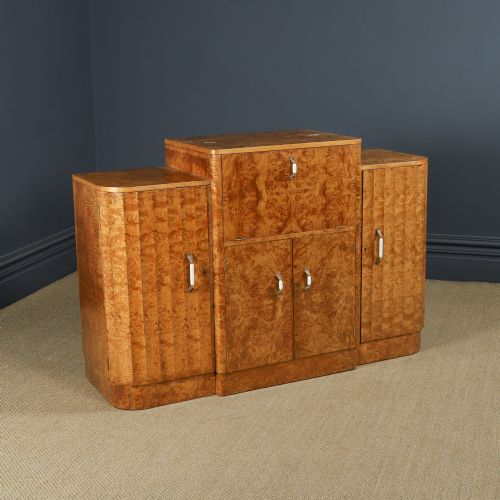
The selection on this page relies heavily on Sheraton Revival designs from the late nineteenth and early twentieth centuries, alongside distinct Art Deco forms and French-influenced commodes. Sideboards sit alongside related case furniture such as side cabinets, display cabinets, and linen presses sharing the same vocabulary of materials.
Originating largely from the late nineteenth century through to the interwar period, these pieces demonstrate how cabinetmakers adapted eighteenth-century neoclassical motifs for later homes. The proportion and silhouette range from compact demi-lune commodes to large breakfront servers.
Materials and Construction
Makers construct these pieces using a foundation of mahogany or pine covered in satinwood veneers, complemented by contrasting timbers such as boxwood and walnut. Craftsmen apply intricate wood inlay and marquetry to create geometric borders, classical urns, and floral motifs across the drawer fronts and doors.
Decorative detailing often incorporates painted panels alongside brass galleries, handles, and keyhole escutcheons. Cabinetmakers shape the timber into bow fronts and serpentine curves, requiring precise bending and jointing techniques to maintain structural integrity.
Listings feature items spanning the Victorian, Edwardian, and Art Deco periods, executed in satinwood, mahogany, and marble.
Distinctions in Standard
The degree of refinement in the hand-painted decoration and the complexity of the marquetry inlay separate standard production from exceptional pieces. Artisans who executed delicate floral swashes or figural scenes by hand achieved a depth absent in simpler stencilled work.
The choice of figured timber veneers and the precision of the cabinet joints determine the overall caliber. Superior examples exhibit tightly matched grain patterns across expansive surfaces and solid secondary woods within the drawer construction.
Harry and Lou Epstein·Waring and Gillow·Collinson and Lock·Gillows·Edwards and Roberts
The Vintage Satinwood Sideboard Glossary
- Satinwood
- A dense, lustrous hardwood native to Ceylon and India, prized for its golden, reflective sheen and pale yellow colour. Cabinetmakers use it primarily as a veneer for high-status case pieces.
- Marquetry
- The art of applying pieces of veneer to a structure to form decorative patterns and pictures. Craftsmen cut different coloured woods to fit together precisely.
- Serpentine
- A furniture front or top shaped with a convex centre flanked by concave curves. This contour requires advanced woodworking skill to execute cleanly.
- Demi-lune
- A half-moon shape used for tables, commodes, and cabinets designed to stand flat against a wall. These pieces often feature sweeping curved doors or drawers.
- Bow-front
- A convex curved cabinet or drawer front that swells outward in the centre. The design softens the angles of a dining room or hallway.
Vintage Satinwood Sideboard: Frequently Asked Questions
What is a satinwood sideboard?
A satinwood sideboard is a large dining room storage piece veneered in pale, figured satinwood, often decorated with inlay or painted motifs. These pieces date predominantly from the Victorian and Edwardian periods.
They provide surface space for serving food and interior storage cupboards for dining accessories.
How do I care for satinwood?
Satinwood furniture requires protection from direct sunlight and excessive heat, which can dry out and fade the pale veneers. Regular dusting with a soft, dry cloth maintains the surface.
Apply a microcrystalline wax occasionally to nourish the wood without building up heavy residues.
What is Sheraton Revival style?
Sheraton Revival refers to late nineteenth and early twentieth-century furniture inspired by the neoclassical designs of George Sheraton. These pieces feature balanced proportions, tapered legs, and detailed marquetry.
Makers utilised satinwood and mahogany to recreate the elegance of the eighteenth century for Edwardian homes.
Where were these pieces used?
These sideboards and cabinets were manufactured primarily for the dining rooms and drawing rooms of large townhouses and country estates. They housed porcelain, silver, and table linen for formal entertaining.
Smaller commodes and servers also found places in hallways and reception rooms.