

Vintage Satinwood Desk
A vintage satinwood desk brings luminous timber and refined marquetry into a room, offering a sophisticated surface for correspondence and daily writing.
Vintage Satinwood Desk
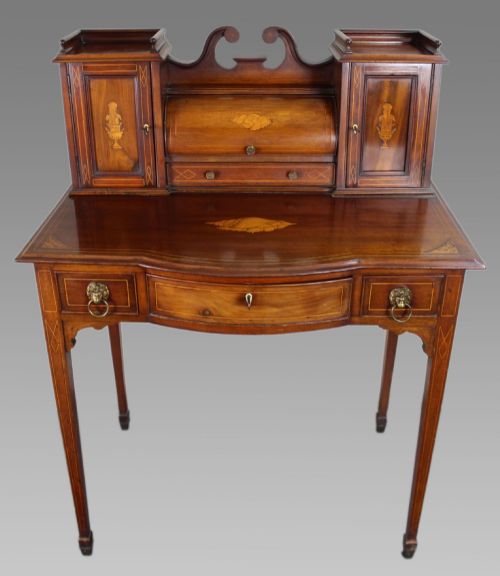
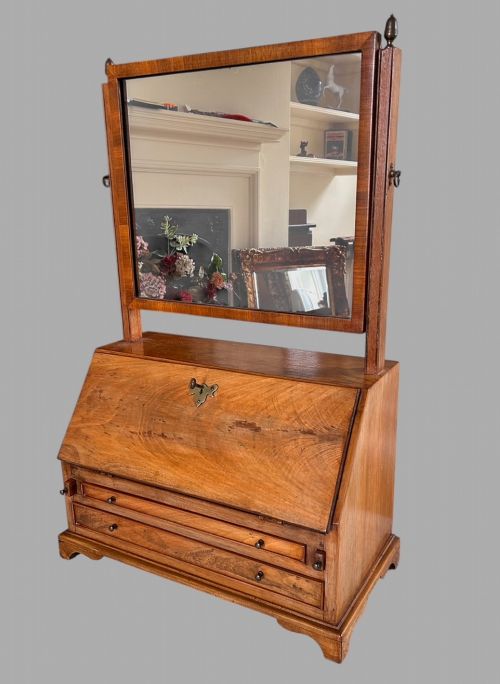
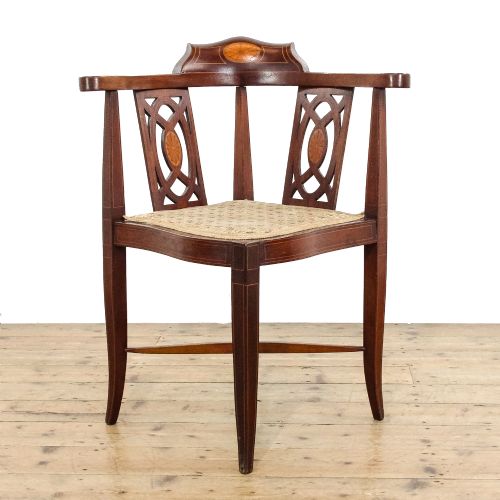
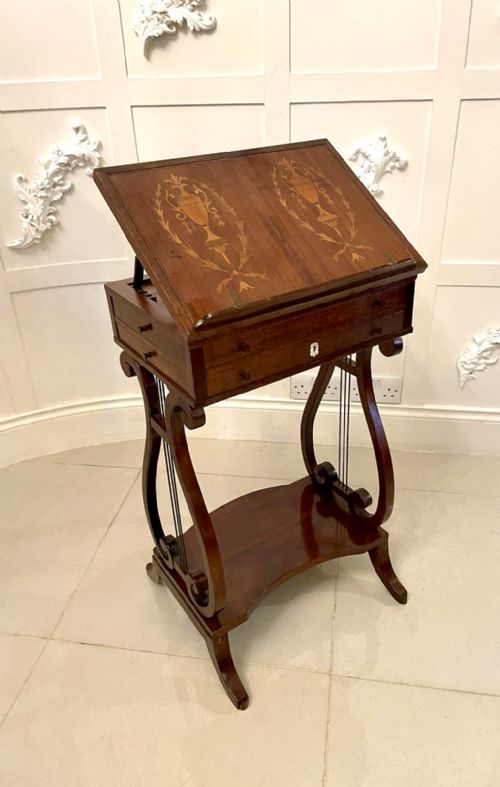
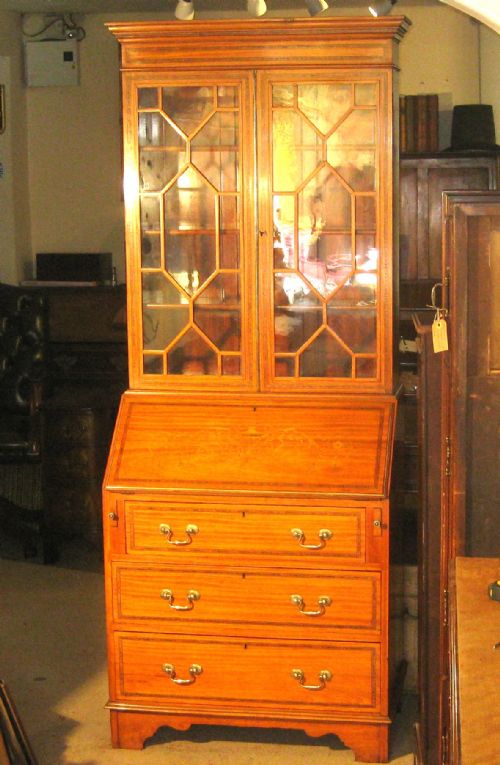
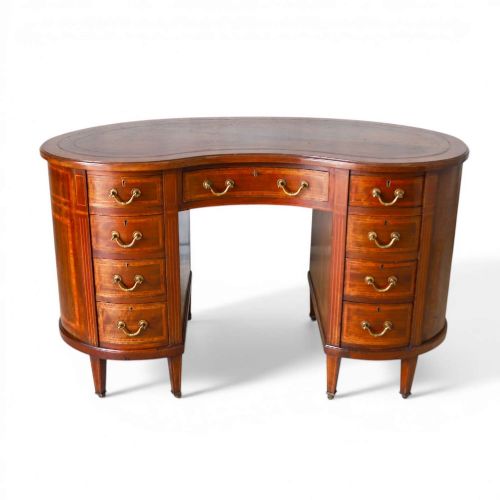
A vintage satinwood desk encompasses various forms designed for writing, from compact ladies' tables and bureau bookcases to grand Carlton House desks and kidney shapes. These pieces frequently date from the Edwardian era, alongside examples spanning the Victorian period, the eighteenth century, and nineteen-thirty Art Deco designs.
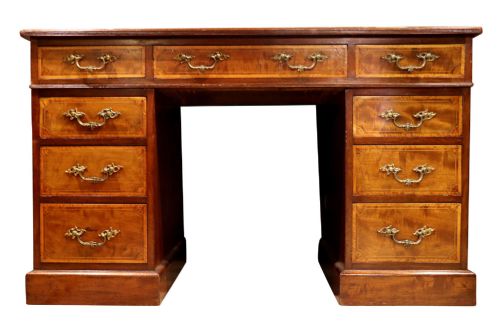
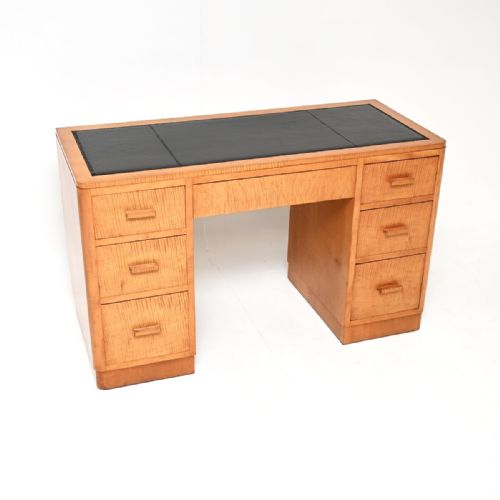
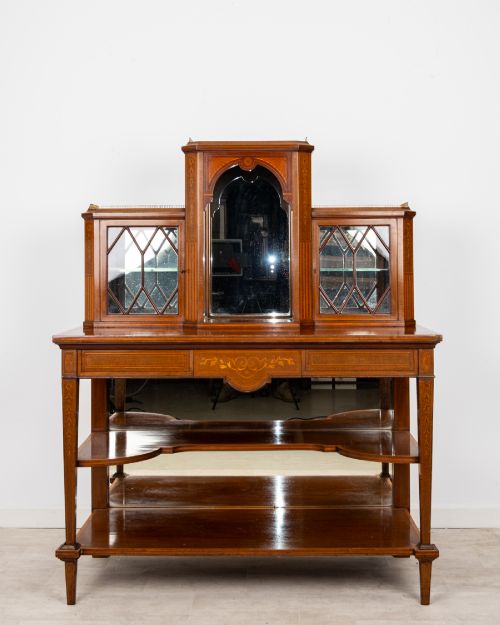
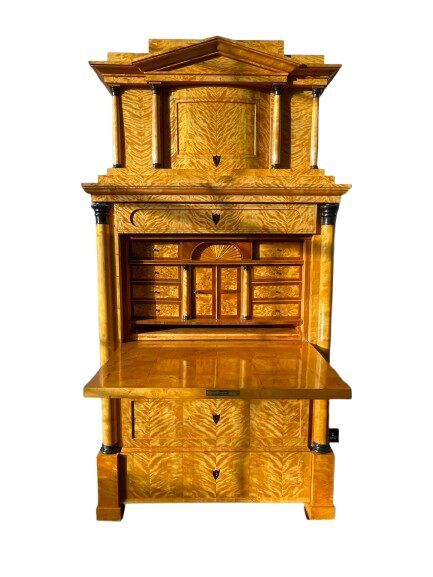
The selections on this page highlight mahogany and satinwood combinations with inlaid details, alongside pieces executed entirely in pale satinwood or satin birch. Certain items incorporate leather writing surfaces, original brass handles, and kingswood crossbanding, reflecting specific historical revivals including Sheraton Revival and French Louis XV styles.
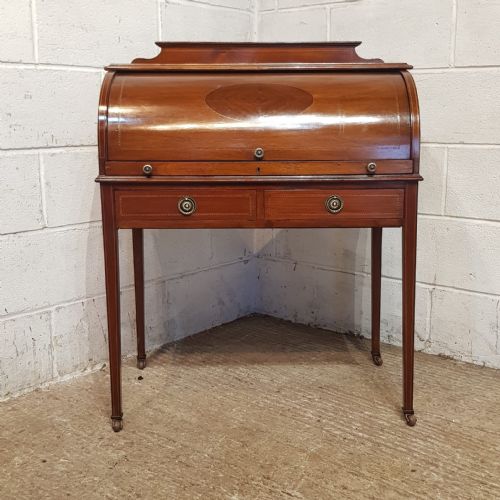
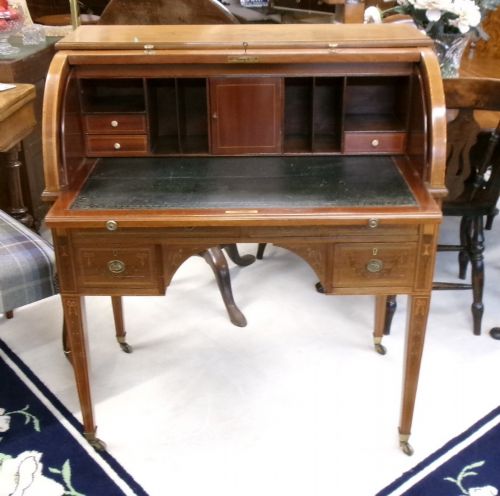
Buyers will encounter multiple configurations, including pedestal desks, writing tables, cylinder top writing desks, and secretaire bookcases. The majority originate from the Edwardian period, bringing lighter proportions and delicate decorative stringing to traditional workspace furniture.
How they were made
Craftsmen utilised dense timbers such as mahogany and red walnut as foundational structures, applying pale satinwood veneers and intricate inlaid decoration across drawer fronts, tabletops, and superstructure compartments. Oak was commonly employed for drawer linings, providing durable internal construction for smaller stationery wells and writing drawers.
Hardware details included cast brass handles, often original to the piece, while writing surfaces were frequently lined with panels of tooled leather. Decorative techniques incorporated contrasting wood inlays, geometric stringing, and occasional glass panels in upper bookcase doors.
Certain Edwardian ladies' desks conceal tiny stationery drawers behind miniature tambour doors designed for secret correspondence.
What varies in quality
The calibre of a piece rests upon the crispness of its marquetry inlay, the figuration of the satinwood grain, and the harmony of its proportions. Superior examples retain their original brass hardware, unblemished leather inserts, and properly fitted interior drawers without timber shrinkage.
Construction methods also separate standard production from finer cabinet work, evident in the neatness of dovetail joints within oak-lined drawers and the precision of crossbanding. Pieces bearing identifiable maker stamps or attribution to notable cabinet firms demonstrate higher workshop standards.
Edwards and Roberts·Bath Cabinet Makers·James Shoolbred
The Vintage Satinwood Desk Glossary
- Satinwood
- A hard, durable timber known for its pale golden colour and natural sheen that catches the light. It was frequently used for fine veneers and decorative stringing on late nineteenth and early twentieth-century furniture.
- Carlton House desk
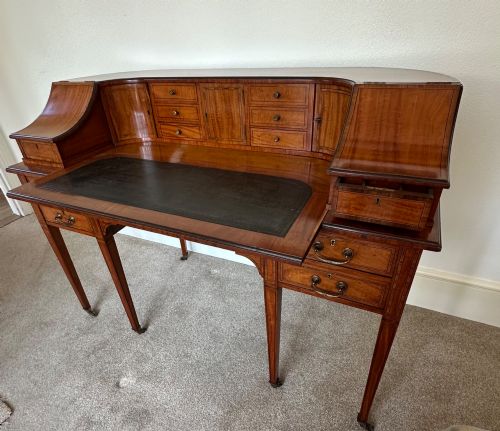
- A horseshoe-shaped writing desk featuring a tiered superstructure of small drawers and pigeonholes curving around the back of the writing surface. This form gained popularity during the Edwardian Sheraton Revival period.
- Crossbanding
- A decorative border technique where strips of veneer are laid across the grain of the primary wood surface. It frames the perimeter of tabletops and drawer fronts with a contrasting timber tone.
- Marquetry
- The art of applying fitted pieces of wood veneer to a structure to form decorative patterns or pictorial designs. It defines much of the inlaid surface work found on Edwardian writing furniture.
- Secretaire
- A piece of furniture containing a concealed writing drawer or drop-front desk compartment. These units combine storage capacity with a dedicated writing surface.
Vintage Satinwood Desk: Frequently Asked Questions
How do I care for satinwood veneer?
Satinwood veneer requires protection from direct sunlight and extreme humidity fluctuations to prevent the timber from fading or the glue beneath from lifting. Regular dusting with a soft, dry cloth maintains the natural sheen of the wood.
Avoid commercial silicone polishes and instead apply occasional applications of traditional beeswax to nourish the surface and preserve the grain.
Are original leather tops important?
Original leather inserts retain the historic character and authentic patina of a vintage writing desk, showing the gentle wear of previous use. Tooled gold borders on the leather indicate higher quality manufacturing.
While replacement leather is acceptable for daily writing utility, surviving original surfaces are preferred by collectors for maintaining historical integrity.
How do I distinguish Edwardian from Victorian desks?
Victorian desks generally exhibit heavier proportions, darker mahogany or walnut timbers, and more robust structural forms. They often reflect revival styles such as French Louis XV or substantial kneehole architecture.
Edwardian pieces tend to be lighter in scale, frequently utilising bright satinwood veneers, delicate inlaid stringing, and neoclassical Sheraton Revival motifs.