



Vintage Round Centre Table
A vintage round centre table brings a balanced focal point to a room, offering practical surface space anchored by circular symmetry.
Vintage Round Centre Table
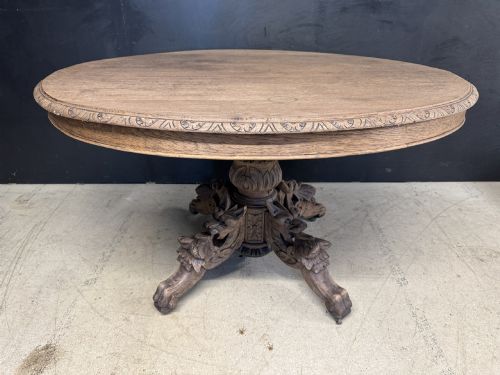
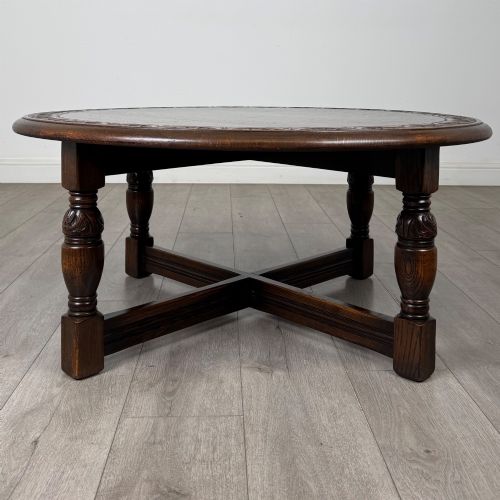
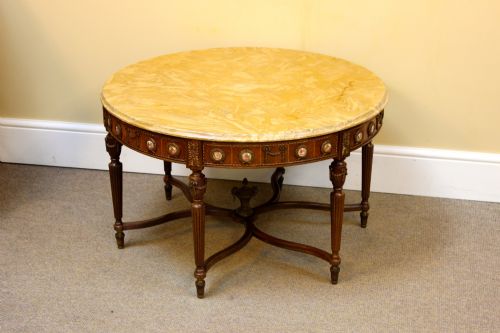
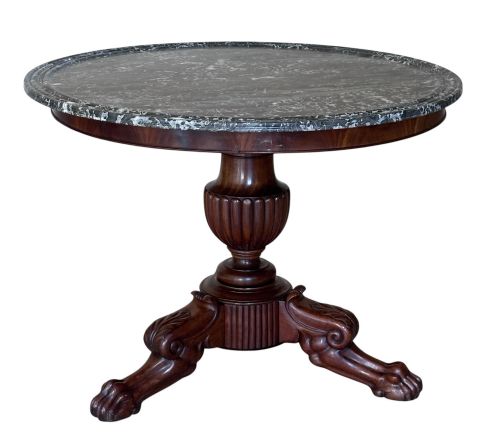
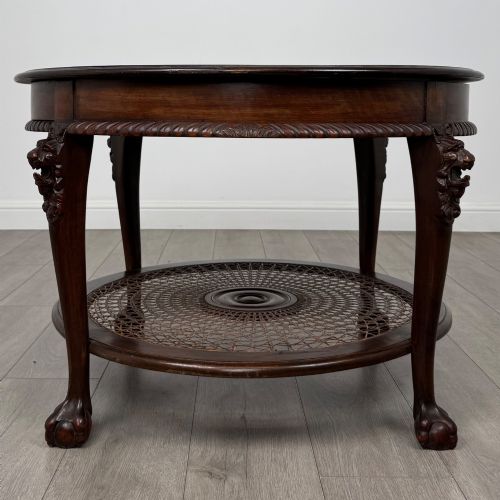
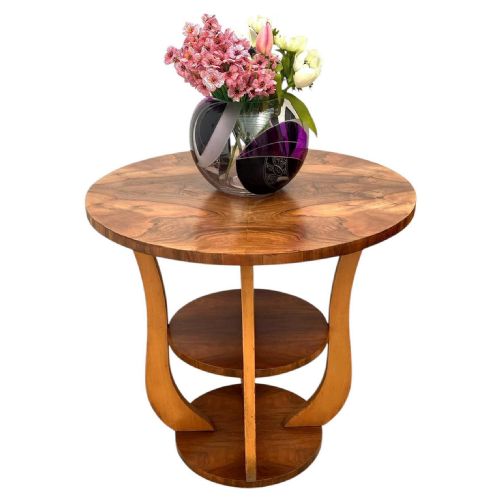
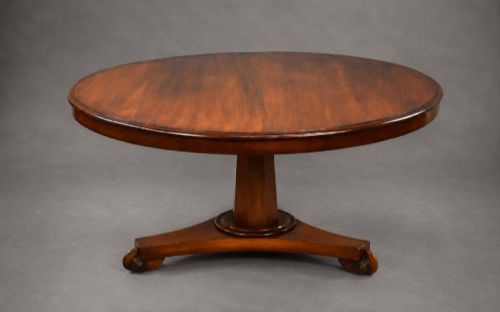
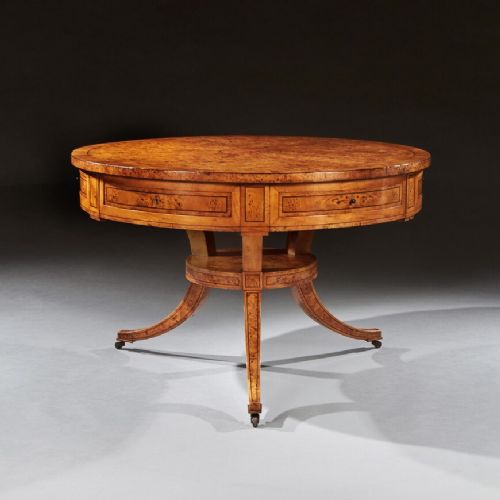
A vintage round centre table spans multiple periods and forms, ranging from nineteenth-century mahogany breakfast tables to twentieth-century Art Deco occasional pieces. Buyers searching for a vintage round centre table encounter various iterations, including French guéridons, drum tables, and marble-topped coffee tables designed for central placement in a room.
The selection includes nineteenth-century William IV rosewood examples alongside Edwardian and Art Deco designs from France, Germany, and Britain. These tables function as coffee tables, breakfast tables, or side tables, depending on their height and scale.
Materials and Construction
Cabinet makers utilised dense hardwoods such as mahogany, rosewood, walnut, and oak, often applying burr walnut or burr elm veneers to create patterned surfaces. Many pieces incorporate turned central pillars, triform bases, or pedestal supports.
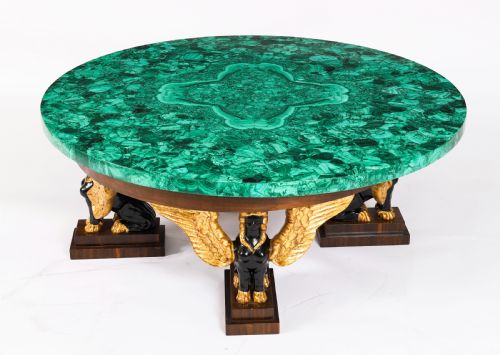
Surface decoration frequently involves inlays of brass or mother-of-pearl, alongside applied giltwood, painted finishes, and inset marble or malachite slabs. Structural elements occasionally integrate iron, copper, and brass alongside traditional timber framing.
Some tables double as architectural menageries, featuring gilt metal dolphins holding up the weight of the top.
Assessing the Standard
Quality rests in the selection of timber veneers and the precision of decorative inlays, such as brass or mother-of-pearl work set flush into the wood. The choice between solid figured timbers and applied veneers dictates the visual depth of the top.
Construction integrity shows in the stability of the central pillar and the joinery of the pedestal base. Original secondary elements, such as fitted marble slabs and patinated metal mounts, elevate the standing of a piece.
The Vintage Round Centre Table Glossary
- Guéridon
- A small French round table, often supported by a single central pillar and frequently fitted with a marble top. These tables originated in the seventeenth century and remained popular through the nineteenth and twentieth centuries.
- Tilt-top
- A table mechanism where the circular top hinges vertically to store flat against the base when not in use. This clever design saved floor space in period rooms.
- Drum table
- A circular library or centre table with a deep frieze containing drawers, resembling the shape of a drum. They usually stand on a central pillar with splayed legs.
- Triform base
- A three-sided pedestal base supporting the central column of a table. This configuration provides stability on uneven floors.
- Pie crust
- A carved, raised decorative edge shaped in undulating curves resembling pastry work. This detail appears on the perimeter of round timber table tops.
Vintage Round Centre Table: Frequently Asked Questions
What is a vintage round centre table used for?
These pieces serve multiple functions in a room, acting as central display surfaces, low coffee tables, or breakfast tables depending on their height. Their circular shape allows people to gather around them naturally.
Placed in the middle of a room, they break up linear furniture arrangements and provide a convenient surface for books, lamps, or decorative objects.
How do I identify a French guéridon?
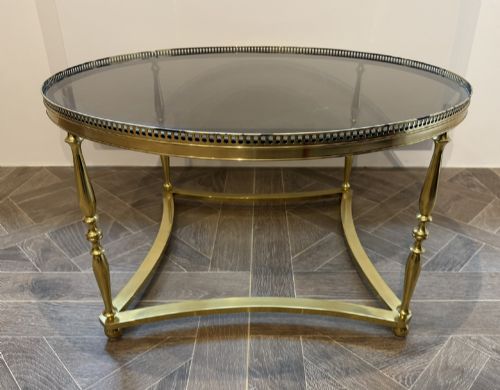
A guéridon is typically a small, round French table featuring a single central pedestal and often an inset marble top surrounded by a brass gallery. They frequently date from the nineteenth or early twentieth century.
Look for distinctive continental proportions and materials such as burr walnut, mahogany, or painted finishes with gilt accents.
What is the difference between a breakfast table and a coffee table?
Period breakfast tables stand at a standard dining height and often feature tilt-top mechanisms designed to fold away when not in use. They were originally intended for morning meals in private rooms.
Coffee tables built in a round format sit much lower to the floor, matching the height of surrounding seating. Many pieces listed as coffee tables were adapted from taller occasional or breakfast tables during the twentieth century.
How do I care for a marble top table?
Marble surfaces require protection from acidic substances such as wine, citrus, and vinegar, which can etch the polished stone. Use coasters and mats to prevent marks.
Clean the stone regularly with a damp cloth and mild, neutral soap, avoiding abrasive scouring powders that can scratch the vintage finish.
What timber veneers are common on these tables?
Cabinet makers frequently applied burr walnut, burr elm, and figured mahogany veneers to create rich, swirling grain patterns across circular table tops. These thin slices of prized wood were laid over stable secondary timbers.
Examining the grain helps distinguish between solid timber construction and veneered surfaces applied during the nineteenth and twentieth centuries.