




Vintage Rosewood Box
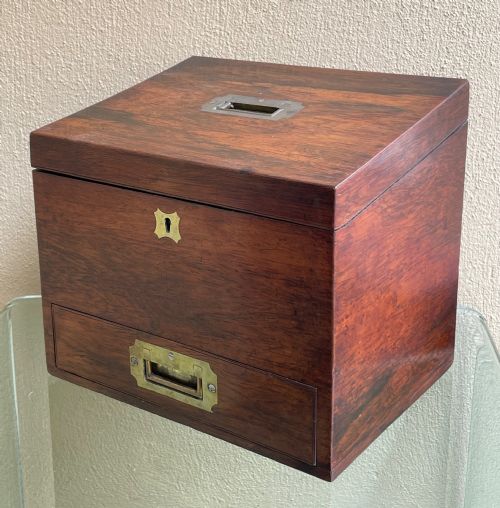
A vintage rosewood box offers dense grain and deep colour, serving as a practical container for correspondence, jewellery or keepsakes.
Vintage Rosewood Box
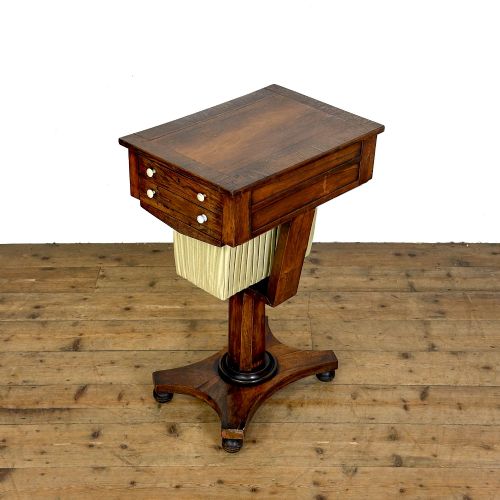
When searching for a vintage rosewood box, you encounter items originating primarily from the Georgian, Regency and Victorian eras alongside nineteenth century examples. These pieces serve specific domestic functions, appearing most frequently as writing slopes, jewellery boxes, tea caddies, work tables and music boxes.
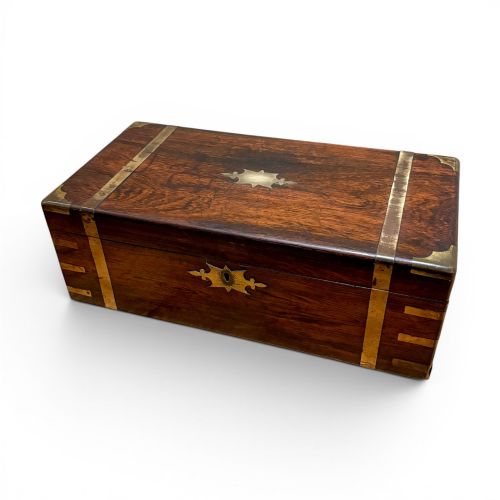
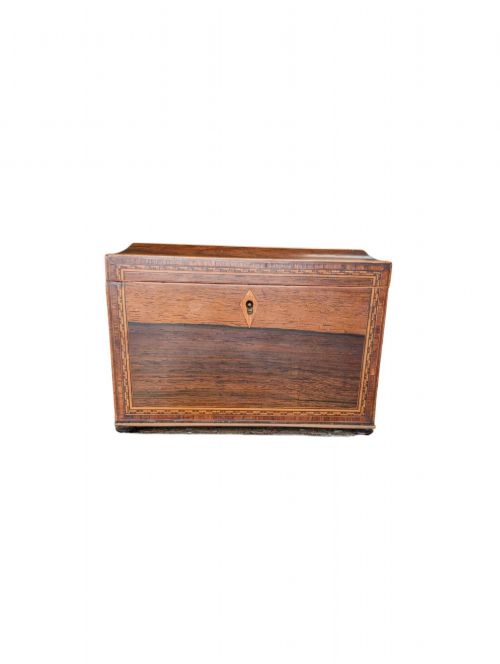
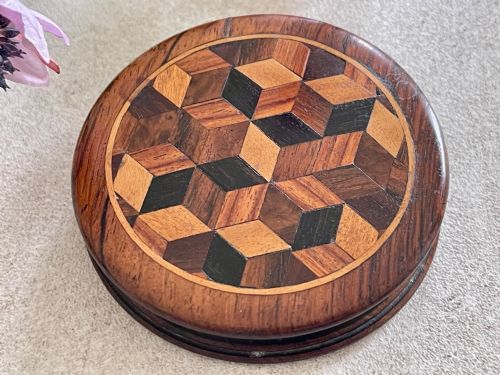
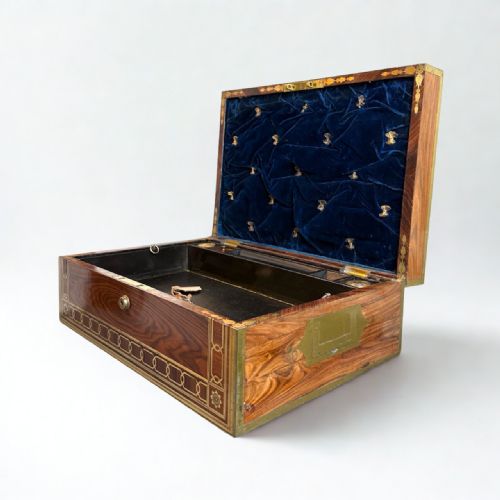
The selection on this page leans heavily towards Victorian and nineteenth century pieces, encompassing campaign styles, Tunbridge Ware and inlaid work boxes. Such containers often retain fitted interiors, secret drawers or working keys intended for personal security and organisation.
Materials and construction
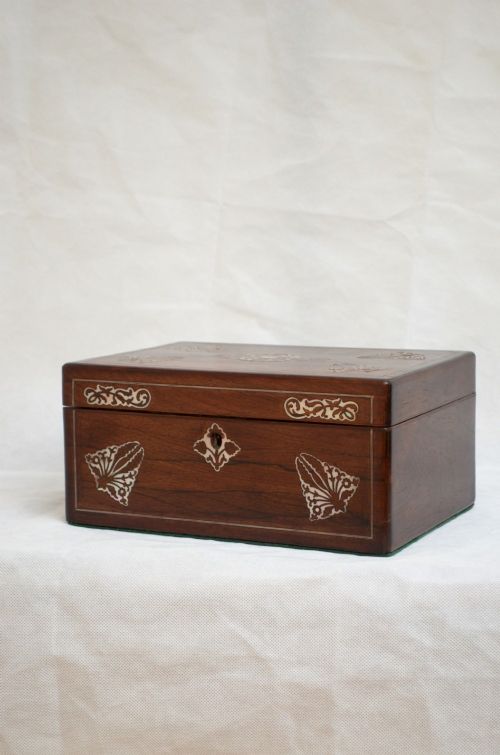
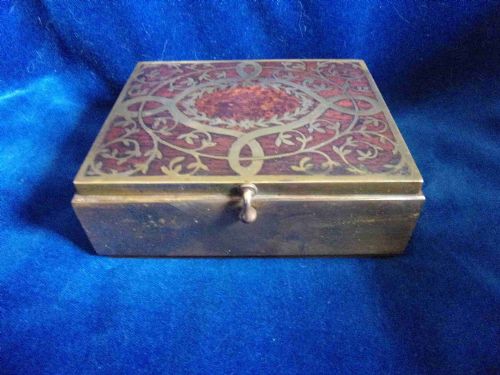
Maker construction relies heavily upon solid rosewood or rosewood veneers applied to secondary timbers, providing a heavy carcass with distinct dark figuring. Workshops frequently integrated brass banding, brass inlays and mother of pearl to accent the exterior surfaces.
Interiors often combine secondary woods such as boxwood with velvet linings, glass components and specialised paper or leather fitments. Tunbridge Ware examples incorporate minute mosaic wood blocks to form detailed geometric or pictorial scenes across the lids.
Several music boxes conceal their mechanical combs behind miniature wooden pin barrels that still play eight distinct airs from the nineteenth century.
Evaluating the standard of execution
Quality rests upon the precision of the cabinetwork, visible in the tightness of the mitred corners, the alignment of brass stringing and the integrity of the internal compartments. Superior pieces maintain matching grain patterns across the exterior surfaces and retain original working locks with keys.
The intricacy of surface decoration separates standard utilitarian containers from finer items, particularly where marquetry, mother of pearl inlay or elaborate Tunbridge Ware micro-mosaic panels are executed with exact geometric symmetry.
Erhard and Sohne·Litherland Davies Of Liverpool·George Austin Dublin
The Vintage Rosewood Box Glossary
- Writing slope
- A portable slant-front desk designed for correspondence, opening to reveal a velvet or leather writing surface, inkwells and concealed compartments.
- Tea caddy
- A container designed to store loose tea leaves, often featuring internal lidded canisters and mixing bowls.
- Tunbridge Ware
- Woodwork decorated with mosaic patterns created by gluing together tiny coloured wood blocks to form pictorial or geometric designs.
- Campaign box
- Portable furniture and storage fitted with brass corners and recessed carrying handles, built for travel during military or colonial service.
- Marquetry
- Decorative veneer work forming intricate patterns or pictures using thin slices of various woods laid onto the carcass.
Vintage Rosewood Box: Frequently Asked Questions
What fits inside a writing slope?
These folding boxes contain compartments sized for stationery, envelopes and dipping pens, alongside glass inkwells fitted with brass or hinged lids. Many versions include hidden secondary drawers beneath the writing bed for private papers.
The sloping surfaces themselves provide a rigid platform angled for handwriting, which folds flat when the entire case is locked for travel.
How do music boxes operate?
Contained mechanisms utilise pinned brass cylinders that rotate against tuned steel combs, plucking individual teeth to produce designated musical airs. Smaller models play a limited selection of tunes, while elaborate examples incorporate bells or drum attachments.
Spring-driven motors power the cylinders, regulated by internal governors to maintain a steady tempo throughout each performance.
How do I care for rosewood?
Keep wooden surfaces away from direct sunlight and artificial heat sources to prevent the rosewood veneer from drying and splitting. Maintaining stable room humidity protects both the external polish and the internal velvet or paper linings.
Dust gently with a dry, soft cloth and avoid applying modern silicone polishes that degrade historic finishes.
How can I date these boxes?
Stylistic indicators such as brass corner brackets point to Regency and early Victorian campaign styles, whereas elaborate mother of pearl inlay aligns with mid-Victorian production. Construction methods, including hand-cut dovetails and the type of secondary wood used inside, provide further chronological clues.
Hardware components like lock types and hinge designs also help establish the decade of manufacture.