


Inlaid Rosewood Jewellery Box
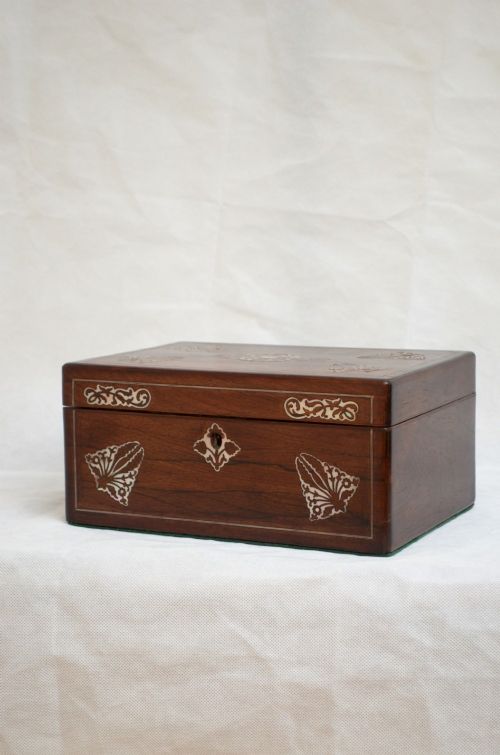
An inlaid rosewood jewellery box brings tactile warmth and domestic history to a dressing table, combining rich timber with delicate metal or mother-of-pearl.
Inlaid Rosewood Jewellery Box
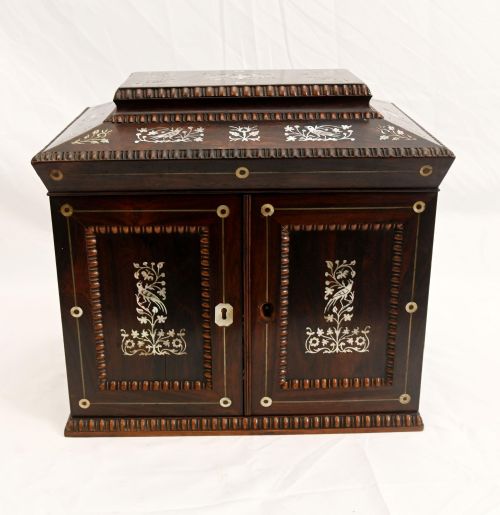
When searching for an inlaid rosewood jewellery box, buyers encounter an array of tabletop receptacles designed to house precious trinkets, correspondence, and sewing implements. These pieces primarily span the Georgian, Regency, and Victorian periods, capturing a nineteenth-century penchant for orderly personal storage.
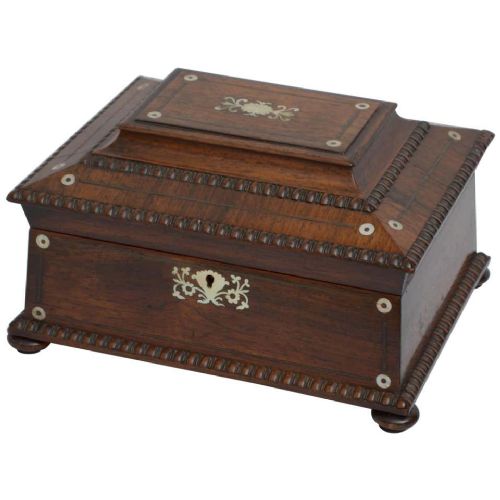
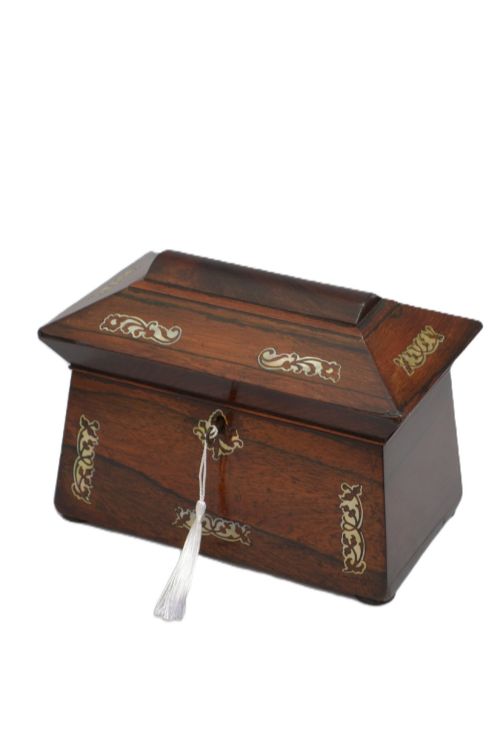
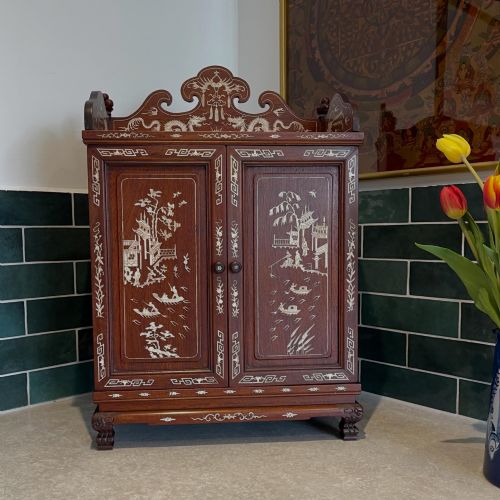
The domestic forms vary from sarcophagus-shaped workboxes and domed glove chests to fitted travel cases and small table cabinets. Interiors often feature lift-out trays, velvet or silk linings, and compartments tailored for rings, pins, and letters.
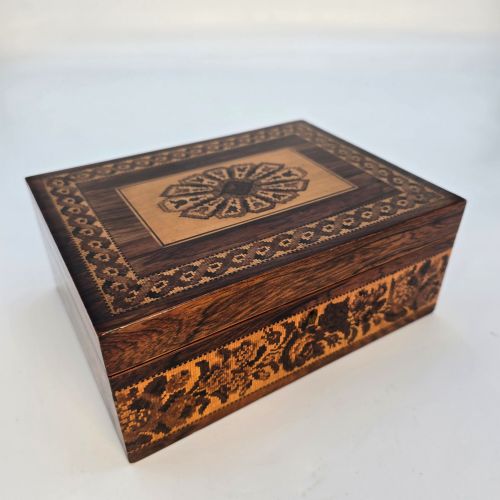
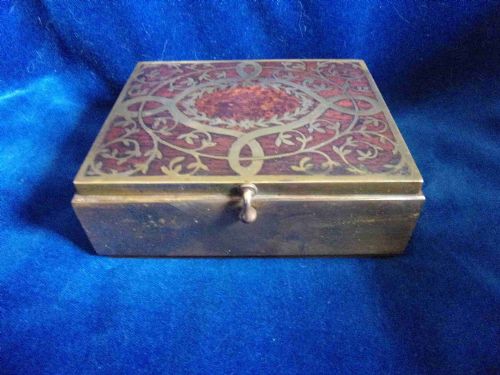
Examples from this selection connect directly to historical workshops in England and abroad, including specialised regional centres such as Tunbridge Wells. Buyers find both brass-inlaid Regency boxes and mother-of-pearl-decorated Victorian pieces represented across the listings.
How They Were Made
Cabinet makers constructed carcass frames from dense rosewood, often applying veneers over a secondary timber foundation to achieve uniform grain patterns across curved or sarcophagus profiles. The surfaces then received precision recesses carved to receive contrasting decorative elements.
Inlay techniques relied on boxwood, mother-of-pearl, and cut brass strips fitted flush into the timber surface, alongside detailed marquetry panels built from mosaic wood tiles in Tunbridge ware pieces. These contrasting materials were secured with animal hide glues and finished with hand-rubbed polishes.
Secret drawers hidden behind false panels in these boxes continue to delight new owners finding long-forgotten pins.
What Varies in Quality
The standard of execution depends heavily on the precision of the inlay work and the structural integrity of the rosewood carcass. Superior examples display tight joints, crisp brass or mother-of-pearl mitres without excessive filler, and harmonious grain alignment across the lid and sides.
Internal appointments also dictate desirability, particularly the presence of original velvet or silk linings, functional lock hardware with keys, and complete lift-out organizational trays. Boxes retaining their fitted compartments demonstrate greater care by original makers.
Edmund Nye·Erhard and Sohne
The Inlaid Rosewood Jewellery Box Glossary
- Rosewood
- A dense, dark timber featuring characteristic purple or black grain figuring. It provides a durable and polished foundation for decorative inlay.
- Tunbridge Ware
- A form of British woodworking from Kent that uses tiny mosaic wood tiles to create pictorial or geometric scenes. These miniature tesserae cover the exterior surfaces of specialty boxes.
- Marquetry
- The art of applying veneer pieces in geometric or pictorial patterns to a wood structure. Makers utilise different tinted woods to achieve contrast.
- Sarcophagus shape
- A distinctive nineteenth-century box profile featuring a sloped or domed lid resting on a rectangular base. This design mimics classical architectural forms.
- Work box
- A multi-purpose receptacle equipped for needlework, threads, and small personal items. They often include removable compartmentalised trays above a deep storage well.
Inlaid Rosewood Jewellery Box: Frequently Asked Questions
How do I date an inlaid rosewood box?
Dating relies on stylistic clues, hardware construction, and timber characteristics. Regency examples often feature geometric cut brass inlay, while Victorian versions frequently incorporate mother-of-pearl.
Internal fittings and paper linings also offer chronological markers. Examining the lock mechanisms and hinge types helps narrow down the decade of manufacture.
What is the difference between a work box and a jewellery box?
Work boxes were originally built to house sewing implements, threads, and small textile tools. They typically contain deeper lower wells beneath removable compartmentalised trays.
Jewellery boxes focus more on ring rolls, velvet-lined partitions, and secure compartments for personal ornaments. Many Victorian designs served dual purposes for both sewing and trinkets.
How should I clean a rosewood surface?
Dusting with a dry, soft microfibre cloth prevents particle buildup on the veneer. Avoid chemical sprays or excessive moisture which can damage aged French polish.
Periodic application of a quality microcrystalline wax helps nourish the timber. Buffing gently restores the soft historical sheen without stripping the original finish.
Are keys usually included with antique boxes?
Original working keys are uncommon because locks were small and easily lost over generations. Many period boxes feature functional locks that can be fitted with a replacement key by a specialist.
The absence of a key does not detract from the decorative merit of the piece. Most buyers display them open or closed as decorative objects.