


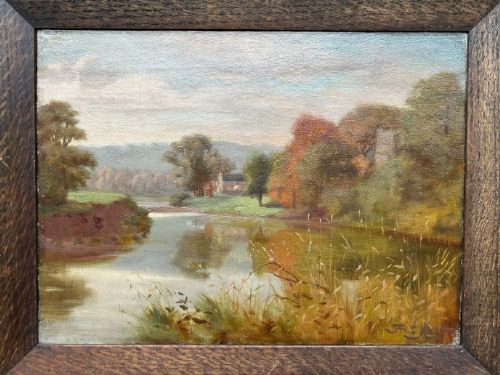
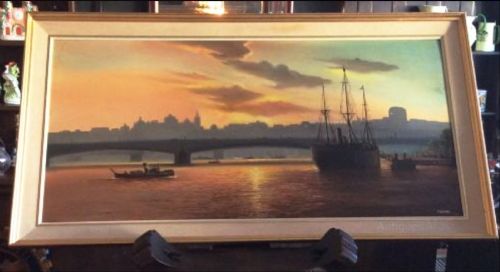
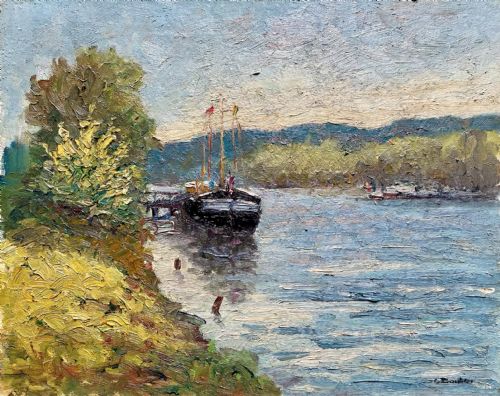
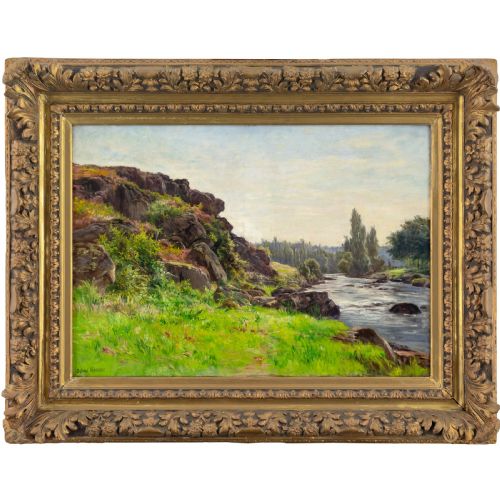
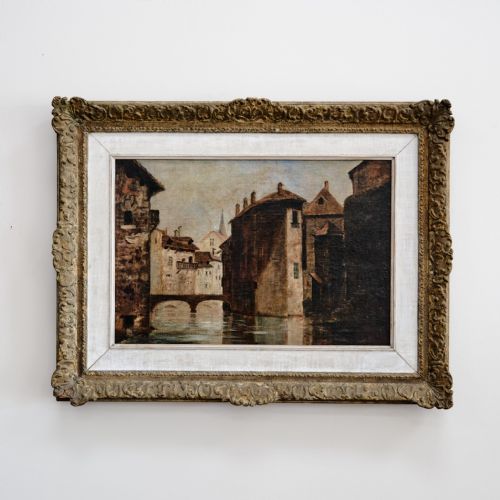
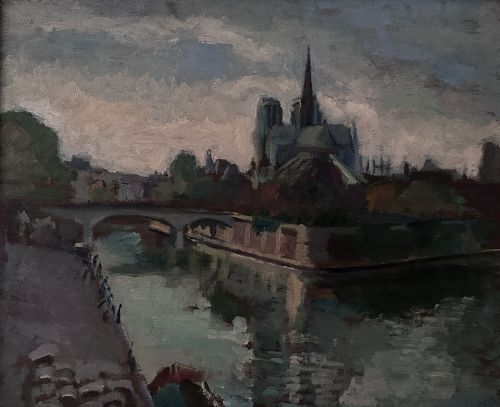
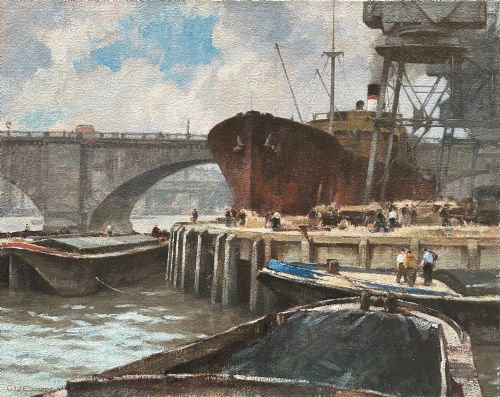
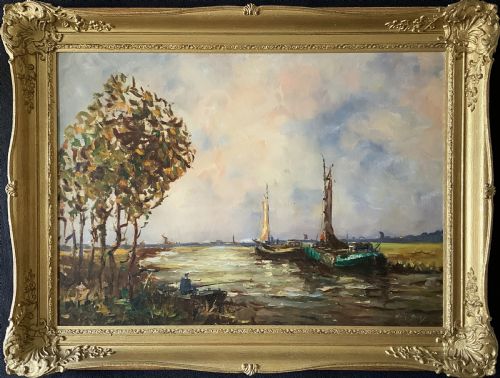
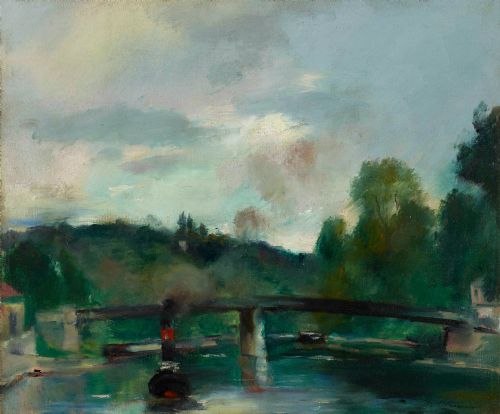
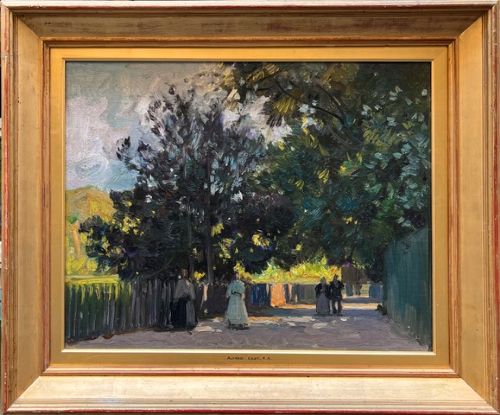
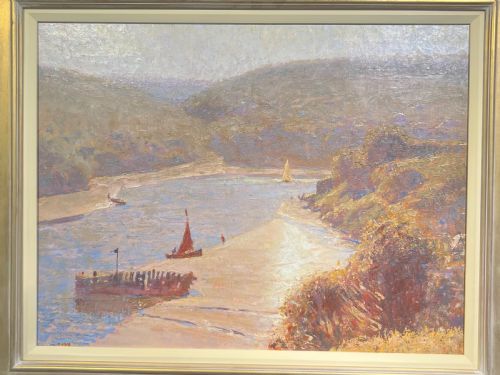
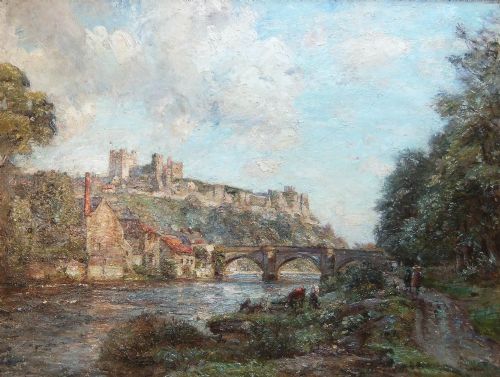
Vintage River Oil Painting
When you search for a vintage river oil painting, you are looking at water-side scenes rendered in oil on canvas or wood from the nineteenth and twentieth centuries.
Vintage River Oil Painting
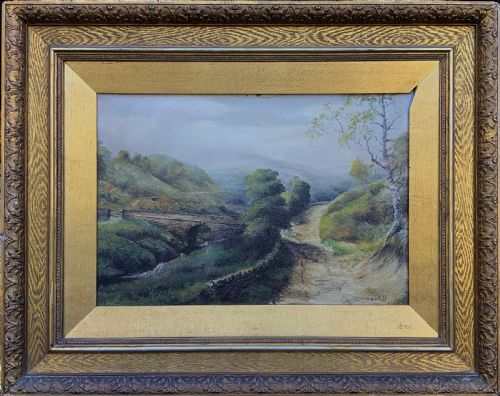
A vintage river oil painting captures waterways, bridges, and banks, ranging from quiet rural streams to bustling urban canals. These works span the nineteenth century through the mid-twentieth century, encompassing British, French, and Dutch schools.
The most frequent examples encountered on this page belong to the late nineteenth and early twentieth centuries, alongside mid-century impressionist interpretations. They appear on stretched canvas, wood panel, or board, often reflecting regional landscape traditions.
Subjects vary from specific locations like the Thames, the Seine, or Dutch waterways to generic rural fishing scenes and autumn landscapes. Buyers look to these pieces for historical atmosphere and the texture of oil pigment.
Materials and technique
These works rely primarily on oil paint applied to canvas, wood panels, or boards, sometimes supported by gesso grounds. Artists employed brushes and palette knives to build impasto textures or smooth, detailed panoramas.
Frames often feature gilt ornamentation that complements the period aesthetic of the painting. Canases were occasionally laid onto board later in their history to provide structural stability.
Listings feature works spanning from the nineteenth century through the 1960s, executed in oil on canvas, wood, and board.
What separates works in quality
Quality rests in the handling of light, water reflections, and atmospheric perspective by the artist. Stronger pieces demonstrate confident brushwork and a cohesive palette, whether working in an impressionist or naturalistic mode.
Condition of the pigment and support also defines the standard of a piece, with undisturbed original surfaces commanding attention. The distinction lies in the artist's ability to capture movement and depth in the water.
George Graham·Frederick Marriott·Willem Bos·Sydney Yates Johnson·Archibald Kay·Henri Jaques Delpy·Mario Pinetti·Gabriel Dauchot·Ron Folland
The Vintage River Oil Painting Glossary
- Impasto
- Paint applied thickly to a canvas or panel, leaving visible brush or palette knife marks. This technique adds physical texture and dimension to water and foliage.
- Panel
- A rigid wooden support used by artists instead of stretched canvas. Panels often date earlier or provide a smooth surface for detailed river scenes.
- Gesso
- A primer mixture consisting of a binder mixed with chalk, gypsum, or pigment. It prepared wooden panels and canvases to receive oil paint.
- Gilt
- A thin layer of gold leaf or paint applied to frames. It enhances the visual presentation of the artwork.
- Post-Impressionism
- An art movement extending beyond impressionism that focused on emotional response and symbolic expression. It influences many mid-century river landscapes on this page.
Vintage River Oil Painting: Frequently Asked Questions
How do I identify the period of a river painting?
Periods are identified through stylistic cues, framing, and supporting materials such as canvas or wood panels. Signatures and stretcher construction often point to specific decades like the 1900s or 1950s.
Examining the handling of light and the clothing of any figures depicted also helps narrow down whether a piece is Victorian or mid-century.
Where were these river scenes typically painted?
Artists painted local waterways across Britain, France, and the Netherlands, focusing on recognizable rivers like the Thames and the Seine. Canal scenes in Holland and Welsh streams also appear frequently in the evidence.
Many works capture specific rural spots or urban bridges, documenting historical views of these waterways.
How should I display an oil painting on wood panel?
Paintings on wood panel require stable indoor humidity to prevent the wood from warping or cracking over time. They should be hung away from direct sunlight and heat sources.
Matching the piece with an appropriate period frame protects the edges and enhances the overall presentation on the wall.
What is the difference between canvas and panel works?
Canvas works involve woven fabric stretched over a wooden frame, offering slight give and a textured surface. Panel works utilise solid wood supports that provide a rigid foundation for finer detail.
Both mediums were used extensively across the nineteenth and twentieth centuries for landscape painting.