
Vintage Revolving Book Stand
A vintage revolving book stand offers immediate access to volumes while rotating smoothly on a fitted base.
Vintage Revolving Book Stand
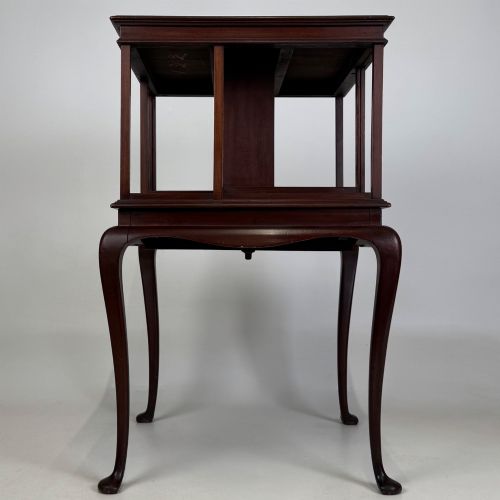
A vintage revolving book stand gathers several volumes into a compact footprint designed to sit upon a floor or desk. Most pieces meeting this description date from the Victorian and Edwardian eras, spanning the late nineteenth century through to the nineteen-thirties.
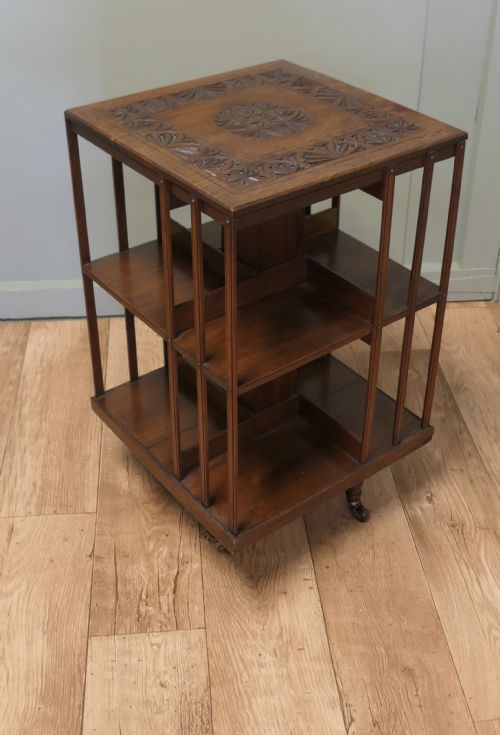
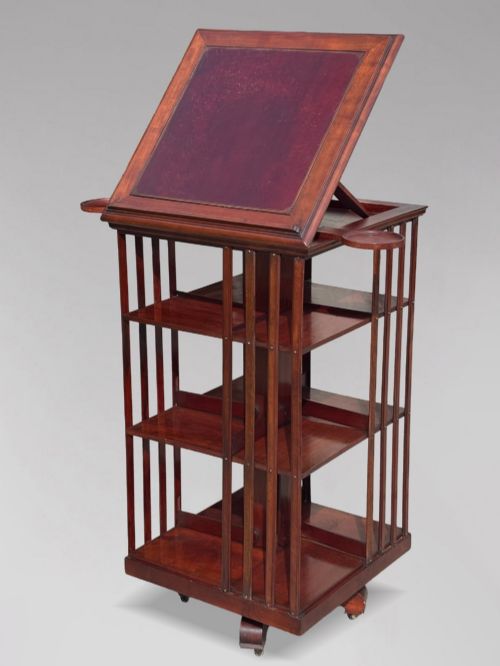
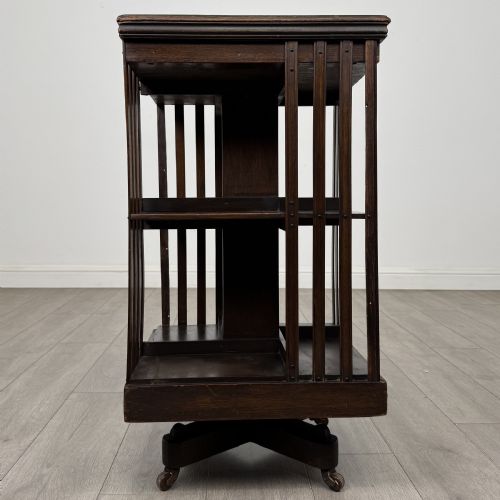
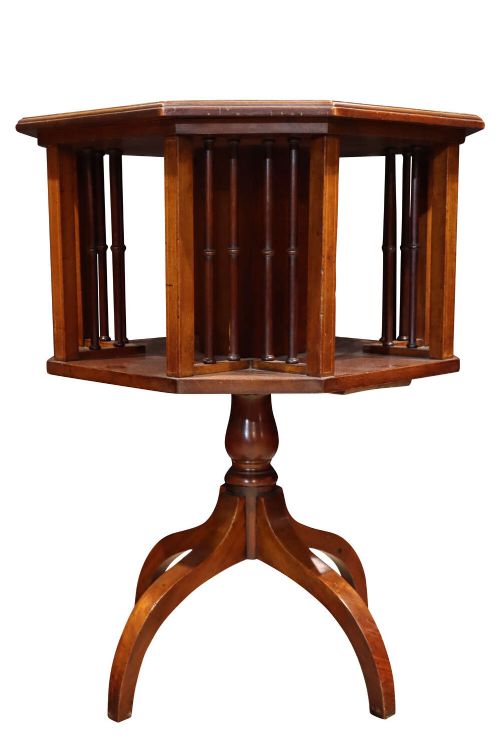
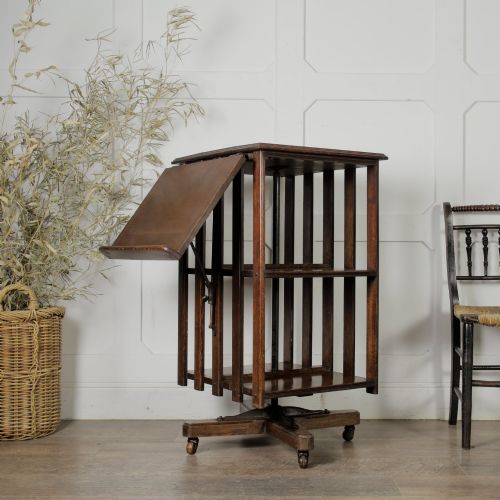
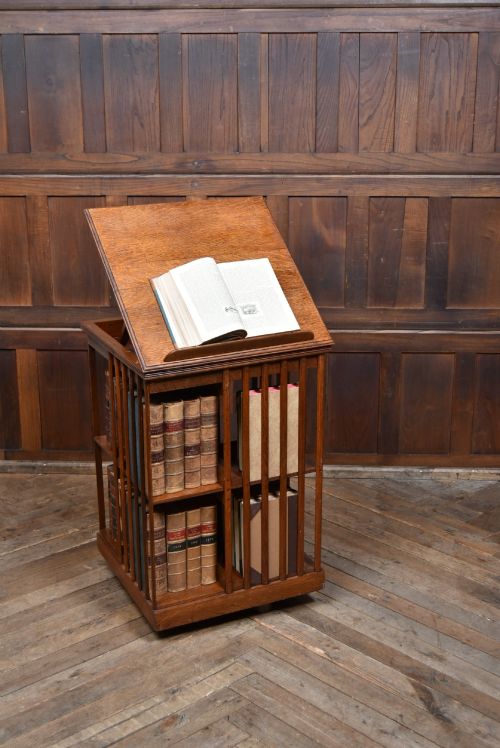
The primary forms on this page include floor-standing models and smaller desktop book rests. Mahogany and oak dominate the selection, often complemented by satinwood or walnut timbers.
Materials and construction
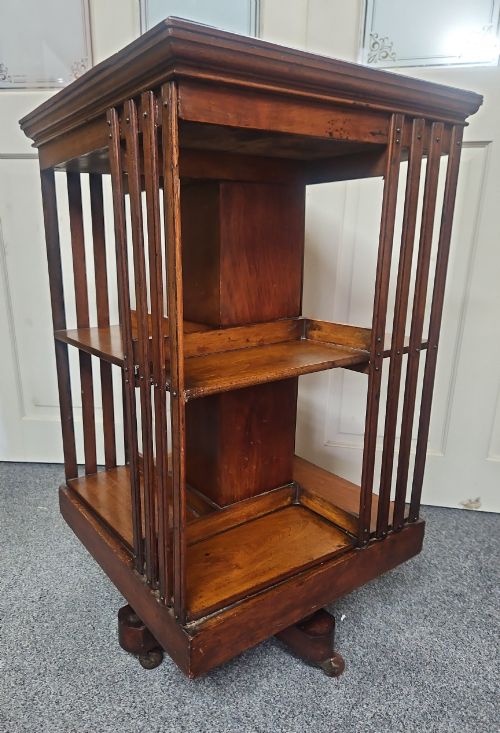
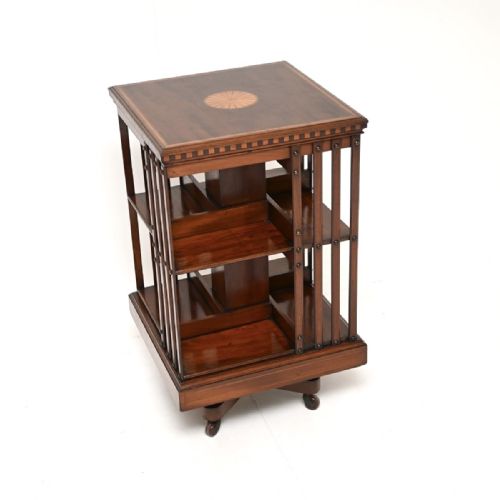
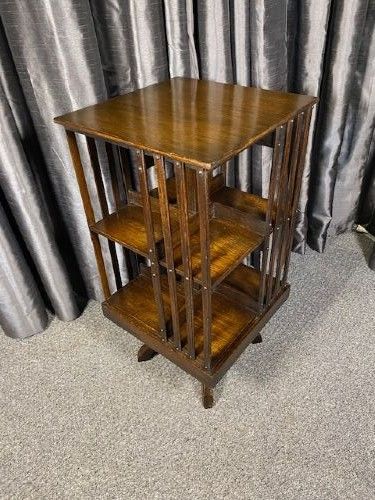
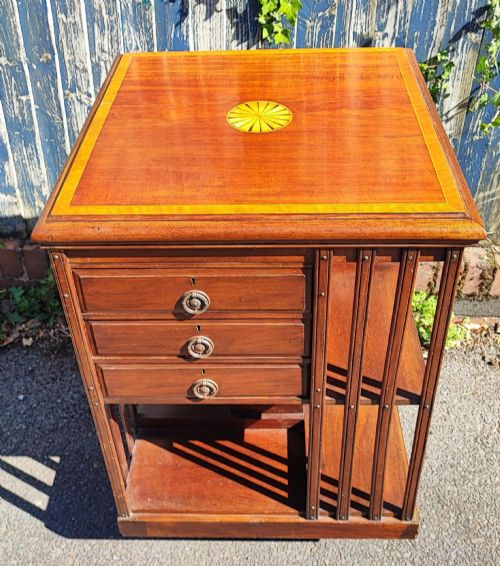
Cabinet makers constructed these stands predominantly in solid or veneered mahogany and oak, applying brass mechanisms concealed beneath the tiers to facilitate smooth rotation. Inlaid banding in satinwood or contrasting timbers frequently decorates the top tiers.
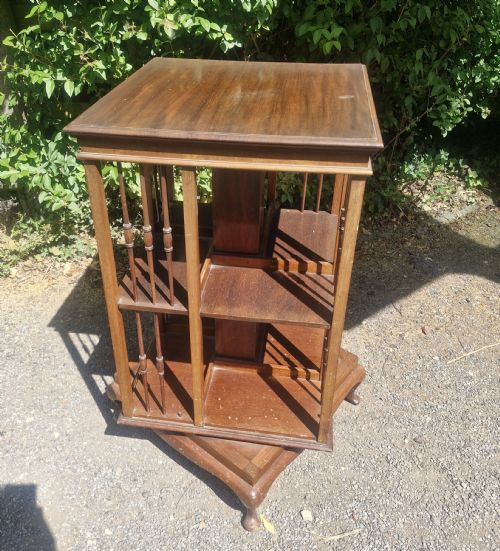
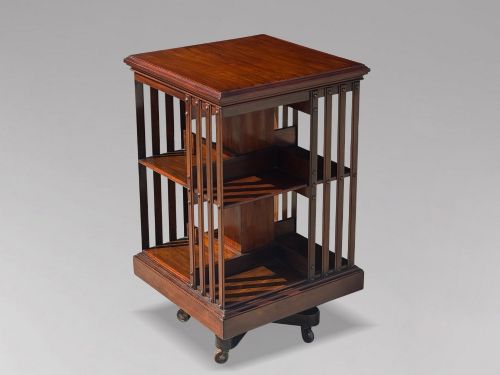
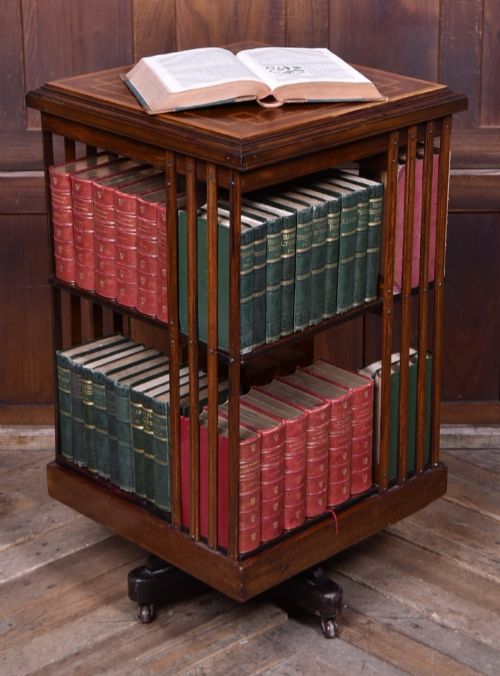
Internal framing often incorporates iron or cast iron components within the revolving pivot to support the weight of multiple heavy volumes. Slatted or panelled sides divide the compartments, keeping texts secure while the unit turns.
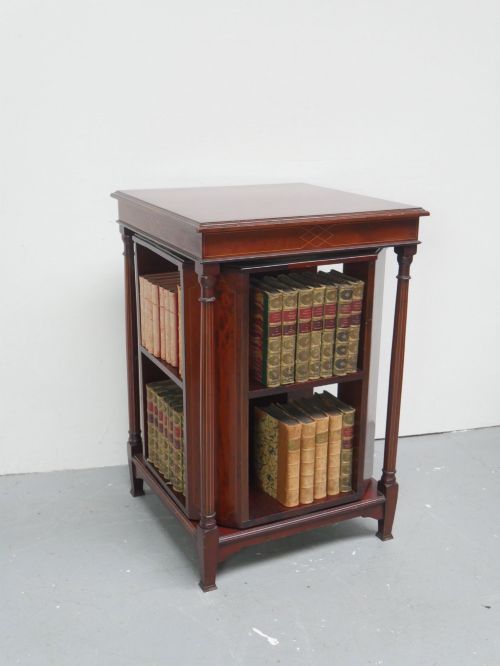
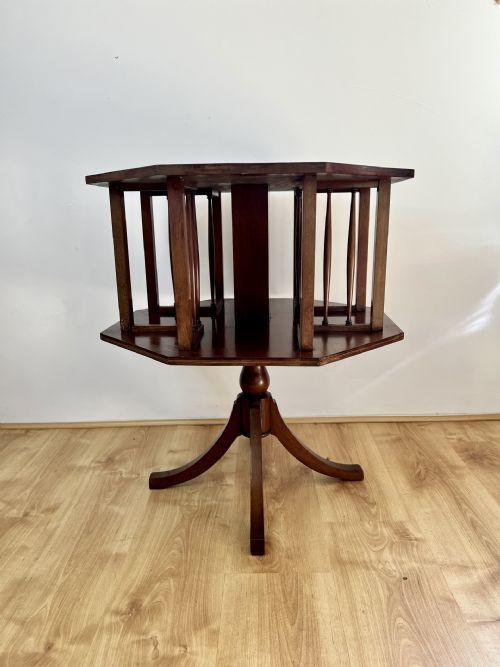
A petite French model joins the heavier English oak and mahogany items, proving that literary rotation transcends national borders.
Assessing build and execution
The distinction between standard production and superior examples lies in the weight of the timber and the refinement of the turning mechanism. Pieces featuring flame mahogany veneers or intricate marquetry inlay demand greater skill from the maker.
Stability during rotation separates ordinary stands from exceptional ones, as a well-balanced central pivot prevents tipping when shelves are unequally loaded.
Heals
The Vintage Revolving Book Stand Glossary
- Revolving bookcase
- A freestanding or desktop unit fitted with a concealed pivot that allows the entire structure to turn. This design places a collection of books within arm's reach from a single seated position.
- Inlay
- The technique of inserting contrasting pieces of wood, such as satinwood, into recesses within the primary timber surface. It creates decorative borders and patterns across the top shelf.
- Flame mahogany
- A timber cut that yields a distinctive undulating grain pattern resembling flickering flames. Cabinet makers utilised this figure on prominent display surfaces.
- Edwardian Sheraton Revival
- A stylistic movement from the early twentieth century drawing inspiration from eighteenth-century designs. Pieces from this period often display lighter timbers and delicate stringing.
Vintage Revolving Book Stand: Frequently Asked Questions
How do these stands rotate?
A concealed internal pivot mechanism rests beneath the shelving tiers, allowing the entire body to turn smoothly in either direction.
Most mechanisms employ metal ball bearings or a central iron spindle to bear the weight of the books.
Where were these pieces used?
Owners placed them beside reading chairs in studies and libraries to keep reference volumes close at hand.
Smaller desktop versions sat upon writing tables to hold dictionaries and current reading material.
How do I distinguish Edwardian from Victorian examples?
Edwardian models frequently display lighter mahogany or oak with delicate satinwood inlay, reflecting the Sheraton Revival taste.
Victorian pieces tend to be heavier in proportion, utilising darker solid oak or mahogany with simpler panelled partitions.
Can these hold heavy books?
The compartments accommodate standard octavo volumes and reference books securely within their vertical divisions.
Solid wood construction and iron-supported pivots ensure the frame remains stable under a full load of literature.