


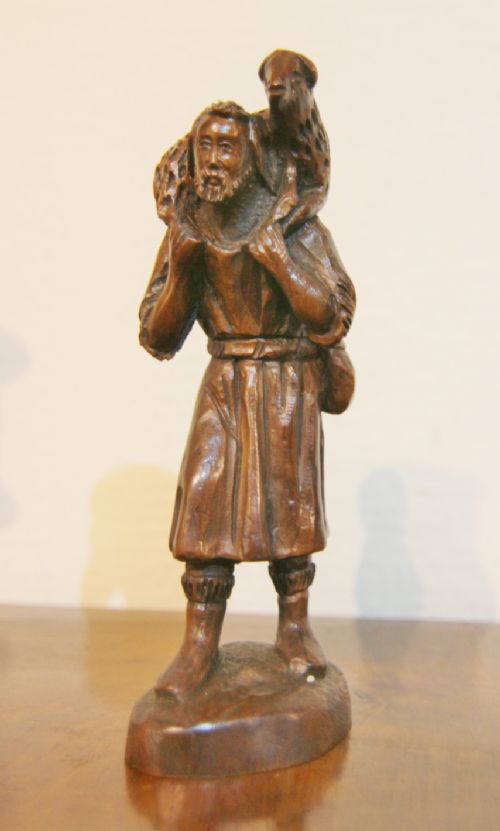


Vintage Religious Figure
A vintage religious figure brings centuries of devotion into a room, spanning carved wood saints, painted plaster angels, and bronze deities.
Vintage Religious Figure
A vintage religious figure encompasses devotional sculptures and statues created in various traditions, ranging from European Christian saints and angels to Asian Buddhist and Hindu deities. These pieces emerge from periods spanning the nineteenth and twentieth centuries, taking forms such as processional figures, garden statues, and church furnishings.
The most common versions met on this page are carved wooden statues of saints, angels, and deities produced in styles like Gothic Revival, Italian folk art, and ecclesiastical traditions. Alongside carved wood, buyers encounter plaster figures, bronze statues, and oil paintings depicting sacred subjects.
Originating from workshops across Europe, India, and Southeast Asia, these sculptures reflect local devotional practices and regional craftsmanship. Whether standing as a large life-size figure or a smaller folk art carving, each piece carries the distinct aesthetic of its period and origin.
How they were made
Carved wood serves as the primary medium for these figures, utilising hardwoods shaped with chisels and gouges. Artisans often applied gesso over the wood base to create a smooth surface for subsequent decoration.
Listings feature carved wood, plaster, terracotta, and bronze materials spanning the nineteenth and twentieth centuries across European and Asian traditions.
What varies in quality
The refinement of the carving dictates the visual strength of a piece, distinguishing stiffly rendered workshop items from expressive, master-carved sculptures. Fine details in drapery folds, facial expression, and hand positioning separate superior examples from standard production.
The preservation of original surface finishes, such as polychrome paint and gilding, alters the character and integrity of a figure. Pieces retaining their early layered decoration carry greater visual harmony than those stripped or heavily repainted over time.
Rouillard Angers·Bohumil Kafka
The Vintage Religious Figure Glossary
- Polychrome paint
- Decoration executed in multiple colours, frequently applied to wood or plaster sculptures to imitate lifelike garments and flesh. This technique defines many traditional ecclesiastical figures.
- Gesso
- A plaster mixture applied to a wooden substrate to provide a smooth ground for painting and gilding. It helps seal the wood and holds fine relief details.
- Gold leaf
- Gold beaten into extremely thin sheets, applied to surfaces using an adhesive size to create a metallic sheen. It highlights halos, robes, and architectural elements on sacred statues.
- Processional figure
- A sculpture designed to be carried during religious festivals and street processions. These figures often feature lightweight construction or articulated limbs.
- Ecclesiastical
- Pertaining to the Christian church and its clergy, describing items made specifically for use in places of worship. Such objects adhere to traditional liturgical iconography.
Vintage Religious Figure: Frequently Asked Questions
How do I identify a vintage religious figure?
Examine the materials, tool marks, and surface wear to understand the age and method of construction. Stylistic cues such as traditional vestments or iconography point towards specific religious traditions and periods.
Look closely at the base, rear, and fixings for clues about how the piece was mounted or displayed in a church, temple, or home.
Where were these religious figures displayed?
Many figures stood in churches, private home shrines, or monastic settings as focal points for prayer and contemplation. Larger statues also appeared in gardens, on altars, or as part of processional floats.
Domestic pieces were often kept in bedrooms or living spaces within dedicated wall brackets or household altars.
How should I care for a carved wooden saint?
Keep wooden and painted figures away from direct sunlight and sudden temperature shifts to prevent the wood from splitting and paint from flaking. Dust gently with a soft, dry brush without using liquid cleaners.
Maintaining a stable indoor humidity helps preserve both the wooden core and any delicate gesso or polychrome layers.
What is a santos figure?
A santos figure is a representation of a saint, deity, or holy person used for devotional practices in Catholic traditions. These can range from simple folk art carvings to elaborate processional statues with detailed clothing.
They often reflect the specific regional style of the workshop and country where they were made.