




Catholic Church Sculpture
These catholic church sculpture pieces are devotional figures of saints and holy personages that bring solemnity and traditional sacred presence into a room.
Catholic Church Sculpture
When you search for catholic church sculpture, you are looking at carved devotional figures representing saints, the Virgin Mary, and sacred scenes. These objects originate from various European and colonial traditions, serving private prayer or ecclesiastical settings.
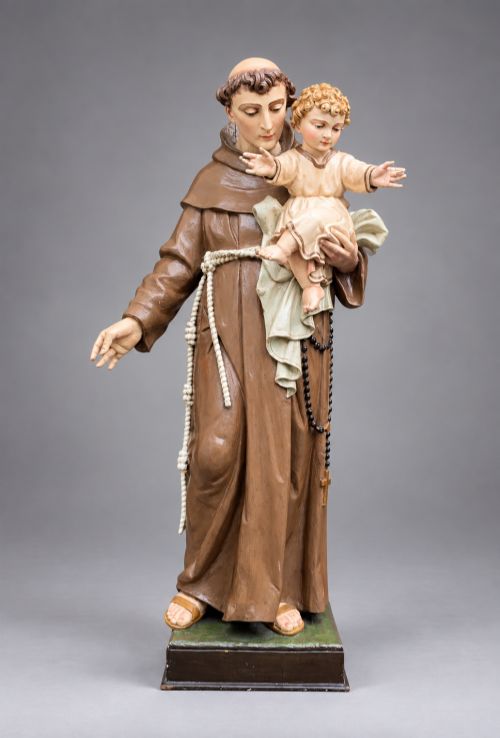
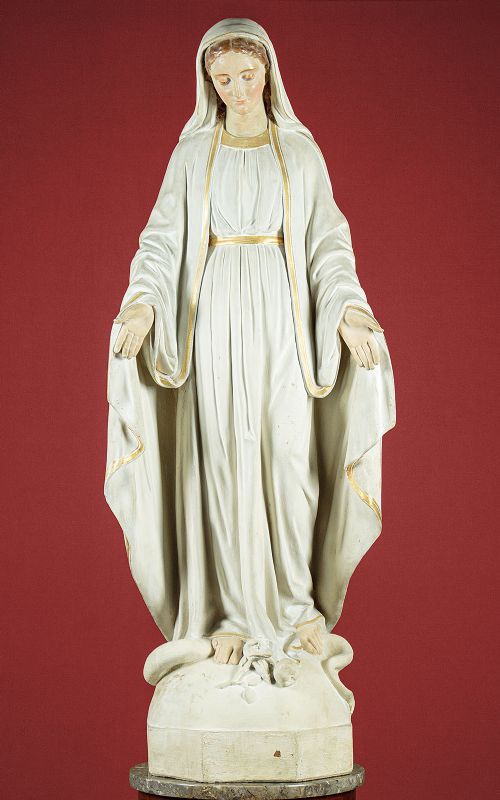
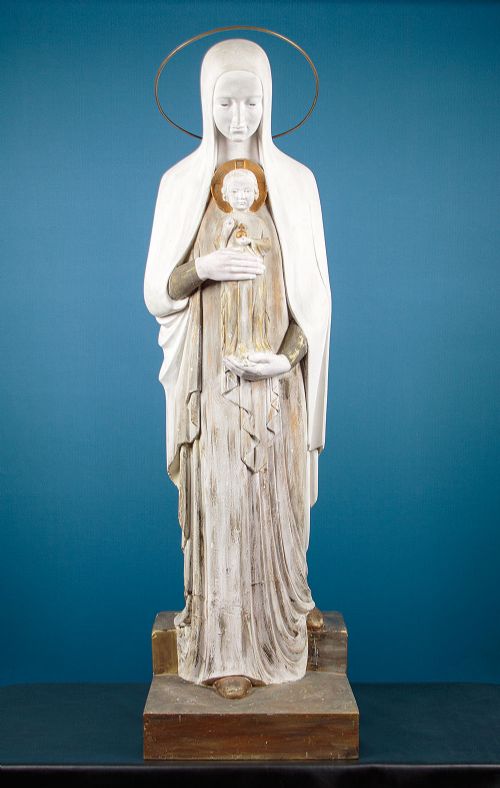
You are most likely to meet wooden statues and figures on this page, ranging from nineteenth-century Italian folk art to earlier Spanish Baroque pieces. The forms include standing saints, seated figures with the infant Christ, and dramatic depictions like the Pieta.
The selection spans centuries of religious craft, touching periods from late medieval times through to the mid-twentieth century. Each piece reflects the specific liturgical needs and aesthetic style of its original time and place.
Materials and construction
Carved wood forms the structural base for the vast majority of these sculptures, utilising timber shaped with gouges and chisels. Artisans frequently applied a layer of gesso over the wood to prepare a smooth surface for subsequent decoration.
Many figures feature polychrome paint work combined with delicate applications of gold leaf to highlight garments and halos. Terracotta also appears in certain twentieth-century examples, offering a different textural quality to the finished piece.
Listings span several eras, moving from late medieval and eighteenth-century works through to nineteenth-century folk art and mid-century ecclesiastical pieces.
Assessing quality and execution
The preservation of original surface treatments, such as polychrome pigments and gold leaf, marks the difference between well-maintained devotional art and pieces that have suffered heavy intervention.
The Catholic Church Sculpture Glossary
- Polychrome
- Painted in several colours. This surface treatment brings depth and realism to carved wooden religious figures.
- Gesso
- A plaster mixture used as a smooth base for paint and gold leaf. It prepares the wooden surface for fine decoration.
- Gold leaf
- Gold beaten into extremely thin sheets for gilding. It is applied to surfaces to create a radiant, reflective finish.
- Santos figure
- A carved figure of a saint or holy person. These sculptures often served central roles in religious processions and domestic shrines.
- Pieta
- A representation of the Virgin Mary holding the dead body of Jesus. This subject appears frequently in devotional carving traditions.
Catholic Church Sculpture: Frequently Asked Questions
What are catholic church sculptures made from?
These figures are predominantly carved from wood, occasionally utilising terracotta for later twentieth-century pieces. Artisans then finished these wooden bases with gesso, polychrome paint, and gold leaf.
Such materials allowed makers to achieve realistic skin tones and ornate, shimmering vestments suitable for sacred spaces.
How do I date a church sculpture?
Dating relies on stylistic clues, tool marks, and the ageing of underlying materials like wood and gesso. Late medieval pieces show different carving techniques compared to nineteenth-century folk art or later twentieth-century works.
Examining the layers of paint and the specific regional style helps narrow down the period of origin.
Where were these sculptures displayed originally?
Many of these pieces stood inside churches, chapels, and monastic buildings for public liturgy and veneration. Others were created for private domestic shrines or carried in religious street processions.
Their scale and back finishes often indicate whether they were meant to be viewed from all sides or placed against a wall.
How do I care for an antique wooden sculpture?
Keep wooden and polychrome figures away from direct sunlight, extreme heat sources, and sudden humidity changes. These environmental controls prevent the timber from splitting and protect delicate gesso and paint layers.
Dust the surface gently with a soft, dry brush without applying modern polishes or cleaning liquids.