


Vintage Virgin Mary
Vintage virgin mary pieces are devotional pendants, medals, and paintings that connect wearers and collectors to centuries of religious art.
Vintage Virgin Mary
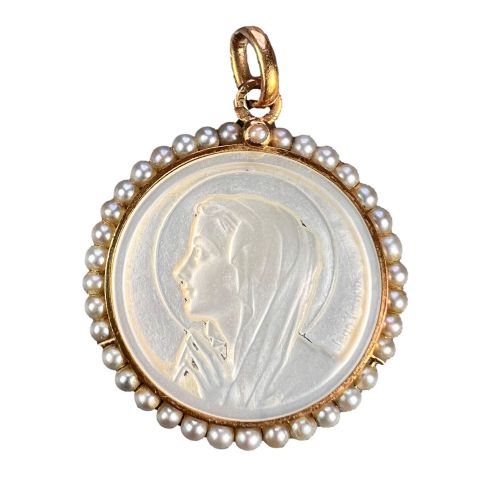
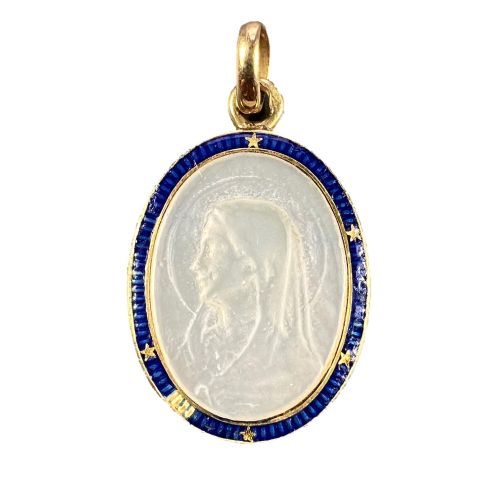
When you search for vintage virgin mary items, you primarily encounter French devotional jewellery from the late nineteenth and early twentieth centuries. These take the form of small gold pendants and medals designed to be worn close to the heart, alongside occasional paintings and sculptures spanning earlier centuries.
The most common pieces on this page are 18K yellow gold medals bearing the image of the Madonna and Child or the Miraculous Medal. Originating largely from French workshops, these items combine religious devotion with the intricate metalwork characteristic of the period.
The selection extends from delicate seed pearl and enamel charms dated around nineteen-ten back to oil paintings from the seventeenth and eighteenth centuries. Despite this chronological spread, small wearable pendants dominate the available forms.
How they were made
Makers utilised 18K yellow, rose, and white gold to construct the foundational frames and medallions of these devotional objects. Metalworking techniques included detailed engraving, piercing, and framing to highlight the central devotional figures.
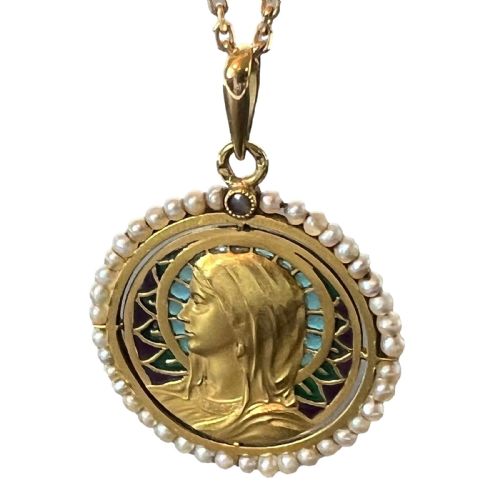
Artisans incorporated mother of pearl as a lustrous backing material for carved or painted depictions of the Madonna. Enamel work, particularly translucent plique-à-jour, added colour and light play to the gold surrounds.
Surface ornamentation frequently relied on seed pearls and enamel detailing applied by hand to the borders and halos of the medals. Painters utilised oil on canvas for larger devotional works, employing traditional glazing methods.
Several miniature portraits of the Virgin Mary hide tiny makers' signatures so small you need a loupe to spot the ghost in the gold.
What varies in quality
The distinction between standard commercial medals and exceptional pieces often rests upon the intricacy of the metalwork and the signature of the artisan. Medals produced by recognised medallists demonstrate superior crispness in the portrait relief and finer hand-chasing on the reverse.
Material combination also defines the hierarchy of quality, with simple engraved gold discs sitting below pieces integrating plique-à-jour enamel, seed pearls, and mother of pearl. The preservation of delicate enamel work without loss or cracking elevates the status of a pendant.
Emile Monier·Pageli Perriat·Emile Dropsy·Sellier·Augis Grun
The Vintage Virgin Mary Glossary
- Plique-a-Jour
- An enamelling technique where enamel is applied to a cellular metal framework without a backing, creating a stained-glass effect that lets light pass through the transparent colours.
- Miraculous Medal
- A specific devotional medal whose design was based on Catherine Labouré's vision of the Blessed Virgin Mary in Paris during eighteen-thirty.
- Madonna and Child
- A representation of Mary holding the infant Jesus, a central motif in Christian art seen across painted panels and gold pendants alike.
- Seed Pearl
- Very small natural pearls, often drilled and sewn or set into jewellery to form floral patterns or borders around devotional images.
- Medallion
- A large medal-like pendant worn as an ornament or devotional token, typically struck from gold and bearing low-relief sculptural portraits.
Vintage Virgin Mary: Frequently Asked Questions
What metals are these pendants made from?
The metallic elements of these devotional items consist predominantly of 18K yellow gold, with occasional pieces utilising rose gold or white gold.
Craftsmen paired these gold standards with natural materials such as seed pearls, mother of pearl, and coloured enamel.
How do I care for gold enamel jewellery?
Enamelled and pearl-set pendants require gentle handling to protect fragile glass surfaces and organic gems from impact or harsh chemicals.
Cleaning should be limited to soft dry cloths, avoiding ultrasonic baths that can dislodge seed pearls or fracture delicate plique-à-jour enamel.
Are these items signed by makers?
Many French devotional medals bear small stamped signatures or maker marks on the lower edge or reverse side of the gold body.
Noted medallists such as Emile Dropsy and Sellier frequently signed their relief work, adding documentary interest to the piece.
How can I tell the period of a medal?
Stylistic indicators such as Art Nouveau curves or specific enamel techniques help narrow down the production era alongside official assay marks stamped on the gold.
French eagle head hallmarks and maker punches provide reliable clues for dating pieces from the late nineteenth and early twentieth centuries.