


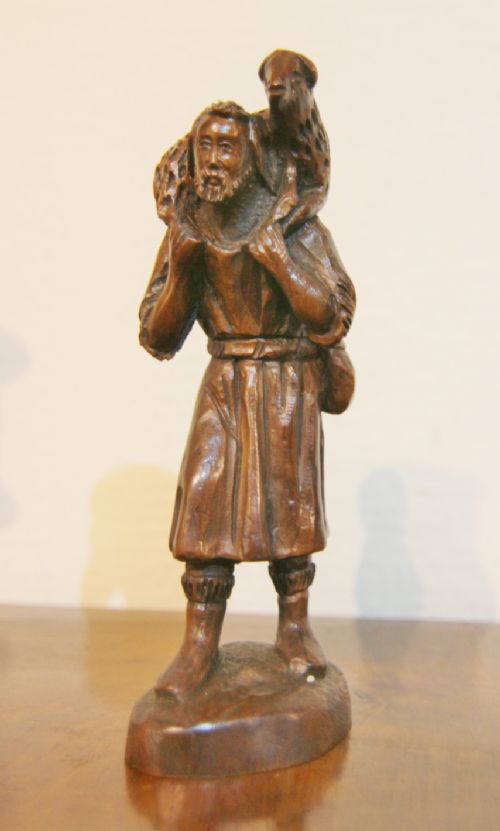


Vintage Religious Carvings
These vintage religious carvings bring centuries of devotion and craftsmanship into your home, offering tangible connections to diverse spiritual traditions.
Vintage Religious Carvings
Vintage religious carvings encompass a diverse array of devotional figures, statues, and architectural models drawn from Christian, Buddhist, and Hindu traditions. When exploring vintage religious carvings, you will encounter pieces ranging from saints and angels to depictions of the Madonna and child.
The selections span multiple centuries, with the nineteenth century heavily represented alongside earlier examples from the sixteenth and seventeenth centuries. Forms vary from monumental life-size figures and altar angels to modest folk art interpretations and architectural models of cathedrals.
Origins stretch across European workshops, including Italian folk art and French pieces, alongside Asian and Anglo-Indian works. Buyers frequently meet wooden statues and polychrome figures that reflect regional stylistic movements such as Gothic Revival and Baroque.
Materials and Methods
Many surfaces received decorative treatments including polychrome paint, gesso preparation, and delicate applications of gold leaf to enhance visual impact. These layered finishes protected the timber while providing the vibrant coloration seen on saints, angels, and deities.
The listings span from the sixteenth century through the twentieth century, incorporating oak, alabaster, stone, and polychrome painted wood.
Evaluating Quality and Execution
The preservation of original surface treatments, such as early polychrome paint and gold leaf, significantly elevates a piece. Subtle tool marks and harmonious ageing distinguish master-carved sculptures from more rudimentary workshop production.
Bohumil Kafka
The Vintage Religious Carvings Glossary
- Polychrome paint
- Decoration applied in several colours to the surface of wood or gesso. This technique brings depth and lifelike qualities to devotional statues.
- Gesso
- A plaster mixture applied as a smooth base for painting and gilding on wood surfaces. It prepares the carved ground to receive gold leaf and pigment.
- Gold leaf
- Metal beaten into extremely thin sheets used to gild wooden sculptures and frames. It adds a reflective, luminous quality to ecclesiastical objects.
- Gothic Revival
- An architectural and artistic style drawing inspiration from medieval forms. Pieces in this aesthetic often echo fourteenth-century church ornamentation.
- Baroque
- An ornate artistic style characterised by dramatic movement and deep relief carving. Italian and French workshops utilised this approach for dynamic altar figures.
Vintage Religious Carvings: Frequently Asked Questions
How do I clean wooden religious carvings?
Dust surfaces gently using a soft, dry brush to prevent accumulation without disturbing fragile paint or gesso layers. Avoid water, harsh chemical cleaners, and modern polishes that can permanently penetrate and damage historic wooden finishes.
Maintain stable indoor humidity and temperature levels to prevent the timber from splitting or warping over time. Direct sunlight should also be avoided to protect polychrome pigments and gold leaf from fading.
Where were these carved figures displayed?
Many figures originated in churches, private home altars, or roadside shrines as focal points for daily prayer and contemplation. Architectural models and smaller statues served similar devotional roles within domestic spaces or institutional settings.
Over time, these objects transitioned from active religious contexts into private collections and interior display settings. Their presence continues to bring historic gravity and sculptural form to modern rooms.
How can I tell the age of a carving?
Examine the tool marks left behind by the carver, as hand-chiselled surfaces differ visibly from machine-produced or modern reproductions. The natural ageing of the wood, combined with the wear patterns on paint and gesso, offers reliable clues to a piece's era.
Compare stylistic indicators, such as the drapery folds and facial expressions, against documented periods like Baroque or Gothic Revival. Wood shrinkage and historical repair work also provide physical evidence of prolonged age.
What is the difference between folk art and church pieces?
Ecclesiastical pieces commissioned for formal churches typically follow strict stylistic conventions and academic proportions established by master workshops. They often feature sophisticated finishes like detailed gilding and refined polychrome painting.
Folk art carvings, by contrast, reflect local traditions and individual interpretations created outside mainstream academic circles. These pieces display charming idiosyncrasies in form and execution that reveal the hand of regional artisans.